Blog

  • Money Talks

    Healthylife® QuitWell™

    Part 1

    Image of 2 piggy banks.

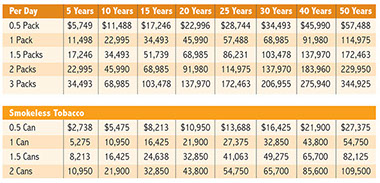
    In 2020, the average price of a pack of cigarettes in the United States was $6.30. In some states, the average price was over $10 per pack. A pack-a-day smoker in those states spends $70 per week on cigarettes. That could buy a week’s worth of groceries, two to three tanks of gas, or pay a month’s utility bill. Over months and years, the possibilities go even further.

    A can of chewing tobacco costs an average of nearly $3. A two can-a-week habit costs over $300 per year. A can-a-day habit costs nearly $1,100 per year. Think of all the things you could do with the money instead of dipping or chewing. It adds up.

    Find out how much money you will save when you quit. The chart below is based on U.S. averages.

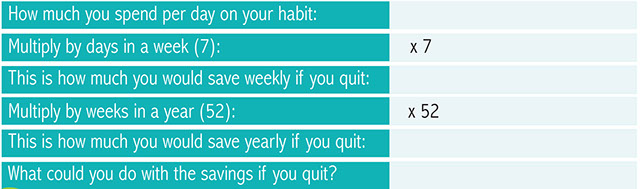
    Calculate Your Savings from Quitting:

    © American Institute for Preventive Medicine

  • Mindfulness 2

    Healthylife® QuitWell™

    Part 2

    Image of man walking his dog.

    Mindfulness means you are fully aware of what you are sensing in the current moment. Mindfulness can help you get through a stressful or uncomfortable time without your usual tobacco/nicotine use. It can also:

    *  Give your mind a chance to think creatively and come up with the answers to tough questions.

    *  Help you gently pull yourself back to the present when your mind wants to go somewhere else.

    *  Exercise greater control over your actions and your energy.

    *  Understand yourself more.

    *  Lower inflammation in the body.

    *  Activate areas in the brain that give you feelings of calmness.

    Mindfulness Exercise

    Practice mindfulness while you listen to music, walk, run, eat, or sit in traffic. You can also try this the next time you feel the desire to have a cigarette, dip, or puff from your vape:

    *  Try to physically pause your body. Sit or stand still. Maybe you can lean against the back of a chair or a wall. Get comfortable.

    *  Focus on your breathing or anything in the present, such as the sounds you hear or an object in your sight.

    *  As thoughts pop up in your mind, notice them without judging them. Picture your thoughts like clouds floating by-let them go by. Return your focus to what you see, hear, and feel.

    *  Notice the feelings you have about smoking/your habit and what may be making you feel that way. Be aware of what is helping you do what you want and what is not helping.

    *  When your mind starts to drift, imagine gently guiding it back to the present, as if you’re helping a child that has strayed off the path.

    The craving may have gone away or is now much less. If this is the case, try to do something else while the craving continues to fade.

    © American Institute for Preventive Medicine

  • Medications To Help You Quit

    Healthylife® QuitWell™

    Part 3

    Seven people holding white cards with letters to assemble the word SUPPORT.

    There are medications available to help you quit. Some of them contain nicotine and some do not. The idea behind nicotine replacement therapy (NRT) is that by replacing the nicotine with nicotine in another form, one can focus on becoming comfortable with the new behavior with less withdrawal/symptoms. Then, later, the nicotine can be cut down in a systematic way. Studies have shown that users of NRT are about twice as likely to quit tobacco.

    You should check with your doctor before using these products if you are:

    *  Younger than 18

    *  Pregnant or nursing

    *  Have heart disease or had a recent heart attack

    *  Have high blood pressure not controlled by medication

    *  Take insulin for diabetes

    *  Have a stomach ulcer

    Always follow the instructions for NRT carefully to avoid complications. Any questions that you have about the products should be addressed with your doctor or pharmacist.

    Common side effects of NRT include nervousness, a racing heart, dizziness, headache, and nausea. These are caused by the nicotine and may be a sign of too much nicotine. If you have any of these symptoms, cut back on the total nicotine you are getting. Chew less gum or use your inhaler less frequently, for example. Avoid smoking, dipping, or vaping while using NRT.

    A rare, but dangerous complication is nicotine overdose. Symptoms include a racing heart, headache, weakness, dizziness, nausea and/or vomiting, and cold sweats. If you are having symptoms like these, get immediate medical attention.

    © American Institute for Preventive Medicine

  • Managing Weight

    Healthylife® QuitWell™

    Part 2

    Image of middle-aged women exercising in her living room.

    Quitting is one of the most important things you can do for your health. Quitting tobacco/nicotine can lead to changes in your weight. There are ways you can manage your weight, as you are quitting and afterwards. You may even find that you lose weight over time as you adopt more healthy habits.

    The average person who quits gains 5 to 10 pounds in the months after quitting. This can happen for several reasons.

    *  Nicotine has been speeding up your metabolism while you’ve been using tobacco/nicotine products. This means that your body was burning energy (fuel from food) faster. When you quit, your metabolism returns to normal.

    *  Nicotine has been raising your blood sugar and interfering with your body’s natural hunger cues. This is the main way that nicotine suppresses your appetite. Now that you are quitting, cravings for sweets may increase as your blood sugar drops. Plan for regular, healthy meals and snacks to help you feel better and avoid eating too many high-sugar foods.

    *  You may feel a strong urge to have something else in your mouth, leading to more snacking. If these are high calorie foods that are high in sugar or saturated fat, you are likely to gain weight.

    The QuitWell™ program will teach you how to avoid gaining too much weight after quitting. Read on to learn ways to manage urges with food and ways to plan your eating with your health in mind.

    © American Institute for Preventive Medicine

  • Managing Slip-Ups

    Healthylife® QuitWell™

    Part 5

    Close up of nicotine gum.

    Start to plan your response to slip-ups even before you have fully quit. Slip-ups are very common, especially in the first few weeks of trying to be tobacco/nicotine free. A slip-up is also called a ‘lapse’. The better you manage a lapse, the easier it will be to avoid full relapse. Relapse refers to going back to a regular habit of using tobacco/nicotine products.

    No one is perfect. Try not to view the slip-up as a failure of willpower or strength. Remember, you are so strong.

    Become hyper-aware of what just happened. It is important to understand the triggers related to a slip-up.

    *  Where are you? Is this place still a trigger for you? If possible, try to avoid this area for now. Or, make sure you have substitutes handy, like NRT gum or cinnamon candies.

    *  Who are you with? How can this person support you in the future?

    *  How are you feeling? Learn to separate your emotional response from situations and feelings. Smoking/chewing won’t change anything about the situation.

    What do you need to work on so that you can respond differently next time? Review the urge tamers, call your support person, or give your mind a quiet moment to really answer the question.

    How do you want this situation to go next time? Imagine responding differently to the trigger. Use the creative imagination exercise. See yourself doing what you want to do.

    © American Institute for Preventive Medicine

  • Make The Connection

    Healthylife® QuitWell™

    Part 2

    Parents giving kids piggy-back rides, laughing and having fun.

    Keeping your motivation and values in mind is a great way to encourage yourself when quitting gets tough. Look for ways to connect your motivation and values to your attitude and actions.

    How do your attitudes and actions show what is important to you? If you feel there is a mismatch, it might be time for a new point of view!

    Old view:Quitting is going to be horrible. I like to do what I want, when I want.

    New view:I value time with my family and want to be a good role model for my kids. It will be awesome to enjoy family time without the interruption of smoke breaks. I can model healthy behavior for my kids.

    © American Institute for Preventive Medicine

  • Make A “Butt Bottle”

    Healthylife® QuitWell™

    Part 3

    An empty clear glass jar.

    Save your cigarette butts or spit from smokeless tobacco in a bottle or glass jar. You will learn what to do with these in the next part of this program.

    © American Institute for Preventive Medicine

  • Look Ahead

    Healthylife® QuitWell™

    Part 1

    Image of women thinking.

    It can be easy to stay in the day-to-day of our lives. Looking ahead can help you see further down the road at where you are headed. Think about how you picture the next year of your life and answer the questions below:

    *  Who are the important people in your life?

    *  Where do you live?

    *  What are you working on?

    *  What is the most important thing in your life?

    *  At the end of one year, will you be using tobacco/nicotine?

    Now, jump ahead 10 years. Ask yourself the same questions. Imagine how you want your life to be. Be realistic and think about where the things you are working on now may take you.

    *  Who are the important people in your life?

    *  Where do you live?

    *  What are you working on?

    *  What is the most important thing in your life?

    *  In 10 years, how will you think of tobacco/nicotine?

    © American Institute for Preventive Medicine

  • Know Your Triggers

    Healthylife® QuitWell™

    Part 5

    Group of teens.

    Relapse triggers can be placed into one of four groups:

    1. Emotional relapse triggers

    2. Interpersonal relapse triggers

    3. Internal relapse triggers

    4. Environmental relapse triggers

    Emotional Relapse Triggers

    These are events in which either uncomfortable feelings, such as boredom, sadness and worry or positive feelings, such as joy, happiness, or being relaxed increase the chances you might use tobacco/nicotine. Which of the following have been triggers for you in the past?

    *  When I am happy and celebrating

    *  When I am relaxed

    *  When I feel tired

    *  When I am bored or have nothing to do

    *  When I am alone and feeling sad

    *  When I am frustrated or angry about something

    *  When I feel unsure and rejected by someone

    *  When I am worried about a loved one

    *  When I am afraid

    *  When I am tense and restless

    *  When I am put under pressure at my job

    Interpersonal Relapse Triggers

    These are events in which you may feel either direct or indirect pressure from other people. Which of the following have been triggers for you in the past?

    *  When other people around me are using tobacco/nicotine

    *  When someone offers me tobacco/nicotine

    *  When I want to show how tough, sophisticated, or liberated I am

    *  When I want to fit in with others who are using tobacco/nicotine

    *  When I want to feel different from other people

    *  When I become angry with someone

    *  When my friend or spouse goes back to using tobacco/nicotine after quitting

    *  When I want to avoid talking to a friend or spouse

    *  When I feel “trapped” in a relationship

    *  When I am upset that I cannot solve a problem with another person

    Internal Relapse Triggers

    These are times when you may have an urge without having a clear-cut reason. Which of the following have been triggers for you in the past?

    *  When I get a strong craving

    *  When I have intense withdrawal signals

    *  When I have a feeling of emptiness

    *  When I want to test my willpower by smoking just one cigarette (or having just one dip, etc.)

    *  When I am curious about the taste of a cigarette, e-cigarette, or chew

    *  When I have a difficult time paying attention

    *  When I think smoking/vaping/chewing is going to make a situation more fun

    *  When I’ve had too much to drink

    *  When I am hungry

    *  When I have trouble falling asleep

    *  When I wake up at night and can’t get back to sleep

    *  When I’m having pain in my body (back pain, headache, cramps, etc.)

    Environmental Relapse Triggers

    Certain times, places, and activities may be linked with your tobacco/nicotine habit. Which of the following have been triggers for you in the past?

    *  When I come across a pack of cigarettes, can of chewing tobacco, or discarded e-cigarette

    *  When I’m in a store where I used to buy tobacco/nicotine

    *  When I take a break from work

    *  When I drink coffee

    *  When I finish a meal

    *  After sex

    *  When I first get up in the morning

    *  When having fun/doing activities that were triggers in the past (e.g. playing cards, during a concert intermission, fishing, hunting, golfing)

    *  When driving

    *  When partying

    *  When I’m on vacation

    *  When I put off an unpleasant task

    © American Institute for Preventive Medicine