Blog

  • Soothe Sore Muscles After Exercise

    BE FIT

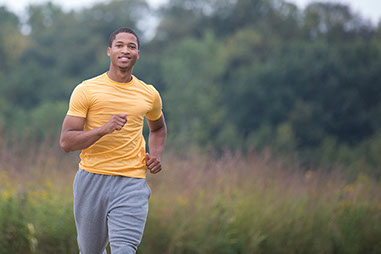
    Image of male jogging outside.

    Exercise can make you feel great. But after a hard workout, sore muscles can be uncomfortable. A little soreness is normal and healthy, especially after trying a new activity or pushing yourself a little harder.

    Don’t let post-exercise pain get you down! You can get through it and reach a new level of fitness with a few tips:

    *Warm up.Don’t jump right into exercise with cold muscles. Doing a lighter or slower version of your workout first will get muscles warm and increase blood flow. This can help avoid injury too.

    *Cool down and stretch.Don’t stop exercise abruptly. Instead, slow down your activity until your heart rate feels normal and you can talk easily. After you’ve exercised, stretch! This is the perfect time to increase flexibility and help lower the chance of soreness.

    *Drink water.It helps keep your joints and muscles hydrated and prevents cramps. Drink before, during and after your workout.

    *Give muscles a break.Give muscles about two days to rest and heal before you exercise them again. For instance, work leg muscles one day and arms the next. Don’t do the same exercise day after day. Muscles need about 48 hours to repair and heal.

    *Be sure you’re doing it right.If you’re new to certain exercises, don’t be afraid to ask someone who can help! Ask a fitness expert or personal trainer or watch videos. Exercise machines and routines can cause injuries if they’re not done properly.

    *Don’t push too hard.It’s easy to get caught up in a new exercise routine. You may want to get into shape as quickly as possible. But doing too much too quickly can mean lots of soreness and even an injury. If you think your exercise routine is too easy, increase the time or intensity slowly. Always ask your doctor about safe exercises you can do if you have any health conditions.

    Listen to your body!

    A lot of soreness or pain isn’t necessary or normal. If you think you have a strained or sprained muscle, tryRICE:

    Rest:Don’t use the sore muscles, if possible.

    Ice:Apply ice packs to the problem area for a few minutes at a time.

    Compression:Use sports bandages or wraps.

    Elevation:Raise the affected body part, such as a foot, up above your heart for two to three hours each day.

    See a doctor if the pain is extreme, gets worse or doesn’t go away after a week.

    Source: American Academy of Family Physicians

    © American Institute for Preventive Medicine

  • Solve The Homework Hassle

    FAMILY LIFE

    Image of father helping son with homework.

    Do you dread those long nights of homework hassle-for parents and students? Homework does not have to be a time of great stress for families, according to Paula Kramer, chair and professor of occupational therapy at University of the Sciences. Dr. Kramer suggests the following ways to help avoid arguments over turning off the TV and hitting the books:

    *  Come to an understanding with your child that homework is a necessity-and must be done every day.

    *  Communicate (in person and by email) with the teachers and find out how much time the student is expected to devote to homework each night. Setting expectations and time limits will make the child more productive.

    *  Allow for active playtime before homework. If the child does not have an after-school activity such as a sport or dance class, provide 45 minutes to an hour for the child to engage in active behavior prior to homework. The physical activity will help the child burn off energy, settle the nervous system, and refocus mentally for homework.

    *  Create a designated area for homework and studying-desk in a bedroom or the kitchen table. Just keep the homework spot the same, quiet, and free from distractions.

    *  Create charts to track homework progress. The chart will not only set a schedule that visibly shows that homework needs to be done every night, but will also allow the child to track progress. Rewards can be given for homework completed successfully a few nights in a row.

    *  Use positive praise to encourage good homework and study habits.

    *  Be a role model for the child. School cannot teach everything. Responsibility for successful behavior also lies at home. Parents need to take an active role in their child’s education and should check in on the child during homework to make sure it is completed properly.

    © American Institute for Preventive Medicine

  • So How (Exactly) Does Exercise Help The Heart?

    BE FIT

    Image of older man in the swimming pool.

    Exercise benefits the heart by decreasing its workload. Exercise improves the ratio between the heart’s demand for oxygen and its supply through the coronary arteries.

    With exercise, the heart gets stronger because it gets bigger and is able to pump more efficiently, according to Joseph Libonati, PhD, associate professor of nursing at Penn Nursing and a cardiac physiology expert.

    Exercise allows your heart to push out a greater volume of blood with every beat and it does so at a lower heart rate. It also improves the blood flow to the heart by improving the heart’s ability to have its coronary blood vessels dilate. Together, these changes improve both the supply and demand of the heart.

    How does exercise lower high blood pressure?

    Exercise helps lower high blood pressure by improving the ability of your blood vessels to dilate (grow larger), making the pressure on those vessels less. Exercise also improves your blood sugar levels and makes you leaner. This allows your heart to pump blood at lower pressures, thereby making your heart work less.

    What exercise is best for the heart?

    Using large muscle mass repetitively is best for heart health. Think about the acronymFIT:

    F– Frequency (5 days a week)

    I– Intensity (if you can talk, you’re at the right intensity)

    T– Time (30 to 60 minutes/day)

    Why is exercise important as you age?

    Exercise is important to maintaining healthy bones and muscles. As you age, you start to have smaller muscles and weaker bones. Activities that maintain muscles and bone mass help you age with a greater ability to function.

    Resistance training or weight training is a good way to maintain bone mass, so making this type of exercise part of your daily routine is important into your 40s and beyond. Also, maintaining muscle mass helps the body’s metabolism and can reduce the risk of obesity, diabetes, and high blood pressure.

    © American Institute for Preventive Medicine

  • So Do You Really Need That Vitamin?

    MEDICAL NEWS

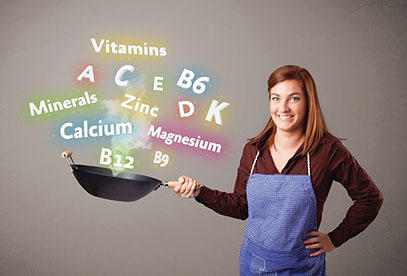
    Concept image of young women with cooking pan and different vitamins words above.

    Before taking a daily vitamin or dietary supplement, you might want to think about what you’re really consuming, suggests a Kansas State University human nutritionist.

    “Supplements are not regulated by the Food and Drug Administration like other drugs are regulated, which is something I think a lot of people don’t realize,” said Brian Lindshield, assistant professor of human nutrition.

    Lindshield researches supplements to see if the ingredients listed on the label actually match what is found in the bottle. You don’t always get what you pay for and think you’re getting.

    If you want to get the most accurate product, look for the bottles with the more descriptive labels. Also, paying a little extra will usually get you the ingredients you are seeking.

    “You should probably avoid buying the cheapest supplement available because if the manufacturer is cutting corners to get the price really cheap, they probably are not using the same standards that the manufacturers of more expensive products are,” Lindshield said.

    Another tip: Don’t expect supplements to make up for a poor diet. “Vitamins and minerals will prevent deficiency, but it’s not going to make up for a lot of the chronic disease risks that come with an unhealthy diet,” Lindshield said.

    © American Institute for Preventive Medicine

  • Smoking And Pregnancy

    MEDICAL NEWS

    Image of pregnant women breaking a cigarette in half.

    According to researchers at the Moffitt Cancer Center in Tampa, nearly 50% of pregnant women who smoke will quit during their pregnancies, but more than half of those will start smoking again after they give birth.

    Not only is smoking harmful for new mothers, but their babies could also be exposed to dangerous secondhand smoke or thirdhand smoke which is left on clothing, furniture, curtains and there surfaces.

    © American Institute for Preventive Medicine
  • Smartphone Break Aids Well-Being

    WELL-BEING

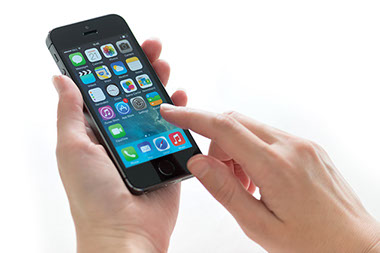
    Image of a smart phone.

    Want to be more productive and happier during the workday? Try taking a short break to text a friend, play Angry Birds, or check Facebook on your smartphone, according to Kansas State University research.

    Allowing employees to take smartphone microbreaks may be a benefit-rather than a disruption-for businesses. Microbreaks are nonworking-related behaviors during working hours.

    “A smartphone microbreak can be beneficial for both the employee and the organization,” said the lead researcher. “For example, if I would play a game for an hour during my working hours, it would definitely hurt my work performance. But if I take short breaks of one or two minutes throughout the day, it could provide me with refreshment to do my job.”

    Taking a break throughout the workday is important because it is difficult, and nearly impossible, for an employee to concentrate for 8 straight hours a day without a break, was the thinking. So the smartphone microbreaks were thought to be similar to other microbreaks throughout the workday: chatting with coworkers, walking around the hallway, or getting a cup of coffee. Such breaks are important because they can help employees cope with the demands of the workplace.

    © American Institute for Preventive Medicine

  • Smart Ways To Avoid Cybercrime

    FINANCIAL HEALTH

    Close up image of hands typing on laptop.

    Cybercrime is a growing problem as we rely on computers and the Internet more than ever before. Many people regularly shop online, send personal information, and even control appliances or household security over the Internet.

    Though this offers convenience, it’s important to take steps to keep your information and your family safe from cybercrime. Cybercrime happens every day with hackers stealing bank information, using computers to attack others, or erasing important online information.

    The U.S Department of Homeland Security recommends:

    *  Only use the Internet on a network that is password protected. Free or open networks may leave you vulnerable.

    *  Do not send personal information, such as your social security number or bank information, over the Internet. Companies will not ask you to send information this way.

    *  Do not open or respond to emails from people you don’t recognize and never click on the links inside the email.

    *  Use long, hard-to-guess passwords for all your devices and email accounts. Change your passwords regularly.

    *  Consider scaling back your social media sharing. Tighten privacy settings so only people you know well can see your activity.

    *  If you see an email or online offer that seems too good to be true, it’s probably a scam.

    © American Institute for Preventive Medicine

  • Smart Recipe Swaps

    HEALTHY EATING

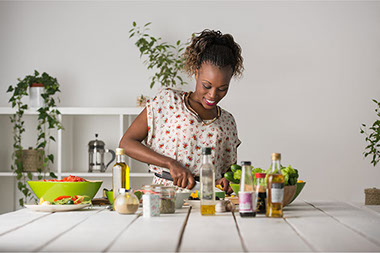
    Image of women cooking.

    You can reduce fat and calories without sacrificing taste by swapping out a few ingredients in your favorite recipes, according to the University of Nebraska-Lincoln Extension experts.

    *  Use two egg whites in place of one egg to reduce cholesterol.

    *  Use low-sodium, fat-free chicken broth in your mashed potatoes to add flavor and cut back on added butter or margarine.

    *  Substitute applesauce for oil, margarine, or butter in muffins and quick breads such as banana bread. Try substituting a small amount at first, as the more you substitute, the more the texture of the finished product changes.

    *  For dips, sauces and pie toppings, use fat-free yogurt, sour cream and whipped topping.

    *  Sliced almonds make a delicious, crunchy topping in place of fried onion rings.

    *  Choose reduced-fat or low-fat cheeses for salads and casseroles.

    © American Institute for Preventive Medicine

  • Small Changes Your Heart Will Love

    MEDICAL NEWS

    Image of a basket filled with fruits and vegetables.

    You may know the basics of heart health that include a healthy diet, exercise, healthy weight, and avoiding tobacco. But, don’t let these major goals overwhelm you. Instead, take small steps each day that add up to big heart-healthy benefits.

    Say bye-bye to beige and eat the rainbow.

    Look at your plate’s color before you eat a meal. If it’s mostly browns, such as breads, pasta and meat, see if you can brighten it up with fruits and vegetables. Leafy greens, yellow peppers, carrots, blueberries and strawberries are just a few of the brightly colored foods that are great for your heart.

    Cut back on sodium when you can.

    If you’ve been eating salt for years, it can be hard to cut it out completely. But you may not taste the difference if you gradually replace some of the salt in your diet with herbs and spices without sodium. Cutting back on sodium can reduce your risk of heart attack, heart failure, and stroke. Many processed foods already contain high amounts of sodium, and adding salt to food greatly increases sodium intake for many people.

    Walk, if you can’t run.

    For many people, jogging, running, or other high-intensity workouts aren’t possible. Fortunately, you don’t have to choose a tough workout to get heart benefits. Start walking just a few minutes a day. Increase the amount of time you walk when you can until you are walking 30 minutes a day most days of the week. Brisk walking can be just as beneficial to your heart as running.

    If you use tobacco, keep trying to quit.

    Quitting tobacco is hard, and many people struggle to succeed. You may have strong urges to use tobacco or you may slip up and start again after you’ve quit. When this happens, be patient with yourself. Understand that many people have to quit several times before they’ve quit for good. When you quit, your heart – and your entire body – will start to heal. You’ll reduce your risk of heart disease, lung cancer, and many other serious diseases. Talk with your health care provider about prescription medication or nicotine replacement therapy.  Many of these treatments are now covered by insurance.

    Source: American Heart Association

    © American Institute for Preventive Medicine
  • Sleep-Wake Cycle Needs To Be Consistent

    WELL-BEING

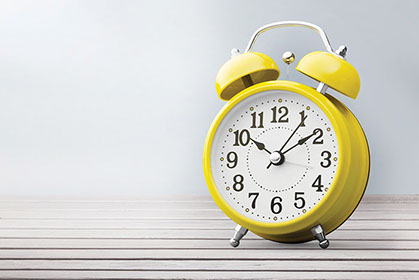
    Image of vintage yellow clock.

    Sleeping late now and then may feel like a luxury. But an inconsistent sleep schedule can throw off your body’s sleep and waking pattern, or circadian rhythm, according to sleep specialists writing in the Harvard Health Letter. Inconsistent cycles can lead to sleepless nights.

    To get sleep and waking patterns back on track, talk to a sleep expert. The first step is a physical exam to rule out underlying health conditions that may cause insomnia. If no underlying cause is found, try a sleep journal. Each morning, write down the wake time, the bedtime from the night before, how long it took to fall asleep, and whether there was any waking in the night-and if so, how many times. After two weeks, a pattern will emerge. It can help pinpoint any changes that need to be made.

    The wake time is most important to getting on a schedule again because it anchors the circadian sleep rhythm. Use an alarm clock to stick to the schedule. Make bedtime about seven or eight hours before the alarm will sound.

    It also helps to make a wind-down period part of the bedtime routine. That means stopping the use of all electronics an hour and a half before bed, keeping the lights low, and doing a relaxing activity such as reading.

    Filling the day with more structure will also reinforce the circadian rhythm. Keep a regular schedule for work, meals, exercise, and activities such as grocery shopping, socializing, or housework.

    © American Institute for Preventive Medicine