Blog

  • Recognize And Treat Early Signs Of Burnout

    SUCCESS OVER STRESS

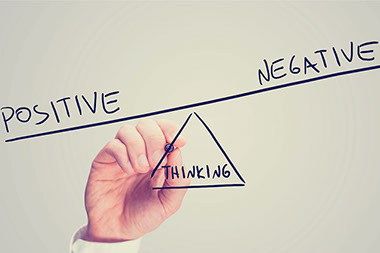
    Image of business man with a notebook over his head.

    Burnout isn’t something that happens overnight. It occurs over time from repeated and unresolved frustration or constant pressure to perform or achieve. With burnout, you feel exhausted, worn out, and detached from others. You feel as if you have nothing more to give and simply do not care about anything. Burnout puts your job, your relationships and your health in jeopardy.

    Signs on the road to burnout

    *  Too much work, not enough relaxation

    *  Feeling as if you have no control over your job

    *  Anger

    *  Fatigue

    *  Sleep problems

    *  Escaping through alcohol, drugs, TV, eating or gambling

    *  Avoiding making decisions

    *  Negative view of yourself and the world

    Also, some traits increase the risk for burnout. These include the need to be in control, wanting everything to be perfect and being a workaholic.

    Ten tips to prevent burnout

    1. Set career and personal goals that can be achieved.

    2. Follow healthy eating and sleeping habits.

    3. Exercise daily – At least 30 minutes most days of the week.

    4. Try not to spread yourself too thin. Delegate tasks at work and at home.

    5. Reduce long work or study hours, if you can. The more you do and the less you rest, the more likely burnout will occur.

    6. Take regular five to 10 minute relaxation breaks. Take mental breaks from stressful situations, too.

    7. Make time for leisure activities that you enjoy and look forward to.

    8. Get creative with a hobby or activity that has nothing to do with work.

    9. Manage stress through meditation, yoga, or therapy.

    10. Plan a vacation one or more times a year. Leave your work at home!

    Discuss feelings and problems you are having with your family, friends, and coworkers. Talking helps ease feelings of frustration that can feed burnout. It things do not get better seek professional help.

    © American Institute for Preventive Medicine
  • Read The Labels, Again

    WELL-BEING

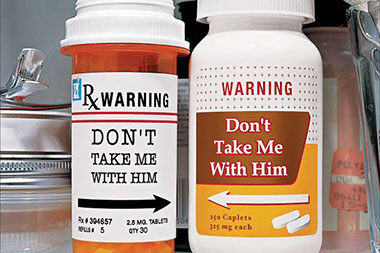
    Image of medicine bottles.

    Any box or bottle of over-the-counter (OTC) medicine lists its active ingredients prominently on the label. But are consumers using that information to make wise choices about taking two or more OTC drugs at the same time? Probably not, suggests a study in the Journal of Public Policy & Marketing.

    A consumer who takes a cold medicine containing, for instance, acetaminophen, may see nothing wrong with taking an additional medicine that also contains acetaminophen. In other words, the typical consumer, who is unlikely to have any medical expertise, may very well believe that there is no danger in taking any two OTC medications at the same time-even medications with the same active ingredients.

    Avoid double dosing. OTC drugs are not risk-free. Read labels.

    FYI

    According to the FDA, more than 600 OTC and prescription medicines contain the active ingredient acetaminophen. Taking acetaminophen is safe and effective when you follow the label information. But you can get severe liver damage if you take:

    *  More acetaminophen than directed

    *  More than one medicine that has acetaminophen

    *  3 or more alcoholic drinks every day while using acetaminophen

    For more information, ask your pharmacist, doctor, or nurse.

    © American Institute for Preventive Medicine

  • Ragweed

    WELL-BEING

    Image of ragweed.

    Maybe you’ve never been allergic to ragweed. You may not be miserable at the end of summer during ragweed season like a lot of other people.

    But even if you’ve never had a problem with seasonal hay fever caused by ragweed, don’t assume that runny nose and itchy eyes are caused by a cold.

    The truth, according to the American College of Allergy, Asthma and Immunology, is that anyone can develop an allergy-including an allergy to ragweed-later in life.

    Scientists think it may be you’ve always had the allergy, but it might have taken exposure to another allergen to trigger your symptoms. If symptoms won’t go away, lasting more than 2 weeks, you probably have allergies.

    Common allergy symptoms include itchy eyes and nose, as well as sneezing, but the mucus is typically clear.

    You’ll want to talk with your doctor first about over-the-counter medications to try to relieve those annoying symptoms.

    © American Institute for Preventive Medicine

  • Race Drinking

    BE FIT

    Image of man drinking from a water bottle.

    Nearly half of recreational runners may be drinking too much fluid during races, according to a survey of runners by Loyola University Health System researchers. Expert guidelines recommend runners drink only when thirsty. But the Loyola survey found that 36.5% of runners drink according to a preset schedule or to maintain a certain body weight and 8.9% drink as much as possible.

    Drinking too much fluid while running can cause a potentially fatal condition called exercise-associated hyponatremia. It occurs when runners drink even when they are not thirsty. Drinking too much during exercise can dilute the sodium content of blood to abnormally low levels.

    Drinking only when thirsty will prevent overconsumption of fluids. “It’s the safest known way to hydrate during endurance exercise,” said Loyola sports medicine physician Dr. James Winger. The study is in the British Journal of Sports Medicine.

    Symptoms of hyponatremia can include nausea, vomiting, headache, confusion, loss of energy, muscle weakness, spasms or cramps. In extreme cases, the condition can lead to seizures, unconsciousness, and coma.

    © American Institute for Preventive Medicine

  • Quit Bugging Me

    WELL-BEING

    Image of insect repellant.

    As you enjoy the great outdoors, you may not see a bear, but you might encounter biting and stinging critters such as ticks, mosquitoes, and other insects.

    Bring along your own make-at-home first aid kit that includes assorted bandages and basic medicines such as a 1 percent hydrocortisone anti-itch cream, suggests Dr. Janyce Sanford, an ER doctor at the University of Alabama at Birmingham.

    Use insect repellant with DEET. Include tweezers to remove ticks (the best way is to pull straight up in an easy motion). And if anyone is sensitive to bee or wasp stings, carry an epinephrine auto-injector (EpiPen) when camping or hiking.

    Find out who in your party knows CPR before you might need it. Carry emergency supplies of food and light, and make sure you practice common sense.

    © American Institute for Preventive Medicine

  • Questions To Ask Before Choosing A Financial Planner

    FINANCIAL HEALTH

    Image of women writing different types of investments.

    1. How are you paid? Is it by a fee and commission? Do you fully disclose the fees and the commissions you earn on every investment you make or service you offer? If paid by fees, what is the average fee your clients pay?

    2. How many years have you been in the business? How long have you been a financial planner?

    3. Can you give me some references of people you have worked with for more than two years?

    4. What is your typical client like? Income levels, issues, investment amounts?

    5. What training did you have to be a planner? What requirements were needed to attain this degree or title?

    6. How many hours of continuing education must you have to keep your degree/designation?

    7. What does a completed financial plan look like?

    8. What is the most important difference your work made in someone’s life?

    9. How many clients do you have?

    10. How many support staff do you have? What are their credentials?

    11. Do you have a privacy statement?  May I have a copy?

    12. Is there an agreement among you and your staff to keep information confidential? Have there ever been any violations of that agreement?

    13. Do you have a copy of your Form ADV (a required disclosure form from the securities authorities)? Have you been responsible for any securities violations?

    14. Do you have a formal contract to define the responsibilities of the clients and those of the planners? Does it also address a protocol to settle differences and to terminate the relationship? How long does the contract last?

    Answers you will get to these questions can vary suggests Lynn S. Evans, CFP, author of Power of the Purse: Fear-Free Finances for Baby Boomer Women. You may have other questions that are important to you. Examples include if the offices are nearby and if you can communicate by email).

    A question regarding the planner’s investment performance is absent. For good reason: the planner’s average return on an investment is not the key to his or her success. The ability to meet the clients’ goals is what really counts.

    Lost without cyberspace?

    What if you couldn’t get a Wi-Fi signal on your smartphone? How anxious would you be if you forgot your phone or lost it? Worry about not being able to see instant news and weather? Or freak about a low battery? If you say yes, you may be a nomophobe (that’s having no mobile phone phobia), according to Iowa State University researchers, in the journal Computers in Human Behavior. Take the 20-question test and judge for yourself atwww.news.iastate.edu/news/2015/08/26/nomophobia. It’s not an addiction but an obsession, they say.

    © American Institute for Preventive Medicine

  • Questions Answered About Mers

    MEDICAL NEWS

    Illustration of lungs with MERS.

    As concern increases about Middle Eastern Respiratory Syndrome, or MERS, in the Middle East and in Asia, Dr. Peter Hotez, dean of the National School of Tropical Medicine at Baylor College of Medicine, answers questions on what we need to know about this emerging infectious disease.

    What is MERS?

    It is a serious lower respiratory infection caused by the MERS coronavirus. This emerging viral pathogen was first acquired from camels, but now has limited human-to-human transmission.

    What are the symptoms?

    The symptoms include fever, cough, and respiratory symptoms that could lead to respiratory failure and other organ system breakdown. This infectious disease is similar to SARS (severe acute respiratory syndrome) that caused a severe and highly lethal outbreak in South China in 2002-2003. Some data from previous SARS outbreaks indicate that 13% of cases may have no symptoms and this could also be true for MERS.

    How is it spread?

    The mode of spread is still not well known. In general, it involves close contact, especially in health care settings. For SARS, a related coronavirus, sneezing and cough seems to facilitate transmission.

    Is there a treatment? Is there a vaccine?

    There is no proven antiviral treatment, yet, for MERS. Several prototype vaccines are in different stages of development.

    Who is at risk? Any groups more at risk?

    For about 30 to 40%, of people who get MERS, the disease is fatal. At greatest risk of dying are the elderly and those with underlying heart and lung disease or diabetes.

    Should we be concerned?

    The MERS epidemic in South Korea looks as though it will be contained soon with all new cases appearing among the estimated 3,000 people in quarantine. However, in Saudi Arabia and elsewhere on the Arabian Peninsula, new cases continue to appear. Individuals thinking about travelling to the Arabian Peninsula should consult their doctor if they are elderly or have underlying chronic disease conditions.

    © American Institute for Preventive Medicine
  • Pumpkin And White Bean Soup

    HEALTHY EATING

    Image of pumpkin and white bean soup.

    Ingredients

    1 can small white beans (15 ounces)

    1 small onion (finely chopped)

    1 cup water

    1 can pumpkin (15 ounces)

    1-1/2 cups apple juice

    1/2 teaspoon cinnamon

    1/2 teaspoon black pepper

    1/4 teaspoon salt

    1/8 teaspoon nutmeg, allspice, or ginger (if you like)

    Directions

    1. Mash white beans, onion and water with a fork or blender until smooth. Set aside.

    2. In a large pot, add the pumpkin, apple juice, cinnamon, black pepper and salt. If using nutmeg, allspice or ginger, add that too. Stir.

    3. Add the bean mix to the pot.

    4. Cook over low heat for 15-20 minutes, until warmed through.

    Source: What’s Cooking? USDA Mixing Bowl

    © American Institute for Preventive Medicine

  • Pump Up Your Heart In 5 Easy Steps

    SELF-CARE CORNER

    Image of older women laughing.

    Did you know that a good night’s sleep can help prevent heart disease? That’s just one way to lower your risk. Dr. Holly Andersen, director of education and outreach at NewYork-Presbyterian Hospital/Weill Cornell Medical Center, offers some easy steps to improve heart health and overall well-being:

    Step 1: Know your numbers.

    Your blood pressure, cholesterol, and triglyceride levels are the most important numbers you will need to know before you take the path to good heart health. A normal blood pressure level is 140/85 or lower, total cholesterol levels should be less than 200, and triglycerides less than 150.

    Step 2: Start walking.

    Exercise really is the fountain of youth. A simple 20- to 30-minute walk a few days a week can actually cut your risk of premature death by more than half. Physical activity also improves sleep, reduces stress, elevates mood, reduces blood pressure, improves cholesterol, improves brain health, and prevents memory loss.

    Step 3: Laugh out loud.

    Laughter is good medicine. Just 15 minutes of laughter is about equal to 30 minutes of aerobic exercise with respect to our heart health. So choose funny movies on Netflix. Laughter has also been linked to the healthy function of blood vessels, an increase in the brain hormones that improve mood, and reduction of pain  and anxiety.

    Step 4: Focus on your waistline, not your weight.

    Your waistline is a better measurement of your overall health than your weight because the amount of fat around your waistline is directly linked to high blood pressure and high cholesterol and can place you at increased risk for diabetes. Anything you can do to make your waistline smaller is definitely a step in the right direction. Liposuction doesn’t count!

    Step 5: Get a good night’s sleep.

    Sleep is one of the most undervalued elements of our daily routines, but it is absolutely vital to good health. Lack of sleep increases your blood pressure, induces stress, increases your appetite and slows down your metabolism, dampens your mood and decreases your brain power.

    © American Institute for Preventive Medicine