Blog

  • ‘Natural’ Relief For Arthritis: Does It Work?

    WELL-BEING

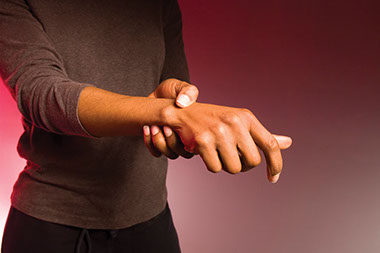
    Image of women holding wrist in pain.

    The painful symptoms of arthritis affect 50 million adults and 300,000 children. If arthritis symptoms interfere with your daily life, talk with your doctor about ways to manage your symptoms. A variety of options may be available to help you, including prescriptions, over-the-counter pain relievers, and natural supplements.

    Though many vitamins, herbs, and other supplements claim to help arthritis, they may not be right for you. “Natural” does not always mean safe or effective. Fortunately, the following supplements have shown promise in clinical studies.

    For relief of pain and inflammation in osteoarthritis:

    *  Capsaicin (active part of chili peppers)

    *  Boswellia serrata (Indian frankincense)

    *  SAM-e (S-adenosylmethionine)

    *  Tumeric/curcumin (Curcuma longa)

    *  Avocado-soybean unsaponifiables (ASU)

    *  Fish oil (omega-3 fatty acids)

    *  Ginger

    Relief of inflammation in rheumatoid arthritis:

    *  Cat’s claw (Uncaria tomentosa)

    *  Fish oil (omega-3 fatty acids)

    *  Gamma linolenic acid (GLA, omega-6 fatty acids)

    *  Ginger

    If you decide to try a natural supplement, be sure to let your doctor know. Some supplements can have bad interactions with other medicines, or may not be safe for people with certain health conditions. If your doctor has a clear picture of everything you take, he or she can help you avoid potential problems.

    Source: Arthritis Foundation

    © American Institute for Preventive Medicine

  • National Safety Month

    WELL-BEING

    Image of worder wearing proper hard-hat and protective eye glasses.

    Each June, the National Safety Council celebrates National Safety Month. This year’s theme is “Safety: It takes all of us.” Join the Council and thousands of organizations across the country to reduce the risk of these key safety issues:

    Week 1: Prevent prescription drug abuse

    *  Ask your doctor about the risk of addiction when he or she advises prescription painkillers. Take these medicines only as prescribed.

    *  If you suspect a co-worker is abusing prescription drugs, contact your Employee Assistance Program or Human Resources. Signs of abusing these drugs include:

    –  Lack of focus or attention

    –  Poor judgment

    –  Missing work often

    Week 2: Stop slips, trips and falls

    *  Follow your workplace’s safety guidelines.

    *  Keep walkways and stairs free from clutter, water and other falling hazards.

    *  At home, use grab bars and safety mats in your tub and shower and next to the toilet.

    Week 3: Be aware of your surroundings

    *  Scan your area for potential hazards.

    *  Follow workplace safety rules for storing objects securely and safe use of machines.

    *  Pay attention at all times. Do not get distracted when working or when you walk, especially when using your cell phone.

    Week 4: Put an end to distracted driving

    When you are driving, focus on the road. Do not use your smartphone or cell phone for texting or talking. Hands-free talking does not make driving safer. Your mind is still sidetracked.

    *  The National Safety Council suggests that you change your voicemail greeting to something like: “Hi, you’ve reached (insert your name). I’m either away from my phone or I’m driving. Please leave a message.”

    *  Avoid other distractions, too. Examples are eating, talking to passengers, grooming, reading (including maps) and adjusting a radio, CD player, or MP3 player.

    Bonus week: Summer safety

    *  Limit exposure to the sun, especially between 10 a.m. and 4 p.m. Wear a broad-spectrum sunscreen with a sun protection factor (SPF) of 15 or higher, as directed. Wear a wide-brimmed hat and sunglasses that wrap around and block both UVA and UVB rays.

    *  Follow directions to use outdoor tools and the lawn mower safely.

    *  Drink plenty of water to help prevent heat-related problems.

    © American Institute for Preventive Medicine

  • National Preparedness

    WELL-BEING

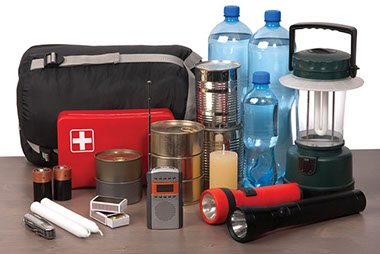
    Image of emergency kit.

    Floods, tornadoes and hurricanes are common stories in the news. Would you and your family be ready for these weather disasters and other unexpected events, such as a house fire or a terrorist attack?

    The Federal Emergency Management Agency (FEMA) in the US Department of Homeland Security wants you to learn what you need to do to be prepared for a variety of disasters. Its website,www.ready.gov, takes you through the following steps to make preparation easier:

    *  Be informed

    *  Make a plan

    *  Build a kit

    *  Get involved

    Each of these areas covers what to do when you are at home, as well as other locations. These include workplaces, schools, and college campuses. You will also find out ways to address caring for pets, aiding family members with access and functional needs and safely shutting off utilities.

    Pre-financial disaster planning is also important. Disasters leave many people without access to finances or with expensive damages. Learn what documents, such as your house deed and insurance policies to keep in a safety deposit box or other safe place away from your home. Make copies of important documents and keep them in your emergency kit or an emergency financial first aid kit (EFFAK). Get a complete list of what to put in the EFFAK fromwww.fema.gov/media-library/assets/documents/29791.

    The Centers for Disease Control and Prevention has many resources and tools to help you be prepared for disasters. Access these fromwww.cdc.gov/features/beready.

    Some disasters strike without warning, so get started today to be prepared.

    © American Institute for Preventive Medicine
  • Get Immunized

    MEDICAL NEWS

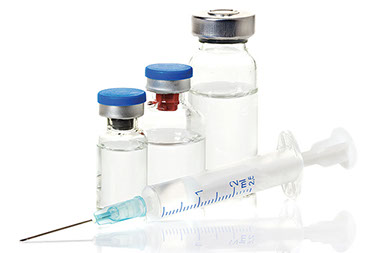
    Image of a needle and immunizations.

    Each August, National Immunization Awareness Month (NIAM) encourages all people to protect their health by being immunized against infectious diseases. This year, the National Public Health Information Coalition is coordinating NIAM activities and along with CDC is focusing on four weekly themes:

    A Healthy Start

    If you are pregnant or are planning a pregnancy, get vaccines as advised by your health care provider. These include vaccines for flu and whooping cough.

    Today’s childhood vaccines protect against 14 serious and potentially life-threatening diseases, including polio, measles, whooping cough and chickenpox. Most childhood vaccines are given during a baby’s first 2 years. That’s why it feels like so many vaccines so soon. Learn which vaccines a child needs from birth to age 6 atwww.cdc.gov/vaccines/schedules/easy-to-read/child.html.

    Back to School

    Schools are highly prone to outbreaks of infectious diseases because students can easily transmit illnesses to one another as a result of poor hand washing, uncovered coughs and dense populations. Check out the immunization schedule for all recommended vaccines for ages 7 to 18 atwww.cdc.gov/vaccines/schedules/easy-to-read/preteen-teen.htm.

    Off to the Future

    Because some diseases can spread quickly in settings like college dorms and classrooms, many colleges and universities have vaccine requirements for school entry. College-age students should get vaccines not yet received in childhood and follow the adult vaccine schedule, as needed.

    Not Just for Kids

    Did you know that adults age 19 and older need a Tdap vaccine for whooping cough if they did not get it as a teen? Adults should also get vaccines for: tetanus / diphtheria every 10 years, shingles at age 60 or older, and pneumonia at age 65. See CDC’s adult vaccine schedule for these and other vaccines atwww.cdc.gov/vaccines/schedules/downloads/adult/adult-schedule-easy-read.pdf.

    © American Institute for Preventive Medicine

  • Nail The Infection

    SELF-CARE CORNER

    Image of a women's feet.

    Despite the wealth of over-the-counter products available that claim to treat fungal nail infections (in the toenails and sometimes in the fingernails), the only way to cure an infection is to see a skin doctor (a dermatologist).

    Over-the-counter topical medications don’t penetrate the nail and therefore aren’t as effective as oral prescriptions. A dermatologist can prescribe the proper drugs to get rid of the fungi that are the problem in yellowing and misshapen nails.

    One of the best ways to deal with fungal nail infections is to prevent them from happening. The fungi love warm, damp environments around swimming pools and gym locker rooms-and inside your warm, sweaty socks.

    The best way to nail a nail infection is to keep your feet clean and dry and wear sandals in public shower areas.

    © American Institute for Preventive Medicine
  • Mushrooms: Eat Your Fungi!

    HEALTHY EATING

    Image of mushrooms.

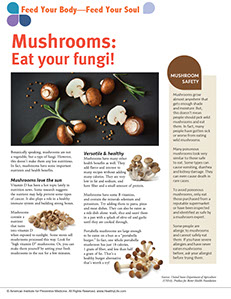
    Botanically speaking, mushrooms are not a vegetable, but a type of fungi. However, this doesn’t make them any less nutritious. In fact, mushrooms have some important nutrients and health benefits.

    Mushrooms love the sun

    Vitamin D has been a hot topic lately in nutrition news. Some research suggests the nutrient may help prevent some types of cancer. It also plays a role in a healthy immune system and building strong bones.

    Mushrooms contain a nutrient that turns into vitamin D when exposed to sunlight. Some stores sell mushrooms processed this way. Look for “high vitamin D” mushrooms. Or, you can make them yourself by setting your fresh mushrooms in the sun for a few minutes.

    Versatile & healthy

    Mushrooms have many other health benefits as well. They add flavor and interest to many recipes without adding many calories. They are very low in fat and sodium, and have fiber and a small amount of protein.

    Mushrooms have some B vitamins, and contain the minerals selenium and potassium. Try adding them to pasta, pizza and meat dishes. They can also be eaten as a side dish alone: wash, slice and sauté them in a pan with a splash of olive oil and garlic until they are cooked through.

    Portabella mushrooms are large enough to be eaten on a bun as a “portabella burger.” In fact, one whole portabella mushroom has just 18 calories, 1 gram of fiber, and less than half a gram of fat. That’s a healthy burger alternative that’s worth a try!

    Mushroom safety

    Mushrooms grow almost anywhere that gets enough shade and moisture. But, this doesn’t mean people should pick wild mushrooms and eat them. In fact, many people have gotten sick or worse from eating wild mushrooms.

    Many poisonous mushrooms look very similar to those safe to eat. Some types can cause vomiting, diarrhea and kidney damage. They can even cause death in rare cases.

    To avoid poisonous mushrooms, only eat those purchased from a reputable supermarket or have been inspected and identified as safe by a mushroom expert.

    Some people are allergic to mushrooms and cannot safely eat them. If you have severe allergies and have never eaten mushrooms before, ask your allergist before trying them.

    Sources: United States Department of Agriculture (USDA), Produce for Better Health Foundation

    © American Institute for Preventive Medicine

  • Mow Safely

    WELL-BEING

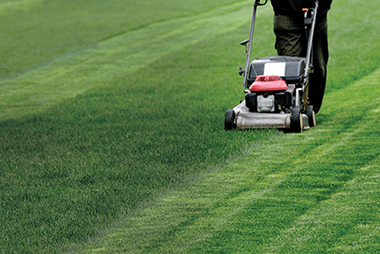
    Image of person mowing the lawn.

    Lawn mowers are powerful machines. Careless injuries harm children and adults alike each year, according to these concerned medical groups: American Academy of Orthopaedic Surgeons, American Academy of Pediatrics, and the American Society for Reconstructive Microsurgery (the docs who reattach fingers!).

    Prevent injuries by following these lawn mower safety tips:

    *  Only use a mower with a control that stops the mower blade from moving if the handle is let go.

    *  Children should be at least 12 years of age before operating a push lawn mower and age 16 to operate a driving lawn mower.

    *  Wear sturdy shoes (not sandals or sneakers) while mowing.

    *  Prevent injuries from flying objects, such as stones or toys, by picking up objects from the lawn before mowing begins. Have anyone who uses a mower or is in the vicinity to wear polycarbonate protective eyewear at all times.

    *  Do not pull the mower backward or mow in reverse unless absolutely necessary, and carefully look for children behind you when you mow in reverse.

    *  Always turn off the mower and wait for the blades to stop completely before removing the grass catcher, unclogging the discharge chute, inspecting or repairing lawn mower equipment, or crossing gravel paths, roads, or other areas.

    * Use a stick or broom handle (not your hands or feet) to remove debris in lawn mowers.

    *  Do not allow children to ride as passengers on ride-on mowers and keep children out of the yard while mowing.

    *  Drive up and down slopes, not across to prevent mower rollover.

    *  Keep lawn mowers in good working order. Before using a lawn mower for the first time in a season, have it serviced to ensure that it is working correctly.

    © American Institute for Preventive Medicine
  • Moving Away: Tips For Families

    FAMILY LIFE

    Image of couple holding moving boxes.

    Moving is a major change for all members of the family. Whether you’re buying a house across town or heading across the country, a new home can be stressful, fun and confusing at the same time. Kids – and parents – of all ages may need some help during the transition:

    *Plan in advance.Sometimes moves have to happen quickly due to a new job or other situation. But if you can, give your kids plenty of time to tell their friends about the move and to say goodbye. Get addresses, emails and phone numbers so they can keep in touch. Take pictures with friends and at your old home.

    *Talk about it and support each other.Be open with your child, teen or spouse. It’s okay to miss your old home or town. Ask them how they’re feeling. Having good communication can help relieve stress and work through tough feelings.

    *Keep your routine.As much as possible, do the same things you used to do once you’re in your new home. Cook familiar dishes for dinner and keep family activities the same. This can help everyone adjust.

    Essential moving items

    When you’re moving, you may feel like you don’t have anything you need at your new place. Make sure you pack these important items to get by until you’re settled in:

    *  Keys, wallet, purse and cell phone

    *  Chargers for electronics

    *  Medicines

    *  Toiletries, such as soap, shampoo, toothbrushes and deodorant

    *  Toilet paper and tissues

    *  Shower curtain

    *  First aid kit

    *  Sheets and pillows

    *  Plates, cups, utensils  and napkins

    *  Dish soap and hand soap

    *  Easy meals and snacks

    *  Favorite books or toys for kids

    *  A few changes of clothes and laundry detergent

    © American Institute for Preventive Medicine

  • Move In Minutes

    SELF-CARE CORNER

    Image of business man walking while talking on the phone.

    Sitting for extended periods can raise the chances of developing cancer even for people who exercise regularly, says recent research. In response to these findings, fitness experts at The University of Texas MD Anderson Cancer Center share advice on how to get moving in minutes.

    “Taking just one- to two-minute breaks from sitting may help lower your cancer risk,” said Dr. Karen Basen-Engquist, professor in the Department of Behavioral Science. “That’s because even short spurts of movement can help minimize inflammation, insulin resistance, and long-term weight gain-all factors that make it harder for the body to fight off cancer.”

    Basen-Engquist, who uses a pedometer and tries to get at least 500 steps an hour, offers these tips to get moving-no matter how many minutes you can grab each day.

    Have 5 minutes? Stretch.

    Take breaks from sitting at work or home by standing up and stretching your back, forearms, wrists, legs, and hamstrings. Among the benefits: more energy, better circulation, and less muscle tension and stress.

    Have 10-15 minutes? Take a brisk walk.

    Head out during your lunchtime. Take walking meetings with coworkers. Plan a quick trip around the neighborhood. Walking helps maintain a healthier blood pressure, boosts metabolism, curbs stress, and possibly reduces breast and colorectal cancer risk.

    Just keep in mind that brisk walking yields more benefits than a casual stroll. So you should feel a little out of breath and feel your heart beating a little faster.

    Have 20-30 minutes? Tidy the house.

    Tidying up does more than limit couch time. It can also qualify as aerobic activity. To get your heart rate up, focus on repetitive activities that use large muscle groups, like the legs and back. This includes vacuuming, mopping, scrubbing, gardening, and even taking multiple trips upstairs to put away laundry.

    Have just 1-2 minutes? Take the stairs.

    Skip the elevator or escalator and take the stairs at work and when doing errands. Stairs get your heart pumping, build muscle, strengthen bones, and burn calories. The more often you take one step at a time, the bigger the payoff.

    © American Institute for Preventive Medicine

  • Mouth To Hand

    SELF-CARE CORNER

    Image of person holding their wrist.

    Tingling, numbness and pain in your fingers and wrists? Is it just tired hands or something more severe? While, these can all be signs of tired, overused hands, these symptoms can also indicate something serious, such as a repetitive stress injury, tendonitis, aggravation of arthritis or sprains, and even carpal tunnel syndrome.

    With over 152.7 billion text messages sent per month in the U.S. alone, according to CTIA-The Wireless Association, it is becoming clear that our society is shifting its primary method of communication from our mouths and voices to our hands and fingers. With this shift, there has also been an increase in the number of injuries related to these repetitive motions.

    “It is important that patients don’t dismiss symptoms of sore fingers, occasional numbness and tingling,” says George Kardashian, MD, an orthopedic surgeon and hand specialist at The Center for Bone and Joint Disease. “These symptoms are all the body’s way of saying it needs a break or a more serious injury will occur.”

    Since it is almost impossible to stop using mobile devices or computers completely, it is important to know how to prevent these symptoms from turning from sore, tired fingers into something more severe.

    *  Take frequent breaks from typing and texting.

    *  Stretch your hands and fingers.

    *  Use ice packs to reduce swelling.

    *  See your doctor if you have continuing symptoms.

    © American Institute for Preventive Medicine