Blog

  • More Than A Bump On The Old Noggin

    BE FIT

    Image of a football player.

    You’re hearing more about sports-related concussions. Why? Because there are simply more of them. Like 3 million each year, says the CDC.

    Does anyone suspected of having a concussion need a CT or MRI scan right away? Dr. Howard Derman, director of the Methodist Concussion Center in Houston, explains. While there is damage to the brain cells in a concussion, the damage is at a microscopic level and cannot be seen on MRI or CT scans. The injured brain looks normal on these tests, even though it has been seriously injured. Even if a CT scan or MRI shows you’re “okay,” your doctor should also perform a physical exam.

    The signs and symptoms of concussion can appear immediately after the injury or may not appear until days after. Some of the many apparent signs to note are these:

    * Appears dazed or stunned

    * Answers questions slowly

    * Has nausea or vomiting

    * Feels sensitivity to light or noise

    * Cannot recall events prior to the hit or fall

    With a concussion, athletes need to be medically cleared to return to activity. The brain is bruised. It needs time to heal.

    © American Institute for Preventive Medicine

  • Minutes Count With A Stroke

    MEDICAL NEWS

    Image of older women with hand on head.

    If someone were having a stroke, would you recognize the signs? Would you know what to do?

    These are important questions to consider. During a stroke, brain cells are damaged due to a blood clot or rupture of a blood vessel in the brain. This can lead to serious disability and death.

    According to the National Institute of Neurological Disorders and Stroke, about 795,000 strokes occur every year. It is the third leading cause of death in the U.S. But with fast action, you might save someone from permanent brain damage.

    Preventing stroke

    Health problems like atrial fibrillation (an irregular beating of the heart), high cholesterol, high blood pressure, heart disease and diabetes increase your risk. Take medicines to control risk factors and follow a heart-healthy lifestyle. Eat right, exercise, limit alcohol and don’t smoke. See your doctor as recommended for health exams and screenings.

    Aspirin may help reduce the risk of stroke due to a blood clot in women ages 55-79 years, but you should discuss the use of aspirin with your doctor before taking it.

    Know the signs of stroke

    The five most common signs and symptoms of stroke:

    *SUDDENnumbness or weakness of the face, arm or leg

    *SUDDENconfusion, trouble speaking or understanding others

    *SUDDENtrouble seeing in one or both eyes

    *SUDDENdizziness, trouble walking or loss of balance or coordination

    *SUDDENsevere headache with no known cause

    What to do

    Call 9-1-1 immediately. Hospital emergency rooms have medication that can dissolve blood clots and restore blood flow to the brain. The window of opportunity is three hours, but in order to receive treatment in time, patients must get to the hospital within 60 minutes. Don’t wait – if you see signs of stroke, seek emergency medical care!

    © American Institute for Preventive Medicine

  • Miles To Go

    WELL-BEING

    Image of a glass of soda.

    Would you choose that soda if you were told how many miles you needed to walk to burn off the calories?

    You’d choose a lower calorie drink if you saw signs explaining how many miles you would need to walk to burn off the calories in that sugary drink. Research at Johns Hopkins, reported in the American Journal of Public Health, found that simply showing calories is not enough to change bad eating habits.

    But when calories are tied to miles of walking, then behavior changes.

    Teens who shopped in neighborhood stores in Baltimore were presented facts on signs about various soft drinks. Researchers found that the teens who saw the signs either bought lower-sugar choices or smaller bottles.

    A typical 20-oz. soda or sports drink has 16 teaspoons of SUGAR and would take 50 minutes of RUNNING or 5 MILES of WALKING for a 110-pound adolescent to burn off the calories.

    © American Institute for Preventive Medicine

  • Menu Secrets

    HEALTHY EATING

    Image of women at a resturant talking to the waitor about the menu.

    When dining out, two things that affect your menu choices the most are what you see on the menu and how you imagine it will taste.

    But what you order may have less to do with what you want and more to do with a menu’s layout and descriptions, according to a Cornell study in the International Journal of Hospitality Management.

    First,any food item that attracts attention (with bold, highlighted or colored font or set apart in a text box) makes us more likely to order that food item rather than the item listed next to it. “In most cases, these are the least healthy items on the menu,” said lead author, Brian Wansink, author of Slim by Design: Mindless Eating Solutions for Everyday Life.

    Second,menu names with descriptive items sell better and lead you to believe that they taste better. The researchers cite a study where they changed the names of restaurant menu items to make them more descriptive; the seafood filet became Succulent Italian Seafood Filet and red beans and rice became Cajun Red Beans and Rice. Sales of these items went up by 28%, and they were rated as tastier, even though the recipe was identical. Diners were also willing to pay an average of 12% more money for a menu item with a descriptive name.

    The best solutionto healthier restaurant dining may be an easy one. “Just ask your server,” said Wansink, “Ask, ‘What are your two or three lighter  entrées that get the most compliments?’ or ‘What’s the best thing on the menu if a person wants a light dinner?’”

    Eating Out Tip

    Before you choose restaurants, check out their websites. Read menu options and nutrition information, if provided, to help you make healthy choices. When you are at a restaurant, ask if you can make healthier substitutes, such as having a vegetable in place of French fries.

    © American Institute for Preventive Medicine

  • Men’s Health 2

    MEDICAL NEWS

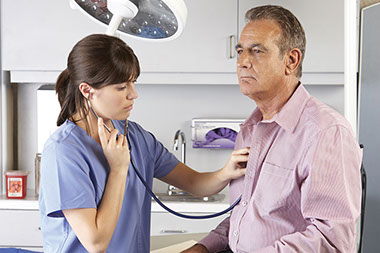
    Image of oler man at the doctor's office.

    Increasing awareness of health problems that can be prevented among men and encourage men and boys to get early detection and treatment of disease and injury.

    6 health tests men need

    Here are 6 essential screening tests all men should receive during their lifetime, according to pathologist and men’s health expert Dr. Thomas Wheeler, Baylor College of Medicine.

    1.Prostate cancer:The prostate specific antigen (PSA) test was developed to help detect prostate cancer in men, but experts now disagree about treating the cancer if detected. Men, starting at age 50, should speak with their docs about the pros and cons of screening. For those in high-risk categories, this conversation should begin at age 45 or earlier.

    2.Blood pressure:It’s a simple and painless test for the “silent killer.” Why? Because high blood pressure has no symptoms. Often, simple diet changes and regular exercise can lower blood pressure. If not, the medications to control blood pressure are well tolerated and do not cost a lot.

    3.Cholesterol:A cholesterol test also is a simple screening test and is advised for men at least every 5 years, or yearly if abnormal.

    4.Colon cancer:This is the third most common cancer in Americans. Beginning at age 50, men should be screened for precancerous polyps and colon cancer. Screening tests include the fecal occult blood test, flexible sigmoidoscopy and colonoscopy.

    5.Skin cancer:Limiting sun exposure and receiving regular check-ups can help men avoid this common cancer including melanoma – a potentially deadly form.

    6.Diabetes:Men 45 years and older should be tested for type 2 diabetes every 3 years. Common screening blood tests are fasting glucose and hemoglobin A1c. Diabetes can be detected early before complications of more advanced disease set in.

    © American Institute for Preventive Medicine

  • Melanoma And Skin Cancer Awareness

    MEDICAL NEWS

    Image of father and child walking on the beach with a big blue umbrella.

    Skin cancer is the most common type of cancer in the U.S. Melanoma, the deadliest form of skin cancer, kills one American every 54 minutes.

    The good news is many cases of skin cancer can be prevented. Before you head outside to enjoy the sunshine and fresh air, know how you can protect yourself and your family from skin cancer.

    *There’s no “safe” tan:Getting a “base” tan before vacation isn’t safe. It increases your risk of skin cancer and aging of the skin. Using self-tanners is the only safe way to get a bronze glow.

    *Seek shade:One of the best ways to avoid UV rays is to love the shade. Trees, umbrellas and buildings are easy ways to keep the sun’s rays off your skin, especially between the hours of 10 a.m. and 4 p.m., when rays are strongest.

    *Get vitamin D safely:Though the skin makes vitamin D when it’s exposed to the sun, there are safer ways to get what you need of this nutrient. Eggs, fatty fish, fortified dairy and juice are good ways to get your D.

    *Use caution with water and snow:Swimming and skiing can expose the skin to more UV rays because the sun reflects off water and snow. Be diligent about sun protection during these kinds of activities.

    *Apply (and reapply) sunscreen:Use a sunscreen labeled “broad spectrum” with an SPF of at least 30. Reapply at least every 2 hours, and after swimming or toweling off.

    *Use protective clothing:Sun protective hats, shirts, scarves and more are available to help block UV rays. Look for clothing and swimwear with a “UPF” rating on the label for protection. Use it with sunscreen for optimum protection.

    Finally, contact your doctor if you notice a new, itchy or painful mole. Moles with irregular shapes and borders or those that are black or multicolored should be checked.

    Sources: U.S. Department of Health and Human Services, American Cancer Society, Skin Cancer Foundation

    © American Institute for Preventive Medicine

  • Meatless Meals (Try It)

    HEALTHY EATING

    Image of yellow and red peppers stuffed with rice and other vegetables.

    You don’t have to become a vegetarian to enjoy a meatless meal. Try working more meatless meals into your week, suggests the Recipe Doctor, Elaine Magee, MPH, RD, author of Food Synergy.

    *  Substitute a soy “meat” product for the meat ingredient in casseroles, stews, tacos, and chili.

    *  Break out a can of beans. They make great meal replacers because they’re super satisfying, with high amounts of protein and fiber. In a nice vegetable stew bursting with beans, you might not notice the meat is missing.

    *  Try a veggie potpie featuring potatoes, peas, mushrooms, and any other vegetables with vegetarian gravy and pie crust.

    *  Make Mexican dishes (burritos, nachos, enchiladas, for example) featuring beans and veggies instead of beef and chicken.

    *  Stir-fry Chinese cuisine with veggies and tofu and serve over rice or noodles.

    *  Stuff bell peppers with a mixture of rice with spices and vegetables plus vegetarian sausage, tofu, or beans to make the dish more satisfying.

    *  Layer lasagna with veggies instead of meat. Spinach replaces ground beef.

    *  A grilled Portobello mushroom can stand in for a burger on a bun.

    © American Institute for Preventive Medicine

  • Managing Financial Stress

    FINANCIAL HEALTH

    Image of hands holding money.

    Do finances keep you awake at night? If so, you’re not alone. More than 75 percent of Americans say money is a big source of stress, according to the American Psychological Association (APA).

    Although we can’t always change our financial problems right away, we can learn to cope with this type of stress. This can help you stay healthier and learn to deal with challenges in a positive way.

    If you’re stressed about money, try these tips:

    *Remain calm and make a plan.It can be easy to get caught up in the panic of the moment when a problem arises. A sudden expense needed for an emergency or stories about a “bad economy” in the news can make things feel hopeless. Instead, think about small steps you can take now to improve your budget. This may be writing down a few specific ways you can cut back on expenses. Or, look at your past spending and make a plan to cut back on things you can do without for now.

    *Look at the positive side of being thrifty.Eating meals at home instead of at a restaurant can be a fun family bonding time. Have everyone help prepare the meal or pick out their favorite dish for the weekly menu. Can’t afford a fitness membership? Exercise with a family member or friend at home and make it fun.

    *Be proud of progress.If you saved $5 by making your coffee at home rather than buying it at a coffee shop, that’s a step in the right direction. Think about the little ways you can save money and how they add up over time. These small successes can get you to your goal.

    *If you can’t pay your bills, ask for help.Banks, utilities and credit card companies will often give you extra time to pay if you’re in a financial crisis. It doesn’t hurt to call and ask.

    *Identify unhealthy behaviors.If you deal with stress by drinking alcohol, smoking or gambling, this will often make matters worse. Not only do these habits cost more money, but they can cost you your health, job and relationships. Healthy ways to cope with stress include exercise, deep breathing, eating a balanced diet, listening to music or calling a friend. If you need help with unhealthy behaviors, ask your doctor or look into community support groups.

    Source: American Psychological Association

    © American Institute for Preventive Medicine