Blog

  • Listening: A Skill Well Worth Mastering

    WELL-BEING

    Image of 2 men talking and smiling.

    You’ve heard the saying, “You’re born with two ears, but only one mouth.” According to the Society for Human Resource Management, being a good listener has many advantages at work and at home. You can come up with better ideas, work with others more easily, and connect with people more deeply.

    So how is it done? Try these tips:

    *  Don’t interrupt.

    *  Don’t offer a solution or advice unless the person asks for it.

    *  Don’t think about your response while the other person is still talking. Hear them all the way through.

    *  When the other person is finished, repeat what they said in your own words. “So what I hear you saying is…”

    *  Don’t make it about you. Remember the other person wants to tell you their story first. Stop yourself from turning it into a discussion about yourself or your problem.

    Having this valuable skill can enhance all the professional and personal relationships in your life.

    © American Institute for Preventive Medicine

  • Like It Loud? Your Ears Don’t

    WELL-BEING

    Image of man listening to music with headphones.

    What do a lawn mower, a motorcycle, and a music player have in common? They can all cause permanent hearing loss.

    Many people assume that only extremely loud sounds, such as gunshots, can damage the ears. But any loud noise, such as power tools, headphones turned up too loud, lawn equipment, or a concert, can lead to hearing loss. This is known as noise-induced hearing loss.

    Noise-induced hearing loss often happens gradually, so you don’t realize the damage that’s being done over time. For instance, being around loud machinery every day or listening to loud music in earphones regularly can cause hearing damage that adds up. The National Institutes of Health states that 26 million Americans between the ages of 20 and 69 have hearing loss caused by excessive noise.

    The Centers for Disease Control and Prevention (CDC) says anything over 85 decibels can damage hearing. The louder it is, the faster it can cause hearing loss if used regularly and/or for long periods. Normal conversation is 60 decibels, and a hair dryer is around 90.

    Save your hearing

    The best way to prevent noise-induced hearing loss is to avoid loud noises whenever you can. But, this may not be possible if your job requires you to be around certain equipment. If you can’t avoid it, always wear proper hearing protection. This includes earplugs and/or ear muffs that have a noise reduction rating (NRR) listed.

    If you notice you have trouble hearing, talk to your doctor.

    © American Institute for Preventive Medicine

  • Lightening The Load: Dividing Household Chores

    FAMILY LIFE

    Image of couple ready to clean.

    Chores are a part of daily life for families. And, the way they are divided can have a big impact on your family relationships. A survey by the Pew Research Center found that sharing household chores was among the top three things that make a marriage work.

    This can be easier said than done in many households. Many families have to work outside the home, attend kids’ activities and deal with other demands every day. With all these things taking up time, chores may be an additional source of stress.

    First, have a good talk

    It’s easy to get angry or upset with someone for not doing enough chores.

    But before you do this, stop and think. Did you clearly tell them when and how you wanted this chore done? Have they been busy with other activities?

    Be kind and respectful when talking about chores; then you may find that the other person is more willing to take part. Try to look at things from their perspective. Perhaps they’ve been overwhelmed with other things or simply didn’t know that something needed to be done. Or, if you feel like you’ve been doing most of the work, ask if others can help take some things off your plate. Be specific with which chores you would like them to do and when.

    Get the kids involved

    Even small children can do chores. Toddlers can pick up toys and help make their beds. Preschool kids can help clean up spills, feed a pet and even take their laundry to the hamper. Older children may be able to wash dishes, and do laundry and fold clothes.

    Younger children often do well with a chore list so they know what is expected of them. If they can’t read yet, use pictures and stickers.

    Set aside a few minutes

    One strategy that works for many families is finding just 10 or 15 minutes a day to do some basic chores. This can be anything that needs to be done. Examples include picking up and putting things away, cleaning a bathroom or running the vacuum. You can even set a timer so it doesn’t feel so overwhelming. Make it fun by turning on music while you clean. Or, make it a “race” with little ones: who can pick up their room first? When the time is up, everyone can feel good about helping out around the house.

    © American Institute for Preventive Medicine

  • Life After Stroke: 9 Tips For Caregivers

    MEDICAL NEWS

    Image of older women in wheelchair being helped by relative.

    A stroke can impact a person’s life in many ways. If you are caring for someone who recently had a stroke, you may be overwhelmed. With more than 7 million stroke survivors living today, you’re not alone. You can make life after a stroke a little easier for yourself and your loved one with these tips.

    1. Ask questions. If you’re not sure about a medication or other needs, talk to the doctor, nurse or therapist. Take notes, if possible.

    2. Focus on stroke prevention. People who have a stroke may be at higher risk of having another one. A healthy diet, exercise, regular doctor visits and taking medications as prescribed can help reduce this risk.

    3. Take falls seriously. People who have had a stroke may be more likely to fall. Seek medical care right away if a fall causes severe pain, a head injury, bruising or bleeding. Talk to a doctor if a fall happens more than once, even if it’s minor.

    4. Keep an eye out for problems like dizziness, balance problems or trouble walking. This may mean the person needs physical therapy to help with their recovery and improve their mobility.

    5. Keep track of progress. Stroke recovery may happen quickly, or it may take months or years. Write down progress your loved one has made each day or week. This can be helpful to the doctor during follow up visits.

    6. Be aware of depression. Up to 50 percent of stroke survivors get depression. This can harm their recovery. Talk to your loved one’s doctor if you notice they have symptoms like a loss of interest in activities, sadness or hopelessness.

    7. Don’t go it alone. A number of resources can help both you and your loved one with stroke recovery. Many support groups for survivors and their caregivers are available. Ask your case manager or social worker for help finding these groups.

    8. Know your loved one’s insurance benefits. There may be limits to how long insurance will pay for stroke rehabilitation. Be sure you are aware of the coverage limits and any costs. Ask your case manager or social worker if you’re not sure how to do this.

    9. Take a break when you can. Even the best caregiver needs some time off. Find a trusted friend or family member who can fill in for you. Try to get exercise, such as walking, to help combat stress and improve your sleep. A regular meditation practice may also help.

    Source: American Stroke Association

    © American Institute for Preventive Medicine

  • Let’s Move

    BE FIT

    Image of women ice skating.

    Tis the season to-get active. Here are a few activities and steps suggested by the government’s “Let’s Move” initiative for active families:

    *  Give children toys that encourage physical activity such as balls, kites, and jump ropes.

    *  Encourage children to join a sports team or try a new physical activity.

    *  Limit TV time and keep the TV out of a child’s bedroom.

    *  Allow a safe walk to and from school a few times a week.

    *  Walk around the block after a meal.

    *  Make a new house rule: no sitting still during TV commercials.

    *  Find time to spend together doing  a fun activity: family park day, swim day, or bike day.

    *  Issue a family challenge to see who can be the first to achieve a physical activity goal.

    *  Encourage schools to hold recess before lunch to increase physical activity before mealtime.

    *  Volunteer to help with after-school physical activity programs or sports teams.

    © American Institute for Preventive Medicine

  • Learn To Love Exercise

    BE FIT

    Image of gym shoes with laces shaped as a heart.

    We know exercise improves our health and well-being. So why do so many of us struggle to get and stay active?

    Maybe we need to look at exercise in a different way. Look at it as something you want to do for yourself and not as a chore or something you have to do. You can look forward to exercise, and even learn to love it, with these tips:

    *Think about who you are.If you are social, look into group classes and activities. “Home bodies” might enjoy using exercise DVDs or online programs in their living room. If you enjoy nature, use your neighborhood or local walking paths to get fresh air. Sports fans might like to join a softball or soccer team.

    *Branch out.Take a chance on a new activity such as dance classes, rock climbing or water aerobics. You may discover a new way to get exercise that is fun and exciting for you.

    *Be a kid again.If you loved basketball, skating or swimming as a child, who says you can’t do it now? Look for local adult clubs or gatherings that include your favorite childhood activities.

    *Add variety.Being bored with exercise will lower your motivation. Change things up, such as walking two days a week and an aerobics or swimming class on the weekend.

    *Find your rhythm.Your favorite music can help you enjoy a walk, jog or weight lifting session. Load your favorite upbeat songs on a music player or smartphone and take it along for your workout. Be careful not to turn it up too loud. You still need to hear what is going on around you. And, prolonged use of headphones at high volumes can cause hearing loss.

    Source: National Institutes of Health

    © American Institute for Preventive Medicine

  • Learn How To Check Your Credit Report

    FINANCIAL HEALTH

    Image of finger pointing to the words 'Credit Report'

    The Consumer Financial Protection Bureau says everyone should check their credit report at least once a year. The information on your credit report could affect your ability to get a mortgage, car loan, a credit card or other loans. It can also affect the interest rate you get. Usually, a higher credit score makes it easier for you to get a loan and a lower interest rate. Most credit scores range from 300-850.

    You are entitled by law to a free report from all three credit reporting agencies (Equifax, Experian and TransUnion) once every 12 months. Take advantage of it – and check it over carefully when you receive it.

    But what should you look for when you get your report? Errors can happen, so be on the lookout for:

    *  Wrong name, phone number or address

    *  Accounts that don’t belong to you (this can happen when two people have similar names, or as a result of identity theft)

    *  Closed accounts reported as open

    *  Being listed as owner of an account where you are only an authorized user

    *  Accounts incorrectly reported as late or delinquent

    *  Wrong dates of payments, when the account was open or delinquency dates

    *  Same loan or debt listed multiple times (possibly with different names)

    *  Past errors that were corrected that may show up again

    *  Incorrect current balance or credit limit

    *  Accounts that appear more than once with different creditors listed (especially in the case of delinquent accounts or accounts in collections)

    If you find errors, contact:

    *  The credit reporting company who sent you the report, or

    *  The creditor or company that provided the incorrect information. This is known as the “furnisher” of the information.

    Your credit report tells you how to dispute inaccurate information. Sample dispute letters are available atwww.consumerfinance.gov. Go to Consumer Tools, then click on Credit Reports and Scores. You can use these letters if you find something incorrect on your credit report.

    How do I get my report?

    Many websites claim to offer free credit reports. But, some of them are trying to sell other products or services. To get your free credit report authorized by federal law, visit:

    *  AnnualCreditReport.com, or

    *  Call 1-877-322-8228

    This website offers free reports only, not scores. Your credit score is available for a fee. You do not have to buy any products or services advertised onannualcreditreport.com.

    You can also contact the credit agencies directly if you have questions or problems with your report:

    *  Equifax: 1-866-349-5191

    *  Experian: 1-888-397-3742

    *  TransUnion: 1-800-916-8800

    © American Institute for Preventive Medicine

  • Latex Allergy

    MEDICAL NEWS

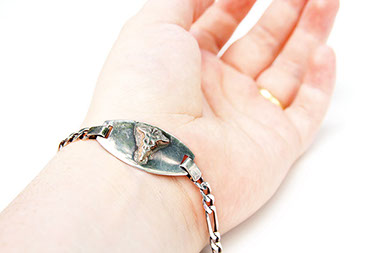
    Close up image of a medical ID.

    If you are allergic to latex, you usually know it. You can react with sneezing or worse symptoms because your body is reacting to proteins in natural rubber latex, which is made from the rubber tree.

    The Asthma and Allergy Foundation of America suggests you do this:

    *  Always wear a medical ID that alerts others about your allergy if you need emergency care.

    *  Ask doctors, dentists, and others who examine you to wear latex-free exam gloves. Carry gloves with you to give your dentist or doctor.

    *  Check labeling. Do not assume a product labeled “hypoallergenic” is latex-free.

    *  Know that latex can be found in some elastic in clothing, rubber bands, condoms, balloons, disposable diapers, and many more products.

    *  If you’re allergic to latex, you may have reactions to bananas, kiwi, and cantaloupe, which contain some of the same allergens found in latex.

    © American Institute for Preventive Medicine