Blog

  • Is Your Job A Pain In The Neck?

    WORK LIFE

    Image of business man holding his neck.

    No, really, if you sit all day in front of a computer at work, your computer workstation may be the cause of your nagging neck and shoulder pain. And not surprising, said Dr. Vincent Fortanasce, a rehab specialist and author of End Back & Neck Pain, “The setup of your computer workstation can play a large factor in your ability to stay symptom free.” He and his coauthors point out 3 common workstation mistakes people make that lead to pain.

    *  Overreaching injuries occur because items on your desktop such as your keyboard or mouse, phone, documents, and other desk items are not on the same level surface. So you reach to grab that stapler or strain to pick up files.The solution: rearrange the desktop, adjust your chair, put the keyboard and mouse on the same surface, put things you use the most closest to you.

    *  Use of incorrect heights refers to the up and down motions and placement of items. Incorrect height occurs as a result of the positioning of the chair, including the armrests, seat back, seat pan, desktop where work is placed, monitor, and the surface holding the keyboard and mouse. Incorrect height may also refer to furniture and features of the work area that are not adjustable.The solution: a proper chair is of critical importance. Can you adjust it? Do you have to reach above your head to get items in shelves above your desk? Is the top line of the text displayed on your monitor at eye level?

    * Unbalanced work area refers to twisting motion you do to reach items. If you’re right handed, and you use your right hand for all desktop activities such as answering the phone, you may have pain on your right side. Do you twist to see your monitor?The solution: Place your monitor right in front of you. Are items you use directly ahead of you?

    Back, neck, and arm pain are often the result of repeated actions, over and over, over time. Assess what’s causing your pain and adjust your workstation.

    © American Institute for Preventive Medicine

  • Is Your Home Safe From Radon?

    MEDICAL NEWS

    Image of hand holding an illustration of a home.

    Indoor radon is the second leading cause of lung cancer in the U.S. Breathing it over long periods can present a significant health risk to families all over the country.

    Radon is an invisible radioactive gas that seeps into homes undetected through foundation cracks. It can reach harmful levels if trapped indoors. It travels up from underground sources of uranium in the earth’s crust.

    The radon threat is preventable with some simple steps. In existing homes, families can begin protecting themselves by buying an easy-to-use radon test kit to find out if a high level exists. If so, a high level might be lowered simply with a straight-forward radon venting system installed by a contractor.

    In new homes, builders can easily and economically include radon-resistant features during construction. Home buyers should ask for these. The EPA also recommends that home buyers ask their builder to test for radon gas before they move in.

    According to the EPA, 1 in every 15 homes nationwide has a high radon level. Test your home for radon every 2 years. Retest for it any time you move, make structural changes to your home, or occupy a previously unused level of a house.

    © American Institute for Preventive Medicine

  • Is Your Heart Older Than You?

    MEDICAL NEWS

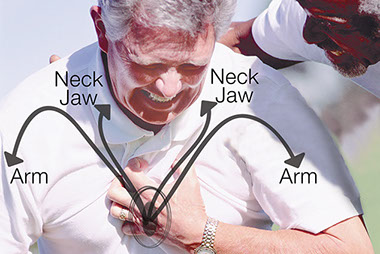
    Image of man suffering a heart attack.

    The year you were born reveals your age. It’s part of your identity. But despite the number on your driver’s license, your heart may be telling a different story.

    According to the Centers for Disease Control and Prevention, 75 percent of Americans have hearts that are older than their actual age. For men, the average heart age is 8 years older, and for women, it’s 5 years. This means many people are at high risk of heart attacks and strokes – even if they don’t know it.

    Your “heart age” is based on certain risk factors you may have for heart disease. This includes lifestyle habits, your body mass index, and certain health problems. You can lower your heart age by adopting heart-healthy habits such as a healthy diet, regular exercise, and not smoking.

    Signs of a heart attack

    *  Pressure, squeezing, or pain in the chest

    *  Pain in the jaw, neck, upper back, arms, or abdomen

    *  Trouble breathing

    *  Feeling dizzy or nauseated

    *  Cold sweats

    If you experience these symptoms, call 911 or have someone take you to the emergency room.

    Source: American Heart Association

    © American Institute for Preventive Medicine
  • Is Your Desk Dining Making You Sick?

    SELF-CARE CORNER

    Image of business man eating lunch at his desk.

    A whopping 83% of Americans typically eat in their office or cubicle in an effort to save time and money. But you’re “out to lunch” if you don’t practice safe food handling.

    According to a new survey by the American Dietetic Association* and ConAgra Foods’ Home Food Safety program, many working Americans eat breakfast and lunch and snack throughout the day at their desks. Best defense:

    *  Wash your hands and clean the desktop. Only half of all Americans say they always wash their hands before eating lunch. In order to reduce the risk of foodborne illness, wash your hands with soap and warm water before and after handling food and keep your desk stocked with moist towelettes or a hand sanitizer for those times you can’t get to the sink. A University of Arizona study found that the average desktop has 100 times more bacteria than a kitchen table and 400 times more than the average toilet seat.

    *  Clean the office fridge. Even though virtually all workplaces now have a refrigerator, is it ever cleaned? Take turns and have a sign-up sheet. And stick a refrigerator thermometer in it to ensure food is safely stored below 40ºF. (Don’t let perishable foods sit out for more than 2 hours.)

    *  And that office microwave? Leftovers and frozen meals are easy, quick, and inexpensive lunch options. But make sure you zap them long enough to kill harmful bacteria. Reheat leftovers to 165ºF.

    *The American Dietetic Association* is now known as the National Academy of Nutrition and Dietetics.

    © American Institute for Preventive Medicine

  • Is Yoga For You?

    BE FIT

    Close up image of female hands while in a yoga pose.

    Yoga is an ancient Indian practice that engages the mind and body. There are many different forms of yoga, and the type you choose should suit your health and fitness goals. Check out these more popular types of yoga.

    Hatha

    Hatha yoga is a general term for any type of yoga. But in general, hatha classes focus on perfecting and holding yoga poses and proper breathing. It can be relaxing, as it is generally slower paced. You may not get an aerobic workout from hatha yoga, but it can improve your strength, balance and flexibility. Hatha classes are usually geared towards beginners.

    Vinyasa

    This is a faster-paced style of yoga that moves quickly from pose to pose, sometimes with upbeat music. You may work up a sweat and get a good cardiovascular workout. Before trying vinyasa, be sure you are familiar with basic yoga poses so you can follow along. It is often suitable for all skill levels, as the poses can be modified to fit your comfort and ability.

    Ashtanga

    This style uses the same six poses in an identical order or sequence. It can be repetitive, but allows people to follow a set routine. This tends to be a more fast-paced and vigorous style of yoga. You may get hot and will need to drink plenty of fluids.

    Bikram

    Bikram yoga, sometimes called hot yoga, is done in a heated room and is designed to make participants sweat heavily during the class. Bikram involves a set of 26 poses and two breathing exercises during a 90-minute class. Though it’s a predictable sequence, the heat makes it a strenuous activity. Though studies haven’t proven its safety or risks for sure, it is not right for everyone. Always ask your doctor before trying any kind of hot yoga. The excess heat may cause heat-related illnesses in some people.

    © American Institute for Preventive Medicine

  • Is Multitasking Really Helpful?

    WORK LIFE

    Concept image of man running with laptop.

    It seems that today’s world is built for multitasking. With smartphones and tablets, you can check your email, surf the web, and chat from nearly anywhere. And at work, you may be typing while on a conference call or checking messages during a meeting.

    But the American Psychological Association (APA) says this culture of multitasking could actually be harmful, not helpful. The brain is only capable of doing one thing at a time, and therefore, multitasking in itself is not truly possible. Your brain actually switches back and forth between tasks when you think you’re multitasking, says the APA. This process of switching costs you time, and can make you less efficient.

    In addition, Harvard Medical School says multitasking leads to errors and mistakes at work. Maybe you’re shifting back and forth between activities or thinking about something else (like the dinging of your smartphone) while you’re supposed to be doing a task. As a result, you may be more likely to miss details or forget to do things.

    So how do you break the multitasking habit? Find your main sources of distraction and put them aside. If your smartphone is the problem, try putting it in the next room or out of sight while you work on a task. At the very least, silence alerts you don’t need right away such as emails and text messages.

    If the beeping of your email at work is keeping you from focusing on your task at hand, consider closing your email program and only checking it at designated times.

    Cutting out the main sources of distraction can help you stay focused and productive at work or at home.

    © American Institute for Preventive Medicine

  • Is It The Flu?

    MEDICAL NEWS

    Image with the words "Fight the Flu" written in a banner.

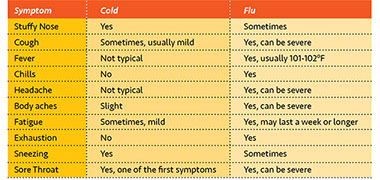
    Influenza, or the flu, circulates every winter and leaves thousands of people sick with a cough, aches, fever, and fatigue. The flu is much more serious than a cold: thousands of people die each year from flu-related complications. Unfortunately, many people don’t realize they have the flu until it’s too late. By then, they may have exposed people at work, school, or other public places. Here’s how to know if you have the flu, or just a cold:

    Chart showing symptoms of the cold vs the flu.

    When you come down with a cold, your symptoms usually appear very gradually over a few days. They often start with a sore throat followed by a runny nose. The flu often hits hard, very quickly. Symptoms appear suddenly and the exhaustion and aches can quickly become severe.

    If in doubt, try to stay home and stay away from others when you’re sick. In particular, try to avoid exposing young children and older adults, who may be more likely to suffer from flu-related problems. Wash your hands frequently and encourage others in your household to do the same.

    If you think you have the flu, call your doctor right away. You may be able to take an antiviral medication (brand name: Tamiflu), which can decrease your symptoms and the amount of time you are sick. Antiviral medications should be taken within 48 hours of the start of symptoms.

    Finally, talk to your doctor about getting a flu shot each year: it’s the number one way to help avoid getting – and spreading – the flu!

    Sources: Centers for Disease Control, U.S. Department of Veterans Affairs

    © American Institute for Preventive Medicine

  • Is It Anxiety – Or Just Stress?

    SUCCESS OVER STRESS

    Image of man using computer.

    Many people have used the word “anxiety” to simply mean they were worried or stressed about an event. But, are anxiety and stress really the same thing?

    According to the National Institutes of Mental Health, anxiety can be a different – and serious – mental health illness that goes beyond just stress. How do you know if it’s more than just daily stress? Here are some key differences:

    *Length of time:The worry goes on for months without relief.

    *Level of worry:You regularly have attacks of intense fear and worry about when the next attack will happen. These episodes may make you feel out of control.

    *Interferes with life:People with anxiety may avoid social situations, have trouble at work, and feel self-conscious around other people.

    *Physical symptoms:Anxiety can make it difficult to sleep and may cause intense fatigue, sweating, trembling or nausea.

    If you’re worried that you have more than just typical stress, seek medical care. Many people with anxiety can get relief with their doctor’s help. Possible treatments include:

    *Talk therapy:A mental health professional can talk with you about your anxiety and help you find ways to cope.

    *Self-help and support groups:Many people find that talking to others with anxiety (in person or online) is helpful.

    *Stress management:Avoiding caffeine, alcohol, and some medications can help improve anxiety symptoms. This is often used in combination with other treatment methods.

    *Medicines:Many medicines can treat anxiety, but they are not a “cure.” They can help calm symptoms of anxiety so a person can function in daily life.

    Diagnosing anxiety isn’t always simple to do, but talking with a doctor about your symptoms is an important first step. From there, you can decide if treatment is needed.

    © American Institute for Preventive Medicine

  • Is Dairy Scary? Eating Right With Lactose Intolerance

    HEALTHY EATING

    Image of a variety of dairy products.

    Does dairy bother your belly? Millions of people have lactose intolerance, or the inability to fully digest lactose. Lactose is a natural sugar found in dairy products like milk, cheese and ice cream. When lactose isn’t properly digested, it leads to digestive problems.

    Symptoms of lactose intolerance

    A person who has lactose intolerance may notice one or more of these signs after eating dairy products:

    *  Bloating, swelling of the abdomen

    *  Stomach ache

    *  Cramps

    *  Diarrhea

    *  Nausea

    *  Gas

    Some people notice the symptoms within minutes, while others don’t notice it until a few hours later.

    Different levels of intolerance

    The level of intolerance can vary widely from person to person. Some people can eat small amounts of dairy without a problem. For instance, they may be able to eat a piece of cheddar cheese or a serving of yogurt. Others, however, notice bloating and discomfort when they drink a few sips of milk.

    Finding out your tolerance level can be a bit of trial and error. If you notice symptoms after eating two pieces of pizza with cheese, for instance, try a smaller serving next time until you don’t notice any problems.

    Can I still eat dairy?

    Many people with lactose intolerance can still eat dairy.

    *Start with small amounts.Many people can tolerate dairy if they eat small portions and gradually increase amounts.

    *Eat dairy only with meals.Eat dairy only with other foods to help it digest.

    *Choose lactose-free milk.Many lactose-free milk and ice cream products can be found in grocery stores.

    *Consider lactase supplements.The enzyme lactase helps digest lactose. Ask a doctor before using these. They may not be safe for everyone, including small children.

    Talk to a doctor or dietitian

    If you have ongoing stomach pain or diarrhea, talk to your doctor. If you aren’t eating any dairy products, ask about seeing a dietitian who can give you diet advice to get the nutrients your body needs, especially calcium and vitamin D.

    Sources: American College of Gastroenterology, National Institutes of Diabetes and Digestive and Kidney Diseases

    © American Institute for Preventive Medicine

  • Is Cinnamon Good For Your Health?

    HEALTHY EATING

    Image of cinnamon.

    Cinnamon is often used in sugar-loaded treats like cinnamon rolls and lattes. And though it’s a popular spice for desserts, it’s not necessarily an unhealthy choice. The spice has been used for thousands of years, and some recent studies suggest cinnamon may even have health benefits:

    *  A study in the journal Diabetes Care studied 60 people with type 2 diabetes. Some were given cinnamon capsules, and others were given a placebo (a fake pill that contained no cinnamon). Those who consumed the cinnamon for 40 days had lower levels of blood sugar, triglycerides, LDL (“bad”) cholesterol, and total cholesterol.

    *  A study in the Journal of Nutrition suggests that cinnamon and other spices may help reduce triglyceride levels after eating a fatty meal.

    *  The Journal of Neuroimmune Pharmacology published a study that suggests cinnamon may be able to protect the brain against changes that can cause Parkinson’s disease.

    Want to spice up your health with cinnamon? Try adding it to your favorite foods or drinks in place of sugar. Its natural flavor can be a welcome addition to coffee, tea, oatmeal, fruit, and even chili.

    High doses of cinnamon can be dangerous, though. Be sure to talk with your doctor before taking cinnamon or other natural supplement.

    © American Institute for Preventive Medicine