Blog

  • Is Bad Breath A Health Problem?

    WELL-BEING

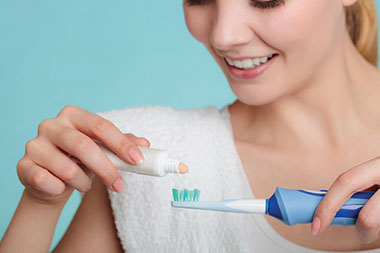
    Image of women placing tooth paste on tooth brush.

    After eating foods like onions or garlic, your mouth may smell less than pleasing to those around you. Usually, brushing, flossing and using mouthwash or sugar-free mints can get your mouth fresh again. Although bad breath is sometimes just bad luck, it can also be a sign of a health problem.

    When bad breath is normal

    Many people have bad breath in the morning. Even if you brushed and flossed well before bed, you may not have great-smelling breath when you wake up. This is because bacteria in the mouth multiply and make sulfur compounds while you sleep. These sulfur compounds usually smell stinky.

    Morning breath may be worse than normal if you slept with your mouth open. This is because the bacteria and sulfur compounds thrive in a dry mouth. If you have a stuffy nose from a cold, your morning breath may be worse for a few days. Floss at night before bed to help minimize morning breath.

    Other ways to help prevent dry mouth include drinking plenty of water throughout the day and avoid using tobacco products.

    Tooth decay and gum disease

    Tooth decay, also known as cavities, can smell bad because bacteria can live inside the holes or cavities in the teeth.

    Not brushing and flossing every day can lead to gum disease. This is sometimes called gingivitis or periodontitis. With gum disease, sticky bacteria called plaque collects in the mouth. Plaque smells bad, and people with gum disease usually have more plaque than normal.

    Besides persistent bad breath, signs of tooth decay and gum disease include:

    *  Tooth pain

    *  A very sensitive tooth

    *  Red, swollen or bleeding gums

    *  Loose teeth

    *  Gums pulling away from the teeth

    See your dentist if you notice these problems. Gum disease and cavities can be treated, but it’s better if you catch these problems early. Most people should see their dentist every six months for a checkup and cleaning.

    Health problems and bad breath

    Bad breath can be a sign of a health problem. If bad breath continues despite good dental care, it may be a sign of a sinus or throat infection. Breath that smells fruity or like rotten apples can be a sign of diabetes. In rare cases, breath that smells like ammonia or rotten eggs can be a sign of a serious kidney or liver problem.

    Your breath may be trying to tell you something. See your dentist and doctor if you’re concerned about bad breath so you can find out the cause and get treatment if needed.

    Sources: American Dental Association, National Institutes of Health

    © American Institute for Preventive Medicine
  • Is 3D As Dangerous As The Warnings?

    WELL-BEING

    Illustration of a TV with wild animlas appearing to come out of the television set.

    Have you read the warnings on a 3D TV or gaming system? Can 3D actually cause altered vision, lightheadedness, twitching, nausea, disorientation, especially for children and the elderly?

    Through these disclaimers, companies may have been scaring away the customers they seek, but medical evidence does not back up the claims.

    Professional eye photographer Timothy Bennett of Penn State Hershey Eye Center said there are no health issues associated with 3D imaging. Some people experience headaches or dizziness, but these are temporary. The images may be disorienting, but as soon as you stop looking at 3D, the feelings clear up.

    He recommends sitting far from the screen, especially if you are sensitive, and take breaks from gaming or watching 3D TV.

    Some people experience headaches or dizziness, but these are temporary.

    © American Institute for Preventive Medicine
  • Iron In Foods: Why It Matters

    HEALTHY EATING

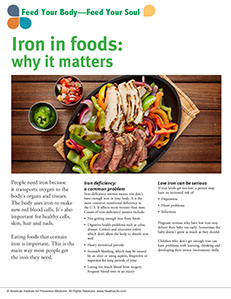
    Image of grilled chicken and steak.

    People need iron because it transports oxygen to the body’s organs and tissues. The body uses iron to make new red blood cells. It’s also important for healthy cells, skin, hair and nails.

    Eating foods that contain iron is important. This is the main way most people get the iron they need.

    Iron deficiency: a common problem

    Iron-deficiency anemia means you don’t have enough iron in your body. It is the most common nutritional deficiency in the U.S. It affects more women than men. Causes of iron-deficiency anemia include:

    *  Not getting enough iron from foods

    *  Digestive health problems such as celiac disease, Crohn’s and ulcerative colitis which don’t allow the body to absorb iron well

    *  Heavy menstrual periods

    *  Stomach bleeding, which may be caused by an ulcer or using aspirin, ibuprofen or naproxen for long periods of time

    *  Losing too much blood from surgery, frequent blood tests or an injury

    Low iron can be serious

    If iron levels get too low, a person may have an increased risk of:

    *  Depression

    *  Heart problems

    *  Infections

    Pregnant women who have low iron may deliver their baby too early. Sometimes the baby doesn’t grow as much as they should.

    Children who don’t get enough iron can have problems with learning, thinking and developing their motor (movement) skills.

    © American Institute for Preventive Medicine

  • Ipad Pain

    WELL-BEING

    Image of man using a tablet.

    When your iPad or other tablet causes pain in the neck and shoulders –

    *  Use a case that positions the device at a comfortable viewing angle.

    *  Routinely shift hands and weight. Stand up if seated, or sit down if standing.

    When using a laptop or desktop computer, follow the same tips for a tablet plus:

    *  Use an external keyboard.

    *  Keep shoulders relaxed and elbows close to the body.

    *  Keep hands, wrists, forearms, and thighs parallel to the floor.

    *  Take a break and change position every 15 minutes.

    Holding a tablet computer too low, say on the lap, forces the neck to bend forward too much, straining and possibly even injuring muscles, nerves, tendons, ligaments, or spinal discs. Simply placing a tablet on a table propped at an angle in a tablet case can reduce neck strain and potential pain, according to research conducted at the Harvard School of Public Health.

    © American Institute for Preventive Medicine

  • Improve Your Mood With Exercise

    BE FIT

    Image of older women walking on bridge along a lake.

    You probably know that exercise has many health benefits. It can reduce your risk of heart disease, type 2 diabetes, and even cancer. But, did you know it can also help your mental health?

    Studies have shown that regular exercise such as walking can improve your mood, according to the American Psychological Association. And it doesn’t take long to feel the effects. Within just a few minutes of starting that walk, many people report more positive mental health. It has also been shown to improve mild to moderate depression.

    If that’s not enough, the APA also says exercise can help people who have anxiety. Regular exercise can help your body calm the “fight-or-flight” feelings that occur when someone gets anxious or overly stressed. And, it can help combat everyday stress by releasing chemicals called endorphins. These effects also help you sleep better, which can help you feel better mentally.

    With all the benefits of exercise, get moving!

    © American Institute for Preventive Medicine

  • Important Health Screenings For Men

    WELL-BEING

    Image of male doctor.

    Even if you feel fine, you should see your doctor for regular health screenings. Many health conditions cause no symptoms in their earliest stages. Screenings can help you get earlier treatment and a better outcome. The National Institutes of Health recommends the following tests for men:

    Abdominal aortic aneurysm:

    Adults ages 65 to 75 who have smoked may need this screening once. Others should consult with their doctor.

    Blood pressure:

    Every one to two years, depending on your risk factors or health conditions.

    Cholesterol:

    Beginning at age 35, every five years if levels are normal. Men with high blood pressure, other risk factors for heart disease or certain health conditions may need to get screened sooner or more often.

    Colon cancer:

    Screening may begin at age 50, or earlier, if you have a family history of the disease, certain risk factors or certain health conditions.

    Diabetes:

    Every three years beginning at age 45. Earlier and/or more frequent testing may be advised if you have certain risk factors.

    Eyes:

    Every one to two years, or more often if you have glaucoma, have certain eye conditions or if your doctor recommends it.

    Hearing:

    Adults over age 65 may need a hearing test if signs of hearing loss are present.

    Lung cancer:

    Annual screening may be recommended for adults aged 55 to 80 years who have a 30 pack-year (smoke one pack per day for 30 years) smoking history AND currently smoke or have quit within the past 15 years.

    Osteoporosis:

    Discuss screening with your doctor if you are over age 50.

    Physical exam:

    Height, weight and Body Mass Index (BMI) should be measured at well visits.

    Prostate cancer:

    Discuss screening with your doctor. Men with certain risk factors may need screenings beginning at age 45.

    Sexually transmitted infections:

    Depending on age, lifestyle and medical history, you may need to discuss with your doctor about getting tested for chlamydia, syphilis, HIV and other infections.

    Men of all ages and health statuses need regular health screenings. Call your doctor to schedule your well visit!

    © American Institute for Preventive Medicine
  • The Importance Of Portions: Size Matters

    HEALTHY EATING

    Image of 2 bagels.

    If it seems like food portions are bigger today than they were years ago, it’s not your imagination. Health experts say that food sizes – and obesity rates – have grown in the last 20 years. Focusing on healthy foods is important. But portion sizes are also an important factor to think about when you eat. Whether it’s a cookie or a plate of spaghetti, how much you eat is just as important as what you eat. After all, the total calories you consume each day can mean the difference between gaining weight and losing it.

    Reality check: Portions are bigger today

    Take a look at these food comparisons, and find out what you need to do to burn off those extra calories.

    Bagel

    20 years ago: 140 calories, 3-inch diameter

    Today: 350 calories, 6-inch diameter

    Calorie difference: 210 calories

    You have to rake leaves for 50 minutes to burn the extra 210 calories. (Based on 130-pound person)

    Cheeseburger

    20 years ago: 330 calories

    Today: 590 calories

    Calorie difference: 260 calories

    You have to lift weights for 1.5 hours to burn the extra 260 calories. (Based on 130-pound person)

    Soda

    20 years ago: 85 calories, 6.5 ounces

    Today: 250 calories, 20 ounces

    Calorie difference: 165 calories

    You have to work in the garden for 35 minutes to burn 165 calories. (Based on 160-pound person)

    Source: National Heart, Lung, and Blood Institute Obesity Education Initiative

    © American Institute for Preventive Medicine

  • Immunize Your Child

    MEDICAL NEWS

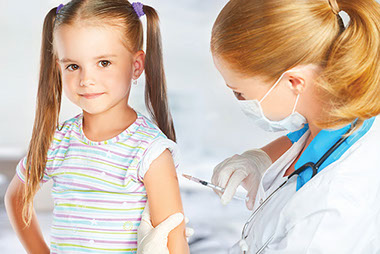
    Image of child receiving a shot by a doctor.

    As summer comes to a close, it’s time to think about going back to school. One of the most important things you can do for your child’s health is to make sure he or she is up-to-date on vaccines, which can protect against many dangerous diseases.

    Vaccine requirements

    Many states require that kids have certain vaccines (shots or immunizations) before they can come to school. The best way to ensure your child is fully protected is to talk to your child’s doctor. You can also find information about vaccines on the Centers for Disease Control website atwww.cdc.gov/vaccines.

    Some diseases, such as mumps and polio, have become very rare thanks to vaccines. But outbreaks of some diseases are still happening, and immunization is the best way to protect your child from a serious illness. For instance, 2014 had a record number of measles cases and many outbreaks of whooping cough have been occurring in schools across the U.S.

    Start vaccines on time

    Babies, toddlers and preschoolers get a number of vaccines early in life to help protect them from 14 life-threatening illnesses. This includes measles, mumps, whooping cough and more, which used to be common – and very dangerous – for young children.

    But vaccines aren’t just for little ones. As children get older, they may need “boosters” to help protect them as the first vaccine begins to wear off. And, certain vaccines like the flu shot need to be given every year for protection.

    Vaccines protect everyone

    When disease outbreaks happen, a vaccinated person is much less likely to get sick. If they do get it, they usually get a much milder case.

    Getting all vaccines on time means you are protecting your own child and others around them. This is known as “herd immunity.” When 90 to 95 percent of people in a community are vaccinated, it’s almost impossible for these dangerous diseases to spread. But when vaccine rates go below 90 percent, diseases can take hold and spread. This weakens the immunity of an entire community.

    If you’re not sure if your child needs vaccines, call your child’s doctor today and beat the back-to-school rush. Catch-up vaccines can be given, if needed, even if your child missed some shots before.

    Concerned about vaccines?

    The U.S. supply of vaccines is extremely safe and effective. When reading something about vaccines, be sure the information comes from a credible source with data to prove the statements. Many false claims have been made about vaccines. Some of these false claims can be found on the Internet even after they’ve been proven wrong. If you have questions, ask your child’s doctor or visithttps://ivaccinate.org

    to get answers to many common concerns.

    © American Institute for Preventive Medicine

  • If You Help Others, You’Ll Be Healthier

    WELL-BEING

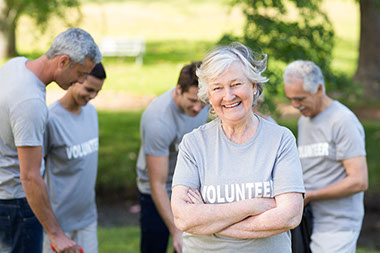
    Image of a group of volunteers.

    The benefits of volunteering or helping other people seem to pay off for the giver and not necessarily the receiver.

    Providing tangible help to others protects your health and may lengthen your life, according to a 5-year study by researchers at 3 universities.

    The lead researcher Dr. Michael J. Poulin, assistant professor of psychology at the University of Buffalo, says, “Giving assistance to others may offer health benefits to the giver by buffering the negative effects of stress.” The study was published in the American Journal of Public Health.

    Here’s why giving works. The study subjects were people from Detroit. They told researchers they had experienced stressful events during the past year such as serious illness, burglary, job loss, financial troubles, or death of a family member. They also reported the amount of time they had spent in the past year helping friends, neighbors or relatives who did not live with them. They did errands, shopping and housework. They also provided transportation, child care and other tasks.

    The researchers concluded that helping others reduced the risk of illness and death by protecting the givers, even though they themselves had significant life stress. The social interaction was an important factor.

    © American Institute for Preventive Medicine