Blog

  • If You Have A Cold, Should You Exercise?

    BE FIT

    Image of women sick in bed.

    Yes and no. Moderate exercise (30 minutes a day, on most, if not all, days of the week) actually lowers your risk for respiratory infections, said David C. Nieman from the American College of Sports Medicine. But prolonged, intense exercise, on the other hand, can weaken your immune system and allow viruses to gain a foothold and spread. If you’re already sick with a respiratory infection (common cold or flu), approach exercise cautiously during your illness. To help you decide whether to hit the gym or stay in bed, Dr. Nieman says this:

    DOexercise moderately if your cold symptoms are confined to your head. If you’re dealing with a runny nose or sore throat, moderate exercise is okay. Intense exercise can be continued a few days after symptoms go away (in cases of the common cold).

    DON’tsweat out your illness. Exercise during an illness does NOT help cure it.

    DOstay in bed if your illness has spread beyond your head. Respiratory infections, fever, swollen glands, and extreme aches and pains all indicate that you should rest up, not work out.

    DON’tjump back in too soon. If you’re recovering from a more serious bout of cold or flu, gradually ease back into exercise after at least 2 weeks of rest.

    “In general, if your symptoms are from the neck up, go ahead and take a walk,” said Dr. Nieman. “But if you have a fever or general aches and pains, rest up and let your body get over the illness.”

    © American Institute for Preventive Medicine

  • If At First You Don’t Succeed

    WELL-BEING

    Image of man crushing a cigarette.

    Anyone who has tried to quit smoking knows it doesn’t always happen on the first try. But what many smokers don’t realize is that they are not alone in their failed quit attempts. A quit attempt is defined as not smoking for at least one day with the intent of not starting again.

    A survey from the American Lung Association (ALA) found that 6 out of 10 former smokers were not able to successfully quit on their first try and required many attempts to quit smoking for good.

    “The American Lung Association wants every smoker to know that they are not alone in their unsuccessful quit attempts, and that with each quit attempt they become one step closer to becoming smoke-free,” said ALA National President and CEO, Harold P. Wimmer.

    The ALA’s Quitter in You campaign (www.QuitterInYou.org) acknowledges that multiple quit attempts are normal and are necessary steps along the way to quitting for good.

    © American Institute for Preventive Medicine

  • If At First You Don’t Succeed, Try, Try Again

    SELF-CARE CORNER

    Image of young women crushing a cigarette in her hand.

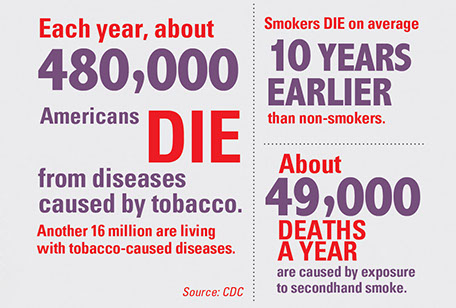
    According to the U.S. Surgeon General, more than 51 million Americans have had success at quitting smoking. Many smokers did not quit on their first try and needed several attempts to have success to quit for good. If you smoke, keep trying to quit.

    “Quitting smoking is one of the single most effective things someone can do to improve their health,” said Harold P. Wimmer, National President and CEO of the American Lung Association.

    It may not be easy to, but the benefits are well worth it:

    *  Within 20 minutes, your heart rate and blood pressure drop.

    *  Within 12 hours, the carbon monoxide level in your blood stream drops to normal.

    *  Within 3 days, the nicotine leaves your body.

    *  Within 3 months, your circulation and lung function improves.

    *  After 9 months, you will cough less and breathe easier.

    *  After 1 year, your risk of coronary heart disease is cut in half.

    *  After 5 years, your risk of cancer of the mouth, throat, esophagus, and bladder are cut in half.

    *  After 10 years, you are one-half as likely to die from lung cancer, and your risk of larynx or pancreatic cancer decreases.

    *  After 15 years, your coronary heart disease risk is the same as a non-smoker’s.

    Get help to quit smoking

    *  Talk to your doctor. He or she can recommend counseling or coaching plus over-the-counter nicotine patches, gum, or lozenges or FDA-approved medications. If you are a Veteran, talk to your health care team about VA tobacco cessation programs and services that are available to you.

    *  Call 1-800-QUIT-NOW (1-800-784-8669). This is the national number to access state-based quitline services.

    *  Smokefree.gov atwww.smokefree.govor text QUIT to 47848, answer a few questions, and you’ll start receiving messages

    *www.cdc.gov/tips

    *  Smokefree Apps: quitSTART and QuitGuide. Download these from your Smartphone’s  App Store or Google Play.

    Chart with tobacco facts from the CDC.

    © American Institute for Preventive Medicine

  • I Resolve …

    WELL-BEING

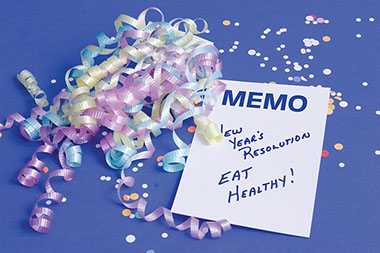
    Image of a memo with the note saying 'New year's resolution eat healthy!'

    Have your New Year’s resolutions to maintain a healthy weight started out strong? Only to fizzle about now?

    Get back on track with these points from the University of Houston Texas Obesity Research Center:

    *Document the evidence.Write down what and how much you eat of everything. Writing things down helps you to stay in control and remember what you are eating and doing every day.

    *Keep on moving.Get at least 30 minutes of physical activity every day. Daily physical activity significantly improves your body functioning, on a cellular level, and your body is better able to lose and avoid gaining weight.

    *Preempt the tempt.Avoid situations where you are going to be hungry and at risk for making high-calorie choices. Eat a small snack every 3 hours. The snack should include some protein such as a small piece of reduced calorie cheese or a small handful of nuts.

    *Tell a friend.Enlist the help and support of your friends and family. They may serve as a kind ear when you need to vent, or may have similar physical activity and eating goals as you.

    *Busy hands.Keep your hands and mind busy. The key is to keep busy and not spend too much time thinking about eating. Try knitting, wood crafts or card games.

    *Plan ahead.Anticipate and make a plan for what you will do in high-risk situations. Decide whether you are going to decline the chocolate pecan torte, have a bite or have a piece. If you decide to have a piece, plan in advance to eat a little less of something else.

    *Talk yourself into it.You have talked yourself into plenty of things before, why should this be any different? Tell yourself you can do it. Every day, think to yourself, “I am doing great,” “I can stick to my plan,” “I am maintaining a healthy weight,” and “I can stay on track.”

    *Practice relaxing.Stress is a prime cause of overeating. Prioritize time to reflect and relax every day.

    *Keep it real.Don’t expect dramatic weight loss immediately-not a realistic goal. Stay on track, keep focused and make small sustainable steps toward your goal.

    *Don’t despair.If you have fallen off the wagon, forgive yourself. And get back on again.

    © American Institute for Preventive Medicine
  • I Love My Cellphone

    WELL-BEING

    Image of a smart phone on a bench.

    You’ve done it: driven back home to search for your forgotten phone. Dug under the car seats. Called yourself to find a lost phone. Or, worse, watched your phone ring silently when you were in a situation where you couldn’t answer it.

    Cellphone use has become a common part of life as mobile devices have become one of the most popular ways to communicate. Research from the University of Missouri has found that cellphone separation can have serious psychological and physiological effects on iPhone users, including poor performance on mental tests.

    The researchers say these findings suggest that iPhone users should avoid parting with their phones during daily situations that involve a great deal of attention, such as taking tests, sitting in conferences or meetings, or completing important work assignments, as it could result in poorer mental performance on those tasks. But use common sense and proper business etiquette about texting, talking, and checking emails in those venues.

    © American Institute for Preventive Medicine

  • “I Know Where You Are”

    WELL-BEING

    Illustration of smartphone next to a shield with the word "security".

    The new you may not be you at all. Hackers and cyber criminals steal millions of records and identities, according to the consumer advocacy nonprofit Privacy Rights Clearinghouse.

    Stay safer online by following these practices:

    *Assume you’ve already been compromised.Whether it’s your baby monitor, your Smart TV, the webcam on your laptop, or apps you installed on your smartphone or tablet, your antivirus is not enough protection. It’s time to take their privacy policies, and the permissions you grant them, much more seriously.

    *Change your passwords.All of them. Now. And do it as frequently as you can tolerate. Also, if you don’t want to change it often, then use any unique characters you can think of, such as a dollar sign ($) or exclamation mark (!), or replace an “oh” with a “zero” (0). This goes a long way in preventing attacks against your password.

    *Turn off wireless and geolocation services.Protect your smartphones and tablets by turning off WiFi, Bluetooth, NFC and GPS, except when you need them. That way, if you are at a local coffee shop or in a shopping mall, no one can spy on you using nearby (proximity) hacking attacks, and they can’t track where you were and where you are going on your GPS.

    *Assume most of your apps are creepware.This is malware that spies on you and your online behavior. Do you really need them? Delete all of the apps you aren’t using too often.

    Source: Gary S. Miliefsky is CEO of SnoopWall and the inventor of SnoopWall spyware-blocking technology. He is a founding member of the U.S. Department of Homeland Security.

    © American Institute for Preventive Medicine
  • I Cannot Tell Afib

    MEDICAL NEWS

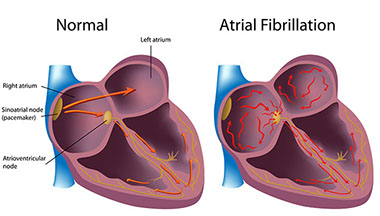
    Illustration of a normal heart vs a heart with AFib.

    Atrial fibrillation or AFib is the most common heart arrhythmia or irregularity in the U.S. It affects up to 4 million people.

    AFib needs to be taken seriously. It increases the risk of stroke by as much as 5 times and can contribute to heart failure and other heart conditions.

    When someone develops AFib, the upper chambers of the heart, the atria, beat rapidly and irregularly. “The atria quiver instead of squeezing normally. This causes slow blood flow, which leads to clots and stroke,” said Dr. Eric Rashba, Director of the Heart Rhythm Center at Stony Brook University Heart Institute.

    People with AFib often feel a fluttering in their chest, an unexplained racing of the heart, or that their heart is skipping beats. Other symptoms include fatigue, dizziness, shortness of breath, and lack of energy. Up to 10% of AFib patients have no symptoms at all.

    AFib can be related to high blood pressure, an overactive thyroid, congestive heart failure, or diseased heart valves. It is important to be diagnosed and treated early.

    The longer you wait for diagnosis and treatment, the more AFib progresses and becomes increasingly difficult to treat. Your doctor can refer you to a heart specialist. Initial treatment is medication. New procedures are also available.

    © American Institute for Preventive Medicine

  • How Was Your Day At School?

    FAMILY LIFE

    Image of mother and her school-age child.

    Students are back in school, and now is the time for parents to develop routines to help their children succeed academically. Kimberly Greder, Iowa State University Extension and Outreach family life specialist, says parental involvement, more than income or social status, is a predictor of student achievement.

    *  Create a home environment that encourages learning. Set high but reasonable expectations for your kids.

    *  Get involved, with your kids, in school and community activities. Ask about homework. Visit with teachers and school counselors. Ask them what you can do at home to help your kids succeed.

    *  Ask your kids about their day at school.

    *  Encourage reading at home and be a role model.

    *  Watch who your kids hang out with. Make sure they are doing healthy activities.

    *  Get your kids involved in activities or sports to develop leadership skills and positive communication and conflict resolution skills.

    © American Institute for Preventive Medicine

  • How To Use Food To Boost Your Energy

    HEALTHY EATING

    Image of business man eating a salad and cracker at his desk.

    Do you hit an afternoon slump every day? Are you feeling drained despite getting enough sleep? Take a look at your food.

    In general, healthy foods like fruits, vegetables and whole grains will keep your energy levels higher than processed or junk foods. But there are some ways you can use those good foods to boost your energy even more:

    *Eat enough calories.Very strict diets can zap your energy if you’re not eating enough. Healthy weight loss should not exceed one to two pounds per week. If you’re losing much more than that, you may feel tired and could be skipping important nutrients. Women should eat at least 1,200 calories and men should eat at least 1,500 calories per day.

    *Avoid candy and sugary treats.These foods may give you a quick boost of energy, but your body will quickly process the sugar. Then, you’ll feel more tired than before.

    *Eat between meals.Many people find they need small snacks throughout the day to keep their energy up. Keep the snacks small and light, such as a small serving of nuts or fruit.

    *Drink water.Even mild dehydration can make you tired. Aim for eight glasses of water per day. You may need more if you’re exercising or sweating.

    *Don’t overeat during meals.Do you ever feel like taking a nap after a big lunch? Avoid this by eating a moderate sized meal, and stopping when you start to feel full.

    *Don’t rely on “energy bars.”Many of these bars contain as much sugar as a dessert, as well as processed ingredients. Instead, opt for food with protein, healthy fats and whole grains to keep you satisfied.

    Source: Harvard Medical School and Centers for Disease Control and Prevention

    © American Institute for Preventive Medicine