Blog

  • How To Put In Eyedrops

    SELF-CARE CORNER

    Image of young women putting eyedrops into eye.

    *  Wash your hands with soap and water.

    *  Shake the eyedrop container gently. Make sure the prescription is for you. Check to see how many drops you are to put in and when.

    *  Remove the cap. Set it aside. Do not touch the dropper tip with your hand.

    *  Tilt your head back. With both eyes open, look at a point on the ceiling.

    *  Pull your lower lid down gently to form a pocket for the drop. Position the tip of the bottle less than an inch above your lower lid.

    *  Squeeze the bottle lightly to allow the drop to fall into the pocket.

    *  Close your eyes without squeezing them. Keep eyes closed for 30 seconds. Gently blot with a clean tissue.

    *  Replace the cap on the eyedrop bottle.

    *  Keep eyedrops out of sunlight.

    Other tips:

    *  Do not wear contact lenses while using eyedrops or ointments.

    *  If you have eyedrops and eye ointment, put in the eyedrops before the ointment.

    *  You may find this easier to do in front of a mirror or lying flat on your back.

    *  Check the bottle’s expiration date. Throw it away if outdated.

    Source: National Institutes of Health

    © American Institute for Preventive Medicine

  • How To Make Those New Year’s Resolutions Stick

    WELL-BEING

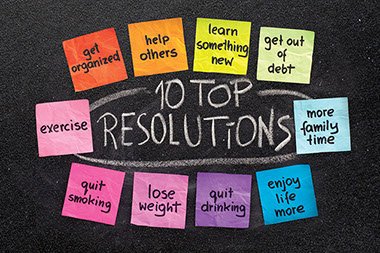
    Image of top resolutions written on small paper notes.

    Tap into your company’s wellness program to help you make and achieve your New Year’s goals, suggests Alere Health.

    Identify your core values.

    Make a list of your core values-such as vitality, health, honesty, compassion, security-to get a sense of what is really important to you.

    Set your priorities.

    Target 3 or 4 of those values to focus on. Base your decision on values that you know would make you happier and improve your quality of life. Then look at what you are doing or not doing that is keeping that value from manifesting in your life.

    Establish specific, measurable goals.

    After you determine the changes you want to make, set specific, measurable goals to track your progress. One of the reasons that many people fail with resolutions is that their goals are too vague. Track your daily progress.

    Be realistic.

    The best health and wellness programs teach you to gradually reduce your unhealthy habits so that you can learn behaviors that will last. Go for ridiculously easy ones, and you’ll achieve your goal every time.

    Be creative.

    Who says resolutions have to be about weight loss or exercise? Getting plenty of sleep can also promote better health and vitality. Or walk around the office if you sit all day. Pledge to stand up once an hour or when you take a phone call.

    Chill out more.

    Stress is the enemy to feeling better and being more productive. Stress management programs can provide the tips and support to manage those life situations that may anger, sadden or worry you and help to keep you on goal.

    Do something for someone else.

    Many stress management programs offered by employers encourage employees to manage stress and improve happiness by doing something for others. Employers are recognizing that employees that are active and engaged in helping others in their community are often more productive and healthier than those who do not. If your company supports a special cause, or if you have one important to you, make the effort to spend a few hours a month volunteering or helping in some way.

    © American Institute for Preventive Medicine

  • How To Make The Most Of Your Lunch Break

    WORK LIFE

    Image of co-workers having lunch.

    It can be tempting to skip your lunch break if you’re swamped. But taking a midday break can renew your energy and productivity through the afternoon and into the evening. Try these tips to make the most of your break:

    *Plan your afternoon.If you’re stressed about work, make a quick list of what you want to accomplish. If there’s too much to do and not enough time, determine which things are top priority and which can wait.

    *Get up from your workspace.A change of scenery can refresh you, even if it’s only for a few minutes. Staying in the same place all day can leave you feeling burned out.

    *Stop thinking about work.Take a few moments, if you can, to take a deep breath and do something you enjoy. That might be listening to a song, a quick walk outside, or having lunch with a friend.

    Lunch break naps: good or bad?

    If you get a 30 or 60 minute lunch break, should you nap during this time? The National Sleep Foundation says you can consider it. Be sure you:

    *  Keep the midday nap to 20 minutes or less.

    *  Keep it early in the day. Late afternoon or early evening naps could make it hard to fall asleep at night.

    If you find that napping interferes with your nighttime sleep, skip it. It’s more important to get good sleep at night.

    © American Institute for Preventive Medicine

  • How To Make The Grade This School Year

    FAMILY LIFE

    Image of a group of school children.

    Start talking about the upcoming school year. Listen closely for fears or concerns, advises Dr. Amie Duncan of Cincinnati Children’s Hospital. “It is important that parents listen to and respond to their child’s potential anxieties about the new school year, especially if they are making a big transition such as from an elementary school to a middle school. It is perfectly normal to experience first day jitters,” she said. These feelings can be relieved with some of these suggestions.

    Preschoolers and kindergartners need to know what will happen.

    *  Visit the school together. Let them play on the playground, walk through the classroom, and meet new teachers.

    *  Go on a school shopping trip for a backpack and supplies. Assign a school prep area at home for supplies and lunchboxes.

    *  Tuck a small family picture in a backpack or lunch.

    *  Set bedtime and wake-up routines 4 weeks before school starts.

    *  Be positive and excited for the new school year.

    Elementary and middle-school children will need to adjust to new beginnings.

    *  Expect that your child may want trendy or “cool” school supplies.

    *  Take a quick trip to school before classes start to help find classrooms, lockers, the cafeteria, and the bus drop-off location.

    *  Right from the start, help your child get and stay organized. Choose places to store their backpack and a distraction-free area to complete homework.

    *  Talk to your child about high-risk behaviors, such as drinking, drug use, and sexual activity. Have this talk early and often.

    *  Encourage your child to choose to take part in at least one school club, sport, or other activity outside of school hours.

    *  Don’t hesitate to make an appointment with the school counselor right away if you have concerns about how your child is adjusting to school. Keep the lines of communication open.

    High schoolers need and thrive on positive reinforcement.

    *  Help your teen set realistic goals on how to earn the best grades and complete assignments.

    *  Stay organized. Buy a daily planner and teach your teen how to use it correctly or teach them how to organize their schedule with a tablet computer or laptop.

    *  Encourage your teen to get involved in at least one extracurricular activity or sport because it will help them meet people.

    *  Continue to support and encourage good study habits with regular homework/study times. Search for ways to offer positive support.

    *  Ask about what’s going on in your child’s life. (Use open-ended questions, rather than those that require only a “yes” or “no” response). Be an active listener without judging your child.

    *  Stay involved in your child’s school life and you will know what is going on, and how they are doing.

    © American Institute for Preventive Medicine

  • How To Make Fewer Mistakes At Work

    WORK LIFE

    Image of clock with person sleeping.

    Do you want to be your best at your job and avoid mistakes? There’s a healthy and simple way to do this: GET ENOUGH SLEEP.

    The National Sleep Foundation (NSF) says almost half of Americans said poor quality sleep affected their lives in the past seven days. And, many people report getting poor sleep on a regular basis.

    This poor sleep adds up to poor job performance, says the NSF. In one poll, up to a third of people admitted to falling asleep or feeling very sleepy at work in the last month. This can lead to minor errors, such as a typo in a letter to major mistakes that affect your career.

    When your body isn’t rested, it affects your brain and thinking in ways that could hurt your job performance and even hurt others. One study showed that when on-call resident doctors work overnight, they report 300 percent more medical errors that led to death than those who worked a 16-hour shift.

    Experts at the NSF say you should get at least seven to eight hours of sleep a night. Try to go to bed and get up at the same time each day, and create a relaxing bedroom environment for sleep. If you have chronic sleep problems, see your doctor for help.

    © American Institute for Preventive Medicine

  • How To Keep “Airport Anxiety” From Flying Out Of Control

    WELL-BEING

    Image of mom with 3 children at the airport.

    Traveling Americans are finding stricter airport screening, long waits, security checks, random searches-and you’re not even off the ground yet. Prepare yourself mentally and physically for the added stress. The Pennsylvania Medical Society offers these tips for avoiding airport anxiety:

    Know what to expect.Get information about airport rules from your travel agent, the airline, or online travel sites.

    Don’t prime the anxiety pump.Why work yourself into a frazzle before you even reach the airport? Give yourself plenty of time to get there. Allow for normal delays, like traffic jams and road closings, and for new ones such as restricted airport access.

    Come equipped to wait it out.Bring a folding canvas seat or arrange with the airport for a wheelchair. Pack snacks in your carryon. Also carry your prescription medications with you along with any special dietary snacks you might need.

    Kid-proof your planning.Check what your kids put in their bags if they packed them so the Scout knife or water gun doesn’t cause a scare at the security gate. Make sure you bring extra batteries for the games and CD players.

    Get physical.Instead of sitting at the gate the whole time, get up and walk around. Keep the blood flowing, and you’ll feel more relaxed and less confined.

    Learn and practice relaxation techniques.If you can’t cope with anxiety, ask your doctor about prescribing a medication instead of using alcohol to relieve your fears. Try the drug at home first to prepare for reactions such as grogginess or impaired coordination. Same with drugs for airsickness.

    © American Institute for Preventive Medicine

  • How To Eat Healthy At Holiday Parties

    HEALTHY EATING

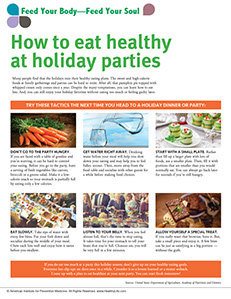
    Image of holiday treat on small plate.

    Many people find that the holidays ruin their healthy eating plans. The sweet and high-calorie foods at family gatherings and parties can be hard to resist. After all, that pumpkin pie topped with whipped cream only comes once a year. Despite the many temptations, you can learn how to eat less. And, you can still enjoy your holiday favorites without eating too much or feeling guilty later.

    Try these tactics the next time you head to a holiday dinner or party:

    Don’t go to the party hungry.If you are faced with a table of goodies and you’re starving, it can be hard to control your eating. Before you go to the party, have a serving of fresh vegetables like carrots, broccoli or a greens salad. Make it a low-calorie snack so your stomach is partially full by eating only a few calories.

    Get water right away.Drinking water before your meal will help you slow down your eating and may help you to feel fuller, sooner. Then, move away from the food table and socialize with other guests for a while before making food choices.

    Start with a small plate.Rather than fill up a larger plate with lots of foods, use a smaller plate. Then, fill it with portions that are smaller than you would normally eat. You can always go back later for seconds if you’re still hungry.

    Eat slowly.Take sips of water with every few bites. Put your fork down and socialize during the middle of your meal. Chew each bite well and enjoy how it tastes before you swallow.

    Listen to your belly.When you feel almost full, that’s the time to stop eating. It takes time for your stomach to tell your brain that you’re full. Chances are, you will be very full in a few minutes.

    Allow yourself a special treat. If you really want that brownie, have it. But, take a small piece and enjoy it. A few bites can be just as satisfying as a big portion – without the guilt.

    If you do eat too much at a party this holiday season, don’t give up on your healthy eating goals. Everyone has slip-ups on diets once in a while. Consider it as a lesson learned or a minor setback. Come up with a plan to eat healthier at your next party. You can start fresh tomorrow!

    Sources: United States Department of Agriculture, Academy of Nutrition and Dietetics

    © American Institute for Preventive Medicine

  • How To Choose A Quality Hospice

    FAMILY LIFE

    Image of male nurse and elderly man on a laptop.

    When a loved one is diagnosed with a serious or life-limiting illness, the questions facing an individual or a family can be overwhelming. The National Hospice and Palliative Care Organization recommends that people learn more about hospice as an important option before they are faced with a medical crisis.

    Hospice is not a place but a kind of care for people who have a life-limiting illness and are making the choice to focus on quality and comfort if more conventional treatments have become burdensome.

    Hospices provide high-quality care that is tailored to your loved one’s needs and that supports family caregivers.

    Your doctor and other health care providers or your company’s EAP may recommend hospice providers in your area. You can also get a list of hospice providers and more information about hospice from the National Hospice and Palliative Care Organization atwww.nhpco.org.

    Important questions in choosing a quality hospice include:

    *  Is the hospice Medicare certified?

    *  What services should I expect from the hospice?

    *  How are services provided after hours?

    *  How and where does hospice provide short-term inpatient care?

    *  What services do volunteers offer?

    *  How long does it typically take the hospice to enroll someone once the request for services is made?

    When should hospice care begin?

    Every patient and family must decide that based upon their unique needs. Professionals encourage people to learn about care options long before they think they may need them.

    © American Institute for Preventive Medicine