Blog

  • How To Be A Team Player At Work

    WORK LIFE

    Concept drawing on table to being a team palyer at work.

    You’re bound to run into many different personality types at the workplace. And when you’re working as a team, it can be challenging to adjust to different work styles.

    The American Management Association says teamwork leads to better problem solving and productivity. But it’s not as simple as just saying you’re part of a team. Here are some tips to help you achieve the best possible outcome with your group:

    *Use your strengths.People have different talents and skills that make them who they are. Offer to use your unique strengths to help get things done. Don’t wait to be asked; volunteer to help when you can.

    *Don’t place blame.When things don’t go well, it’s usually not helpful to blame someone else. Instead, look at the problem and work together to find ways to solve it.

    *Listen without talking.When others have ideas or opinions, listen to their side before jumping in with your thoughts. Listen with the goal of understanding their point, not adding your own.

    *Be aware of different work styles.You may be on a team with someone who does things differently than you. Instead of trying to correct them, see if you can learn something from their way of doing things.

    *Be dependable.The best team players are those who get things done on time. Missing deadlines could cause trouble for others on your team or jeopardize your project.

    *Communicate.If you’re running into problems or have too much on your plate, tell your team about it. Someone else may be able to help so you can keep the project running smoothly. People may have no idea you’re struggling – unless you speak up and tell them.

    © American Institute for Preventive Medicine

  • How Sweet It Is

    HEALTHY EATING

    Image of different types of sweeteners.

    Is sugar really bad for us? How about artificial or low-calorie sweeteners?

    Our bodies need one type of sugar, called glucose, to survive. “Glucose is the number one food for the brain, and it’s an extremely important source of fuel throughout the body,” said Dr. Kristina Rother, pediatrician with the National Institute on Health and expert on sweeteners.

    But there’s no need to add glucose to your diet, because your body can make the glucose it needs by breaking down food molecules like carbohydrates, proteins, and fats. Some sugars are found naturally in foods such as fruits, vegetables, and milk.

    Much of the sugar we eat isn’t found naturally in food but is added during processing or preparation.

    Although sugar itself isn’t bad, said Dr. Rother, “Sugar has a bad reputation that’s mostly deserved because we consume too much of it. It’s now in just about every food we eat.”

    You can cut down on added sugars. NIH in Health offers these suggestions:

    *  Choose water, fat-free milk, or unsweetened tea or coffee instead of sodas, sports drinks, energy drinks, and fruit drinks.

    *  Reduce sugar in recipes. If a recipe says 1 cup, use 2/3 cup.

    *  To enhance flavor, add vanilla, cinnamon, or nutmeg.

    *  Eat fresh, canned, frozen, and dried fruits without added sugar. Choose fruits canned in their own juice rather than in syrup.

    *  Use fruits to top foods like cereal and pancakes rather than sugars, syrups, or other sweet toppings.

    *  Read the ingredients list to pick food with little or no added sugar.

    © American Institute for Preventive Medicine

  • How Physical Activity Works

    BE FIT

    Image of couple using dumb bells.

    No, this is not another article about why you should be active. This information tells you how exercise works to keep you healthier.

    The concept to understand is called overload. And according to the government’s Physical Activity Guidelines for Americans, overload is the physical stress placed on your body when your physical activity is greater in amount or intensity than usual.

    The body responds and adapts to these stresses (say, a Zumba class). For example, aerobic activity places stress on your heart and lungs and muscles. Your lungs are required to move more air and the heart pumps more blood and delivers it to working muscles. This increase in demand increases the efficiency of your lungs, heart, your entire circulatory system, and your muscles.

    Muscle-strengthening exercise overloads muscles and bones in the same way-making them stronger.

    Also tied to the idea of overload is the principle of progression. Once you reach a certain fitness level, you progress to higher levels of physical activity by continued overload and adaptation. These small and progressive changes help your body adapt to the additional stresses while minimizing your risk of injury.

    © American Institute for Preventive Medicine

  • How Not To Get Sick When Traveling

    SELF-CARE CORNER

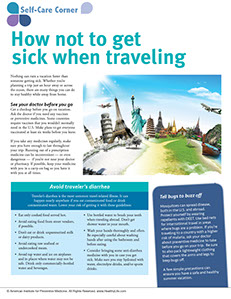
    Illustration of different city landmarks.

    Nothing can ruin a vacation faster than someone getting sick. Whether you’re planning a trip just an hour away or across the ocean, there are many things you can do to stay healthy while away from home.

    See your doctor before you go

    Get a checkup before you go on vacation. Ask the doctor if you need any vaccines or preventive medicines. Some countries require vaccines that you wouldn’t normally need in the U.S. Make plans to get everyone vaccinated at least six weeks before you leave.

    If you take any medicines regularly, make sure you have enough to last throughout your trip. Running out of a prescription medicine can be inconvenient – or even dangerous –  if you’re not near your doctor or pharmacy. If possible, keep your medicine with you in a carry-on bag so you have it with you at all times.

    Avoid traveler’s diarrhea

    Traveler’s diarrhea is the most common travel-related illness. It can happen nearly anywhere if you eat contaminated food or drink contaminated water. Lower your risk of getting it with these guidelines:

    *  Eat only cooked food served hot.

    *  Avoid eating food from street vendors, if possible.

    *  Don’t eat or drink unpasteurized milk or dairy products.

    *  Avoid eating raw seafood or undercooked meats.

    *  Avoid tap water and ice on airplanes and in places where water may not be safe. Drink only commercially-bottled water and beverages.

    *  Use bottled water to brush your teeth when traveling abroad. Don’t get shower water in your mouth.

    *  Wash your hands thoroughly and often. Be especially careful about washing hands after using the bathroom and before eating.

    *  Consider bringing some anti-diarrhea medicine with you in case you get sick. Make sure you stay hydrated with water, electrolyte drinks, and/or sports drinks.

    Tell bugs to buzz off

    Mosquitoes can spread disease, both in the U.S. and abroad. Protect yourself by wearing repellents with DEET. Use bed nets for international travel in areas where bugs are a problem. If you’re traveling to a country with a higher risk of malaria, ask your doctor about preventive medicine to take before you go on your trip. Be sure to also pack lightweight clothing that covers the arms and legs to keep bugs off.

    A few simple precautions can ensure you have a safe and healthy summer vacation.

    © American Institute for Preventive Medicine

  • How Much Calciumis Needed Each Day?

    HEALTHY EATING

    Image of different calcium sources.

    The Institute of Medicine’s recommended daily allowance (RDA) for calcium from food and supplements*:

    *  Ages 9-18 years, 1,300 mg

    *  Ages 19-50 years, 1,000 mg

    *  Ages 70+ years, 1200 mg

    *  Men 51-70 years, 1000 mg

    *  Women 51-70 years, 1200 mg

    *To increase absorption from calcium supplements, take no more than 600 mg at a time. Follow your doctor’s advice for calcium supplements.

    © American Institute for Preventive Medicine

  • How Does Your Heart ‘Rate’?

    BE FIT

    Image of female checking heart rate.

    When it comes to getting a good workout, no two people are alike. Age, health status, fitness level, and many other factors can play a role in how hard you can – or should – exercise.

    Your target heart rate can tell you if you’re exercising hard enough to burn calories, but not too hard. Your target heart rate is how fast you want your heart to beat during exercise.

    You can find your target heart rate by following these steps:

    1. Get a stopwatch or use a watch or clock that has a second hand.

    2. Periodically during exercise, put two fingers on a pulse point. This can be the inside of your wrist on the thumb side, the inside of your elbow, or the side of your neck.

    3. Count how many times your heart beats in 60 seconds.

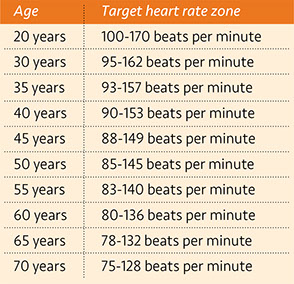
    Next, find your age in the chart and see if your heart rate is within the target heart rate zone listed. If it’s higher than the zone, take your workout down to an easier level. If it’s below, you may be able to exercise a little harder.

    Chart of Target Heart Rate Zone.

    If you’re just starting out with exercise, aim for the lower end of the range. After a few weeks, you can gradually work up to a higher heart rate within the zone.

    People who have heart conditions or other health problems should discuss any exercise or fitness activities with their doctor before starting. Certain medications that treat heart and blood pressure disease can cause a lower heart rate. Discuss your medications with your physician before trying to reach your maximum heart rate.

    Heart rate and blood pressure explained

    Heart rate and blood pressure are not the same thing. Blood pressure is the force of blood moving through your body. Heart rate or pulse is simply the number of times your heart beats per minute.

    A faster heart rate does not necessarily mean your blood pressure is rising. When the heart rate speeds up, blood vessels get bigger, allowing more blood to move through. This means many people can safely raise their heart rate during exercise without affecting their blood pressure.

    Talk to your doctor about blood pressure and get it checked yearly. Most people with high blood pressure can and should exercise with their doctor’s approval.

    Source: American Heart Association

    © American Institute for Preventive Medicine
  • How Does Diabetes Affect Your Eyes?

    MEDICAL NEWS

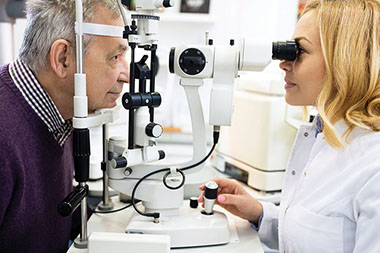
    Image of mature male at eye doctor appointment.

    Did you know that diabetes can affect your eyes? If diabetes isn’t well controlled with a doctor’s help, it can cause problems that can lead to vision loss. Eye problems that are caused by diabetes are called diabetic eye disease.

    Diabetic eye disease includes:

    *  Diabetic retinopathy

    *  Diabetic macular edema (DME)

    *  Cataracts

    *  Glaucoma

    What’s the link between diabetes and your eyes?

    When blood sugar is too high, it can change or damage the delicate blood vessels in the eyes. This can lead to too much pressure in the eye, bleeding in the eye or swelling in some of the eye’s important tissues. Diabetic retinopathy is the leading cause of blindness for adults ages 20 through 74.

    Diabetic eye disease is dangerous because many people don’t know they have it. These eye problems may have no signs or symptoms at first. Then, a person may start to lose their vision after eye damage has already occurred. Unfortunately, it is harder to treat these problems at a later stage.

    The good news

    Diabetes can be controlled. When you have good control over your diabetes and blood sugar, you can manage or avoid diabetic eye disease.

    You control your diabetes by:

    *  Taking your medications as prescribed by your doctor

    *  Monitoring blood sugar levels

    *  Getting regular exercise

    *  Eating a healthy diet

    *  Working toward a healthy weight

    *  Not smoking

    *  Getting a full eye exam at least once a year, including an exam that includes dilating of the eyes

    The diabetes ABCs are important measures of good diabetes control. Your ABCs are:

    *  A = A1C, which is a blood sugar (glucose) measurement. Your doctor can test this. Most people should have an A1C below 7 percent. This should be checked every 3-6 months.

    *  B = Blood pressure, which should be checked at each doctor appointment. Discuss your blood pressure target with your doctor.

    *  C = Cholesterol, which may need to be checked yearly or more often. Ask your doctor about a healthy cholesterol goal.

    Getting regular checkups and following your doctor’s recommendations for managing your diabetes will greatly reduce your risk of these problems. Most people with well-controlled diabetes can keep their eyes healthy.

    Sources: American Diabetes Association, National Eye Institute, National Institutes of Diabetes and Digestive and Kidney Diseases

    © American Institute for Preventive Medicine

  • Hot-Weather Problems To Avoid

    WELL-BEING

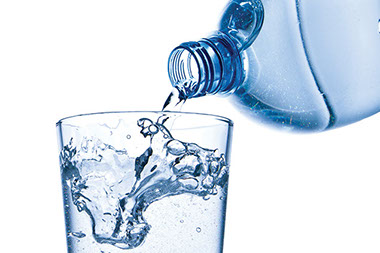
    Image of a water bottle being poured into a glass.

    Summer’s brutal heat brings with it the dangers of deadly dehydration and other hot-weather health issues. Dr. Richard N. Bradley, associate professor of emergency medicine at The University of Texas Health Science Center, says, “Don’t push it too hard. When possible, stay inside your air-conditioned homes or go to places that have A/C.”

    If you notice someone acting confused and the person has been out in the hot sun, seek help immediately for any of these hot-weather problems. Be alert to the symptoms of heat-related illnesses such as cramps, heat exhaustion, and heat stroke.

    *Heat crampsare painful, brief muscle cramps that occur during exercise or work in a hot environment. The cramps are usually felt in the calves, thighs, abdomen, or shoulders.

    *Heat exhaustionoccurs when the body is not able to maintain normal functions because of the excessive loss of body fluids and salts. In effect, the body is trying to protect itself from a greater rise in body temperature. The symptoms include heavy sweating, intense thirst, dizziness, nausea and a weak or rapid pulse.

    *Heat strokeis a life-threatening emergency. It is the result of the body’s inability to regulate its core temperature. As the body’s water and salt supplies dwindle, its temperature rises to extreme levels. The symptoms include a body temperature above 104ºF (although heat stroke can occur at lower body temperatures), disorientation, confusion, or coma. The skin may be hot and dry or sweaty.

    Drink plenty of water, no alcohol. Drink throughout the day, even when you’re not thirsty.

    © American Institute for Preventive Medicine

  • Hope For Migraine Headaches

    SELF-CARE CORNER

    Image of man with a migraine.

    Migraine headaches are more than an inconvenience. Migraine pain is severe and can interfere with a person’s life. Fortunately, today’s migraine treatments can help many people get the relief they need.

    There are two types of medicines for migraines: abortive and preventive.

    Abortive medicines

    Abortive medicines, also referred to as acute, are designed to stop, or abort, a migraine. They should be taken as early as possible when a person feels a migraine starting. Some of these medicines include:

    *  Pain relievers. Aspirin, ibuprofen, and other common pain relievers can be used to treat mild migraines. But, for many people, these aren’t enough to get rid of a migraine. Experts say people shouldn’t take these medicines more than twice a week. Overusing these medicines can lead to stomach problems and can even cause more headaches.

    *  Prescription migraine medicines. Your doctor may prescribe special medicines that are designed to relieve migraine pain and other symptoms, such as nausea. These may work well for people who don’t find relief from over-the-counter pain relievers.

    Preventing migraines

    Some of the medicines available today are used to prevent migraines before they happen. These are called preventive treatments. These types of medicines are recommended for people who:

    *  Get four or more migraines a month

    *  Have migraines that last 12 hours or longer

    *  Haven’t found relief with  abortive medicines

    *  Can’t take abortive medicines

    There are different types of preventive medicines available. Sometimes a person needs to try several different medicines before finding the one that works best for them. Keeping track of how many migraines you have and their severity can help you see how well a medicine is working.

    In addition to medicines, you and your doctor may discuss migraine triggers and how to avoid them. Certain foods, stress, lack of sleep, hormonal changes, and many other things can cause migraines. Learning your own triggers and how to avoid them is an important part of preventing migraines.

    What makes a migraine

    Migraines usually have the following symptoms:

    *  Severe pain and intense pounding in the head that makes it impossible to do daily tasks

    *  Nausea and/or vomiting

    *  Sensitivity to light or sound

    Some migraines also start with an aura. An aura may be vision changes, like seeing flashes of light or lines. Some people have trouble seeing clearly and cannot focus on objects. An aura may also cause tingling in an arm or leg. Only about 20 percent of people who get migraines will have an aura.

    © American Institute for Preventive Medicine