Blog

  • Helping A Depressed Family Member

    FAMILY LIFE

    Image of man talking with a counselor.

    Depression is a medical condition that can be serious. The National Institutes of Mental Health say depression can affect how you feel, think and cope with daily life. Eating, sleeping, socializing and working can all be difficult for someone with depression.

    If a member of your family has depression, there are ways to support them.

    Tip #1:

    Don’t tell them to “just snap out of it.” Experts believe depression is caused by a chemical imbalance in the brain. This may be due to genetics or it may be triggered by a stressful event such as death of a family member, divorce or abuse. Sometimes, a cause cannot be found. It’s important to understand that the person’s everyday actions may be affected by this disease, and they can’t make it just go away.

    Tip #2:

    Take medical care seriously. Treatment for depression often involves medication  and/or therapy. It can take some time to find the treatment that works for your family member. Whenever possible, offer to go with them to doctor appointments. Support them in following their treatment plan. Do what you can to make sure they take medications as prescribed without forcing or arguing.

    Tip #3:

    Offer to take them out, but don’t push. Many people with depression struggle to get out of bed each day or leave the house. But, with treatment, it is possible to start enjoying life again. Ask the family member if they’d like to do something simple, such as go to the store or park. If they decline, wait a few days and offer again. Eventually, they may say yes.

    Tip #4:

    Listen when they want to talk. If your family member wishes to talk about his or her feelings, let them do so without judging or offering advice. Simply listen to their thoughts and feelings without trying to “fix” anything.

    Take loved ones’ comments about suicide or self-harm seriously. Many times a person will confide in a loved one prior to committing a harmful act.

    With help from a doctor, depression can be treated. Let your family member know you care, and ask them to get the medical help they need. Proper medical care can help them get on the path to a healthier, happier life.

    © American Institute for Preventive Medicine
  • Help For The Indoor Sneezing Season

    SELF-CARE CORNER

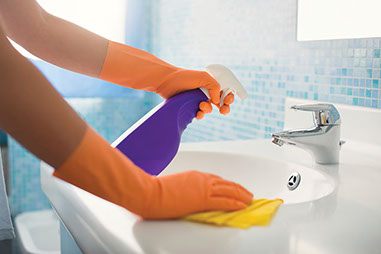
    Image of a person cleaning the bathroom sink.

    Sometimes indoor winter air brings a whole new set of allergy and asthma triggers including dust, pet dander, and mold.

    Doctors from the American College of Allergy, Asthma and Immunology offer advice on how to stay sneeze-free and sniffle-free while indoors this winter.

    *  Reduce moisture in your home to keep dust mites in check. Maintain humidity below 55%, and don’t use a humidifier or a vaporizer.

    *  Filter out dust and other allergens by installing a high efficiency furnace filter with a MERV rating of 11 or 12, and be sure to change it every 3 months.

    *  Banish allergens from the bedroom (where you spend a third of your life). Keep pets and their dander out, and encase mattresses and pillows with dust-mite-proof covers. Use blinds instead of curtains.

    *  Allergy sufferers should wear a NIOSH-rated N95 mask while dusting-a chore that should be done regularly. Wash bedding and stuffed animals in hot water every 14 days and use a vacuum with a HEPA filter.

    *  Turn on the fan or open the window to reduce mold growth in bathrooms (while bathing) and kitchens (while cooking). Wear latex-free gloves and clean visible mold with a 5% bleach solution and detergent.

    *  Box up books and knick-knacks and limit the number of indoor plants. When you are buying new furniture, like chairs or sofas, opt for leather or other nonporous surfaces to make cleaning easier.

    © American Institute for Preventive Medicine

  • Heat & Humidity:A Dangerous Combination

    MEDICAL NEWS

    Image of young women suffering heat exhaustion.

    Heat and humidity can trigger three major illnesses, according to Dr. Eric Kirkendall, of Cincinnati Children’s Hospital Medical Center:

    Heat strokesymptoms include hot flushed skin, high fevers (over 104ºF), altered mental states such as confusion, and can be accompanied by seizures. Heat stroke is a life-threatening emergency and needs to be treated promptly.

    Heat stroke is a 911 emergency. Cool the person off as quickly as possible while waiting for medical services to arrive. Move the person to a cool shady place or an air-conditioned room; sponge the entire body surface with cool water (as tolerated without causing shivering); and fan the person to increase heat loss from evaporation. Keep the feet elevated to counteract shock. If the person is awake, give him or her as much cold water to drink as he or she can tolerate. Fever medicines are of no value for heat stroke.

    Heat exhaustionsymptoms include pale skin, profuse sweating, nausea, vomiting, muscle cramps, or weakness. It is less severe than heat stroke but is still dangerous and may require medical attention.

    For heat exhaustion, put the person in a cool place indoors or in the shade. Have him or her lie down with the feet elevated. Undress the person (except for underwear) so the body surface can give off heat. Sponge the entire body surface continuously with cool water without causing shivering. Fan the person to increase heat loss from evaporation. Give as much cool, not cold water or sport drinks as the person tolerates until he or she feels better. If symptoms do not improve or the person gets light-headed or faints, get medical care right away.

    Heat crampsare most common in the abdomen and legs, especially the calf or thigh muscles. Tightness or hand spasms can also occur, but fever is not a symptom.

    For heat cramps, monitor physical activity and make sure children don’t overly exert themselves. Adults can self-monitor. Make sure children drink plenty of water often. Encourage frequent breaks from physical activity to cool down and gently stretch muscles.

    © American Institute for Preventive Medicine

  • Heart-Shaped Foods Help Your Heart

    HEALTHY EATING

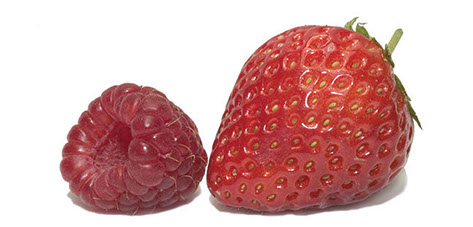
    Image of a berry and strawberry.

    While some dietitians extol the virtues of red wine, dark chocolate, and salmon for heart health, Dr. Katie Eliot, assistant professor of nutrition and dietetics at Saint Louis University, has a different plan.

    Keep it simple. Look to heart-shaped foods to protect your heart.

    “Being red and heart shaped can be a tip off that some foods are good for your heart,” Dr. Eliot said. “Many heart-shaped fruits and vegetables are great sources of antioxidants. These compounds act like shields, taking the hit from free radicals that otherwise damage the body and cause heart disease and cancer.”

    For instance, strawberries and raspberries are loaded with vitamin C and an antioxidant that prevents plaque from forming in arteries. Cherries contain an antioxidant that is thought to protect the blood vessels and is high in potassium, which helps lower blood pressure.

    Tomatoes and red peppers are rich in the antioxidant lycopene, which is in many red fruits and vegetables and works magic by neutralizing free radicals. And acorn squash and apples contain a type of fiber, which reduces bad cholesterol that can clog up your arteries to cause heart attacks and stroke.

    © American Institute for Preventive Medicine

  • Heart-Healthy Eating Made Easy

    HEALTHY EATING

    Image of a healthy salad.

    Simple, small changes in what you eat can make it easier to follow a heart-healthy diet. Experts in the Harvard Heart Letter made these suggestions to lower the amount of saturated fat, trans fat, sugar, sodium, and calories, and boost the amount of fiber and nutrients in a daily diet:

    Breakfast

    If you eat:Eggs

    Try:Scrambling eggs with vegetables from last night’s dinner or chopped fresh tomatoes and avocado

    Why:Adds nutrients and fiber; tomatoes add antioxidants, which help prevent fatty plaques; avocados add monounsaturated fat, which helps the body absorb nutrients

    Lunch

    If you eat:Salad with ranch or blue cheese dressing

    Try:A vinaigrette dressing made with garlic, Dijon mustard, fresh herbs, 1/3 cup vinegar, 2/3 cup extra-virgin olive oil, pepper, and a dash of salt shaken together in a jar

    Why:Reduces sodium and unhealthy fats

    Dinner

    If you eat:Pasta with meat and cheese

    Try:Whole-wheat spaghetti topped with fresh tomatoes and herbs or extra-virgin olive oil, grilled shrimp, and a small amount of freshly grated Parmesan cheese

    Why:Reduces saturated fat; adds fiber and health-protecting phytonutrients; shrimp adds omega-3 fatty acids, which may lower the risk of heart attack, stroke, and irregular heart beats

    © American Institute for Preventive Medicine
  • Healthy Trail Mix

    HEALTHY EATING

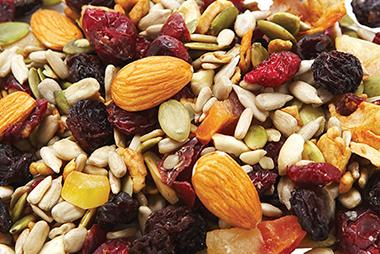
    Image of trail mix.

    Ingredients:

    1/2 cup cherries, dried, not packed

    1/2 cup apples, dried, pieces

    1/4 cup apricots, dried

    1/2 cup English walnuts, pieces

    1/4 cup sunflower seeds, raw

    1/2 cup raisins, not packed

    1/4 cup banana chips

    1/4 cup almonds, whole, raw

    Directions

    Mix all ingredients in a bowl and divide into small storage bags for portion control and portability. Makes 3 cups. One quarter cup is 180 calories, 3 g fiber, 24 carbs, 3 g protein, 10 grams fat.

    © American Institute for Preventive Medicine

  • ”Healthy” Foods That Don’t Help With Weight Loss

    HEALTHY EATING

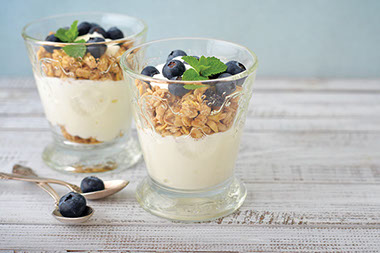
    Image of yogurt with granola and berries.

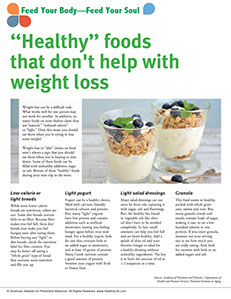
    Weight loss can be a difficult task. What works well for one person may not work for another. In addition, so many foods on store shelves claim they are “natural,” “reduced calorie”  or “light.” Does this mean you should eat them when you’re trying to lose some weight?

    Weight-loss or “diet” claims on food aren’t always a sign that you should eat them when you’re hoping to slim down. Some of these foods can be filled with unhealthy additives, sugar or salt. Beware of these “healthy” foods during your next trip to the store:

    Low-calorie or light breads

    While some lower calorie breads are nutritious, others are not. Some diet breads contain little to no fiber. Because fiber makes you feel full, these diet breads may make you feel hungry soon after eating them. Before buying any “light” or diet breads, check the nutrition label for fiber content. You may be better off eating a “whole grain” type of bread that contains more nutrition and fills you up.

    Light yogurt

    Yogurt can be a healthy choice, filled with calcium, friendly bacterial cultures and protein. But, many “light” yogurts have low protein and contain additives such as artificial sweeteners, leaving you feeling hungry again before your next meal. For a healthy yogurt, look for one that contains little to no added sugar or sweeteners, and at least 10 grams of protein. Many Greek varieties contain a good amount of protein. Sweeten your yogurt with fresh or frozen fruit.

    Light salad dressings

    Many salad dressings cut out extra fat from oils, replacing it with sugar, salt and flavorings. But, the healthy fats found in vegetable oils like olive oil don’t have to be avoided completely. In fact, small amounts can help you feel full and are heart-healthy. Add a splash of olive oil and your favorite vinegar to salad for a healthy dressing without unhealthy ingredients. The key is to limit the amount of oil to 1-2 teaspoons at a time.

    Granola

    This food seems so healthy, packed with whole grain oats, raisins and nuts. But, many granola cereals and snacks contain loads of sugar, making it easy to eat a few hundred calories in one portion. If you enjoy granola, measure out your serving size to see how much you are really eating. And, look for varieties with little to no added sugars and salt.

    Sources: Academy of Nutrition and Dietetics, Department of Health and Human Services, National Institute on Aging

    © American Institute for Preventive Medicine

  • ‘Healthy’ Foods That Aren’t So Healthy

    HEALTHY EATING

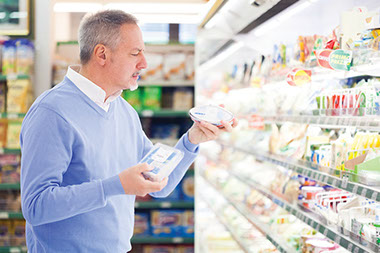
    Image of older man grocery shopping.

    Walking down the aisles at the store can feel like you’re in the middle of a commercial. Words like “low-fat,” “reduced calorie,” and “made with real fruit” appear on food packages, making them sound healthy. But how do you know if these foods are really good for you?

    No matter what claims are on the package, you can find out if a food is a good choice by looking at the nutrition facts panel. It may take some detective work, but there are ways to find out which foods you should put in your cart – and which ones are better left on the shelf.

    Count your sugar grams.

    Many processed foods contain lots of added sugar. This includes “healthy” foods, such as granola and dried fruit. Check out how many grams of sugar are included per serving size. The American Heart Association says women should not exceed 25 grams of sugar per day, and men should not exceed 37.5 grams.

    If the food contains 13 grams of sugar per serving, for instance, that’s about half of a woman’s daily sugar intake. Some yogurts, even ones labeled as “healthy” and “low-fat,” can have up to 12 grams of sugar in one serving.

    Look at the type of fat.

    Certain types of fat are good for you in moderate amounts. Monounsaturated and polyunsaturated fats can help lower cholesterol levels. These are found in vegetable oils, such as canola and olive, as well as avocados, nuts and fish.

    Many processed foods contain trans fats, which should be avoided whenever possible. Saturated fats, found in dairy, meat, and some processed foods, should be limited. The AHA says this type of fat should not exceed 5 to 6 percent of your total calories. Example: A person who eats 2,000 calories a day should not eat more than 13 grams of saturated fat. A person who eats 1,500 calories a day should not exceed 10g.

    Compare fiber content.

    When shopping for grains, such as bread, pay attention to the amount of fiber they contain. Processed, white breads often contain little to no fiber. Whole grain breads, by contrast, are often higher in nutrients and contain 2 to 5 grams of fiber per serving.

    Fiber is also found in fruits, vegetables, nuts and legumes, such as beans. Women should aim for 25 total grams per day, and men 38 grams.

    © American Institute for Preventive Medicine

  • Healthier Super Bowl Snacks

    HEALTHY EATING

    Image of football.
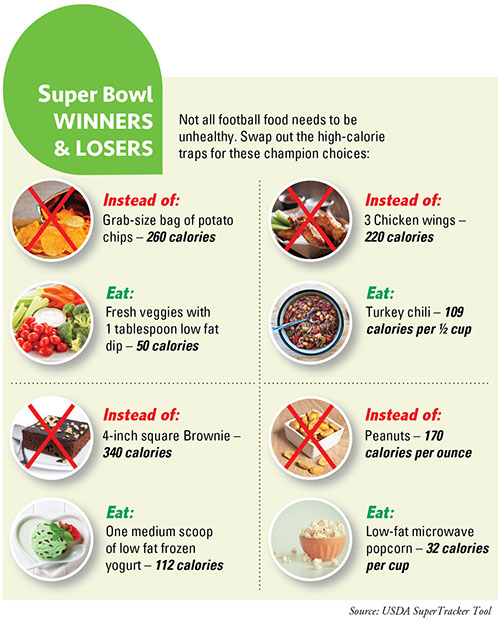
    Chart showing healthy options for super bowl snacks.

    On Super Bowl Sunday, people across the country will gather at homes, restaurants, and bars to watch the big game and enjoy game-day food. Sadly, traditional football fare tends to be high in fat and calories and low in nutrition. The Calorie Control Council says many Super Bowl fans will consume 2,000 calories or more during the game. That’s about a full day’s worth of calories in just a few hours.

    So how can you enjoy the game without the unhealthy side effects? Here are a few tips to help:

    *  Keep a zero-calorie drink like water in your hand, and sip on it throughout the day instead of snacking on food.

    *  Keep your distance from the kitchen or wherever the food is sitting out. If it’s out of sight, you’ll be less likely to mindlessly reach for snacks when you’re not hungry.

    *  If fresh fruit and veggies are available, fill your plate with those. This leaves little room for other choices.

    Be mindful of how much you’re eating, and stick to only a small serving of the high-calorie foods. If you’re cooking, take the opportunity to prepare a variety of healthy but fun choices for your guests.

    © American Institute for Preventive Medicine
  • Hassle-Free Screening Tips While Traveling

    WELL-BEING

    Image of airport check-in line.

    If you’re flying, make sure you familiarize yourself with the TSA screening process. You’ll have smooth flying if you do the following when passing through airport security:

    *Clothing:To maximize efficiency at the security checkpoint, avoid wearing clothing with metal and stow all metal items in carry-on luggage.

    *Zip it:Make sure any liquids are in 3-ounce bottles in a clear, quart-size, zip top plastic bag.

    *Footwear:Passengers are required to remove footwear for X-ray screening. Wearing footwear that can be easily removed helps speed the screening process.

    *Boarding pass and ID:When approaching the security checkpoint, passengers will be asked to present a boarding pass and a government-issued identification.

    *Electronics:Large electronics such as laptops should be removed from their cases for X-ray screening. E-readers and small electronics may stay in luggage.

    *Locking checked bags:When locking checked baggage, use a TSA recognized lock. A list of these locks can be found atwww.tsa.gov.

    © American Institute for Preventive Medicine