Blog

  • Good Cheer For Holiday Dieting

    HEALTHY EATING

    Image of gift sitting on a plate.

    Big holiday coming up? Don’t panic. With a good game plan and strategic planning you and your diet can not only survive holidays but you can actually thrive on them. Holidays do not have to be a time of feast or famine-you can strike a happy balance between gorging and self-sacrifice.

    *  Review your eating habits from the previous year’s celebration. Does food take center stage during the holidays? Do you genuinely enjoy foods like fruitcake, for example, or do you just eat them out of custom and tradition?

    *  Before digging in at a big holiday feast, imagine how you will feel after eating it. Visualize the bloated, uncomfortable, and guilty feelings you’ve experienced on past occasions.

    *  Forget about being “perfect” on holidays. Stringent dieting may be unrealistic and you could sabotage your efforts by setting standards that are too high. Don’t set yourself up for failure by only thinking of what you can’t have. Concentrate instead on healthy options such as fruit baskets.

    *  Learn to be festive without depending on alcohol. A drink here, a toast there-the calories of alcohol can add up. Substitute club soda or mineral water for alcohol.

    *  If you’re invited to someone’s home for dinner, ask if you can bring a dish, then make it  low-calorie. (And be sure to make plenty. Low-calorie foods are usually very popular.)

    *  Remember that the major purpose of the holidays is to enjoy family and friends. Food and alcohol are secondary factors.

    © American Institute for Preventive Medicine

  • Going Back To Work After A Leave

    WORK LIFE

    Image of 2 construction workers.

    Many people take a leave of absence from work at some point. It could be for a life event, such as maternity or paternity leave, or because of an illness. A leave of absence is usually an extended period of time off that goes beyond vacation or other type of leave.

    No matter how long your leave is, going back to work can be a big adjustment and cause you plenty of anxiety. But, you can make the transition smoother if you prepare for your new routine. Try these tips:

    *  Get organized. A week or two before you go back, start jotting down things you will need to do every day. Whether it’s packing lunches, walking the dog or dropping kids off at daycare, it helps to have it all written down to feel more in control of the situation. You can then create a schedule or to-do list which helps make it more manageable.

    *  Start moving back to your work schedule. It can be quite a shock to go back to a 6 a.m. work shift if you’ve been staying up late. At least two weeks before you go back, start transitioning your sleep schedule. Give your body time to adjust to getting up at that same time and change your bedtime accordingly. Aim for seven to eight hours of sleep so you can feel rested and productive.

    *  Allow for extra time in the morning. Set your alarm for earlier than you think you need to. You’ll be glad to have the extra time without rushing in the morning. Or, you may find that it takes you longer to get ready than you thought.

    *  Talk with your supervisor before going back. You can discuss your specific job duties and schedule. And, you can touch base about any changes or updates that may have taken place while you were gone. This could save you time and stress on your first day back.

    *  Discuss breastfeeding in advance. Moms who plan to pump breastmilk at work should ask their supervisor or human resources department about this before going back. Come up with a pumping schedule that works for you and your employer. Discuss where you can pump. You’ll need a clean and private area with access to a sink.

    Going back to work can be less stressful with some planning and open discussion with your employer. Don’t wait until you go back to deal with these questions and details.

    © American Institute for Preventive Medicine

  • Go With The Grain

    HEALTHY EATING

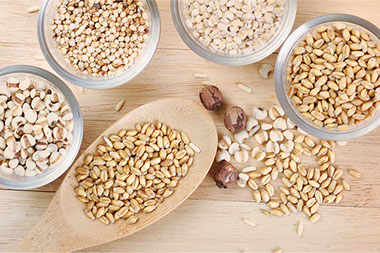
    Image of different grains.

    With one look down the grocery store aisle or a quick glance at a restaurant menu, it’s clear that whole-grain options are popping up everywhere. From quinoa to buckwheat and farro to freekeh, the number of grain possibilities is growing, leaving home cooks and diners puzzled by how to choose the right one and know how to prepare it.

    Not only do whole grains provide an array of health benefits, they can also be an excellent base for hearty dishes that taste great and are remarkably filling. Whether featured in a salad, formed into a patty as a vegetarian burger option, warmed up for breakfast, or used as the base of a thick stew, grains are extremely versatile and can be enjoyed as part of breakfast, lunch, dinner or dessert.

    Although cooking with grains can seem like a daunting task, the chef instructors at Le Cordon Bleu encourage home cooks to soak their long-cooking grains, whether for a few hours or overnight, to minimize the cooking time. This also ensures that any resin left on the grain that can cause a bitter taste will get washed off.

    They also suggest these cooking tips:

    *  Whole-grain options can be customized for each meal of the day. Make a big batch of steel-cut oats on Sunday evening and eat it for breakfast throughout the week. Add quinoa to lunchtime salads-add the dressing in advance so the grain fully absorbs the flavors of the dish. For dinner, add wheat berries or barley to soups for a hearty, filling meal.

    *  Resist the urge to stir grains as they are cooking. Stirring causes whole grains, especially rice, to become sticky and clump together, making it difficult to prepare a fluffy, flavorful dish.

    *  After they are cooked, whole grains stay fresh for several days in the refrigerator. You can cook a large pot of brown rice or quinoa at the beginning of the week and use it in dishes throughout the week to save cooking time.

    © American Institute for Preventive Medicine

  • Go Red To Manage Pain

    SELF-CARE CORNER

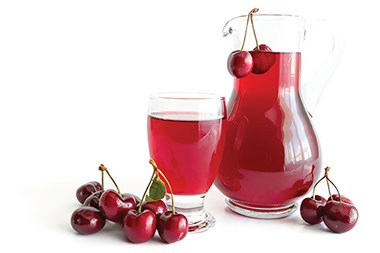
    Image of cherry juice.

    Tart cherries may help reduce chronic inflammation, especially for the millions of Americans suffering from joint pain and arthritis, according to research from Oregon Health & Science University. The researchers suggest tart cherries have the “highest anti-inflammatory content of any food” and can help people with osteoarthritis manage their disease.

    In a study of women ages 40 to 70 with inflammatory osteoarthritis, the researchers found that drinking tart cherry juice twice daily for three weeks led to significant reductions in important inflammation markers-especially for women who had the highest inflammation levels at the start of the study.

    Often thought of as “wear-and-tear” arthritis, osteoarthritis is the most common type of arthritis. Athletes are often at a greater risk for developing the condition, given their excessive joint use that can cause a breakdown in cartilage and lead to pain and injury, according to the Arthritis Foundation.

    Along with providing the fruit’s bright red color, the antioxidant compounds in tart cherries-called anthocyanins-have been specifically linked to high antioxidant capacity and reduced inflammation, at levels comparable to some well-known pain medications.

    Available every day of the year in dried, frozen, and juice forms, tart cherries are a versatile ingredient to include in any training or inflammation-fighting diet.

    © American Institute for Preventive Medicine

  • Go Dark For Better Sleep – And Better Mornings

    WELL-BEING

    Image of a young female using a tablet in the dark.

    Your nighttime habits may be hurting your morning routine. Many electronic devices, such as smartphones, computers and tablets, give off blue light. This type of light boosts energy – and can interfere with sleep.

    If you wake up feeling groggy in the morning, try shutting off the electronics two to three hours before bedtime. And, make sure you get out and see some daylight and other bright lights during your waking hours. This can help set your body’s internal clock, telling you when to wind down at bedtime and then rise the next day.

    Source: Harvard Medical School

    © American Institute for Preventive Medicine

  • Be Active Every Day!

    WELL-BEING

    Image of couple walking along the beach.

    Go4Life® is an exercise and physical activity campaign from the National Institute on Aging at NIH for people 50-plus. It is designed to help them fit exercise and physical activity into daily life.

    Go4Life® is based on research which shows that exercise can help prevent many of the chronic conditions and disability linked with aging. Despite the benefits of exercise for people of all ages, U.S. adults tend to become less active as they age. Go4Life® provides an interactive website athttps://go4life.nia.nih.govto help older adults increase their physical activity. This includes sample exercises, success stories, and free materials to motivate them to improve their health and achieve a better quality of life. Go4Life® also works with local and national groups to provide an environment that supports these efforts.

    “It’s never too late for exercise to have a positive effect on your health,” said NIA Director Richard J. Hodes, M.D. “We know that exercise can reduce the risk of heart disease, obesity, stroke, diabetes and other chronic conditions. One recent study found that even sedentary people in their 70s and 80s improved mobility and reduced the risk of disability through a regular program of structured physical activity.”

    “The establishment of Go4Life® Month will help draw attention to the critical importance of exercise with age and the resources that we can provide to support adults who want to do more,” Hodes said.

    Athttps://go4life.nia.nih.gov/event-list, find out about activities planned for Go4Life® Month.

    For more information on healthy aging, accesswww.nia.nih.gov.

    © American Institute for Preventive Medicine

  • Gluten-Free Diet Is Treatment, Not Trend

    MEDICAL NEWS

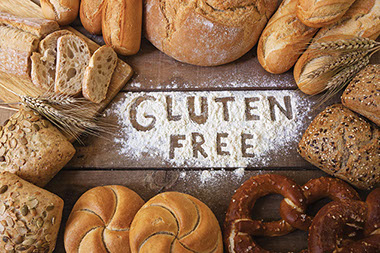
    Image of various breads with the words "Gluten Free" written in powedered white flour.

    You’d never suspect it from the growing number of gluten-free items on supermarket shelves, but only one in about every 133 people has celiac disease. This genetic autoimmune disorder causes the body to react negatively to the intake of gluten, a protein found in wheat, rye, barley, and their byproducts.

    It is estimated that more than 80% of the Americans whose systems can’t tolerate gluten are either not diagnosed or misdiagnosed. And the average time a person waits for a correct diagnosis is more than 10 years. A prime reason is that the symptoms of gluten-related problems vary widely-from migraine headaches and diarrhea to joint pain and skin rashes-and are common to numerous other conditions and disorders.

    When a person with celiac disease consumes gluten, the protein triggers an immune response that damages part of the small intestine called villi, which interferes with the absorption of nutrients from the food. This can cause malnutrition, trigger other health problems-among them cancer, osteoporosis, and infertility-and open the door to other autoimmune disorders.

    “There’s greater awareness of celiac disease, we have better tests, and we know more about who should be screened, but we’re still seeing only the tip of the iceberg,” said  Dr. Anca M. Safta, a gastroenterologist at Wake Forest Baptist Medical Center and director of its Gluten & Allergic Digestive Disorders Program.

    A simple antibody blood test can screen for celiac disease. And because the disease is inherited, there’s also genetic testing. But while these tests can eliminate the possibility of celiac disease, they can’t confirm its presence. That usually has to be done with an endoscopic biopsy. This procedure examines the small intestine and removes tissue samples for analysis.

    If the biopsy results are positive for celiac disease, the only way to repair existing damage to the small intestine and prevent reoccurrence is for the person to adopt a strict gluten-free diet.

    That’s also the treatment for people with non-celiac gluten sensitivity. This has symptoms much like those of celiac disease but doesn’t cause the same intestinal damage and can’t be identified through blood or tissue testing.

    Steering completely clear of gluten can be tricky. Gluten isn’t just in grain-based products such as bread, cereal, cookies, pastry, pasta, and beer. It also can be found in candy, ice cream, lunch meats, cooking oil, salad dressing, condiments, instant coffee, soup mixes, and a host of other processed foods. Vitamins, toothpaste, and lipstick can also contain gluten.

    Gluten-free products are more plentiful than ever, but they’re also costly-nearly 250% more expensive than their conventional counterparts. And because even small amounts of gluten can produce negative effects, cross-contamination-when gluten-free foods come into contact with or are prepared with gluten products-is a threat, especially when eating outside the home.

    Is going gluten-free good for everybody? In a word, no.

    “It’s not necessarily a healthier diet if you don’t need it,” Dr. Safta said.

    Any time you restrict your diet, you have a greater chance of not getting all the nutrients you need. You risk developing a nutrient or vitamin deficiency because gluten-free products aren’t fortified or enriched like most regular bread and cereal products are.

    Going gluten-free is not the best way to shed excess pounds. Weight loss is generally due to eating fewer processed foods and more fruits and vegetables, not shunning gluten. And gluten-free foods can contain as many calories as standard products, or even more.

    © American Institute for Preventive Medicine

  • Gluten-Freecauliflower Pizza Crust

    HEALTHY EATING

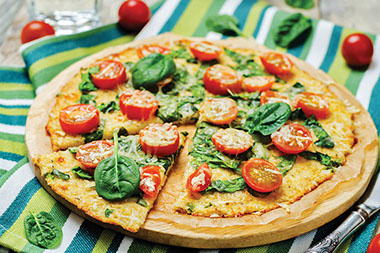
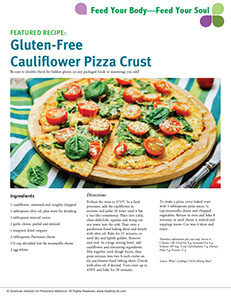
    Image of cauliflower crust pizza.

    Be sure to double-check for hidden gluten on any packaged foods or seasonings you add!

    Ingredients

    1 cauliflower, stemmed and roughly chopped

    1 tablespoon olive oil, plus more for drizzling

    1 tablespoon minced onion

    2 garlic cloves, peeled and minced

    1 teaspoon dried oregano

    2 tablespoons Parmesan cheese

    1/4 cup shredded low-fat mozzarella cheese

    2 egg whites

    Directions

    Preheat the oven to 375°F. In a food processor, add the cauliflower in sections and pulse 10 times until it has a rice-like consistency. Place into a dry, clean dishcloth, squeeze and wring out any water into the sink. Pour onto a parchment-lined baking sheet and drizzle with olive oil. Bake for 25 minutes, or until dry and lightly golden. Remove and cool. In a large mixing bowl, add cauliflower and remaining ingredients. Mix together until dough forms, then press mixture into two 8-inch circles on the parchment-lined baking sheet. Drizzle with olive oil, if desired. Turn oven up to 450°F and bake for 20 minutes.

    To make a pizza, cover baked crust with 3 tablespoons pizza sauce, ¼ cup mozzarella cheese and chopped vegetables. Return to oven and bake 8 minutes, or until cheese is melted and toppings warm. Cut into 4 slices and enjoy.

    Nutrition information for crust only: Serves 4. Calories 120; Total Fat 8 g; Saturated Fat 4 g; Sodium 185 mg; Total Carbohydrate 5 g; Dietary Fiber 5 g; Protein 11 g

    Source: What’s Cooking? USDA Mixing Bowl

    © American Institute for Preventive Medicine

  • Giving The Gift Of Healthy Eating

    HEALTHY EATING

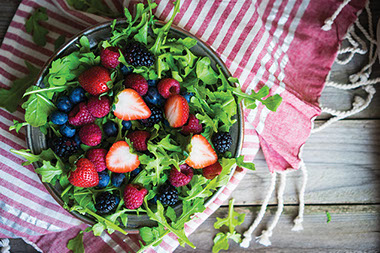
    Image of salad filled with a variety of berries.

    The holiday season is usually associated with a lot of unhealthy, rich foods and sweets. The result of eating too much of these treats is often weight gain. A study in the New England Journal of Medicine found that people gained weight within 10 days of a national holiday, and it took several months to lose that weight.

    This year, celebrate without extra weight! Spread the gift of healthy eating to others by giving gifts that encourage good habits.

    Making healthy food easier

    If you’re looking for a thoughtful gift that will be truly appreciated, try giving the gift of healthy food that saves time and effort! Here are some ideas:

    *Make a healthy meal that freezes well and hand deliver it.The recipient can choose to freeze and eat later, or eat it that day. Be sure you are aware of any food allergies or other dietary needs. Some ideas include homemade chili or pasta sauce.

    *Put a more creative twist on a traditional fruit basket and give them a fruit salad that’s ready to eat.Pre-washed and cut fruit that’s ready to grab means they can enjoy it right away, without any prep time.

    *Put soup ingredients in a mason jar.This is a popular gift that helps the person prepare an easy and healthy dinner. Usually, the dry ingredients for your favorite soup will go well in a jar. Be sure to include directions on how to cook it, and consider adding some whole-grain bread on the side.

    *Share your favorite mix or sauce.Do you have a secret recipe for healthy granola or a delicious marinade for meats? Share your gift of cooking by putting it in a jar or container with a nice label. Provide tips on how to use or prepare it.

    Not into cooking?You can always purchase dishes or containers that are useful for healthy eating. For instance, a person who eats lunch on the go may appreciate containers that can keep salads, dressing or other healthy foods fresh and delicious.

    © American Institute for Preventive Medicine