Blog

  • Give Cold Sores The Cold Shoulder

    SELF-CARE CORNER

    Close up image of cold sore.

    Cold sores – those bothersome blisters that appear around the mouth – can be painful and embarrassing. Cold sores are spread by a virus, but not the cold virus.

    Cold sores happen when a person gets infected with the herpes simplex virus (HSV). This is why cold sores may also be called “oral herpes.” HSV is very contagious. It can be easily spread person to person by:

    *  Sharing drinks or utensils

    *  Kissing

    *  Touching a cold sore or infected person’s face, and then touching your face

    *  Touching an infected person’s face and then touching someone else (this is how many babies get HSV)

    *  Sharing personal items like razors or towels

    *  Intimate or sexual contact

    *  Touching the same object that was touched by a person with a cold sore.

    The type of HSV that causes cold sores is usually HSV  type 1. Another type of HSV,  known as HSV type 2, is most often spread through sexual contact. HSV type 2 is the virus that usually causes genital herpes. But, either type of  HSV can cause cold sores or genital herpes.

    What triggers cold sores?

    Once you get HSV, there is no cure. It stays in the body forever and it may cause repeated outbreaks of cold sores. Certain things may trigger a cold sore outbreak. Things that bring down the body’s defenses may allow the virus to become active and produce a cold sore again. Many people get cold sores due to:

    *  Stress

    *  Hormone changes such as menstruation or pregnancy

    *  Illnesses, like the flu or a cold

    *  Sun exposure

    *  Certain foods

    Don’t spread cold sores!

    Even if you stay healthy and avoid stress, there is no way to prevent all cold sore outbreaks. So, it’s best to try and avoid spreading cold sores and HSV to others.

    The best way to avoid spreading cold sores is to wash your hands frequently and avoid contact that could spread the sore. If you feel a cold sore coming on, don’t share drinks and other items listed in this article. Avoid touching your mouth and don’t touch people’s faces or kiss people, especially babies, children and people with weakened immune systems.

    Treating cold sores

    If you get cold sores frequently, ask your doctor about medicines that can help. Some antiviral medicines can reduce the number of outbreaks. They also help lower the chance of spreading HSV to others.

    Some over-the-counter medicines can also help speed up the healing time of a sore, but they won’t prevent outbreaks or stop the spread of HSV. Ask your doctor if one of these treatments might work for you.

    Sources: American Academy of Pediatrics, Centers for Disease Control and Prevention, National Institutes of Health

    © American Institute for Preventive Medicine

  • Getting Motivated To Exercise

    BE FIT

    Image of couple running.

    We know exercise is healthy. But, without motivation, it’s hard to get started. Try these tips to get excited about working out, to get going and to stay with it.

    *Set goals you can achieve.Try 20 minutes of exercise, 3 days per week. Once you’ve mastered that habit, move it up to 30. Then, increase the number of days, and so on.

    *Make exercise “me time.”Exercise class, a walk or your favorite sport is time that helps your body and mind get healthier. Think of it as a treat to yourself.

    *Write down something you’ve achieved with exercise.Whether you met your goal for two weeks or perhaps noticed your mood was better, take note of it. Go back and look at the good things you’ve accomplished over time. This can give you positive encouragement.

    *Don’t dwell on setbacks.Everyone has a day where they miss a workout. Just move forward and figure out how you can get back into your routine tomorrow.

    *Find support when you need it.Sometimes, it helps to have a friend cheer you on. Or, maybe a family member is willing to babysit your kids while you exercise. Maybe you can ask a friend to exercise with you. Together, you can motivate each other.

    *Skip the stuff you don’t like.If you really dislike a certain class or activity, don’t do it. Instead, find an exercise you can look forward to. Do what gets you active and feels fun and invigorating.

    *Try something new.Whether it’s a new class, a new video or a new piece of equipment at the gym, variety can be fun. Doing the same exercise every day for weeks or months can kill motivation.

    If you have any health conditions, or haven’t exercised in a long time, ask your doctor which types of exercise would work best for you.

    Source: American Academy of Family Physicians

    © American Institute for Preventive Medicine

  • Getting Kids To Donate Old Toys

    FAMILY LIFE

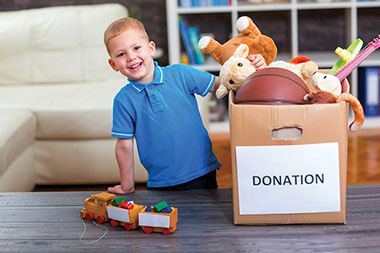
    Image of happy child placing toys in donation box.

    After the holidays, many families find their house overrun with toys. If your kids received new toys as gifts and have old toys they don’t use anymore, consider donating the toys to families in need.

    Unfortunately, it’s not always easy to do this. Many parents find that children struggle to give up old toys. Even if they haven’t touched it in months, they may be unwilling to give the toy away.

    The American Academy of Pediatrics suggests these tips to get kids on board:

    *Make giving a part of family life.Try volunteering for a local charity as a family throughout the year. Talk to the kids about causes you support.

    *Talk to the kids about ways to give.Talk to your child about local charities that could use their old toys. A church nursery, children’s shelters, a child care center, and children’s hospitals are just a few options.

    *Ask for the kids’ help.Take some time to sort through old toys with your child. Try the “give one, keep one” approach so they can decide for themselves what stays and what goes.

    *Only donate toys that are safe, not broken, and clean.

    Tips for teaching gratitude to kids

    *Do small things for friends or neighbors.Have your children bring fresh food to a neighbor who lives alone, or help them rake leaves without asking for anything in return.

    *Talk to them about what they are thankful for each day.This can help parents too.

    *Say “thank you” to others whenever appropriate.This helps them learn by following your example.

    *Send thank-you notesand teach kids to send them after receiving birthday or holiday gifts.

    *Have them do age-appropriate chores.This gives kids an idea of all the work it takes to keep a household running.

    © American Institute for Preventive Medicine

  • Getting Active As A Family

    FAMILY LIFE

    Image of family jogging.

    One of the best ways to prevent weight problems in children is to make exercise and activity a family event. Not only can parents set a good example, but it helps everyone get healthier while bonding and having fun together. The U.S. Department of Health and Human Services offers some tips:

    *  Find some free time. Being active together just twice a week can have health and emotional benefits. Try to find some 30-minute time slots and put your activity time on the calendar.

    *  Don’t make too many changes at once. To get everyone on board, start gradually and be sure to celebrate each time you make a healthy change.

    *  Ask for the kids’ ideas. Ask your kids about where they’d like to walk or bike. Talk to them about sports or activities they want to try.

    Remember, any time you make a change toward more activity and less screen time, you’re helping everyone in your family lead a healthier life.

    © American Institute for Preventive Medicine

  • Get Your Iron In The Kitchen!

    HEALTHY EATING

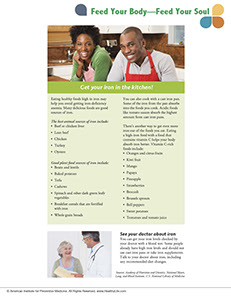
    Image of couple in the kitchen.

    Eating healthy foods high in iron may help you avoid getting iron-deficiency anemia. Many delicious foods are good sources of iron.

    The best animal sources of iron include:

    *  Beef or chicken liver

    *  Lean beef

    *  Chicken

    *  Turkey

    *  Oysters

    Good plant food sources of iron include:

    *  Beans and lentils

    *  Baked potatoes

    *  Tofu

    *  Cashews

    *  Spinach and other dark green leafy vegetables

    *  Breakfast cereals that are fortified with iron

    *  Whole grain breads

    You can also cook with a cast iron pan. Some of the iron from the pan absorbs into the foods you cook. Acidic foods like tomato sauces absorb the highest amount from cast iron pans.

    There’s another way to get even more iron out of the foods you eat. Eating a high-iron food with a food that contains vitamin C helps your body absorb iron better. Vitamin C-rich foods include:

    *  Oranges and citrus fruits

    *  Kiwi fruit

    *  Mango

    *  Papaya

    *  Pineapple

    *  Strawberries

    *  Broccoli

    *  Brussels sprouts

    *  Bell peppers

    *  Sweet potatoes

    *  Tomatoes and tomato juice

    See your doctor about iron

    You can get your iron levels checked by your doctor with a blood test. Some people already have high iron levels and should not use cast iron pans or take iron supplements. Talk to your doctor about iron, including any recommended diet changes.

    Sources: Academy of Nutrition and Dietetics, National Heart, Lung, and Blood Institute, U.S. National Library of Medicine

    © American Institute for Preventive Medicine

  • Get Your Healthy Game Day On

    SELF-CARE CORNER

    Image of football field.

    The excitement of football, and even the activities and feelings of anticipation leading up to games, can be unhealthy in ways many do not realize, according to Jody Gilchrist, a cardiac nurse practitioner at the University of Alabama at Birmingham.

    Critical matchups, tight games, and crushing defeats can trigger adrenaline that reduces blood flow to the heart and other muscles and increases heart rate and blood pressure. Over time, these high levels of stress hormones can hurt your heart-even though a football game may be deemed good stress.

    Adding to the effects of stress on the body would be unhealthier foods at the tailgate party, and heavier eating and drinking during the game. Not a winning combination. Here are some tailgating tips:

    *  Help minimize stress by watching the game with people you enjoy.

    *  Knock out a few pushups and sit ups during commercial breaks.

    *  Chew gum or squeeze a stress ball to reduce anxiety and control your emotions.

    *  Take a brief walk at halftime, or if you are attending the game, take a walk around the stadium or to another section to meet a friend.

    *  Manage your net dietary intake by planning ahead and making healthier choices at other times of the day in anticipation of splurging a bit during the game.

    *  If tailgating at the stadium, try to conserve calories earlier in the day.

    *  If tailgating at home, consider using vegetables in place of chips for dips, and substitute Greek yogurt for sour cream or cream cheese dips.

    *  Because sodium causes fluid retention-something especially bad for heart patients-a good rule of thumb is to avoid foods that have more than 1 mg of sodium per calorie. At about 0.5 mg of sodium per calorie, natural foods such as fresh fruits and vegetables generally contain much less, so opt for them whenever possible.

    *  Do your best to avoid soft drinks, which are extremely high in sugar.

    In the end, your health will win-even if your team does not.

    © American Institute for Preventive Medicine

  • Get Your Game On

    BE FIT

    Image of two males playing active video game, such as the Wii.

    Active video games, also known as “exergames,” are not the perfect solution to getting the nation moving, but they can play a role in getting some people up off the couch and moving right in front of it.

    Michigan State University researchers reviewed published research of studies of these games and say that most of the games provide only “light-to-moderate” intensity physical activity.

    And that, they say, is not nearly as good as what would be real exercise, but video gaming may be a step in the right direction. They generally do not provide the recommended 30 minutes of moderate activity per day, but for some people, the researchers said, light activity can sometimes be enough.

    The researchers named the three video gaming systems that offer active video games as ways to increase physical activity: Nintendo’s Wii, Xbox 360 (Kinect), and PlayStation 3 (Move). The study was published in Health Education and Behavior.

    © American Institute for Preventive Medicine

  • Get Out Of Your Seat

    MEDICAL NEWS

    Image of women standing and talking on the phone.

    There are lots of things you can do to keep your body healthy. Eat nutritious foods like fruits and vegetables, get exercise, and see your doctor as needed for checkups. But the American Cancer Society says there’s something else we need to do: don’t sit so much.

    A large study showed that women who sat for more than six hours per day had a higher risk of cancer than those who sat for three hours or less. In addition, studies have found links between sitting for long periods and dying younger, the ACS says.

    But what if you have to sit for your job? There are some ways you can reduce your sitting time:

    *  Stand during conference calls.

    *  Take a quick standing or walking break every hour if you can.

    *  Park farther away from the building.

    *  Walk during your lunch break.

    Remember, every little bit helps. A few minutes of walking here and there can add up to big health benefits.

    © American Institute for Preventive Medicine

  • Get Fit While Cleaning House

    BE FIT

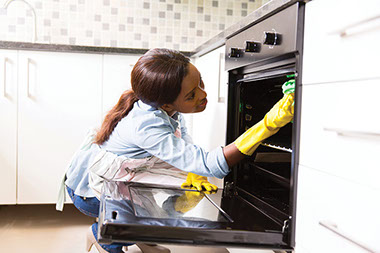
    Image of women cleaning the oven.

    If you have a home, you probably spend a good amount of time cleaning it. What if you spent that time not only cleaning your house, but cleaning up your health too?

    If you do your chores with a few fitness upgrades, you could burn extra calories and feel great when you’re done. Here’s how you can do it:

    1. Turn on the tunes.

    Use upbeat music to get motivated and set it for 30 minutes of play time. Or, set an oven timer for 30 minutes. Then, dance and move around the house as you organize, sweep, wash dishes or put laundry away. Keep your body moving as much as possible but make it fun!

    2. Focus on a muscle group while working.

    If you’re vacuuming or mopping floors, you’re already burning some calories. But, take it up a notch by working your muscles even harder during the task. For instance, hold your abdominal core (belly) muscles tight as you do your task. Try holding them for 10 seconds. Then, take a 10-second break. If this becomes too easy, increase the time to 20 seconds.

    3. Do squats as you pick up.

    If you’re spending time getting toys, clothes or other items off the floor, use this chore to work your lower body. After you pick up something, do a squat. Keeping your back straight and belly tight, slowly bend your knees and lower your bottom slightly toward the floor. Don’t let your knees reach over your toes. Come back up slowly. If this hurts your knees or back, you should stop.

    Remember, exercise doesn’t have to be a workout at the gym. You can move your body while doing everyday jobs and multitask for your health!

    Sources: Calorie Control Council, Compendium of Physical Activities

    © American Institute for Preventive Medicine