Blog

  • Get Better Sleep Starting Tonight

    SELF-CARE CORNER

    Image of man feeling sleepy at his desk.

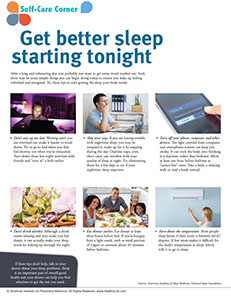
    After a long and exhausting day, you probably just want to get some much needed rest. And, there may be some simple things you can begin doing today to ensure you wake up feeling refreshed and energized. Try these tips to start getting the sleep your body needs:

    *  Don’t stay up too late. Waiting until you are overtired can make it harder to wind down. Try to go to bed when you first feel drowsy, not when you’re exhausted. Turn down those late-night activities with friends and “turn in” a little earlier.

    *  Skip your nap. If you are having trouble with nighttime sleep, you may be tempted to make up for it by napping during the day. Daytime naps, even short ones, can interfere with your quality of sleep at night. Try eliminating them for a few days to see if your nighttime sleep improves.

    *  Turn off your phone, computer and other devices. The light emitted from computer and smartphone screens can keep you awake. It can trick the body into thinking it is daytime, rather than bedtime. Allow at least one hour before bedtime as “screen-free” time. Take a bath, a relaxing walk or read a book instead.

    *  Don’t drink alcohol. Although a drink seems relaxing and may make you feel sleepy, it can actually make your sleep worse by waking up through the night.

    *  Eat dinner earlier. Eat dinner at least three hours before bed. If you’re hungry, have a light snack, such as small portion of yogurt or oatmeal, about 45 minutes before bedtime.

    *  Turn down the temperature. Most people sleep better if their room is between 60-67 degrees. A hot room makes it difficult for the body’s temperature to drop, which tells it to go to sleep.

    If these tips don’t help, talk to your doctor about your sleep problems. Sleep is an important part of overall good health and your doctor can help you find solutions to get the rest you need.

    Sources: American Academy of Sleep Medicine, National Sleep Foundation
    © American Institute for Preventive Medicine
  • Get Back Into The Exercise Habit

    BE FIT

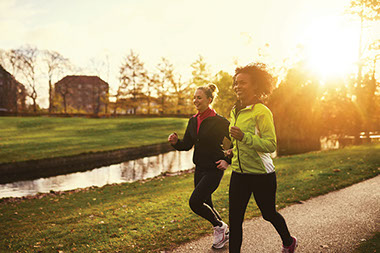
    Image of 2 females jogging.

    Stressful and busy times in our lives often get in the way of exercise. Whether you’ve been busy with your job, family, or other commitments, it is possible to get back into a fitness habit. If you haven’t exercised for months or even years, here are some safe ways to start fresh and enjoy all the healthy benefits of exercise again.

    1.Go easy at first.Understand that your body will need to work back up to its prior fitness level. Go for a shorter and lighter workout and see how you feel the next day. Gradually make it longer and more difficult each time. This will help you avoid injury and soreness.

    2.Don’t be frustrated.Perhaps you can’t run as fast or lift as many pounds as you did before. That’s to be expected. You can, however, keep working at your fitness goals to be your healthiest self. Each day you exercise, you get closer to that goal.

    3.Recovery is important.You may notice more soreness at first, as your body adjusts to exercise again. Be sure you cool down at the end of your workout and stretch your muscles.

    4.Set realistic goals.Fitness goals can help move you forward. But goals that are too difficult to reach may cause you to throw in the towel. Be proud of any progress you make and each day you choose to be active.

    5.Ask a friend to join you.Having a workout buddy can help you stay motivated and make it fun. Perhaps your friend can join you at the gym or for walks around the neighborhood a few times a week.

    6.Consider a coach or trainer.Professional fitness experts can help you avoid injury and get you on a good fitness plan. Some gyms offer free or low-cost training sessions to new members.

    Source: Office of Disease Prevention and Health Promotion

    © American Institute for Preventive Medicine

  • Germs: Just Don’t Share Them

    WORK LIFE

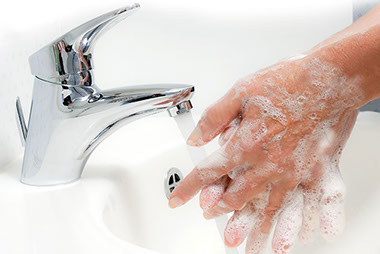
    Image of hands being wash with soap and water.

    If you must go to work or do necessary errands with a minor illness, follow these tips from the CDC to help prevent the spread of germs:

    *  Wash your hands often with soap and running water. Wash your hands after blowing your nose and using the bathroom.

    *  Cough or sneeze into a tissue and throw it away. If you do not have a tissue, cough or sneeze into your elbow, not your hand.

    *  Avoid touching your eyes, nose, or mouth.

    © American Institute for Preventive Medicine
  • Gentle Ways To Support Someone With Depression

    WELL-BEING

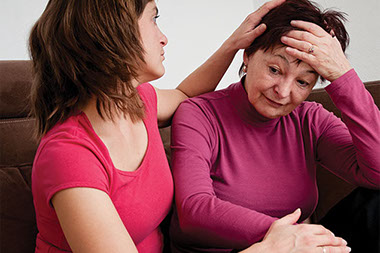
    Image of women supporting another women with depression.

    Everyone knows someone who has been through depression. Yet it’s not something we’re used to talking about over coffee break.

    If you suspect that someone is depressed, what do you say? You’re not a doctor, and you certainly can’t diagnose. But you can offer some encouragement, say mental health experts:

    *  Be understanding: “I know you’re suffering. I know you’re in pain.” “Have you thought about talking things over with your doctor?”

    *  Be supportive: “It’s okay to take your medicine.”

    *  Maintain as normal a relationship as possible: “How about lunch? My treat.”

    *  Pay genuine compliments: “Great new haircut.”

    *  Show respect: “Nice work on that report.”

    Treatment works, but it won’t work if people are not encouraged to see their doctor in the first place. Seeking treatment is a sign of strength. It’s the first step toward feeling better. Yet all the medicine in the world won’t be enough without support from those around you.

    Know what to say and when to say it. Be present to help someone put depression in their past.

    © American Institute for Preventive Medicine

  • Gbs: Get Tested, Get Treated

    MEDICAL NEWS

    Image of pregnant women at the doctors office.

    GBS is a bacteria that can be dangerous for pregnant women and their babies.

    About 1 in 4 pregnant women have GBS in their bodies, but they may not know it. That’s because GBS doesn’t always make the mother sick. But, if GBS is passed to her newborn during labor and delivery, the baby can become very sick. GBS can cause:

    *  Pneumonia

    *  Sepsis (blood infection)

    *  Meningitis (infection in the fluid around the brain)

    *  Premature birth

    *  Stillbirth

    Testing for GBS

    Many women have GBS because it’s a normal part of the body’s bacteria. You don’t get GBS from another person. It may live in the body for years without any signs. That’s why all pregnant women should be tested for GBS between 35 and 37 weeks of pregnancy.

    If the test is positive for GBS, the mother should get antibiotics during labor and delivery. The antibiotics are given through an IV. This is a safe and effective way to prevent serious GBS infection in the baby.

    Babies most at risk

    Not all babies get sick from GBS. But, because GBS can be life-threatening, every mother should be tested and treated to avoid spreading this bacteria.

    Some babies may be more at risk of serious health problems from GBS. This is more likely to happen if:

    *  The baby is born before 37 weeks of pregnancy

    *  The mother’s water breaks 18 hours or more before the baby is born

    *  The mother has a fever during labor

    *  The mother had a urinary tract infection during pregnancy that was caused by GBS

    *  The mother had a previous baby with a GBS infection

    GBS can make a baby sick even if none of these risk factors happen.

    Signs of GBS in babies

    With proper testing and treatment, GBS can be prevented. But, it’s important to know the signs of GBS infection in a baby. Get treatment right away if you notice any of these signs in your baby:

    *  Fever

    *  Breathing problems

    *  Being very drowsy

    *  Coughing or congestion

    *  Trouble eating

    These symptoms don’t mean a baby has GBS. But, any unusual signs in a baby should be checked by a doctor right away.

    Sources: Centers for Disease Control and Prevention, Group B Strep International, March of Dimes

    © American Institute for Preventive Medicine
  • Gas Leak

    WELL-BEING

    Illustration of 911 Emergency written.

    Be aware of all the possible signs of a gas leak, including a distinct unpleasant smell. The odor is added to natural gas to help identify leaks.

    If a leak is suspected:

    *  Stay calm.

    *  Don’t light a match, candle, or cigarette, and don’t turn any electrical devices on or off, including light switches, or use any device or equipment that could cause a spark.

    *  Immediately evacuate the area where the leak is suspected and from a safe location call your gas company or 911.

    © American Institute for Preventive Medicine

  • Garlic Secrets

    HEALTHY EATING

    Image of garlic.

    Use a garlic peeler to quickly peel garlic. A garlic peeler is a cylindrical piece of rubber that you place the garlic in and then roll it on the counter with the palm of your hand. The peel will stick to the inside of the peeler, and the garlic will fall out the end. If you don’t have a garlic peeler, you can do the same thing with a rubber jar opener, say extension experts at the University of Nebraska-Lincoln.

    Bonus tip:

    To mince garlic without having it stick to your knife, add a few drops of water to the garlic and then chop. The garlic sticks to the cutting board and not your knife.

    © American Institute for Preventive Medicine

  • Garage Door Safety

    WELL-BEING

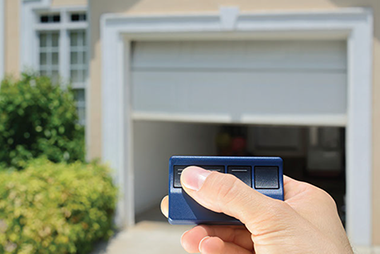
    Image of garage door opener.

    Follow this safety advice from the Overhead Door Corporation:

    *  Keep the garage door opener control button out of the reach of small children. And do not let children play with garage door remote controls.

    *  Never place fingers between door sections. Explain the dangers to children and consider pinch-resistant door panels.

    *  Consult the owner’s manual and learn how to use your garage door’s emergency release feature.

    *  Each month, inspect the springs, cables, rollers and pulleys for signs of wear. Do not try to remove, adjust or repair these parts or anything attached to them. These parts are under high tension and should only be fixed by a trained door technician.

    *  Test the reversing mechanism, monthly, too. Place a 2×4 board or a roll of paper towels in the door’s path. If the door does not reverse after contacting the object, call a qualified professional for repair. If the garage door opener has not been replaced since 1993, get a new one that has safety beams and an auto-reverse as standard features.

    *  Do not leave the garage door partially open. When activated again, it may travel downward and come in contact with an object in its path. This also compromises a home’s security.

    *  Never leave the remote control in the car when given to a parking attendant. A stolen remote leaves you more susceptible to home invasion. Always lock your car when left unattended. Store the remote out of sight.

    © American Institute for Preventive Medicine
  • Fun, Fast Indoor Workouts

    BE FIT

    Image of middle-aged man with headphones on dancing.

    When the winter months hit, it can be difficult to get outside to exercise. Snow, ice, wind, and rain can put a damper on your regular walk around the neighborhoods.

    But regular exercise cuts your risk for heart disease, diabetes, depression, and even some cancers, according to the CDC. So don’t cut your workout routine when the weather doesn’t cooperate. Bring the workout into your home with these tips:

    1.Just dance.Not only is it fun, but you can burn a lot of calories and customize it to work for you. Turn on your favorite tunes and start moving. For maximum benefit, do a 5-minute warm-up, 20-30 minutes of active dancing, and a 5-minute cool down. If you can’t do that much to start, just try a few minutes and add more time each week as you are able.

    2.March or jump.If dancing isn’t for you, marching around the house, or even just in your living room, can provide great benefits. Mix it up every few minutes by doing a few jumping jacks. You can also “pretend” you’re jumping rope by doing the motions without a rope. Watch videos that guide you through indoor walking or other aerobic activities.

    3.Strength training.You don’t need fancy weight machines or equipment. Use a resistance band to strengthen your arms and legs. Try simple exercises like squats, lunges, and push-ups. Take care to do them correctly. If you have an injury or health condition that restricts movement, talk with your doctor about exercises that are right for you.

    With a little creativity, you can have your own body-and-mind-boosting workout in the comfort of your home – no matter what the weather.

    © American Institute for Preventive Medicine
  • Fueling Your Workout The Healthy Way

    BE FIT

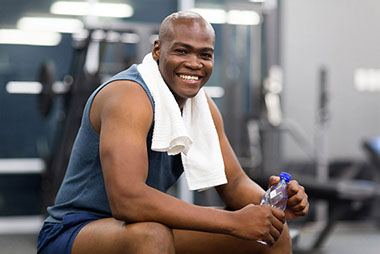
    Image of man at the gym.

    Food is your body’s fuel. When it comes to exercise, healthy food can power you through a workout session, while less healthy food can leave you feeling flat.

    Finding the right pre-workout foods doesn’t have to be complicated. Listen to your body and keep track of your diet. This can help you discover what you should eat – and avoid eating – when you want to make the most of your exercise time.

    No “quick fixes”

    Though many products on the market claim to boost energy and performance, many of them aren’t as healthy as nutritious, whole foods. Some energy bars and drinks contain high levels of sugar, caffeine and other additives. These may give you a quick “jolt,” but when your blood sugar drops and the caffeine wears off, you could feel sluggish or downright exhausted.

    Is timing everything?

    Some athletes swear by eating 30 minutes before a workout. Others experience cramping or tiredness if they eat too close to when they exercise.

    If you’re doing an intense workout, such as running or high-impact aerobics, you may need to give your body longer to digest a meal. But lower-intensity activities, such as walking or gardening, may be more enjoyable if you’ve had a small meal first.

    Healthy pre-workout choices

    Whole foods are often a great choice pre-workout – and in daily life. But don’t stick to fruits and vegetables only. The body needs some protein and fat to make energy. Try avocados, nuts, seeds, eggs, fish or beans with some fruit or veggies. If you’re going to exercise within the hour, make it a smaller portion.

    Skip sugary treats, sweetened beverages, and energy bars and drinks. Drink plenty of water before your workout and continue to drink during and afterward. If you’ll be sweating excessively, a sports drink may be advised – but make water the drink of choice most of the time.

    Coffee and exercise – a good match?

    Some people find they have a better workout after they’ve had their morning cup of joe. This can be helpful for those who already drink coffee, but it’s not for everyone. Coffee can dehydrate you, so drink plenty of water. And, if you don’t already drink caffeinated beverages, you could end up jittery or anxious. If your doctor has told you to avoid caffeine, don’t try this.

    Consuming the right foods at the right time may help you feel your best during and after your workout.

    © American Institute for Preventive Medicine