Blog

  • Easy Snacks For High Energy

    HEALTHY EATING

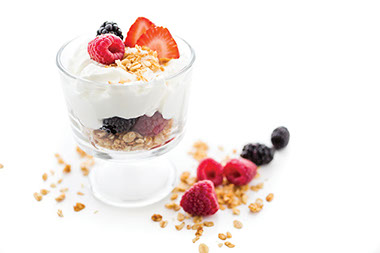
    Image of greek yogurt and fresh berries.

    One way to keep your energy up is to choose snacks that have fiber and protein. These foods are digested more slowly. That way you won’t “crash” like you do after eating sugar-filled and low-fiber foods. Some healthy choices include:

    *  An apple with a small handful of nuts

    *  Carrots and celery with string cheese

    *  Greek yogurt and fresh berries

    Source: Academy of Nutrition and Dietetics

    © American Institute for Preventive Medicine

  • Easy Snack Substitutions

    HEALTHY EATING

    Image of popcorn in a bowl.

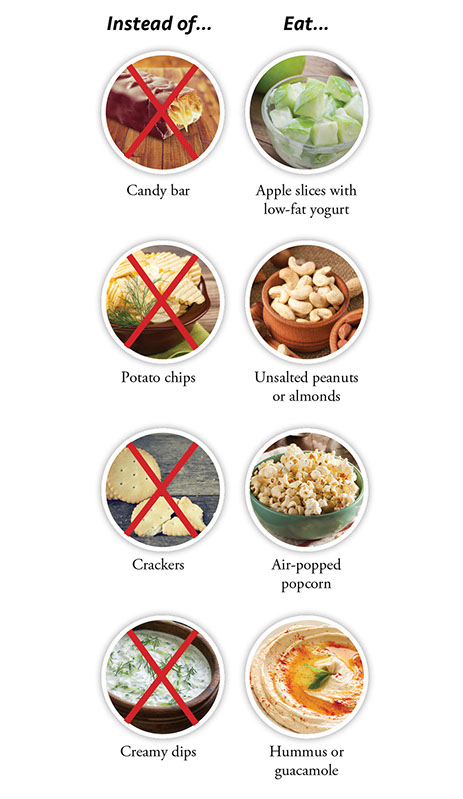
    Skip the vending machine and processed foods when you need to fill up between meals. Try these alternatives to everyday unhealthy snacks:

    © American Institute for Preventive Medicine

  • Easy Protein Snacks

    HEALTHY EATING

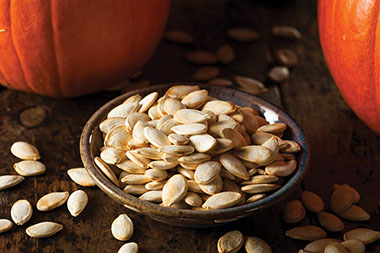
    Image of roasted pumpkin seeds.

    A great way to get healthy protein throughout the day is to make snacks with protein. The protein can help you feel fuller, holding you over until your next meal. These snacks may also help avoid a blood sugar crash that leaves you feeling sluggish and even hungrier than before. Try these ideas for tasty and easy-to-pack snacks:

    *  Hummus with sliced peppers, carrots, celery or cucumbers

    *  Peanut butter or almond butter with a banana

    *  ¼ cup of nuts, such as almonds, walnuts or pistachios with fresh fruit

    *  Roasted pumpkin seeds (buy them roasted or bake on a cookie sheet at 300º for 20 minutes)

    *  Tortilla with black beans, salsa and a sprinkle of low-fat cheese

    *  Roasted soy nuts (available at many supermarkets)

    *  A hard-boiled egg with leafy greens

    *  Low-fat string cheese with an apple or pistachios

    © American Institute for Preventive Medicine

  • Easy Food Swaps For A Healthier You

    HEALTHY EATING

    Image of middle-aged couple preparing food in their kitchen.

    What if you could be healthier without making a bunch of drastic changes? No extreme dieting or starving, but just taking some small steps to improve your food choices. It is possible if you know which foods to eat more of, and which ones to scale back on. The American Heart Association recommends a few simple switches that can add up to better overall health:

    *  Don’t cook with butter, lard, or shortening. Use vegetable oils that are high in unsaturated fats. Great choices include olive, canola, walnut, and safflower oils.

    *  When purchasing canned soups or vegetables, look for lower-sodium or “no salt added” varieties. Choose frozen vegetables without added salt or sauces.

    *  Avoid foods with added sugar, such as canned fruits with syrup. Choose canned fruits with no sugar added and/or packed in 100 percent fruit juice.

    *  Use nonstick cooking spray instead of shortening for recipes that call for “greased” cookware.

    *  When buying bread or crackers, look for those labeled “whole grain” or “whole wheat.” These choices contain more fiber and nutrients than refined grains.

    *  Cut back on red meat by using ground turkey or chicken in place of ground beef in recipes. Turkey tacos, meatballs, or chili can be just as tasty and many people can’t tell the difference.

    These simple tips can help you cut back on saturated fat, excess sugar and sodium. This adds up to great health benefits without having to change your eating habits entirely.

    © American Institute for Preventive Medicine

  • Eap Is At Your Service

    WORK LIFE

    Image of 2 business women shaking hands.

    In an edition of Psychology Today, Steve Albrecht, doctor of business administration, encourages employees to find out about the many services available from their Employee Assistance Program (EAP) and reach out for help if needed. Dr. Albrecht has written or co-written 15 books, including Ticking Bombs: Defusing Violence in the Workplace, and Fear and Violence on the Job. He is also a former police officer and domestic violence investigator with the San Diego Police Department.

    Dr. Albrecht gave four reasons why employees do not use their EAP services:

    1. They do not think what they say or do will be held in confidence.

    2. They see reaching out for help as a weakness. This is especially true  for men.

    3. They think they need to get permission from their boss or Human Resources to seek services from their EAP.

    4. They do not know their EAP exists.

    First, according to Dr. Albrecht, services and discussions between employees and EAP providers are kept confidential. There is an exception-an EAP counselor has a duty to warn or intervene if the employee wants to harm himself or herself or others. The company gets no reports or records of employee use of EAP services.

    Second, employees need to be reassured that EAP offers help for many very common issues that affect most people. Examples are money worries, marital issues, raising children or step-children, blended families, sick kids, and dealing with parents with Alzheimer’s disease.

    Employees can also get help for financial problems, burnout, stress-related illnesses, cancer and mental health issues. These include substance abuse, workplace conflicts, depression and suicidal thoughts.

    Third, employees simply need to call the EAP phone number and make an appointment. They do not have to tell coworkers, their boss or Human Resources.

    Lastly, Dr. Albrecht is puzzled why employees do not know about their EAP. Companies with EAP programs list their services and contact numbers on posters and brochures in lunch rooms and break rooms. New employees receive EAP information.

    To find out if your company offers EAP services, check your benefits manual or website or ask your human resources manager. Help is just a phone call away.

    © American Institute for Preventive Medicine

  • Due Date

    SELF-CARE CORNER

    Image of pregnant women smiling.

    Although we think of pregnancy as lasting 9 months, in reality most pregnancies last nearly 10 months. Research shows that babies are born healthier if they have at least 39 weeks to grow in the womb.

    The NIH in Health offers these wise choices for a healthy pregnancy:

    *  See your doctor for regular care while you are pregnant.

    *  Talk to your doctor about the medicines you take. Some may not be safe during pregnancy.

    *  Follow a healthy diet.

    *  Take folic acid-at least 400 micrograms each day. This B vitamin can help prevent serious birth defects of the brain and spine. Make sure you take folic acid for at least one month before you get pregnant, too.

    *  Stay active. Ask your doctor which physical activity is safe for you.

    *  Avoid drinking alcohol and smoking (and being around anyone smoking).

    *  Control any existing conditions such as diabetes.

    *  If you have no medical reasons to deliver early, wait until at least 39 weeks for delivery. A woman’s body will go into labor when the baby is ready to enter the world.

    © American Institute for Preventive Medicine

  • Drugs That May Affect Your Driving

    MEDICAL NEWS

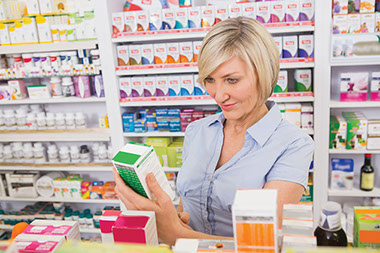
    Image of women at store reading the medicine label.

    Certain over-the-counter medicines, known as OTC or nonprescription drugs, may affect your ability to drive.

    Read the Drug Facts label and use the medicine exactly as directed, advises the FDA.

    Look for such statements as “you may get drowsy,” “marked drowsiness will occur,” “be careful when driving a motor vehicle or operating machinery,” or “do not drive a motor vehicle or operate machinery when using this product.”

    Some of these seemingly harmless drugs for allergies or an upset stomach are not harmless at all, even though you can buy them without a prescription.

    Certain medications may make you drowsy fairly quickly. Their effects can last several hours. Others may cause “hangover-like” effects, even the next day.

    Common OTC medicines that can cause drowsiness or impaired driving are antihistamines (often used for a runny nose or watery eyes), antidiarrheals (used to treat or control diarrhea), and anti-emetics (taken for nausea, vomiting, or dizziness).

    © American Institute for Preventive Medicine

  • Drive-Thru Eating Driving You Crazy?

    HEALTHY EATING

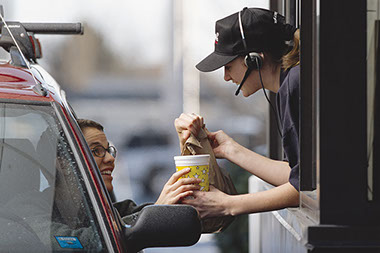
    Image of women picking up food from a drive-thru.

    Are you driving through fast-food windows, mindlessly eating while you work? Or do you munch while you drive?

    You may be out of touch with your eating, and then it’s easy to overeat, said Dr. Jenny Conviser, an expert in the treatment of  eating disorders. You can establish mindful eating patterns. She offers this advice:

    *Carve out time for meals.Don’t get a lunch break? Fight for one, even if it’s 15 minutes. Research suggests that our brains don’t even fully register the things we’re eating while doing something else.

    *Eat sitting down.If you’re going to eat at the refrigerator, pull up a chair! If you commit to eating only while sitting down (at a table no less!), you’re less likely to mindlessly munch. And eat without distractions, like the TV or computer, so you can fully experience what you are eating.

    *Learn what “hungry” feels like.Ask yourself if you really are hungry before you eat, or are you eating due to habit or to cope with stress? If you are hungry, allow yourself to eat and plan for healthy snacks during your day. Driving yourself to extreme hunger by skipping meals or not allowing yourself to snack can result in unhealthy binges.

    *Notice each sensation.Next time you sit down to eat something, take a moment to notice its shape, color and size. Bring the food to your nose and inhale the aroma. When you take a bite, notice how the texture feels on your tongue. Chew fully before swallowing. Take a moment before taking another bite. Sure, this takes a few extra minutes, but you get to experience food as it’s meant to be-a full sensory experience.

    *Check in with yourself.Try stopping for a break midway through your meal for a few minutes. Are you still really hungry? If so, keep eating, and check in again after a few more bites. If not, maybe it’s time to stop and save the rest for later.

    © American Institute for Preventive Medicine

  • Drink To Your Health With Kefir

    HEALTHY EATING

    Image of kefir.

    One of the newer additions to the dairy section, kefir is a type of fermented milk product similar to yogurt. Its consistency is generally thin, so it’s usually sold in bottles as a drink. But what makes it different from yogurt, besides the ability to skip the spoon?

    Like yogurt, kefir is usually made from dairy milk that is fermented with helpful bacteria (though it can be made with non-dairy milks as well). These bacteria, known as probiotics, may have a number of health benefits, according to the National Center for Complementary and Integrative Health. Probiotics may be helpful in treating the following issues:

    *  Diarrhea, constipation, irritable bowel syndrome and other bowel disorders

    *  Digestive problems, such as acid reflux

    *  The common cold

    *  Seasonal allergies and eczema

    *  Cavities and gum disease

    *  Colic in babies

    *  Liver disease

    Kefir may also help prevent stomach side effects and complications that arise from taking antibiotics.

    Kefir contains many different strains of probiotics and generally has a bigger variety than store-bought yogurts. It also contains beneficial yeast–an ingredient not found in yogurt. This friendly yeast may help fight off bad yeast in the body, such as those that cause yeast infections.

    Many people who are lactose intolerant can still drink dairy kefir. The lactic acid bacteria found in kefir breaks down the lactose, making it easier to digest. People with dairy allergies, however, should only consume a dairy-free version.

    How to get it:

    Kefir can be made at home with plain milk and kefir starter grains, which are usually found at health food stores. Though plain is healthiest, many people find they need to sweeten it to offset the tart taste. Try mixing it in smoothies with fresh or frozen fruit.

    Many grocery stores carry kefir in the dairy section near the yogurt. Though kefir is healthy, look at the label before purchasing. Some brands and flavors may contain too much sugar or artificial sweeteners.

    © American Institute for Preventive Medicine

  • Do’s And Don’ts For The Itch Of Eczema

    SELF-CARE CORNER

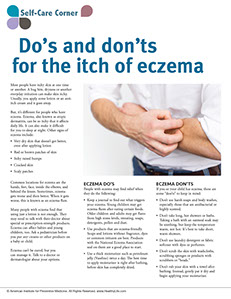
    Image of man itching arm.

    Most people have itchy skin at one time or another. A bug bite, dryness or another everyday irritation can make skin itchy. Usually, you apply some lotion or an anti-itch cream and it goes away.

    But, it’s different for people who have eczema. Eczema, also known as atopic dermatitis, can be so itchy that it affects daily life. It can also make it difficult for you to sleep at night. Other signs of eczema include:

    *  Very dry skin that doesn’t get better, even after applying lotion

    *  Red or brown patches of skin

    *  Itchy raised bumps

    *  Cracked skin

    *  Scaly patches

    Common locations for eczema are the hands, feet, face, inside the elbows, and behind the knees. Sometimes, eczema gets worse and then better. When it gets worse, this is known as an eczema flare.

    Many people with eczema find that using just a lotion is not enough. They may need to talk with their doctor about special or prescription-strength products. Eczema can affect babies and young children, too. Ask a pediatrician before you put any creams or other products on a baby or child.

    Eczema can’t be cured, but you can manage it. Talk to a doctor or dermatologist about your options.

    Eczema do’s

    People with eczema may find relief when they do the following:

    *  Keep a journal to find out what triggers your eczema. Young children may get eczema flares after eating certain foods. Older children and adults may get flares from high stress levels, sweating, soaps, detergents, pollen and dust.

    *  Use products that are eczema-friendly. Soaps and lotions without fragrance, dyes or common irritants are best. Products with the National Eczema Association seal on them are a good place to start.

    *  Use a thick moisturizer such as petroleum jelly (Vaseline) twice a day. The best time to apply moisturizer is right after bathing, before skin has completely dried.

    Eczema don’ts

    If you or your child has eczema, these are some “don’ts” to keep in mind:

    *  Don’t use harsh soaps and body washes, especially those that are antibacterial or highly scented.

    *  Don’t take long, hot showers or baths. Taking a bath with an oatmeal soak may be soothing, but keep the temperature warm, not hot. It’s best to take short, warm showers.

    *  Don’t use laundry detergent or fabric softener with dyes or perfumes.

    *  Don’t scrub the skin with washcloths, scrubbing sponges or products with scrubbers or “beads.”

    *  Don’t rub your skin with a towel after bathing. Instead, gently pat it dry and begin applying your moisturizer.
    © American Institute for Preventive Medicine