Blog

  • Creative Imagination

    Healthylife® QuitWell™

    Part 5

    Image of smiling women.

    Creative imagination is the acting out of an event or activity in your mind before it really happens. It allows you to work through the event or activity ahead of time so that you will be better prepared to deal with it. Many athletes practice an upcoming game in their heads before stepping onto the playing field.

    A study was done to compare “creative imagination” to actual practice with a group of basketball players. Three groups of students were used.

    *Group 1– Practiced making free throws every day for 20 days.

    *Group 2– Threw the ball on the 1st and 20th days, but did not practice in between.

    *Group 3– Threw free throws on the first day and then spent 20 minutes a day for the next 20 days imagining that they were throwing the ball. If they missed, they had to imagine changing their aim.

    On the 20th day:

    *  Group 1 – Improved their scores by 24%

    *  Group 2 – No improvement

    *  Group 3 – Improved their scores by 23% by using creative imagination

    Mental practice can help you change your feelings about day-to-day events. Picture yourself succeeding with your goals and getting through trigger situations. The power of your mind to change what you imagine to be real is vast; all it takes is a little thinking and practice.

    What would you like to imagine doing differently? Picture yourself doing things the way you want. Repeat this practice every day for at least 2 weeks.
    © American Institute for Preventive Medicine

  • Cleaning Up Mind Pollution

    Healthylife® QuitWell™

    Part 4

    Image of women relaxing while thinking.

    Start with changing how you react to minor annoyances, like traffic or a chatty co-worker. Work to reduce the number of things that push your buttons. It is not the event itself that determines your feelings-it is what you tell yourself about it. You may have some truly big, serious stressors in your life. Avoid piling the little things on top.

    “Men are not disturbed by things, but by the views they take of them.”  – Epictetus

    Let’s pretend you got stuck in a traffic jam on the way to work today. You feel angry and upset. But it is not the traffic jam that makes you upset. It is what you tell yourself that upsets you: “I’m going to be late for work.” “I have so much to do.” “This is such a waste of time.”

    You cannot change the fact that you are stuck in traffic. Getting angry serves no purpose. If you can look at the delay as a minor problem that you can’t control, rather than a major event, you will feel much better. When your mind stays calm, you may even see ways around the issue, like taking another route or using hands-free calling to join a meeting you’re running late for.

    Your outlook on quitting is also very important. If you tell yourself that quitting will be awful, chances are the process will be as bad as you think. If you accept the fact that you will have urges, but nothing you can’t handle, you will have an easier time quitting. Focus on what is gained from quitting, not on what is being lost or the minor discomfort along the way.

    Thinking Differently

    You can change how you think, feel, and react to any event. The ABCDE model can help you do this.

    Activating Event:An event that triggers thoughts and feelings. Example – “I am trying to quit smoking and this event is making me anxious.”

    Belief:What you think or say to yourself about the activating event. Examples – “I just can’t quit.” “I don’t have any willpower.”

    Consequence:How you feel in response to your beliefs. Examples – “I feel discouraged.” “I feel embarrassed and defeated.”

    Dispute:Question your earlier beliefs. Examples – “Wait a minute here, I can do hard things!” “I don’t need to rely on willpower to quit. I can apply skills I’m learning in QuitWell™.”

    Effect:How you feel after you dispute your earlier beliefs. Examples – “I can succeed.” “I feel my actions are within my control.” “I can handle this.”

    © American Institute for Preventive Medicine
  • Clean Your Environment

    Healthylife® QuitWell™

    Part 4

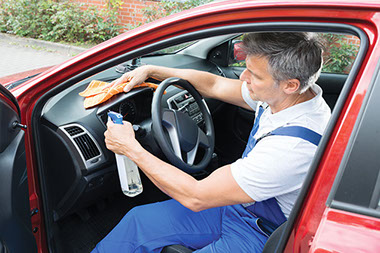
    Man cleaning the inside of his car.

    Go around your house, car, workplace, and other places you have stored tobacco products. Gather all your tobacco, lighters, matches, and other items related to your habit. Don’t forget to check your coats, purses, and drawers.

    If you have quit, throw these products away. Seeing these items will not be helpful to staying quit. If you are still working on quitting, having all these items out of sight will also reduce the unhelpful reminders of your habits. You will be more ready for the day you quit completely.

    © American Institute for Preventive Medicine
  • Carry & Store In A New Place

    Healthylife® QuitWell™

    Part 3

    Image of man with thumbs up.

    Change where you keep your tobacco/nicotine products. For example, instead of keeping them in your desk or in a locker, keep them in your car. Better yet, put that pack or can in the trunk of your car. When reaching in the usual place without thinking, coming up empty will be a reminder of what you are working on. If you have always kept a pack in your right pocket, switch to your left.

    This pause allows you to be more mindful and deliberate, instead of acting without thinking. This is another way to put a speedbump in your usual way of doing things every day.

    © American Institute for Preventive Medicine

  • Buy Smaller Amounts

    Healthylife® QuitWell™

    Part 3

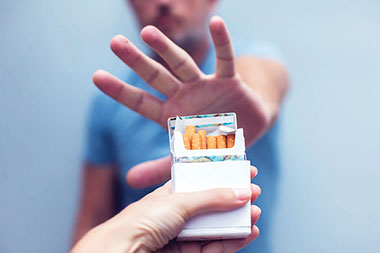
    A hand offering cigarettes and another hand rejected them.

    If you smoke, buy cigarettes one pack at a time, not by the carton. If you dip, buy one can at a time. If you vape, smoke cigars, or use another form of tobacco/nicotine, buy the smallest quantity available. If you vape, buy a lower concentration of nicotine or fewer cartridges. This makes your habit less convenient (more trips to the store) and it will be helpful to have less at home when you are ready to be completely done.

    Note for e-cigarettes: Start by stepping down to the next lowest concentration. If you’re using 18 mg cartridges, switch to 12 mg, and so on, until you’re down to 0 mg.

    While you’re cutting back:

    *  Focus on keeping your inhaling as consistent as possible. It might be tempting to inhale more forcefully to get a bigger nicotine hit.

    *  Avoid taking more hits than you did on higher doses of nicotine.

    © American Institute for Preventive Medicine
  • Buddy System

    Healthylife® QuitWell™

    Part 3

    Image of 3 friends talking over tea and coffee.

    Who could support you in your effort to quit? Having someone to hold you accountable-and who you want to share success with-can be a powerful part of your quit plan. Support from others can help:

    *  Motivate you and lift you up when you stumble.

    *  Hold you accountable.

    *  Give you new ideas and inspiration-especially if they have gone through quitting themselves.

    *  Make activities more fun, like taking a walk together instead of a smoke break.

    Start With One Person

    1. Choose a buddy-someone you will talk to daily. This person should be someone you trust and who you can be completely honest with.

    2. Let them know what you are trying to do.

    3. Ask them if they would be willing to support you. If they are, thank them!

    4. Let them know how to help you. This may change over time.

    5. Share your feelings and actions truthfully with your buddy. If you don’t, you are losing out on the benefits of an accountability buddy.

    6. Thank this person often. Let them know the impact they are having on your lifestyle change.

    Involving Others

    Even when someone wants to help you, they may not know how. You have probably experienced this already, like when someone gives you cliché advice or says “just one won’t hurt.”

    Be specific when you tell others how to help you. These are suggestions for those people who want to help you. Read over the list and choose the ones you think will be most helpful. Write these down and show your list to the people who want to help.

    © American Institute for Preventive Medicine
  • Break Down Barriers

    Healthylife® QuitWell™

    Part 2

    Image of smiling man with thumbs up.

    Maybe you don’t feel like you have time to read the QuitWell™ program or answer the questions in each section. The tips on time management in this section can help. Other barriers may seem to be unchangeable until a powerful motivator enters the picture. More information or skills to get through a challenge can also help you overcome what felt impossible in the past.

    Be Open to Powerful Motivators

    Have you ever started a new relationship or made a new friend and suddenly you want to spend all your time with that person? You may even get into a new hobby in order to spend more time with them. Or, maybe you got concerning test results and want to improve before your next visit to the doctor. Or, maybe you just found out you are going to be a parent or grandparent.

    These are examples of powerful motivators. They usually seem to come out of nowhere or when you are least expecting them. Some seem to knock you off your feet and you can’t ignore how powerful they are. Others you may not notice unless you are paying attention. These may be negative and scary or joyous and exciting. As you think about quitting and look at your barriers, try to be open to power motivators.

    Do you feel any powerful motivators in your life right now?

    What could be a powerful motivator in the future? Imagine what it would take to suddenly make nearly all the barriers on your list seem less important.

    © American Institute for Preventive Medicine

  • Be Assertive 2

    Healthylife® QuitWell™

    Part 5

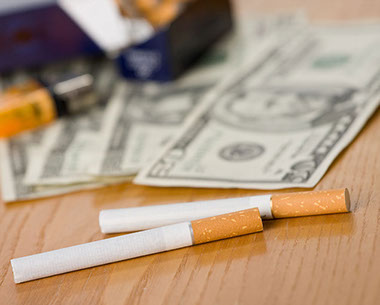
    Image of cigarettes and money.

    Learn the differences between passive, aggressive, and assertive communication.

    Passive

    *  You lack expression for yourself.

    *  You do not stand up for your rights and needs.

    Result: You usually do not achieve your goal. You may feel like someone is walking all over you.

    Aggressive

    *  You stand up for your rights and needs, but at the expense of someone else.

    Result: You usually put down or hurt someone else. You gain no respect and may even start a conflict.

    Assertive

    *  You stand up for your rights and needs without putting down or hurting someone else.

    Result: You build self-respect and feel good about yourself. You are likely to achieve your goal.

    Example

    Your co-worker offers you a cigarette, saying that you can have just one, even though you recently quit. This person wants to smoke with you for old time’s sake. You know this could send you back to using tobacco.

    Passive Response:“All right, I’ll have a cigarette with you, but just this one.”

    Aggressive Response:“You really have some nerve offering me a cigarette. I hate cigarettes and I think it’s disgusting that you smoke. You should smell your breath. Don’t ever come near me with a cigarette again.”

    Assertive Response:“No, thank you. I have quit smoking and I plan to stay that way. Even one can trigger my old addiction. You can help me remain an ex-smoker by not offering me any.”

    © American Institute for Preventive Medicine

  • Balance Of Choice 2

    Healthylife® QuitWell™

    Part 2

    Man's hand touching an abstract no smoking.

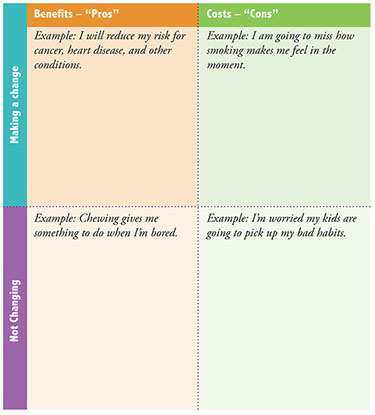
    Learn what is pulling you toward your goal and what is holding you back. All thoughts and feelings are valid. Is your goal more important to you than the challenges to achieve it? Are you pursuing this goal just because someone said you “should” do it? Complete the chart below as well as you can. If you think of something later, come back to this page to add another point to one of the boxes.

    Chart to fill out your choices.

    © American Institute for Preventive Medicine
  • Avoid Secondhand Smoke

    Tobacco Cessation

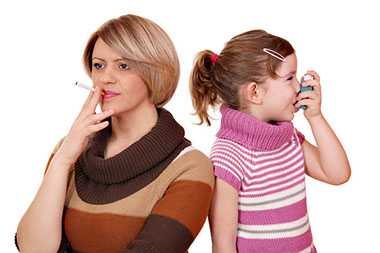
    Image of women smoking and child using an asthma inhaler.

    Somebody else’s habit can destroy your health.

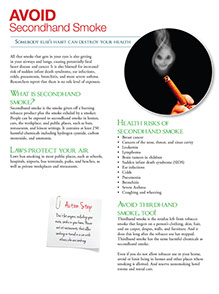
    All that smoke that gets in your eyes is also getting in your airways and lungs, causing potentially fatal heart disease and cancer. It is also blamed for increased risk of sudden infant death syndrome, ear infections, colds, pneumonia, bronchitis, and more severe asthma. Researchers report that there is no safe level of exposure.

    What is secondhand smoke?

    Secondhand smoke is the combination of smoke given off a burning tobacco product and the smoke exhaled by a smoker. People can be exposed to secondhand smoke in homes, cars, the workplace, and public places, such as bars, restaurants, and leisure settings. It contains at least 250 harmful chemicals including hydrogen cyanide, carbon monoxide, and ammonia.

    Laws protect your air.

    Federal law bans smoking on most public transportation and in federally owned buildings. Many states and local governments have passed laws that ban smoking in public facilities, such as schools, hospitals, airports, bus terminals, parks, and beaches, as well as private workplaces, including restaurants and bars.

    Health risks of secondhand smoke:

    *  Breast cancer

    *  Cancers of the nose, throat, and sinus cavity

    *  Leukemia

    *  Lymphoma

    *  Brain tumors in children

    *  Sudden infant death syndrome (SIDS)

    *  Ear infections

    *  Colds

    *  Pneumonia

    *  Bronchitis

    *  Severe Asthma

    *  Coughing and wheezing

    Avoid thirdhand smoke, too!

    Thirdhand smoke is the residue left from tobacco smoke that lingers on a person’s clothing, skin, hair, and on carpet, drapes, walls, and furniture. And it does this long after the tobacco use has stopped. Thirdhand smoke has the same harmful chemicals as secondhand smoke.

    Even if you do not allow tobacco use in your home, avoid or limit being in homes and other places where smoking is allowed. And reserve nonsmoking hotel rooms and rental cars.

    Action Step

    Don’t let anyone, including your mate, smoke in your home. Never eat at restaurants that allow smoking or travel in a car with others who are smoking.

    Page from Ways to Well-Being book by the American Institute for Preventive Medicine. www.HealthyLife.com. All rights reserved.

    © American Institute for Preventive Medicine