Blog

  • Backpacks. Crayons. Glue Sticks. Epipen?

    FAMILY LIFE

    Image of 2 school kids in the classroom.

    For more and more school-age children the Epipen is becoming a necessity for completing the back-to-school supply list. In fact, allergic conditions are one of the most common medical conditions affecting children in the U.S.

    “Accidental exposure to allergens at school is a major concern for kids with severe allergies since any exposure could be fatal,” said Dr. Joyce Rabbat, pediatric allergist at Loyola University Health System.

    Food allergies are the most concerning for school-age children since allergens can be hidden in food or utensils and pots and pans could be contaminated without the child’s knowledge. Dr. Rabbat said that parents of children with food allergies should ensure an Allergy Action Plan is in place for the child at his or her school.

    This really could mean life or death to the child,” she said in suggesting that parents should make sure the school reviews the child’s health records that they provide from the doctor. She also suggests asking what the school does to prevent accidental exposure and that staff are trained to deal with an emergency situation.

    If the child is older and knows how to self-administer medications, Dr. Rabbat suggests talking to the school about allowing the child to carry the medication with them. If that is not allowed at the school, make sure the following medications are available:

    *  Epinephrine autoinjectors

    *  Antihistamines

    *  Albuterol rescue inhalers

    Also make sure a staff member, who is available at all times, is properly trained on to how to administer these medications and that your child is familiar with this person.

    © American Institute for Preventive Medicine

  • Back In Action

    MEDICAL NEWS

    Image of older women holding her back in pain.

    Back pain. In the last 3 months, about 1 in 4 adults has had at least one day of back pain, mostly in the lower back, according to NIH in Health.

    The good news is that most back pain goes away by itself-in time. If pain continues for more than 3 months, you have chronic back pain. If doctors can find out the source of your pain, you may be treated effectively with certain surgeries.

    But even chronic pain can clear up without surgery. Don’t let the pain take over. Doctors advise:

    *  Stay active and maintain a healthy weight.

    *  Stretch before exercise or other strenuous physical activity.

    *  Don’t slouch when standing or sitting.

    *  Make sure your work surface is at a comfortable height for you.

    *  Wear comfortable, low-heeled shoes.

    *  Lift, if you must, with your back straight, bend at the knees, and put the stress on your legs and hips.

    *  Don’t smoke.

    *  Talk with your doctor to make sure you’re getting enough calcium and vitamin D.

    © American Institute for Preventive Medicine

  • Baby Teeth

    FAMILY LIFE

    Image of baby at the doctor's office.

    The ideal time for a child to visit the dentist is 6 months after the child’s first teeth appear. During this initial visit, a dentist will be able to examine the development of the child’s mouth.

    Babies may have dental problems, such as teething irritations, gum disease, and prolonged thumb or pacifier sucking.

    The sooner the child visits a dentist, the better, says the Academy of General Dentistry in offering these other tips:

    *  Clean your infant’s gums with a clean, damp cloth twice a day.

    *  Ask your dentist when you may begin to rub a tiny dab of toothpaste on your child’s gums. Doing so will help your child become accustomed to the flavor of toothpaste.

    *  As soon as the first teeth come in, begin brushing them with a small, soft-bristled toothbrush and a pea-sized dab of fluoride toothpaste.

    *  Help a young child brush at night. This is the most important time to brush, due to lower salivary flow during sleep and higher risk for cavities and plaque.

    *  By about age 5, your child can learn to brush his or her teeth with proper help from an adult.

    © American Institute for Preventive Medicine

  • Avoiding The Afternoon Slump

    WORK LIFE

    Image of a group of co-workers smiling and laughing.

    Do you often feel tired and worn out after lunch? It can be hard to stay productive and get through the workday if you’re fighting fatigue and exhaustion. Often times, this afternoon slump can be avoided by making a few simple changes:

    *Use caffeine sparingly.A cup of coffee or tea can give you a boost in the morning, but drinking too much can cause an energy crash after it wears off. Finish your last caffeinated drink before noon, and limit intake to four 8 oz. cups of coffee.

    *Include lean protein and healthy fats in your lunch.This can help stabilize blood sugar levels and fight fatigue. Examples include turkey, low-fat dairy, avocado, nuts and fish.

    *Drink plenty of water.Even mild dehydration can make you tired. Aim for eight 8 oz. glasses per day.

    *Get moving.If you can, walk outside at lunch and get fresh air, even for just 10 minutes. This can energize and relax you. But even walking indoors or stretching in your office can be helpful. Sitting at a desk for hours without getting up can make you feel tired. Do alternative activities and walk around when you can.

    *Having more energy starts the day before.If you find that you’re tired every day despite these tips, you may need more sleep. Aim for 7 to 9 hours a night.

    Sometimes, ongoing fatigue can be a sign of a health issue. If you find that your energy levels are always low despite making healthy choices, talk to your doctor. Problems such as sleep disorders, anemia, depression, diabetes, and many other conditions can cause energy levels to sag. Certain medications can also cause sleepiness. You and your doctor can discuss your health history and make a plan to address any issues to get you feeling better again.

    © American Institute for Preventive Medicine

  • Avoiding Distractions At Work

    WORK LIFE

    Close up image of laptop with hands and phone.

    We all have days that are more productive than others. But you can be your best each day if you learn how to avoid the biggest distractions at your workplace.

    Put the phone away

    Is your phone frequently dinging with texts or people calling you “just to chat?” Do you find yourself checking social media or playing with apps when you should be working?

    Smart phones are a major cause of work-related distractions. Some employers have policies that prohibit cell phone use on the job. If that’s the case, you’ll need to follow those rules. But if your employer allows cell phones, turn off notifications and put the phone in a place that’s harder to reach. Some phones have an option that filters all calls except those from important or emergency numbers. This is a great way to allow people to reach you when it’s necessary, but to avoid non-essential calls and notifications.

    Use white noise

    If other people’s conversations or office noises are bothering you, consider ways you can soften or filter some of the sound. A white noise machine, fan or even headphones that play white noise or quiet non-distracting music may be helpful.

    Ways to get your focus back

    Everyone needs a mental break once in a while. Instead of checking your phone or social media, try these healthy tips that can energize you and help you get back to your work:

    *  Take a short walk around the building.

    *  Eat a healthy snack, such as fruits, vegetables, or lean protein.

    *  Drink a glass of water. Add a lemon or cucumber slice for more flavor.

    *  Get up from your chair and stretch for 3 minutes.

    *  Clean or organize your workspace. Clutter in your space can make your brain feel cluttered, too.

    © American Institute for Preventive Medicine

  • Avoiding Digital Eye Strain

    WORK LIFE

    Image of man working on computer.

    Many people spend a lot of time in front of a computer screen at their job. And when we’re not at our desks, we may be looking at a smartphone or tablet or watching TV. All of these digital screens add up to a lot of strain on the eyes. Viewing a digital screen is hard on the eyes due to glare and reflections. Most screens also have less defined letters than printed paper, making them harder to read.

    Digital eye strain, or computer vision syndrome, may cause dry eyes or blurred vision, but it can affect other areas of the body as well. Some people also experience headaches and neck and shoulder pain. If these symptoms bother you when you’re using a digital screen, you may have digital eye strain.

    When you are viewing a screen for long periods, protect your eyes from strain by following these tips:

    *  Keep your screen about four to five inches below eye level.

    *  Avoid glare by moving the screen away from windows and bright lights. Consider a screen glare filter if needed.

    *  Rest your eyes throughout the day with the 20-20-20 rule. Every 20 minutes, look at an object 20 feet away for 20 seconds.

    *  Think about blinking. Many people blink less frequently while viewing a screen. Be intentional about blinking so your eyes stay moist.

    *  Get regular eye exams from a qualified doctor or optometrist. Be sure to tell your doctor if you notice any symptoms of digital eye strain or vision changes.

    Source: American Optometric Association

    © American Institute for Preventive Medicine

  • Avoiding Chemicals In The Home

    SELF-CARE CORNER

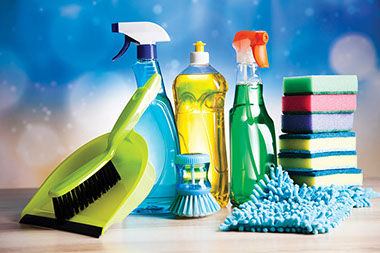
    Image of variety of cleaning supplies.

    Many common household items contain chemicals. Not all chemicals are bad for your health, but some can be harmful. To keep yourself and your family healthy, it’s best to take steps to reduce or avoid chemicals that could be unsafe.

    Did you know possible toxic substances can be found in cleaning products, furniture, carpet and shower curtains? Here’s how to avoid unsafe levels of toxins:

    *Read labels carefully.Many cleaning products have warnings and directions for how to use them. Follow these carefully. For instance, if it says, “use in a well-ventilated area,” you should be sure to open a window to the outside.

    *Be aware of odors.If something gives you a headache, sore throat or makes you cough, this may be a sign that you shouldn’t use it anymore.

    *Protect your skin.Wear gloves when using cleaning products and wash your hands after cleaning. Don’t let children use products with any chemicals in them like bleach, ammonia or strong cleaning ingredients.

    *Get checked for lead.If you live in a home built before 1980, ask your local health department how you can get your home and water checked for lead. You can’t see, smell or taste lead. Lead is harmful to the brain and affects children’s development. Find out if your home is at risk and take steps to get it removed, if needed.

    *Avoid pesticides whenever possible.Contact professional pest control companies for insect problems.

    *Choose fragrance-free products when possible.Many fragrances contain chemicals that disrupt hormone functions in the body. Also, some people are sensitive to fragrances.

    *Replace old nonstick pans that look worn or scratched.They may contain chemicals that can get into your food.

    *Look for cleaning products that have the Environmental Protection Agency’s “Safer Choice” label.For more information, visitwww.epa.gov/saferchoice/products.

    If someone in your home may have ingested a poisonous product, call The American Association of Poison Control Centers at (800) 222-1222.

    Remove dust for a healthier home

    Did you know household dust often contains chemicals and toxins from your home? A good way to reduce your exposure to them is to keep dust down. Try these tips:

    *  Choose non-toxic or “Safer Choice” cleaning products. White vinegar is an effective non-toxic cleaner for many surfaces.

    *  Use a damp rag without chemicals to dust.

    *  Clean floors with a damp mop or a steam-only mop.

    *  Vacuum floors regularly and use a vacuum with a high efficiency particulate air (HEPA) filter.

    *  Open windows to bring in fresh air whenever possible.

    *  Change furnace and air filters regularly.

    *  Wash hands often.

    Source: National Institutes of Health, Environmental Protection Agency

    © American Institute for Preventive Medicine

  • Avoid The Aches And Pains Of Technology

    SELF-CARE CORNER

    Image of business man with laptop and smart phone.

    You can prevent BlackBerry thumb and text neck-new ailments that came with devices such as smartphones and BlackBerries and their small keyboards, advises the American Chiropractic Association.

    *  Avoid typing for more than 3 minutes without a break.

    *  Keep messages short and simple; abbreviate.

    *  Practice using other fingers for typing, especially when thumbs hurt.

    *  Don’t slouch when texting.

    *  Keep wrists upright, straight and close to the body when holding a device.

    *  Don’t bend your neck excessively when texting; tuck your chin in instead and look down.

    *  Turn your devices off on the weekends (or at least on Sunday).

    *  Get outside, exercise and enjoy nature too. Balance is key to staying healthy.

    For more tips on proper use of technology and good health, visitwww.TechnoHealthy.com.

    © American Institute for Preventive Medicine

  • Avoid Summer Headaches

    SELF-CARE CORNER

    Image of women sitting at the beach talking on the phone.

    The sun can be especially bothersome if you suffer from migraine. Looking directly or indirectly at the sun can trigger a migraine attack for some people.

    Don’t forget your shades-sunglasses, visors, or sun hat when you are out and enjoying the sunshine at the beach, tennis court, golf course, or a baseball game, advises the National Headache Foundation.

    Other summer headache triggers include changes in barometric pressure. Watch out for those sudden thunderstorms and windy days.

    Drink plenty of water, not soft drinks, to help prevent those “dehydration” headaches. You don’t want to drink too many soft drinks containing caffeine, which can also contribute to your headaches.

    At backyard barbecues and picnics, you may encounter food items that you wouldn’t normally eat. The sauces and dry rubs on those tasty ribs may contain monosodium glutamate (MSG) to which many headache sufferers are sensitive. The spread at a picnic may include aged cheeses, hot dogs, and other meats with nitrates, and pickles-all possible triggers. Also watch your intake of beer and cocktails.

    © American Institute for Preventive Medicine

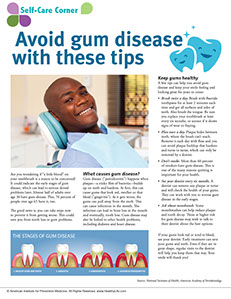
  • Avoid Gum Disease With These Tips

    SELF-CARE CORNER

    Image of variety of cleaning supplies.

    Are you wondering if “a little blood” on your toothbrush is a reason to be concerned? It could indicate the early stages of gum disease, which can lead to serious dental problems later. Almost half of adults over age 30 have gum disease. Plus, 70 percent of people over age 65 have it, too.

    The good news is, you can take steps now to prevent it from getting worse. This could save you from tooth loss or gum problems.

    What causes gum disease?

    Gum disease (“periodontitis”) happens when plaque-a sticky film of bacteria-builds up on teeth and hardens. At first, this can cause gums that look red, swollen or that bleed (“gingivitis”). As it gets worse, the gums can pull away from the teeth. This can cause infections in the mouth. The infection can lead to bone loss in the mouth and eventually, tooth loss. Gum disease may also be linked to other health problems, including diabetes and heart disease.

    Keep gums healthy

    A few tips can help you avoid gum disease and keep your smile feeling and looking great for years to come:

    *  Brush twice a day. Brush with fluoride toothpaste for at least 2 minutes each time and get all surfaces and sides of teeth. Also brush the tongue. Be sure you replace your toothbrush at least every six months, or sooner if it shows signs of wear or fraying.

    *  Floss once a day. Plaque hides between teeth, where the brush can’t reach. Remove it each day with floss and you can avoid plaque buildup that hardens and turns to tartar, which can only be removed by a dentist.

    *  Don’t smoke. More than 60 percent of smokers have gum disease. This is one of the many reasons quitting is important for your health.

    *  See your dentist every six months. A dentist can remove any plaque or tartar and will check the health of your gums. They can work with you to reverse gum disease in the early stages.

    *  Ask about mouthwash. Some mouthwashes can help reduce plaque and tooth decay. Those at higher risk for gum disease may wish to talk to their dentist about the best options.

    If your gums look red or tend to bleed, see your dentist. Early treatment can save your gums and teeth. Even if they are in great shape, regular visits to the dentist will help you keep them that way. Your smile will thank you!

    Sources: National Institutes of Health, American Academy of Periodontology

    © American Institute for Preventive Medicine