Blog

  • Alcohol Increases Risk For Breast Cancer

    SELF-CARE CORNER

    Image of middle-aged women smiling wearing a pink blazer.

    Breast cancer is the second leading cause of cancer death for women in the United States, after lung cancer. Dr. Erica Mayer, a breast cancer expert at Dana-Farber Cancer Institute, says there are at least 5 simple ways women can reduce their risk of getting the disease:

    1.Limit alcohol.Research has shown having too much alcohol can increase your risk of breast cancer. If you choose to drink alcohol-including beer, wine, or liquor-limit yourself to no more than one half to one drink a day on average.

    2.Get a mammogram.Many health organizations advise women to get regular mammograms starting at age 40. “Mammography screening does not prevent or cure breast cancer, but it may detect the disease before symptoms occur,” said Dr. Mayer.

    3.Eat a healthy diet and keep your weight under control.The American Cancer Society recommends a diet rich in vegetables, fruits, whole grains, and fiber. “High-fat diets can lead to being overweight or obese, which is a risk factor for breast cancer,” said Dr. Mayer.

    4.Exercise.There’s growing evidence that physical activity reduces a woman’s breast cancer risk.

    5.Determine if you have family history of breast cancer and be vigilant to early detection.Twenty to 30% of people who develop breast cancer have a family history of the disease. About 5 to 10% of women carry a BRCA1 or BRCA 2 mutation, the so called “breast cancer genes.”

    © American Institute for Preventive Medicine
  • Aging Parents & Falls: Simple Prevention Tips

    FAMILY LIFE

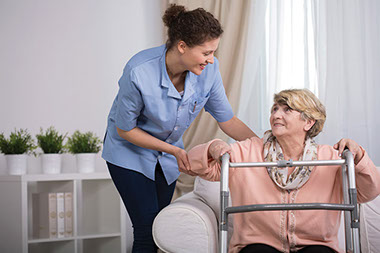
    Image of older women recieving help to sit.

    Because people are living longer than ever, many people have senior parents in their lives. One of the biggest health issues facing older adults is falls. In fact, the CDC reports that nearly 3 million older adults are treated in the emergency room each year for a fall-related injury.

    Whether your older parent lives with you or just visits occasionally, there are some simple steps you can take to keep your older parent safe from falls at home.

    *  Place handrails on both sides of all stairways.

    *  Carpets and rugs should be tacked to the floor. Do not use loose rugs.

    *  Make sure you have good lighting throughout the home, especially at the top and bottom of the stairs. Use nightlights in bathrooms, next to the bed, and in hallways.

    *  Keep the floor clean and free of clutter. Avoid having cords or wires on the floor.

    *  Place grab bars near toilets and on the inside and outside of your tub or shower.

    *  Use non-skid mats or carpet on floors that get wet.

    © American Institute for Preventive Medicine

  • Agility Means Mobility

    SELF-CARE CORNER

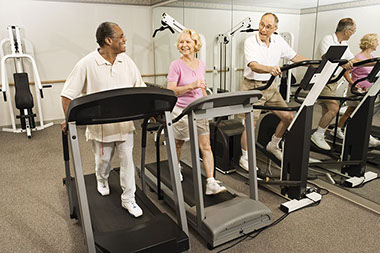
    Image of 3 senior citizens walking on treadmills.

    Want to be able to move around well as you age? Finding it more difficult to get down on your knees (and get up)? Interested in keeping your joints strong and flexible to meet the demands of daily life?

    Join the club. Without our ability to get around, all kinds of health problems set in, according to the CDC. MySilverAge.com challenges not just seniors but everyone else to work out to improve mobility with these 3 functional fitness workouts:

    *Use sandbells to minimize strain.While exercise equipment such as dumbbells strengthen arms, many weights can place too much strain on the hands. A sandbell-a weighted, contoured fabric bag filled with sand-is an easier alternative for older adults and others who have trouble gripping items, because they offer customizable weight and grip for strength exercises, while minimizing stress and strain on hands.

    *Use interval training for quick bursts of energy.Children tend to have short bursts of energy followed by periods of rest before they start again. Keep up with the kids with interval training. Walk on a treadmill at a normal speed for 5 minutes, then increase to a more challenging pace for 1 minute and repeat.

    *Use an exercise ball for better balance.Good balance is vital for safe walking, stair climbing, and avoiding falls. Use an exercise ball in place of a chair during traditional workouts, such as lifting weights, to help improve balance. The instability of the ball forces all the body’s muscles to work together to support stability and steady balance.

    © American Institute for Preventive Medicine
  • Age Successfully

    SELF-CARE CORNER

    Image of older couple.

    Successful aging means more than good health. It means taking charge of your personal well-being so that you can continue to live a vibrant, independent life, regardless of your age, according to Dr. Terri Ginsberg of the Institute for Successful Aging at the University of Medicine and Dentistry of New Jersey.

    “Successful aging isn’t difficult, but it does require a personal commitment to active living,” says Ginsberg. To help them age successfully, Ginsberg recommends that adults of all ages follow these “10 Resolutions for Healthy Aging:”

    1.Sleep at night.Avoid frequent daytime naps, late night snacks or watching television in bed.

    2.Eat lots of colors.Vibrantly colored fruits and vegetables on your plate mean a healthy diet that keeps your body moving.

    3.Get checked out.Catch up on any health screenings your doctor has recommended and don’t forget eye and dental check-ups.

    4.Worry less.It really is possible to “worry yourself sick.” Excessive worrying can lead to high blood pressure, digestive problems, chronic headaches and unhealthy weight gain.

    5.Stay in touch.Living alone doesn’t mean being alone. Reach out to friends, neighbors and relatives.

    6.Move more.Exercise improves heart health, and good heart health helps prevent a range of related disorders, including blood clots and depression.

    7.Read more.You can “exercise your brain” with newspapers, books, magazines or puzzles.

    8.Laugh and sing.Is there a better way to enjoy life? And both will help you to worry less.

    9.Take control.Be proactive about your own health. Ask your doctor questions about your health and for advice on positive lifestyle changes.

    10.Get involved.Local organizations of all types need volunteers. Helping others is the best tonic for feeling good about yourself.

    © American Institute for Preventive Medicine

  • Addressing A Work Schedule That Doesn’t Work

    WORK LIFE

    Image of clock super imposed on an image of employees sitting in a circle.

    When it comes to work schedules, one thing is certain: no one schedule works for everyone. While some people might thrive on an early-morning first shift, others prefer a later work schedule or even a night shift.

    Today’s work environment has plenty of variability in work schedules. Besides different start times, there are also differences in where people work. Some people work from home and others may split their time between the home and office. And, there are full-time or part-time schedules.

    But, finding the best work schedule for you isn’t always easy. Perhaps your employer simply doesn’t offer the type of schedule you need. Or, you might want someone else’s schedule, but the “spot” is already filled.

    If you feel that your current work schedule isn’t fitting into your life, don’t let it frustrate you. You can approach the issue and have a positive outcome for both you and your employer. These steps can help you find a solution:

    1.  Think about what you want in a schedule. First, write down what works for you now and what doesn’t work. Be specific. Do you need to get out earlier? Work around school pick-up times? Do you need more predictable start and end times? This lets your employer know how they can help you.

    2.  Set up a meeting  with the right person. You may wish to talk with your direct supervisor first. They may be able to help you find something that works better, or may want to bring in human resources for some assistance. Don’t try to simply mention it in passing. A scheduled meeting will give you enough time to discuss it without being rushed or distracted.

    3.  Work with family and friends. Sometimes, some additional help is all that’s needed to make your work schedule work better for you. Can a friend pick up your kids from school while you work? Can you carpool with someone? Reach out to your community and neighbors. It never hurts to ask.

    Remember, your employer may have no idea that your work schedule doesn’t work for you. You have to tell them so the problem can be addressed. Be open and honest about your needs. Ultimately, this can lead to higher work satisfaction for you.

    © American Institute for Preventive Medicine
  • Abs: The Core Of A Healthy Body

    BE FIT

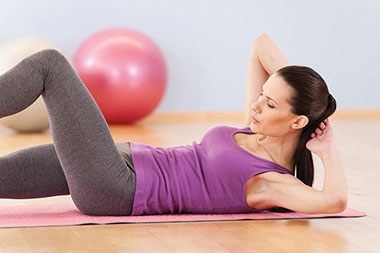
    Image of women doing abdominal exercises.

    Strong abdominal muscles can do more than just make you look slimmer. Healthy ab muscles can help you improve posture and alleviate back pain. For those who thought ab exercises were only for achieving a “six pack,” it’s time to discover all the benefits of a strong midsection.

    Your abdominal muscles are part of the body’s core muscles, which support your entire body when you sit, stand and move. For those who don’t like sit-ups or can’t get on the floor, there are other options to strengthen and tone these important muscles. In fact, “vertical” core exercises may be even more effective than sit-ups.

    Try this standing core exercise that’s suitable for beginners:

    *  Stand facing a wall. Place your feet shoulder-width apart and push your hands against the wall.

    *  Bend your knee and bring your leg toward the wall. Keep the other foot flat on the floor at all times.

    *  Step your leg across the other one in front. Then, step the same leg out to the side.

    *  Bend the knee again and open your leg to the outside, using your hip. Then, swing the leg to the inside.

    Repeat these exercises with the other leg. Concentrate on keeping your abs tight each time you lift and move your leg. Try to repeat them several times, and increase the number of reps as you get stronger.

    Source: American College of Sports Medicine

    © American Institute for Preventive Medicine

  • The Abcs Of Hepatitis

    MEDICAL NEWS

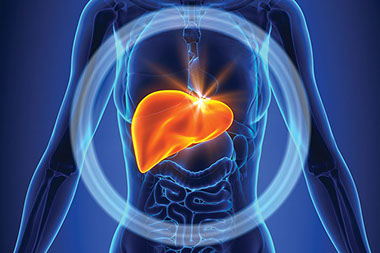
    Illustration of liver.

    Millions of Americans are living with hepatitis today, and many don’t know they have it. Hepatitis can be serious and can lead to lifelong health problems. To help fight this dangerous disease, it’s important to know how it is spread and what you can do to prevent it.

    What is hepatitis?

    Hepatitis is an inflammation of the liver. Without the liver, the body cannot process nutrients, fight infection, or filter the blood. Hepatitis can make someone very sick. Some people with viral hepatitis can get liver cancer or severe scarring of the liver, known as cirrhosis.

    How does someone get hepatitis?

    The three most common types of viral hepatitis are spread in different ways:

    *  Hepatitis A can spread if a person eats or drinks something that has been contaminated with the virus. A person with hepatitis A spreads the virus through their stool.

    *  Hepatitis B can spread when blood, semen or other body fluids from an infected person get into the body of another person. This can happen during childbirth, sexual contact, getting tattoos or piercings, sharing needles or medical equipment, or sharing personal items, such as razors.

    *  Hepatitis C spreads through blood. Sharing needles or personal equipment that comes into contact with blood is the main way it gets spread. It may also spread during sexual contact. Like hepatitis B, Hep C can infect a baby during childbirth if the mother has it.

    How do I prevent hepatitis?

    Many people don’t have symptoms of hepatitis and don’t know they are infected. This means they can spread it to others without knowing it.

    The best ways to help prevent the spread of hepatitis are:

    *  Getting the vaccine, if needed. Vaccines are available for hepatitis A and B.

    *  Getting screened for hepatitis if you are at risk and getting treatment when available.

    *  Being aware of risk factors and avoiding them whenever possible. This may include not sharing needles or other personal equipment as listed on this page. Use latex condoms during sexual activity.

    Is there a cure for viral hepatitis?

    Most people who get hepatitis A will recover after a few weeks or months. People with hepatitis B may need to be checked regularly for liver damage, and the infection may be lifelong. Hepatitis C can often be cured with today’s advanced medications.

    Ask your doctor if you are at risk for hepatitis and whether you should be screened or vaccinated.

    Sources: Centers for Disease Control, World Health Organization

    © American Institute for Preventive Medicine

  • A Shoulder To Lean On

    BE FIT

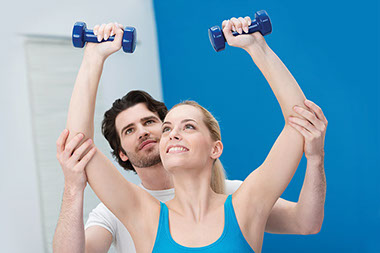
    Image of women and trainer exercising the shoulders.

    Shoulder injuries are common. Why? Because of improper exercise technique, say exercise experts at the American Council on Exercise (ACE), and because people commonly over-train one or two deltoid muscles while neglecting others.

    Strength-training routines are typically dominated by exercises that train only the front of the shoulder, which is actually comprised of three distinct muscles. So ACE looked into the most effective exercises for strengthening the overall shoulder and preventing injury.

    The result? Researchers from the University of Wisconsin, LaCrosse shrugged their shoulders when asked to pick the top exercise. Results showed there is not one best exercise that completely works all muscles of the shoulders.

    Instead, for best results, exercisers should perform the dumbbell shoulder press to target the front, and either the 45-degree incline row or the seated rear lateral raise for the rear. Ask your gym’s expert to show you these techniques.

    69% of people will experience a shoulder injury at some point in their lives, according to the NIH.

    © American Institute for Preventive Medicine
  • A Matter Of Balance

    WELL-BEING

    Illustration of 3 people figures with one of them falling.

    A fall for a senior is not simply a matter of shaking it off and standing back up. A fall could mean a broken hip or a bruise, and some seniors really “can’t get up.” Falls are a major threat to the health and independence of older adults.

    The best solution is preventing falls in the first place. And a recent study in the British Medical Journal pointed to the success of exercise programs in reducing falls that cause injuries and broken bones.

    Risk factors for falls include muscle weakness, especially in the legs, and poor balance-all linked to lack of exercise or certain medical conditions. Poor vision and confusion can also lead to falls. Even some medications can cause dizziness. To lower your risk for falls, CDC recommends you do four things:

    1. Exercise to improve balance and strength.

    Walking, using a stretch band and lifting weights increase muscle strength. Yoga and tai chi improve balance. Follow your doctor’s advice for exercise.

    2. Have your doctor or pharmacist review all prescribed and over-the-counter medications you take.

    Some, when taken alone or with other medications or alcohol can make you dizzy or sleepy and raise your risk for falls. Also, let your doctor know if you feel lightheaded when you get up from sitting in a chair or out of bed. Before you get out of bed, sit on the edge of it for a minute or two and get up slowly.

    3. Get an eye exam from an eye doctor at least once a year.

    Follow his or her advice for wearing corrective lenses and/or using low-vision aids. Get treatment for cataract, glaucoma, macular degeneration and other eye conditions as needed.

    4. Make your house safer.

    *  Keep the inside of your house well lit. Use night lights.

    *  Have secure handrails on both sides of  all stairs.

    *  Keep stairs and walk paths clear from clutter and tripping hazards.

    *  Install grab bars in the tub/shower and next to the toilet. If needed, use a shower chair that has rubber tips on the legs and a hand-held shower.

    *  If you use throw rugs, use ones with nonskid backs. Or, put nonslip rug pads or carpet tape underneath rugs.

    *  Wear sturdy shoes with thin, nonslip soles. Avoid going barefoot.

    *  Avoid using a step ladder or a chair to stand on. Keep items you use often in easy-to-reach places.

    *  Be mindful of where your pet and his or her toys are to avoid tripping over them.

    © American Institute for Preventive Medicine
  • A Jolt Of Java

    HEALTHY EATING

    Image of 3 coffee cups around coffee beans.

    The addictive drug caffeine (yes, it’s a drug) is naturally found in coffee beans and is added to other drinks and foods. So how much is in your daily cup?

    Here’s what the Center for Science in the Public Interest says. (Numbers are in milligrams per 8 ounce cup, unless otherwise stated, so judge accordingly because who drinks just 8 ounces?)

    * Note: The FDA advises consumers to talk with their health care providers before using any product marketed as an “energy shot” or “energy drink.”

    *  Brewed coffee 102 to 200 (by comparison, brewed decaf 5)

    *  Instant coffee 27 to 173

    *  Starbucks brewed 160 (Starbucks vanilla latte 75 or 1 oz Espresso 75)

    *  Dunkin’ Donuts 103

    *  Starbucks Tazo Chai tea 50

    *  Brewed tea 40-120

    *  Arizona Iced Tea, black 16; green 7.5

    *  Snapple, Just Plain Unsweetened 9

    *  5-Hour Energy (1.93 oz) 207*

    *  Monster Energy 80 (but the cans are 16 oz so 160)*

    *  Coke, regular or diet 54 (12 oz); Classic 35

    *  Sprite, regular or diet 0

    *  SoBe Essential 48

    *  Ben & Jerry’s Coffee Heath Bar Crunch 84

    *  Hershey’s Chocolate Bar (1.55 oz) 9

    *  Hershey’s Kisses (9 pieces) 9

    *  Excedrin (Extra Strength, 2 tablets) 130

    © American Institute for Preventive Medicine