Blog

  • 7 Quick And Easy Breakfast Tips

    HEALTHY EATING

    Image of father and daughter having breakfast.

    A healthy breakfast is a must for kids. Skip it and your kids will be playing nutritional catch-up for the rest of the day, said Carole L. Adler, a dietitian at the Food and Drug Administration.

    When kids skip breakfast, they don’t get what they need to be at their best. “Growing bodies and developing brains need regular, healthy meals,” she said. According to the Academy of Nutrition and Dietetics, studies show that school children who eat breakfast perform better in the classroom.

    As with other meals, it’s a good idea for your kids (and you) to eat a healthy balance of fruits and vegetables, proteins, grains, and dairy-not just for breakfast but throughout the day.

    Here are Adler’s 7 quick and easy breakfast tips to ensure your children start their day off right.

    1.Breakfast doesn’t have to mean traditional breakfast foods.Anything goes. Even last night’s leftovers.

    2.Give kids foods they like.Put veggies on that left-over whole-grain pizza. Or make muffins with zucchini and carrots and spread with peanut butter with a glass of milk. Mix sugary cereal with a healthier nutrient-packed brand.

    3.Make healthy trade-offs.Nutritional balance is key. Not enough vegetables in the morning meal? Prepare extra carrot, celery, and broccoli sticks with a hummus dip as an afternoon snack.

    4.Take growth and activity levels into account.Adler says that having a breakfast that contains protein, fat, and carbohydrates helps children feel full and stay focused until lunch. Protein choices might include an egg, some nuts, a slice of deli meat or cheese, or a container of yogurt.

    5.Don’t take, “Mom, I don’t have time for breakfast” as an excuse.Make sure your kids grab a piece of fruit on the way out the door, and hand them a bag of nut-and-fruit trail mix or a whole-wheat tortilla spread with peanut butter or almond butter and a carton of milk.

    6.Prep the night before.Morning is a busy time for everyone-you included. So take ten minutes to think ahead and prep for breakfast the night before. Chop up fruit to layer in a yogurt parfait or add to cereal. Cut up vegetables for an omelet. Mix up muffin or whole-grain waffle batter, cover, and put in the fridge.

    7.Use the Nutrition Facts label and ingredient statement when you shop.

    Desk snacks.

    People who have snacks in or on the desk reported weighing 15.4 pounds more than those who don’t. Use an opaque candy dish with a lid and store candy in a drawer where it’s less visible and accessible, advises Cornell University researcher, Dr. Brian Wansink, author of Slim by Design. Or, keep dried fruit or unsalted nuts in your desk drawer.

    © American Institute for Preventive Medicine

  • 6 Ways To Cool A Workplace Argument

    WORK LIFE

    Image of co-workers talking.

    No matter where you work, you’re bound to meet coworkers with different personalities and work styles. As a result, there may be times when you need to work through opinions that differ. Sometimes you may be faced with a heated argument. But, this type of situation doesn’t have to get worse.

    Learn how to calm an upset coworker with these tips from the Society for Human Resource Management:

    1.Remain calm.Yelling and unprofessional behavior doesn’t help anyone find a solution. It could escalate and end up out of control.

    2.Try to understand what the other person is saying.Look at them calmly and let them talk. Follow up by asking them to explain more if needed.

    3.Use “I” statements, such as “I feel disappointed that this project isn’t going well.”Rather than, “You aren’t doing a good job on this project.” Focus on behaviors or problems, not people.

    4.Discuss solutions to the problem.Write them down on paper or a white board if needed.

    5.Make sure everyone agrees on the solution.

    6.If an agreement can’t be reached, decide if you can “agree to disagree” on the issue.If that’s not an option, consider involving a neutral third person or a human resources staff member if needed.

    Knowing how to resolve conflict in the workplace is a valuable skill you can use throughout your life. Staying calm and collected in a tense situation gives you the ability to find a productive, positive solution.

    © American Institute for Preventive Medicine

  • 6 Ways To Be A Good Houseguest

    FAMILY LIFE

    Image of houseguest entering home with dessert.

    Each year, millions of Americans travel and visit friends and family members for the holidays. And with so many overnight visits this time of year, being a courteous houseguest is a skill that may come in handy. If you’re staying with a friend or family member, remember these tips:

    *Make plans well in advance.Don’t expect family members to drop everything at the last minute for your visit. Give them several weeks notice of when you will be coming (if possible) and don’t arrive earlier or stay longer than planned.

    *Consider a small gift.A bouquet of fresh flowers, a book, or an attractive fruit bowl are good host gifts to consider.

    *  Pay attention to house rules. Are there shoes by the door? Then you should take yours off when you enter.

    *Offer to pitch in.Ask if you can pick up some groceries at the store, or offer to pay for meals when going out.

    *Clean up after yourself.Don’t expect the host to do it all. Help clear the table after meals and wash dishes. The day of your departure, strip the sheets off the bed and offer to throw them in the laundry. Wipe off the bathroom counters after you use them. Put things back where you found them.

    *Send a note afterward.When you return home, send a short but sincere thank you note to your host.

    Source: The Emily Post Institute

    © American Institute for Preventive Medicine

  • 6 Tips To Become More Productive At Work

    WORK LIFE

    Image of women at work looking at notes posted on the wall.

    Productivity means you make the most of your time. You may get more done with less time or with fewer people. But it’s not just about being fast, it’s about maintaining quality too. Learning to be productive means you can showcase your talents and abilities by doing a great job with the resources and skills you have.

    Boosting productivity is often easier said than done. When you’re tired, distracted or simply don’t know how to organize your day, it can be hard to stay productive. Try these tips to make the most of your workday – and get more satisfaction out of your career while doing it!

    1.Break down big tasks.Large projects can be overwhelming, so we often put them off because we don’t know where to start. Instead of letting a large project sit on your to-do list, write down the first step you need to do to get it done. Make it something you know you can do, and set a deadline for yourself. Once that’s done, move on to the next step, and so on.

    2.Have real conversations instead of emailing.Email chains can become time-wasters and often lead to misunderstandings or missing information. When possible, talk to someone in person or on the phone instead of starting an email trail.

    3.Check email at set times.We can’t avoid email completely, but constant inbox chimes can quickly diminish your productivity. Instead of reading every email as it comes in, turn off your email program and only check it two to three times a day.

    4.Take quick breaks when you can.Back-to-back meetings or intense work sessions can drain you. But you don’t need to wait until your lunch hour to energize yourself. If you can, take a few moments to get up and walk around. Stretch at your desk or try deep-breathing exercises.

    5.Tackle those little things to clean up your to-do list.If you have a bunch of small, quick tasks nagging at you, set some time aside to get them done. Then you can focus on the bigger, more important things without other distractions.

    6.Set your own deadlines.If a task or project doesn’t have a due date, it’s easier to put off. Even if a specific deadline hasn’t been set, you can give yourself one. This helps you avoid hanging onto those things that sit undone for days or weeks.

    © American Institute for Preventive Medicine

  • 6 Things To Know Before Taking Any Medicines

    SELF-CARE CORNER

    Image of women reading medication information.

    The Centers for Disease Control and Prevention (CDC) says that adverse drug events (ADEs) are a serious public health problem. An ADE is when an injury occurs after taking medicine. With 82 percent of Americans taking at least one medication, ADEs could happen to almost anyone.

    ADEs can be serious, and even deadly. They may include:

    *  Side effects from a medicine

    *  Interactions with other medicines or supplements

    *  Allergic reactions to a medicine

    *  Overdoses

    *  Taking the wrong dose or type of medicine

    You can avoid ADEs with a few simple steps. Do these things today to keep yourself and loved ones safe:

    1.Be aware of any interactions before you take a medicine.Some medicines should not be taken with certain foods, such as grapefruit or grapefruit juice. Others can cause side effects if taken with certain herbs and supplements. Because of possible interactions, be sure your doctor knows everything you take, including natural supplements, vitamins and herbs. If you’re caring for an aging family member, keep track of all their medications and show the list to their doctors during appointments. If you see more than one doctor, make sure all your doctors know which medications you take.

    2.Keep them secure, out of reach from others.Something that’s safe for you to take could be dangerous – or even deadly – to a child or pet. Keep all medicines out of reach of kids and pets, preferably with child-proof packaging.

    3.Take only the dose you are prescribed.If you feel your medication isn’t working, talk to your doctor about options. Taking a higher dose than what’s prescribed or mixing it with other medications can lead to serious side effects or overdoses.

    4.Don’t share your medicines.It can be dangerous to give someone a prescription drug that wasn’t prescribed to them. Even over-the-counter medicines should be used with caution, especially if a person has health conditions or is taking other medicines.

    5.Keep medicines in their original bottles.Putting medicines in other containers could lead to someone accidentally taking the wrong medicine. It also makes it more difficult to keep track of what you’re taking.

    6.Dispose of expired or unneeded medicines correctly.Using a drug “take-back” program is a safe option. If you must throw them away, don’t flush them. Put them in the household trash with kitty litter or coffee grounds. For complete information on medicine disposal, visit the FDA website atwww.fda.gov.

    © American Institute for Preventive Medicine

  • 6 Steps To Reduce Your Risk For A Stroke

    SELF-CARE CORNER

    Image of an older couple stretching before a workout.

    According to the World Stroke Organization, you can take these 6 steps to reduce your risk of stroke-a blockage or bleeding in your brain:

    1. Know your personal risk factors: high blood pressure, diabetes, and high blood cholesterol.

    2. Be physically active and exercise regularly.

    3. Avoid obesity by keeping to a healthy diet.

    4. Limit your alcohol intake.

    5. Avoid cigarette smoke. If you smoke, seek help to stop.

    6. Learn to recognize the warning signs of a stroke: a sudden numbness, especially on one side of the body; sudden trouble speaking or seeing; loss of balance; and a sudden severe headache with no apparent cause.

    Stroke is a call-911 medical emergency!

    © American Institute for Preventive Medicine

  • 6 Simple Steps To A Healthier Marriage

    FAMILY LIFE

    Image of young smiling couple sitting against a wall.

    Having a healthy, supportive marriage is important to your overall well-being. But the stresses of life, work, family, and day-to-day problems can put a strain on even the best marriage at times.

    Fortunately, there are some ways you can help keep your marriage strong – or work on problems before they become major issues. Here are some tips from the National Healthy Marriage Resource Center:

    1. Make every effort to keep your commitment.

    Marriage will have “good times and bad,” and you need to realize that challenges will happen. The key is to work through them and be aware that everyone has disagreements and difficulties. No marriage is perfect, but with extra effort from both partners, you can make yours last.

    2. Make time for each other.

    Even when you’re overwhelmed with work, children, or other tasks, don’t forget about your marriage. Set aside time for a dinner alone or even a weekend getaway if you can. If that’s not possible, have 15 to 30 minutes of time to talk and connect each day – without TV or cell phones.

    3. Have a sense of humor.

    Life’s little mishaps are easier to take when you can laugh at them. Mistakes that don’t really hurt anyone don’t have to turn into arguments. Don’t focus on who’s to blame. Laugh at it if you can, and work on a solution together. Forgive your spouse (and yourself!) and try to find the humor in the situation.

    4. Communication is key.

    This is an important aspect of any marriage. Talk about what’s bothering you – and what you love. Listen to what your spouse is saying, and don’t be quick to defend yourself. No one has to “win” an argument. If you both listen and respect each other, a solution or compromise can usually be found.

    5. Do “little” things for your spouse.

    Make a favorite meal for the other person, do the dishes without being asked, or leave a love note. These small things can add up to big happiness. Just showing your spouse that you care about him or her will help build your marriage each day.

    6. Choose your battles.

    Before you get angry about something, ask yourself if it’s worth an argument. If it’s important to you, approach the subject calmly and be honest. If not, take a deep breath and focus your energy on better things.

    Marriage isn’t always easy, but working to keep it strong and healthy can have big payoffs. People in healthy marriages have better mental health and may even live longer. Give your marriage the attention it deserves, and you’ll both enjoy the benefits.

    © American Institute for Preventive Medicine

  • 6 Reasons To Eat Oranges Daily

    HEALTHY EATING

    Image of an orange.

    1. Vitamin C

    One large orange gives you 130 percent of your daily need for vitamin C. This vitamin helps boost immunity and fight cancer.

    2. Fiber

    One sweet, juicy orange delivers 4 grams of fiber. Fiber helps with digestion and may help prevent heart disease and some cancers.

    3. Minerals

    Oranges also contain important minerals such as calcium, magnesium, copper, phosphorus and potassium. These minerals are important for immune health, nervous system and muscle function, and many other body processes.

    4. B vitamins

    Oranges contain several of the B vitamins, which help the body’s cells work properly and provide you with energy.

    5. Calorie-Friendly

    One orange is a lower calorie option to satisfy your craving for something sweet.

    6. Phytochemicals

    Oranges contain hundreds of these plant chemicals that support many metabolic functions in the body.

    Sources: United States Department of Agriculture, National Institutes of Health

    © American Institute for Preventive Medicine

  • 6 Benefits Of Drinking Water

    WELL-BEING

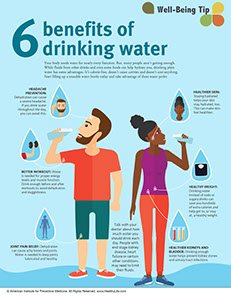
    Illustration of drinking water and it's benefits.

    Your body needs water for nearly every function. But, many people aren’t getting enough. While fluids from other drinks and even some foods can help hydrate you, drinking plain water has some advantages. It’s calorie-free, doesn’t cause cavities and doesn’t cost anything. Start filling up a reusable water bottle today and take advantage of these water perks:

    Headache prevention:Dehydration can cause a severe headache. If you drink water throughout the day, you can avoid this.

    Better workout:Water is needed for proper energy levels and muscle function. Drink enough before and after workouts to avoid dehydration and sluggishness.

    Joint pain relief:Dehydration can cause achy bones and joints. Water is needed to keep joints lubricated and healthy.

    Healthier skin:Staying hydrated helps your skin stay hydrated, too. This can make skin feel healthier.

    Healthy weight:Drinking water instead of soda or sugary drinks can save you hundreds of extra calories and help get to, or stay at, a healthy weight.

    Healthier kidneys and bladder:Drinking enough water helps prevent kidney stones and urinary tract infections.

    Talk with your doctor about how much water you should drink each day. People with end stage kidney disease, heart failure or certain other conditions may need to limit their fluids.

    © American Institute for Preventive Medicine

  • 5 Ways To Tell Your Heart, ‘I Love You’

    MEDICAL NEWS

    Image of mother and daughter making a heart with their hands.

    You can love your heart, not just during heart month, but all year long. Let’s count the ways with Lori Daniels, MD, cardiologist at the University of California, San Diego Medical Center. She offers 5 easy ways, especially for people with heart disease, to love their hearts throughout the year.

    1.One crème brulee = 5 miles.Research shows a direct link between obesity and increased heart disease. One way to keep your weight down is to reduce the number of calories you take in and increase the number of calories you burn. So before diving into a crème brulee or double chocolate sundae, find out how many calories the dessert contains. Then determine how many miles you would need to walk to burn the calories off. On average, 100 calories are burned walking 1 mile. Is one dessert worth a 3-mile trek? You decide.

    2.Laminate.Keep an up-to-date list of medications and doctors’ contact info in your bag and car glove compartment. In an emergency, this will serve as a quick and easy reference for family and medical personnel. Be sure to share this list with friends and family before traveling in case you need to fill a prescription or get medical attention.

    3.One aspirin, crushed.Keep a supply of aspirin handy. If you have heart disease, you may already be taking some form of aspirin every day at any time you choose. If you or a friend believes you are suffering the onset of a heart attack, take either 1 adult or 2 baby aspirin. Instead of swallowing the pill whole, crush it first so that the aspirin is more rapidly absorbed into your body.

    4.Avoid salt of all colors.You may be able to greatly lower your blood pressure by reducing the sodium (salt) in your diet. Be aware that white table salt is just one form of sodium in your kitchen. Other culprits with high sodium content come in black (soy and teriyaki sauce), yellow (mustard), pink (lunch meats) and brown (canned soups and gravies.) Check the sodium content before eating a processed product. If you dramatically reduce your intake of sodium, you might, under your doctor’s care, be able to stop taking some blood pressure medications.

    5.Sunday night, count them out.Whether you take blood pressure medicine, cholesterol drugs or any other prescription or supplement, try this. Instead of managing many pill bottles, manage one pill box. Almost every pharmacy sells pill boxes marked with the days of the week. Every Sunday night, fill up one weeks’ worth of pills. Reduce the time you spend counting your prescriptions to 4 times a month instead of 30. And you’ll be able to keep track of whether you took your medicine each day.

    © American Institute for Preventive Medicine