Blog

  • 4 Warning Signs Of Teen Depression

    SELF-CARE CORNER

    Image of teen girl depressed.

    Withdrawn. Irritable. Sleepy. This could describe almost any teenager, but these are also symptoms of teen depression.

    Teen depression sometimes gets overlooked because it doesn’t always look like depression in adults. For example, sadness is a core feature of most depression and what most people associate with depression, according to Dr. Ken Duckworth, medical director of the National Alliance on Mental Illness. Many teens also experience other symptoms-parents might miss these warning signs.

    1.Sleep disturbance.“Many adolescents sleep until noon on a Saturday, but if you notice a change in their sleep or their sleep is irregular even more than before, that’s something to worry about,” Dr. Duckworth says.

    2.Social changes.“Adolescents are typically very focused on social connections,” he says. “If they’re not interested in their social network and they want to quit sports, pay attention to that.”

    3.Physical symptoms.Some teens demonstrate their emotional distress through physical symptoms, such as headaches, stomach aches, weakness, and body aches.

    4.Substance abuse.Some depressed teens use drugs and alcohol to change how they’re feeling. Abusing drugs and alcohol also increases the risk for depression or worsening depression.

    © American Institute for Preventive Medicine

  • 4 Steps To Prevent Colorectal Cancer

    MEDICAL NEWS

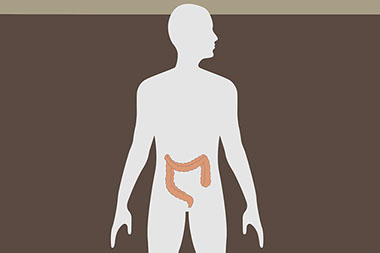
    Illustration of a colon.

    Colorectal cancer is the second leading cancer killer in our country. It takes the lives of about 50,000 people each year, according to the Centers for Disease Control and Prevention.

    Many of these deaths, however, could be prevented. Here’s what you need to know:

    1.Take care of your heart.Avoiding colorectal cancer is like getting a two-for-one deal. If you follow a heart-healthy lifestyle, you’ll also be lowering your risk of colorectal cancer. Don’t smoke, get regular exercise, and lose weight if you’re overweight. Limit red meat to no more than two servings per week. Finally, drink no more than one alcoholic drink per day for women, or two drinks per day for men.

    2.Know the symptoms.Signs of colorectal cancer usually include blood in your stool or stomach pain that doesn’t go away. See your doctor if you notice these signs.

    3.Find out your family history.If you have a close blood relative with the disease, you may be at a higher risk of getting it. Talk with your doctor about your risk.

    4.Get screened.Tests include stool blood tests that you do at home, sigmoidoscopy, and colonoscopy. Follow your doctor’s advice for screening tests and how often you need them. If you are at normal risk, begin screenings at age 50 and have them up to age 75. If you have risk factors for or a family history of colon polyps or colon cancer, you may need tests sooner and more often. During a colonoscopy, polyps can be removed before they turn into cancer. Screenings can save your life!

    © American Institute for Preventive Medicine

  • 4 Reasons To Get Your Colonoscopy

    MEDICAL NEWS

    Illustration of doctor's hand with the word "Colonoscopy."

    If you’re age 50 or older, your doctor may have recommended you get a colonoscopy. This test, which uses a thin, lighted tube to view inside the colon and rectum, checks for:

    *  Polyps, which are growths or bumps that could turn into cancer

    *  Colorectal cancer (cancer in the colon and/or rectum)

    A colonoscopy gives the doctor a chance to remove polyps and possible cancerous growths during the test.

    Even though a colonoscopy is a safe and effective way to help prevent colorectal cancer or find it early, many people put off getting one. This is often because they are nervous about the test or they don’t want to do the “prep.” Preparing for a colonoscopy usually means you take medicines that cause diarrhea the day before the test. This can be inconvenient, but it’s worth the hassle.

    Here are 4 good reasons you should call your doctor about scheduling it today:

    1.Early colon cancer has no symptoms.Many people have polyps or even colon cancer for months or years and don’t know it. A colonoscopy can find these things early and increase the chances of a good outcome. The earlier colon cancer is found, the higher the likliehood of successful treatment.

    2.One day of prep could save your life.No one likes to have diarrhea. But, one day of prep means you’re getting a test that checks for a common and sometimes deadly cancer. In fact, the American Cancer Society says more than 50,000 Americans will die from colorectal cancer in 2018. It is the third most common cancer in the U.S.

    3.There are ways to make the prep easier.Ask your doctor about adding certain flavorings to your medicine to make it taste better. Also, there are many clear liquids other than water you may be able to drink. Sports drinks, tea, coffee, popsicles and some broths may be allowed. Usually, red, blue and purple dyes need to be avoided, but other flavors are fine.

    4.Can’t put a price on peace of mind.With so many people being diagnosed with colorectal cancer, isn’t it worth a day of discomfort to know that you’ve been screened? Even if a polyp or possible sign of cancer is found, you can get on the path to treatment that could be life-saving.

    Sources: Centers for Disease Control and Prevention, National Institutes of Health, American Cancer Society

    © American Institute for Preventive Medicine

  • 4 Questions To Ask Before Having Surgery

    MEDICAL NEWS

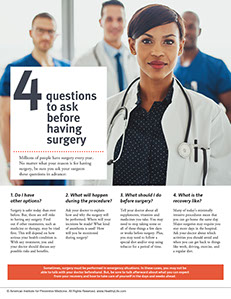
    Image of doctors.

    Millions of people have surgery every year. No matter what your reason is for having surgery, be sure you ask your surgeon these questions in advance:

    1.Do I have other options?Surgery is safer today than ever before. But, there are still risks to having any surgery. Find out if other treatments, such as medicine or therapy, may be tried first. This will depend on how serious your health condition is. With any treatment, you and your doctor should discuss any possible risks and benefits.

    2.What will happen during the procedure?Ask your doctor to explain how and why the surgery will be performed. Where will your incisions be made? What kind of anesthesia is used? How  will you be monitored  during surgery?

    3.What should I do before surgery?Tell your doctor about all supplements, vitamins and medicines you take. You may need to stop taking some or all of these things a few days or weeks before surgery. Plus, you may need to follow a special diet and/or stop using tobacco for a period of time.

    4.What is the recovery like?Many of today’s minimally invasive procedures mean that you can go home the same day. Major surgeries may require you stay more days in the hospital. Ask your doctor about which activities you should avoid and when you can get back to things like work, driving, exercise, and a regular diet.

    Sometimes, surgery must be performed in emergency situations. In these cases, you may not be able to talk with your doctor beforehand. But, be sure to talk afterward about what you can expect from your recovery and how to take care of yourself in the days and weeks ahead.

    © American Institute for Preventive Medicine

  • 4 Behaviors For A Healthy Wallet

    FINANCIAL HEALTH

    Concept image of growing leaf with stacked coins.

    1. Make a budget and stick to it.

    Many money experts will tell you that you need to know where your money is going each month. Creating a budget helps to see how much you spend on certain things and where you can cut back to save even more.

    2. Check your credit report each year.

    You are entitled to a free credit report once per year. This is an important step to help spot identity theft early. Your credit report can affect your mortgage rate and ability to get a loan.

    3. Shop around for a good APR on your next loan.

    The annual percentage rate (APR) on a loan is an important number. This is the total cost, including fees and interest, described as a yearly rate. The APR can vary widely between banks or lenders. It pays to take some extra time to find the best rate. Make sure you understand exactly what you will pay.

    4. Put money away for an emergency fund.

    Having an emergency fund offers peace of mind and protection from unexpected costs. Even a few dollars a week can add up, so save what you can.

    Paycheck checkup

    The Internal Revenue Service (IRS) says employees should look at their paycheck withholdings each year. Withholdings are taxes that are taken out of your paycheck.

    It’s especially important to check your withholdings in 2018, the IRS says. The Tax Cuts and Jobs Act, signed in December 2017, may change how much you want withheld.

    The IRS has a withholding calculator on their website at:apps.irs.gov/app/withholdingcalculator. This calculator can help you be sure that you aren’t having too much or too little tax withheld from your paychecks.

    © American Institute for Preventive Medicine
  • 3 Ways To Find Joy At Work

    WORK LIFE

    Image of co-workers talking and smiling.

    Your job is a part of your life. But if you’re less than happy with it, your health could take a hit. The U.S. Surgeon General states that mental and emotional well-being are critical to your overall health. Not to mention, if you find ways to be happy at work, you may find more success and satisfaction with your career. Here are a few ways to make work more enjoyable each day:

    1.Think about your motivation.Write down two reasons why you go to work each day. Look at those reasons each day to remind yourself why you’re doing it.

    2.Take note of daily progress.Big or small, think about something good that you did at work each day. Congratulate yourself for achievements or ways you’ve improved in certain areas or abilities.

    3.Find healthy outlets.Sometimes work stress can’t be avoided. If you can accept the fact that stress will happen, the next step is to find a way to cope. Find a fun new hobby, take a class, go for a walk, or try meditation.

    © American Institute for Preventive Medicine

  • 3 Ways To Be A Positive Force At Work

    WORK LIFE

    Image of co-workers talking.

    *Give – or share – the credit.If you are recognized for a job well done, accept it graciously, but don’t forget about those who may have helped. If a co-worker or team had a hand in your achievement, be sure to mention them.

    *Always use “please” and “thank you.”We often forget these simple words when we’re busy and trying to get through a long to-do list. But they can have a big impact on how others respond to you. A (genuine) smile also helps.

    *Don’t take feedback personally.As hard as it may be, try to accept constructive criticism gracefully. Remember it’s not a personal attack, and consider the other person’s point of view before responding or getting upset.

    © American Institute for Preventive Medicine