Blog

  • Reduce Sit-Time

    Healthylife® Weigh

    Part 5

    Business team with folders walking along office building and talking.

    Find ways to move more throughout the day.

    *  Set an alarm on your watch or phone to get up every hour, if sitting.

    *  Stretch and walk for a few minutes to get more oxygen flowing through your body.

    *  Drink water regularly so you need to use the bathroom at least once every few hours.

    *  Get up to use a drinking fountain.

    *  Get up during commercial breaks on TV to tidy up a room or dust.

    *  Walk outside for a few minutes. Take a deep breath of fresh air.

    *  Have walking meetings with co-workers and friends. Walk and talk.

    *  Walk to get lunch.

    © American Institute for Preventive Medicine

  • Recognize When Something Is Bothering You

    Healthylife® Weigh

    Part 6

    Couple having dinner at restaurant.

    Identify what forces are at play. These may be positive or negative emotions that are pushing you to do something you don’t need or want to do.

    The following emotions that trigger less healthy eating.

    *  Anger

    *  Anxiety

    *  Boredom

    *  Depression

    *  Frustration

    *  Insecurity

    *  Stress

    *  Celebration

    Write other feelings you have that trigger feelings of hunger:

    *  Accept that you are having these feelings. Rather than trying to change how you feel, focus on changing your response to these feelings.

    *  Keep a journal to determine what triggers lead you to emotional eating.

    For negative emotions, did eating food solve the situation? Chances are it did not. Food does not solve emotional problems. It never has and it never will. Food simply keeps you from dealing with the issue at hand. When the last bite is eaten, the problem is still there.

    Positive emotions, like joy and comradery, may cause you to overeat. Think of a time when you were celebrating and over-ate.

    Avoid feeling guilty if you have overeaten or chosen less healthy foods. The feeling of guilt can make digestion difficult or lead to more overeating.

    © American Institute for Preventive Medicine

  • Find Reasons To Care About Physical Activity

    Healthylife® Weigh

    Part 5

    Elderly couple jogging.

    Being physically active helps you manage your weight. When you engage in physical activity, you burn calories. The more intense the activity, the more calories you burn. However, all exercise boosts your metabolism. Exercise builds muscle, the biggest fat burner in the body. Even in a state of rest, muscle burns calories efficiently (you’ll still be experiencing the benefits of your morning workout in the afternoon). Losing weight can slow your metabolism, but exercise can balance this effect.

    There are many other reasons to be active that may motivate you. Being physically active may help you live out the values you identified in Part 1.

    © American Institute for Preventive Medicine

  • Relaxation Reflex

    Healthylife® Weigh

    Part 6

    Man stretching at desk.

    This skill relaxes four basic muscle groups. Tightening and relaxing these muscles produces a soothing effect that helps you relax. Take slow, deep breaths, drop your head, and place your shoulders forward to add to the effect.

    Practice every day for about 5 to 10 minutes. Divide the body into 4 muscle groups. Tense each group for 5 seconds, then release.

    1.Arms and Hands– Lift your arms, bending them at your wrists and elbows. Make fists and tighten your upper arms.

    2.Face and Neck– Squinch your eyes, nose, cheeks, and brow. Stretch your mouth and grit your teeth. Point your chin down toward your chest.

    3.Middle Torso– Push your shoulders back. Tighten your stomach and the middle of your back.

    4.Legs and Feet– Lift your legs off the floor and hold them straight out. Point your toes toward your face. Tighten your thighs.

    © American Institute for Preventive Medicine

  • Quit Smoking

    Healthylife® Weigh

    Part 3

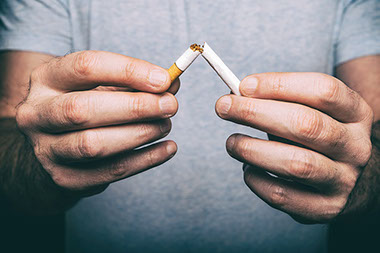
    Hands breaking a cigarette in half.

    Smoking and the use of other tobacco products causes serious harm to the body, including cancer, cardiovascular disease, and emphysema. Smoking can also complicate diabetes and other health conditions.

    If you are smoking, try to quit. Talk to your doctor about tools to help you quit. Call 800-QUIT-NOW (800-784-8669) to talk to someone who can help you quit.

    Quitting smoking may cause some weight gain as your body learns to regulate blood sugar and appetite normally again. Smoking can also be a coping strategy for stress, so you will need to learn new ways to manage stress. It is worth it to quit smoking.

    © American Institute for Preventive Medicine

  • Protein 2

    Healthylife® Weigh

    Menus & Recipes

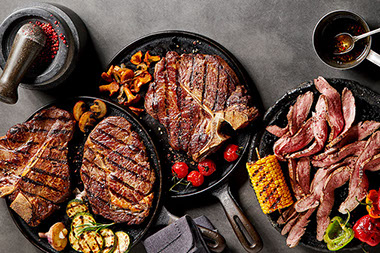
    Cooked meats and vegetables in frying pans with seasoning and garnishes.

    Protein helps build and repair muscle tissue, fight disease, manage hunger, and perform other essential tasks. This food group includes seafood, meats, poultry, eggs, nuts, seeds, and soy foods and beverages. Try to include at least one non-meat source of protein every day. Plant proteins are very nutrient dense.

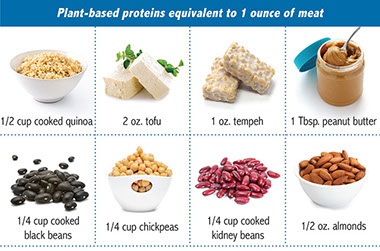
    Chart of plant-based equivalent to 1 ounce of meat.
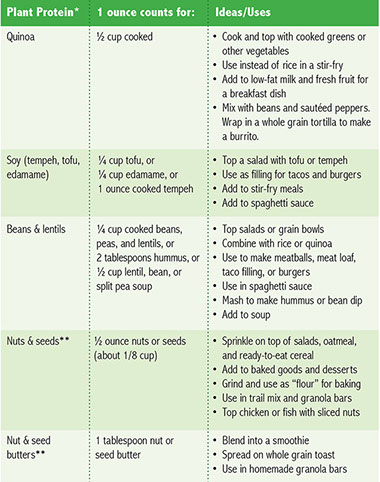
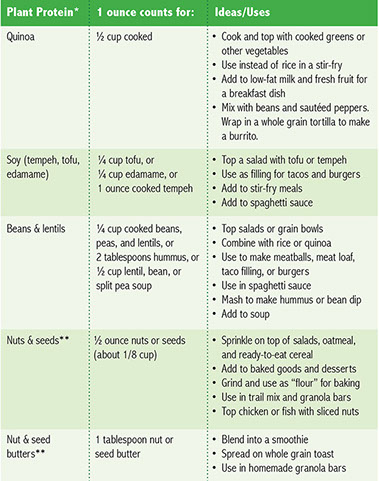
    Chart of plant protein, how much is needed to 1 ounce and ideas.

    * These complete proteins contain all 9 essential amino acids. Other plant proteins contain some, but not all, of these protein building blocks. Consume a variety of sources to form a “team” of complete proteins.

    ** Choose unsalted nuts and no-sugar added butters to reduce sodium and added sugars.

    Make animal protein choices lean

    Choose lean animal proteins most of the time. Poultry (chicken and turkey) is leaner than red meat (beef) or processed meats (e.g., sausage). Consider using a food scale to weigh animal protein, at least until you are more familiar with recommended portion sizes by sight. Another option is to use a deck of cards to estimate 3 ounces of meat.

    © American Institute for Preventive Medicine

  • Protein

    Healthylife® Weigh

    Part 2

    Cooked meats and vegetables in frying pans with seasoning and garnishes.

    Protein-rich food choices make up one-quarter of MyPlate. Protein helps the body build and repair muscle tissue, fight disease, manage hunger, and perform other essential tasks. The protein group includes seafood, meats, poultry, eggs, nuts, seeds, and soy foods and beverages. Protein provides  4 calories per gram.

    Protein sources can be plant-based or animal-based. Whether you eat meat or not, make some of your choices from plant-based protein sources. Try to include at least one non-meat source of protein every day.

    Plant Protein Power

    Some plant foods are high in protein. These foods also contain fiber, vitamins, minerals, plant chemicals (phytochemicals), and other nutrients. Some, like nuts, contain healthy fats, and others, such as tempeh, contain healthy bacteria that promote gut health.

    Chart of plant-based equivalent to 1 ounce of meat.
    Chart of plant protein, how much is needed to 1 ounce and ideas.

    * You can get all the protein your body needs by eating a balanced and varied diet of plant foods if you choose not to eat foods that come from animal products.

    ** Choose unsalted or low-salt nuts and no sugar added butters to reduce sodium and added sugars.

    Varieties of Seeds & Nuts

    *  Sunflower seeds

    *  Sesame seeds

    *  Flax seeds

    *  Pumpkin seeds

    *  Peanuts

    *  Cashews

    *  Almonds

    *  Walnuts

    *  Pecans

    *  Pine nuts

    *  Nut or seed butter

    Fun Fact: Peanuts are actually a legume. For planning your meals, consider them a nut. Count peanuts and peanut butter in the protein group.

    Lean Animal Protein

    Use a food scale to weigh animal protein. For deli meat and processed meats (e.g., sausage), use the nutrition facts to determine how many slices or pieces equal one ounce. For thicker cuts of unprocessed meat, estimate by comparing to a deck of cards. A deck of cards is the same size as about 3 ounces of meat. Choose lean animal proteins. Poultry (chicken and turkey) is leaner than red meat (beef) or processed meats (e.g., sausage or bacon).

    Leanest Cuts (Choose More of These)

    *  Fish

    *  Chicken breast

    *  Turkey breast

    *  Ground turkey or chicken breast (90% lean or higher)

    *  Pork tenderloin

    *  Venison (deer meat)

    Medium Fat (Choose Fewer of These)

    *  Dark meat from chicken or turkey (meat from thighs or legs)

    *  Ground beef, 90% lean or leaner

    *  Ground turkey or chicken, less than 90% lean

    *  Beef: chuck shoulder roast, top round, tenderloin, flank steak, or round steak

    Highest Fat (Limit These)

    *  Ground beef (less than 90% lean)

    *  Ribs (beef or pork)

    *  Beef brisket

    *  Sausage

    *  Bacon

    *  Bologna, pepperoni, salami

    *  Spam

    *  Hot dogs

    Lean Cooking Tips for Animal Protein

    *  Remove the skin from chicken to reduce fat. Trim visible fats from meat before cooking.

    *  Use liquid fats in cooking (canola or olive oil) instead of solid fats (butter or shortening).

    *  Poach chicken or fish in water, stock, or white wine. When roasting or broiling, place meat on a rack in a pan so that the fat drips off the meat.

    *  Place fish or chicken on foil or parchment paper. Add fresh herbs, lemon juice, and tomatoes; fold up and bake. This will help seal in flavors and juices.

    *  Tenderize leaner cuts of meat by pounding, marinating, or cooking in a pressure cooker.

    Deep frying is not a lean-cooking technique. Limit deep fried foods.

    Eggs

    One ounce counts as: 1 egg

    Eggs are a great source of protein. Eat the whole egg (including the yolk) to get many important nutrients. These include:

    *  Choline, which promotes normal cell activity and liver function

    *  Lutein and zeaxanthin, which help maintain eye health

    *  B vitamins that help with energy production in the body

    Eating just the egg white also provides protein. However, you will miss out on many important nutrients found in the yolk.

    Ideas for Adding Eggs to Your Meals and Snacks:

    Eggs can be quickly prepared on the stove or in the microwave. Add a pinch of pepper for a flavorful, on-the-go meal or snack. Eggs can be added to many dishes:

    *  Stir-fry

    *  Burritos

    *  Chili

    *  Tacos

    *  Burgers (as a topping or in place of meat)

    *  Eggs provide a filling base for vegetables. Scramble, poach, or pan-fry an egg with cooking spray. Add peppers, onions, spinach, mushrooms, tomatoes, or other colorful vegetables.

    Microwave Scrambled Eggs:Add 1 tablespoon milk per egg and whisk in a microwave-safe bowl. Microwave on high for 1 minute. Stir and cook for 1 more minute (or until done).

    Oaty Eggs Florentine:Coat a small pan with cooking spray and fry one egg. Add the cooked egg to cooked oatmeal and stir in spinach and cheese.

    Blueberry Mug Cake:Mix 1 egg with 3 teaspoons oatmeal, 10 blueberries, and a small mashed banana in a microwave safe mug. Mix in 2-3 drops vanilla extract. Microwave on high for 3 minutes. Top with low-fat yogurt.

    Fish & Seafood

    Fish and seafood are lean protein sources. Add a variety of the following choices into your weekly meal plan. If you eat animal protein, include fish at least once a week*.

    Types of Fish:Tuna, salmon, snapper, cod, flounder, haddock, halibut, perch, pollock, trout, tilapia

    Types of Seafood:Clams, lobster, oysters, scallops, shrimp, sardines, herring

    Tips for Choosing Fish:

    *  Fresh: Keep refrigerated until ready to cook. Prepare within a few days or freeze.

    *  Frozen: Thaw in the refrigerator overnight before cooking.

    *  Canned: Choose canned tuna or salmon packed in water. Drain before using. Canned fish usually costs less than fresh or frozen fish.

    *  Pouch: Choose ready-to-eat tuna that is packed in water. Get packets that don’t include mayonnaise. If needed, add a teaspoon of olive oil for moisture.

    Omega-3 Fatty Acids

    Omega-3 fatty acids are an essential fat. This means the body needs to get that type of fat from food. Omega 3-fatty acids help:

    *  Keep cells healthy, including brain cells responsible for memory

    *  Regulate blood clotting and contraction and relaxation of arteries

    *  Reduce inflammation

    *  Regulate genetic function

    Fish sources of omega-3 fatty acids:Salmon, anchovies, albacore tuna, mackerel, lake trout, halibut, sardines, oysters, and herring

    Plant-based sources of omega-3 fatty acids:Walnuts, ground flaxseeds (and oil), canola oil, soybean oil

    *  If you are planning to become pregnant or have young children, you are more sensitive to higher mercury levels found in some fish. Visitwww.epa.gov/fish-tech/epa-fda-advice-about-eating-fish-and-shellfishfor more information.

    © American Institute for Preventive Medicine

  • Practice Relaxation Techniques

    Healthylife® Weigh

    Part 6

    Women deep breathing.

    Use relaxation techniques to manage emotional eating triggers.

    Learn These Four Skills to Relax

    1. Relaxation Reflex: Get rid of muscle tension.

    2. Mindfulness: Be fully present in the moment.

    3. Deep Breathing: Feel relaxed by breathing in more oxygen.

    Plan Relaxation Time

    Plan 15 minutes during the day to intentionally relax. You can also do relaxation exercises as needed throughout the day. Practice these techniques before eating or to cope with an emotion that is triggering you to eat. Relaxation techniques can help reduce stress-related health problems, such as high blood pressure, headaches, and pain. These tools also help you to have greater mental and physical control and improve your response to negative emotions.

    How the mind can control the body:

    *  It can slow brain wave patterns.

    *  It can reduce heart and breathing rates.

    *  It can increase blood flow to the limbs.

    *  It can relax muscles.

    © American Institute for Preventive Medicine

  • Practice Assertiveness

    Healthylife® Weigh

    Part 4

    Group friends enjoying a meal at home.

    Practice responding to common scenarios. Below are sample responses to a few statements and situations.

    “One piece of chocolate cake won’t hurt you.”

    You’re right, but a whole cake of pieces will! Since I’m not eating chocolate cake as often, I’ll enjoy a couple of bites with you. -OR-  I’m not eating chocolate cake as often. I’ll have a piece another time.

    “I made it just for you.”

    Wow, I really appreciate you thinking of me! I’m cutting back on how much I eat that treat right now. Can I have just a taste?

    “What’s the matter? Don’t you like it?”

    I am enjoying it, but since I’m changing how I eat, I’m eating the amount that’s just right for me.

    “You’ve been on every diet there is. This one won’t work either.”

    I appreciate your concern for my success, but this time my goal is a healthy lifestyle change and the weight loss is secondary. I’m doing things differently this time.

    Someone takes you on a “surprise” trip to the ice cream parlor.

    What a surprise! I’m going to enjoy a kiddie-size ice cream. Next time, maybe we could go for a walk, go someplace different, etc.

    Someone asks you to do something during planned physical activity time.

    Thanks for the invite, but I have plans to go to the gym today. How about we take a look at our schedules and find a time that works for both of us to do something in the future. Or, would you like to join me?

    You look great! You don’t need to change anything you’re doing!

    Thanks for the compliment! But, I want to look and FEEL my best so it’s important for me to keep implementing healthier lifestyle choices for myself.

    © American Institute for Preventive Medicine