Blog

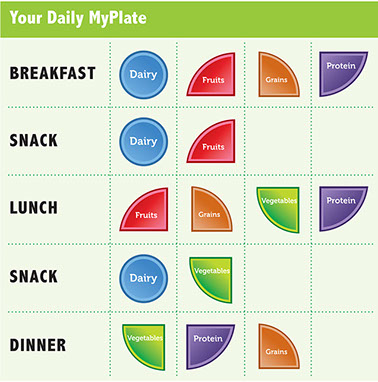
  • Myplate Choices For One Day

    Healthylife® Weigh

    Part 3

    Breakfast smoothie bowl with fruits and granola.

    Every meal does not have to include every food group.

    Combine at least three food groups at every meal, and at least two food groups at every snack. For example, combine an apple and peanut butter to get one serving of protein and one serving of fruit. This will help you feel full and give you long-lasting energy.

    Here is an example that includes three meals and two snacks.

    © American Institute for Preventive Medicine

  • Modify Ingredients In Recipes

    Healthylife® Weigh

    Part 3

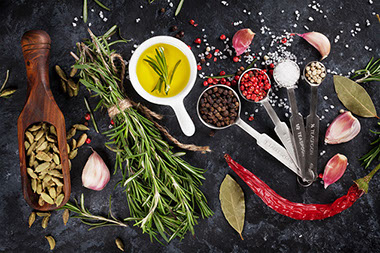
    Herbs and spices.

    Recipes offer guidelines, not rules. You may want to modify them if you:

    *  Don’t like an ingredient.

    *  Don’t have an ingredient.

    *  Want to include something different.

    *  Need to fulfill a need on MyPlate, like getting another serving of vegetables or whole grains.

    *  Want to reduce sodium, saturated fat, or added sugars.

    *  Are allergic or sensitive to an ingredient.

    3 Ways to Modify a Recipe:

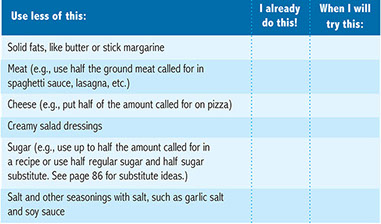
    1. Use less of ingredients that have added sugar, sodium, or saturated fat.

    Chart of ideas on using less of ingredients.

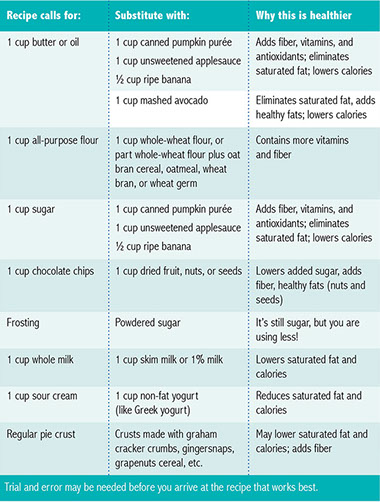
    2. Substitute ingredients

    Chart of substitute ingredients ideas.

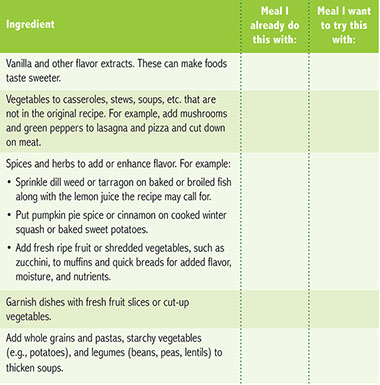
    3. Add new ingredients

    Chart of adding new ingredient ideas.

    © American Institute for Preventive Medicine

  • Mindfulness

    Healthylife® Weigh

    Part 6

    Man mediating on bedroom floor.

    Mindfulness means you are fully aware of all aspects of what you are sensing in the current moment. Practice mindfulness while you listen to music, walk, run, garden, or eat.

    *  Focus on current thoughts without judging them.

    *  Put past thoughts and what the future has in store out of your mind.

    Mindfulness can activate areas in the brain that give you feelings of calmness and help reduce stress.

    Mindfulness Exercise

    *  Set aside five (or more) minutes. Find a place with no distractions.  Get comfortable.

    *  Focus on your breathing or anything in the present, such as the sounds you hear or an object in your sight.

    *  As thoughts pop up in your mind, let them go without judging them. Return your focus to what you see, hear, and feel.

    Mindful Eating

    *  Have a space for eating that is separate from where you do other tasks.

    *  Calm yourself first. Use other relaxation techniques to help you focus on the present.

    *  When you are eating, just eat. Avoid multi-tasking. Distractions like watching TV or looking at your phone take away from being mindful.

    *  Savor your food and the act of eating it. Embrace all of the senses-touch, smell, sight, taste, and sound.

    *  Avoid judging yourself while you eat. Once you have chosen what to eat, enjoy it fully.

    Practice Mindfulness with an Orange

    Peeling an orange or other fragrant fruit can help you practice focusing on the moment. Press your nail into the thick skin to break through. Breathe in the citrus scent as you slowly take pieces off the fruit. Bite into a slice of the orange. Notice the taste on your tongue and the feel of the juices.

    © American Institute for Preventive Medicine

  • Myplate

    Healthylife® Weigh

    Menus & Recipes

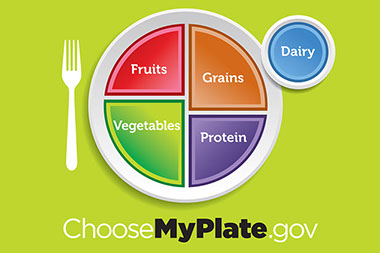
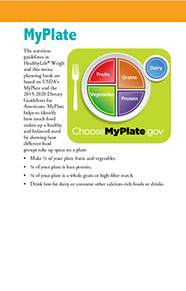
    Choose MyPlate logo.

    The nutrition guidelines in HealthyLife® Weigh and this menu planning guide are based on USDA’s MyPlate and the 2015-2020 Dietary Guidelines for Americans. MyPlate helps to identify how much food makes up a healthy and balanced meal by showing how different food groups take up space on a plate:

    *  Make ½ of your plate fruits and vegetables.

    * ¼ of your plate is lean protein.

    * ¼ of your plate is a whole grain or high-fiber starch.

    * Drink low-fat dairy or consume other calcium-rich foods or drinks.

    Menus & Recipes

    QUICK LINKS: PART 1

    MyPlate

    Plan a Balanced Day

    Fruits & Vegetables

    Grains & Starches

    Protein

    Dairy

    Healthy Fats & Oils

    Limit Added Sugars

    Limit Sodium

    Getting Started with Menu Planning

    Plan MyPlate

    Plan Your Week

    Suggestions for Meals & Snacks

    Improve a Packaged Meal

    Eating Out

    Map Your Meal Plan

    © American Institute for Preventive Medicine

  • Mental Health

    Healthylife® Weigh

    Part 5

    Group of people with thumbs up in yoga studio.

    Emotional Health

    Exercise releases endorphins and increases levels of serotonin and dopamine in the brain. These brain chemicals help create feelings of happiness and euphoria. You may start to feel these benefits after just a few minutes of moderate exercise. This leads to a quick happiness buzz and an overall mood boost!

    Stress Management

    Norepinephrine is a chemical that can moderate the brain’s response to stress. Exercise helps to increase that chemical. Exercise can decrease worry and tension. It also enhances the mind’s ability to deal with daily stressors. Managing stress can reduce emotional eating and cravings for sweets and high-fat foods. The calming effect of exercise can last at least four hours after the exercise is over.

    View physical activity as a break from your day. Use this time to focus on the present, instead of past or future problems and worries.

    Connect to My Values:

    Example: Having good emotional health will help me enjoy what I am doing in the moment. Enjoying life’s pleasures, such as the beauty of fall colors, is important to me.

    © American Institute for Preventive Medicine

  • Meal Planning Basics

    Healthylife® Weigh

    Part 3

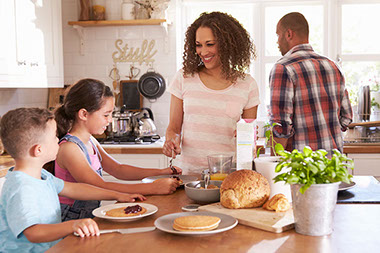
    Family at home eating breakfast in the kitchen.

    This online guide uses the terms breakfast, lunch, dinner, and snacks.

    *  Breakfast: The first time you eat upon waking

    *  Lunch: 3-4 hours later

    *  Dinner: 4-5 hours later

    *  Snacks: Small meals between breakfast, lunch, and dinner. These are optional, but snacks may help you manage hunger.

    Your work schedule, culture, travel, dietary restrictions, or preferences may mean you have a different meal schedule. Label each meal or snack in a way that makes sense to you.

    Goals for all meals and snacks:

    *  Get enough energy and nutrients.

    *  Choose foods from the main food groups.

    *  Meet, but try not to go over, your daily goals for all food groups.

    *  Avoid spikes or drops in blood sugar that can trigger overeating,  sugar cravings, mood swings, and tiredness.

    *  Include tasty foods.

    *  Build time management into the meal plan.

    Do I have to eat breakfast?

    Breakfast is an important meal that you shouldn’t skip. Eating breakfast:

    *  Gives your body energy after a long break in eating.

    *  Kick-starts your metabolism and helps you burn energy during the day.

    *  May help with memory, concentration, and focus.

    *  May lower your risk for heart disease, type 2 diabetes, and obesity.

    You don’t have to eat typical breakfast foods to get the benefits of eating breakfast. Choose foods high in protein and nutrient-dense carbohydrates. Try whole grain pancakes with yogurt and fruit. Or, re-heat leftovers from the night before.

    © American Institute for Preventive Medicine

  • Meal And Snack Ideas

    Healthylife® Weigh

    Part 3

    Family eating dinner together at home.

    Below are ideas for basic meals and snacks. Use these ideas to start building your meal plan.

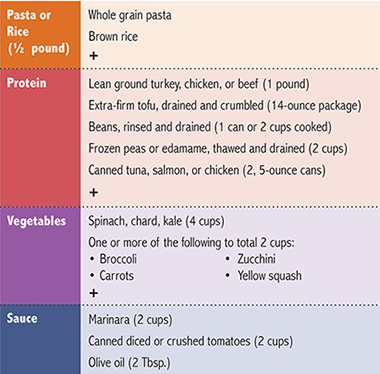
    Meal Idea: Pasta or Rice Dinner

    Choose ingredients from the chart below. This recipe makes four servings.

    Chart of meal ideas, pasta or rice dinner.

    Directions:

    1. Cook pasta or rice according to package directions and drain.

    2. Cook protein choice as needed.

    3. Cook veggies by steaming, grilling, roasting, sautéing, or adding to boiling pasta water in the last few minutes of cooking.

    4. In a large pot, heat sauce over medium heat. If using spices, add them now. Add protein and veggies to heat through. Toss with hot cooked pasta or rice and serve.

    For a casserole, follow the directions above. Then, pour into a 9 x 13-inch baking pan and bake for 40-60 minutes until the top is golden brown.

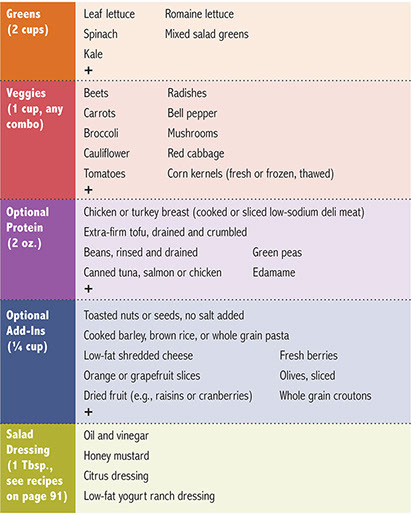
    Meal Idea: Salad

    Choose ingredients from the chart below. This salad recipe serves one person.

    Chart of meal ideas, salad.

    Directions:

    Toss ingredients together when ready to eat. Or, prepare a salad ahead of time in a container, keeping very moist ingredients (like tomatoes and dressing) separate. When you are ready to eat, toss and empty onto a plate or in a large bowl.

    Salad Dressing

    Salad dressing can be a healthy choice for your salad. Use healthy, unsaturated fats in salad dressing to:

    *  Help you feel full and more satisfied.

    *  Help your body get the benefits of other vitamins in your salad, like fat-soluble vitamins A, D, E, and K.

    *  Add flavor. Dressings are a great place for herbs, spices, and other powerful flavors to make your salad POP!

    *  Help you eat vegetables that you don’t like plain.

    Tips for Selecting a Dressing at a Restaurant:

    *  Ask for oil-based dressings, such as olive oil and balsamic vinegar.

    *  Ask for dressing on the side. Toss your salad with half the dressing provided and put the rest to the side. Most restaurants offer much more dressing than you need for your salad.

    *  If you are worried you may use too much dressing, ask for a half-size salad or order another vegetable as a side dish.

    *  On bottled dressings, look for ones made without added sugars.

    Make Your Own Salad Dressing

    Use 1-2 Tbsp. of the dressing on your salad. Store leftovers in a sealed jar.

    *  Oil and vinegar dressing: 3 Tbsp. olive oil, 2 Tbsp. red wine vinegar,  1/8 tsp. salt (a dash), ¼ tsp. black pepper. Serving size: 1 Tbsp.

    *  Honey mustard dressing: 6 Tbsp. mustard, ½ Tbsp. fresh lemon juice or cider vinegar, 1½ Tbsp. honey, 1 tsp. olive or canola oil, 1/8 tsp. salt  (a dash), ¼ tsp. black pepper. Serving size: 2 Tbsp.

    *  Citrus dressing: 2 Tbsp. lime, lemon, or orange juice; 3-4 Tbsp. canola or olive oil, 1/8 tsp. salt (a dash), ¼ tsp. black pepper. Serving size: 1 Tbsp.

    *  Creamy low-fat ranch dressing: 1 (6-ounce) container plain nonfat or  low-fat yogurt, 1/3 cup low-fat mayonnaise, 2 Tbsp. white vinegar, 1 Tbsp. dried dill, ¼ tsp. garlic powder, 1/8 tsp. salt (a dash). Serving size: 2 Tbsp.

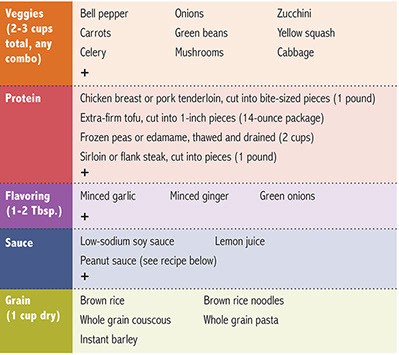
    Meal Ideas: Stir-Fry

    Choose ingredients from the chart below. This recipe makes four servings.

    Chart of meal ideas, stir-fry.

    Peanut Sauce:In a small bowl, stir together ¼ cup peanut butter, 1/3 cup water, ¼ cup low-sodium soy sauce, 2 Tbsp. cider vinegar, and 4 tsp. sugar.

    Directions

    1. Cook grains. Follow package directions and set aside.

    2. If using meat: In a large skillet over medium heat, cook meat or poultry in 1 tablespoon canola or olive oil. Set aside.

    3. Add veggies to skillet, starting with harder veggies (these take longer to cook). Cook to desired softness. Add flavoring (garlic, ginger, or green onions). If adding tofu, peas, or edamame, add that now.

    4. Add sauce and cook for 1-2 more minutes. Stir in cooked meat.

    5. Serve over cooked grains.

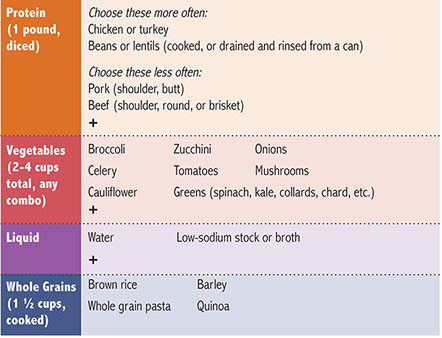
    Meal Ideas: Soup

    Choose ingredients from the chart below. This recipe makes four servings.

    Chart of meal ideas, soup.

    Directions

    1. If using meat: Heat 1 Tbsp. of canola or olive oil in a soup pot. Add meat and cook for 5 minutes. If not using meat, skip this step.

    2. Add chosen vegetables and sauté for 5 minutes. If using frozen vegetables, thaw in the microwave first.

    3. Add liquid and beans or lentils (if using) and bring to a boil. Once boiling, reduce heat and simmer for 25-30 minutes. Stir occasionally.

    4. Add grains and seasonings. Cook for an additional 5 minutes.

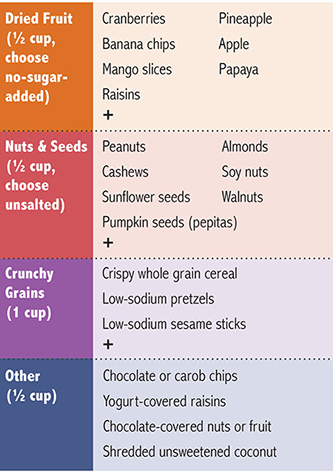
    Snack Ideas: Trail Mix

    Choose ingredients from the chart below. This recipe makes four servings.
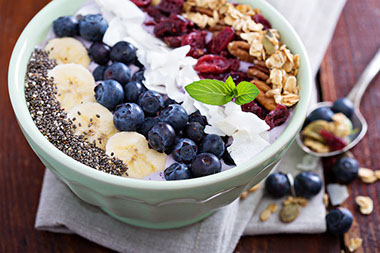
    Chart of snack ideas, trail mix.

    © American Institute for Preventive Medicine

  • Covid-19 Booster Shots

    Respiratory conditions

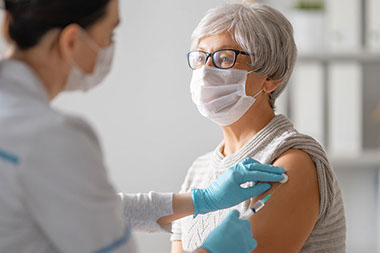
    Older female receiving vaccine shot.

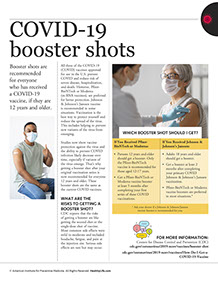
    Booster shots are recommended for everyone who has received a COVID-19 vaccine, if they are 12 years and older.

    All three of the COVID-19 (COVID) vaccines approved for use in the U.S. prevent COVID and reduce risk of severe disease, hospitalization, and death. However, Pfizer-BioNTech or Moderna (m-RNA vaccines), are preferred for better protection. Johnson & Johnson’s Janssen vaccine is recommended in some situations. Vaccination is the best way to protect yourself and reduce the spread of the virus. This includes helping to prevent new variants of the virus from emerging.

    Studies now show vaccine protection against the virus and the ability to prevent COVID infection likely decrease over time, especially if variants of the virus emerge. That’s why getting a booster shot after your original vaccination series is now recommended for everyone 12 years and older. These booster shots are the same as the current COVID vaccines.

    What are the risks to getting a booster shot?

    CDC reports that the risks of getting a booster are like getting the second shot or the single-dose shot of vaccine. Most common side effects were mild to moderate and included headache, fatigue, and pain at the injection site. Serious side effects are rare but may occur.

    Which Booster Shot Should I Get?

    If You Received Pfizer-BioNTech or Moderna:

    *  Persons 12 years and older should get a booster. Only the Pfizer-BioNTech vaccine is recommended for those aged 12-17 years.

    *  Get a Pfizer-BioNTech or Moderna vaccine booster at least 5 months after completing your first series of these COVID vaccinations.

    If You Received Johnson & Johnson’s Janssen:

    *  Adults 18 years and older should get a booster.

    *  Get a booster at least 2 months after completing your primary COVID Johnson & Johnson’s Janssen vaccination.

    *  Pfizer-BioNTech or Moderna vaccine boosters are preferred in most situations.*

    * Ask your doctor if a Johnson & Johnson/Janssen vaccine booster is recommended for you.

    Healthier at Home book by the American Institute for Preventive Medicine. www.HealthyLife.com. All rights reserved.

    © American Institute for Preventive Medicine

  • 10 Action Steps To Lower Heart Disease Risk

    Heart & Circulation Problems

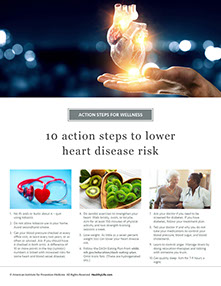
    Computer generated heart glowing above hand.

    1.  No ifs ands or butts about it − quit  using tobacco.

    2.  Do not allow tobacco use in your home. Avoid secondhand smoke.

    3.  Get your blood pressure checked at every office visit, at least every two years, or as often as advised. Ask if you should have it checked in both arms. A difference of 10 or more points in the top (systolic) numbers is linked with increased risks for some heart and blood vessel diseases.

    4.  Do aerobic exercises to strengthen your heart. Walk briskly, swim, or bicycle. Aim for at least 150 minutes of physical activity and two strength-training sessions a week.

    5.  Lose weight. As little as a seven percent weight loss can lower your heart disease risk.

    6.  Follow the DASH Eating Plan fromnhlbi.nih.gov/education/dash-eating-plan. Omit trans fats. (These are hydrogenated oils.)

    7.  Ask your doctor if you need to be screened for diabetes. If you have diabetes, follow your treatment plan.

    8.  Tell your doctor if and why you do not take your medications to control your blood pressure, blood sugar, and blood cholesterol.

    9.  Learn to control anger. Manage stress by doing relaxation therapies and talking with someone you trust..

    10.Get quality sleep. Aim for 7-9 hours a night.

    Health at Home Lifetime book by the American Institute for Preventive Medicine. www.HealthyLife.com. All rights reserved.

    © American Institute for Preventive Medicine

  • 10 Action Steps To Prevent The Spread Of Cold & Flu Viruses

    Respiratory conditions

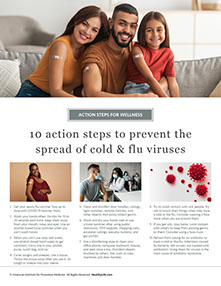
    Family smiling with bandage on upper arms noting they all had a vaccine.

    1.  Get your yearly flu vaccine! Stay up to date with COVID-19 booster shots.

    2.  Wash your hands often. Do this for 15 to 20 seconds each time. Keep them away from your mouth, nose, and eyes. Use an alcohol-based hand sanitizer when you can’t wash hands.

    3.  When you can’t use soap and water, use alcohol-based hand wipes or gel sanitizers. Carry one in your pocket, purse, lunch bag, and car.

    4.  Cover coughs and sneezes. Use a tissue. Throw the tissue away after you use it. Or cough or sneeze into your sleeve.

    5.  Clean and disinfect door handles, railings, light switches, remote controls, and other objects that easily collect germs.

    6.  Wash and dry your hands well or use a hand sanitizer after using public restrooms, ATM keypads, shopping carts, escalator railings, elevator buttons, and gas pumps.

    7.  Use a disinfecting wipe to clean your office phone, computer keyboard, mouse, and desk once a day. Disinfect objects touched by others, too, such as copy machines and door handles.

    8.  Try to avoid contact with sick people. Try not to touch their things when they have a cold or the flu. Consider wearing a face mask when you are around them.

    9.  If you get sick, stay home. Limit contact with others to keep from passing germs to them. Consider using a face mask.

    10. Refrain from asking for an antibiotic to treat a cold or the flu. Infections caused by bacteria, not viruses, are treated with antibiotics. Using them for viruses is the main cause of antibiotic resistance.

    Health at Home Lifetime book by the American Institute for Preventive Medicine. www.HealthyLife.com. All rights reserved.

    © American Institute for Preventive Medicine