Blog

  • Exercise And Sleep

    Healthylife® Weigh

    Part 5

    Women sleeping.

    Physical activity can help you sleep better. After your body has worked hard, deep sleep is triggered to help your body recover, repair, and get ready for more activity. This natural drive helps you fall asleep and sleep more restfully.

    Be active outdoors, when possible. Outdoor physical activity increases exposure to sunlight. This helps to strengthen your body’s circadian rhythm (natural sleep clock). A stronger circadian rhythm helps you feel sleepy when it’s time to rest.

    Sleep Helps You Recover from Exercise

    Physical activity triggers a cycle of muscle break-down and repair. The repair process depends on sleep. Without enough sleep, repair is limited. This can increase the risk of injury and limit athletic goals (e.g., running or walking farther or lifting more weight).

    Severe sleep restriction (less than four hours per night) can cause dramatic increases in your heart rate and blood pressure. This strains your heart. Not only does this limit your ability to exercise, but your risk for heart attack and cardiovascular problems increases.

    Timing Exercise with Sleep

    Physical activity increases adrenaline in the body. This hormone increases your heart rate and alertness. Plan vigorous exercise at least four to six hours before bedtime. Light exercise and mild activities should end at least two to four hours before bedtime.
    © American Institute for Preventive Medicine

  • Exercise And Eating

    Healthylife® Weigh

    Part 5

    Man eating a power bar at the gym.

    Exercise is not a solution for overeating or for eating unhealthy foods. Avoid treating exercise as a way to “make up” for eating more than your body needs. This can lead to feelings of guilt. It can also make exercise feel like a punishment.

    We tend to overestimate the calories burned through exercise and under-estimate the calories in food. The number of calories burned during exercise also varies from person to person. Factors like age, gender, and physical fitness can increase or decrease the caloric burn. The number in a chart or on a cardio machine monitor may not be accurate for you.

    Pre-Workout Eating

    You don’t have to eat before working out early in the morning, but it may give you more energy and help your body recover faster.

    Eat foods low in fat and fiber that can be digested easily. Include small amounts of protein in your pre-workout meals and snacks. This will help reduce muscle soreness. Experiment to find out what works best for you and allows you to feel your best.

    Pre-workout snack ideas (30-60 minutes before exercise):

    *  Piece of fruit

    *  Low-fat or non-fat yogurt

    *  Trail mix

    *  Whole-wheat toast with banana slices

    *  Smoothie with plain yogurt, frozen berries, and protein powder

    *  Oatmeal with fresh fruit

    Post-Workout Eating

    Exercise can increase your appetite. Your body wants to replace the calories you burned during exercise. Avoid overeating after exercise.

    Eat foods rich in protein, fiber, and healthy fats. Drink water to replenish fluids.

    Post-workout snack ideas (within 2 hours of exercise):

    *  Smoothie with plain yogurt, frozen berries, protein powder and avocado

    *  Banana with peanut butter

    *  Whole-wheat pita with turkey and veggies

    *  Protein bar (choose a bar with fewer than 5g of sugar)

    *  String cheese, apple, and whole grain crackers

    *  Veggie omelet with avocado

    If you are close to your normal meal time, just have that. Or, if you are not close to your normal meal time, have a small snack.

    © American Institute for Preventive Medicine

  • The “Everything In Moderation” Trap

    Healthylife® Weigh

    Part 4

    Chocloate covered strawberries.

    This may be the most common dietary advice today: everything in moderation. However, there are many reasons why this is really hard for most people and downright dangerous for others.

    1.May Be Dangerous:Certain ingredients may harm your body or could make managing a medical condition difficult. Or, you may be sensitive to a food that leads to discomfort, like an artificial sweetener triggering a headache. Moderation does not work in this case.

    2.Risk of Overeating:Second, moderation is a very vague term. How often are you having this food in “moderation”? A small amount daily? A large amount once weekly? Even what you think is a small amount may actually take up a large portion of your daily calorie budget. Also, having this small amount could lead to overeating, especially if the food is high in sugar.

    3.Negotiation Trap:Eating foods in moderation can lead to negotiations and planning to “make up for it” later. “If I eat this cake tonight, I’ll run an extra mile tomorrow.” “If I go out drinking this weekend, I won’t have any alcohol next weekend.” It seems easy in the moment to seize instant gratification. However, if you use the “everything in moderation” excuse too often, you may find yourself negotiating your health away.

    © American Institute for Preventive Medicine
  • Estimate Serving Sizes

    Healthylife® Weigh

    Part 2

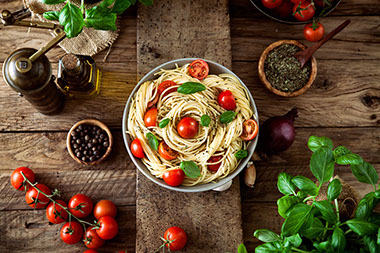
    Pasta with olive oil, garlic, basil and tomatoes.

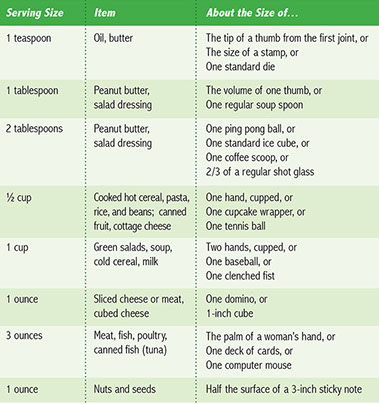
    To stay within the food group guidelines for your calorie needs, you need to use correct serving sizes. To be exact, you could use measuring cups and spoons or weigh foods on a scale. Do this when you can or when you are learning, but this is not always practical. You can estimate serving sizes using familiar objects.

    Chart showing serving sizes and items.

    © American Institute for Preventive Medicine
  • Energy, Learning, And Focus

    Healthylife® Weigh

    Part 5

    Senior couple exercising in gym.

    Improved Energy Levels

    Exercise helps transport oxygen and nutrients to your tissues. When your heart and lungs are working more efficiently, you have more energy to work, do daily chores, keep up with active kids, and have fun.

    Improved Ability to Learn

    Exercise increases production of cells in the brain responsible for memory and learning. Exercise can help with decision-making and higher-level thinking. Exercise also helps increase brain volume and reduce the number and size of age-related holes in the brain. This decreases the risk for dementia and Alzheimer’s.

    Improved Focus

    Exercise that requires hand-eye coordination or quick foot work helps your brain cells grow. These exercises, like tennis or basketball, may improve your concentration skills better than more simple exercises, like riding a stationary bike.

    © American Institute for Preventive Medicine
  • Eating Out

    Healthylife® Weigh

    Menus & Recipes

    Two people eating at a restaurant.

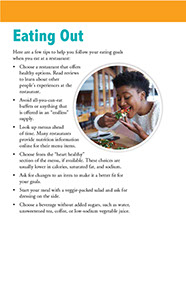
    Here are a few tips to help you follow your eating goals when you eat at a restaurant:

    *  Choose a restaurant that offers healthy options. Read reviews to learn about other people’s experiences at the restaurant.

    *  Avoid all-you-can-eat buffets or anything that is offered in an “endless” supply.

    *  Look up menus ahead of time. Many restaurants provide nutrition information online for their menu items.

    *  Choose from the “heart healthy” section of the menu, if available. These choices are usually lower in calories, saturated fat, and sodium.

    *  Ask for changes to an item to make it a better fit for your goals.

    *  Start your meal with a veggie-packed salad and ask for dressing on the side.

    *  Choose a beverage without added sugars, such as water, unsweetened tea, coffee, or low-sodium vegetable juice.

    If you are getting a fast food meal, here are some tips and some healthier options to order:

    Tips

    *  Choose grilled options over fried. This reduces saturated fat.

    *  Look for lower-sodium options.

    *  Order the smaller portions on the menu.

    *  Order water instead of 100% fruit juice. Order 100% fruit juice instead of soda.

    *  If you want a treat, choose a small portion, like a small ice cream.

    *  Eat half a portion and save the other half for later. Or, split a meal or menu item with a friend.

    Healthier Choices

    *  Regular burger, skip the fries and add a side salad with a vinaigrette dressing

    *  Grilled chicken wrap with apple slices and a side salad

    *  4-piece chicken nuggets, small fries, apples, yogurt

    *  Salad with chicken and a clementine

    *  Chili with a small salad

    *  Baked potato with plain yogurt

    © American Institute for Preventive Medicine
  • Eating At A Restaurant

    Healthylife® Weigh

    Part 3

    Two people eating at a restaurant.

    Use the same guidelines for choosing food at the grocery store to help you make healthy choices at a restaurant. Compared to preparing food at home, you have less control over what is in your food, how it is prepared, and how much you are served. However, you DO have some control. Here are a few tips to help you follow your eating goals when you eat out:

    1. Choose a restaurant that offers healthy options.

    *  If you are dining with a group, offer to make the reservation.

    *  Read reviews to learn about experiences other people have had at the restaurant.

    *  Avoid all-you-can-eat buffets or anything that is offered in an “endless” supply.

    2. Look up menus ahead of time. Many restaurants, especially fast-food restaurants and other chain restaurants, offer nutrition information online for items on their menu.

    3. Look for clues in the menu. Menus can offer information about what is in the food and how it is made.

    *  Look for meat, poultry, and seafood that has been baked, broiled, steamed, poached, or grilled. Avoid fried choices. Or, ask if a fried food can be prepared with one of these healthier cooking methods.

    *  Pictures, if on the menu, can show you the size of the food groups on the plate. If you need more vegetables to meet your daily needs, ask for an extra serving or order a side salad.

    *  Choose from the “heart healthy” section of the menu, if available. These choices are usually lower in saturated fat and sodium.

    4. Ask for changes to an item, if needed. Menu items can usually be modified by the restaurant. Use the menu to learn what the restaurant has in the kitchen. Mix and match to create a meal that fits your goals. *Be kind and tip your wait staff generously if you are asking for a lot of changes to your order!

    5. Follow your healthy eating plan during the day. Skipping meals or ignoring hunger earlier in the day can lead to overeating or choosing foods higher in sugar, saturated fat, and salt at the restaurant.

    6. Choose your portion. Order your meal as a half-size order or split a meal with a friend. Take some of your food home for another meal.

    7. Set yourself up to be successful. Decline the bread basket, politely. If you are with a group that wants the basket on the table, keep it at the other end to avoid grabbing a piece out of habit. Or, share a piece.

    8. Limit alcohol. This can be a big source of added calories. Stick with one glass of wine or one beer. Or, avoid alcohol altogether.

    Most importantly, enjoy yourself!

    Restaurants can be places to try new foods and flavors and make wonderful memories with family and friends. Take your time. Use your napkin between bites and sip your water often. Engage in conversation. Appreciate the restaurant’s décor and the courtesy of the staff.

    © American Institute for Preventive Medicine

  • Eating And Body Image Issues

    Healthylife® Weigh

    Part 5

    Group of friends eating at a resturant.

    Develop a healthy relationship with eating and your body image. Paying attention to your eating and exercise habits can be a positive step for your health, but you are also at risk for having a distorted body image, developing unhealthy eating patterns, and becoming preoccupied with food and body image.

    Healthy Concern

    *  I pay attention to what I eat in order to maintain a healthy body.

    *  I am flexible in my goals for eating well.

    *  I am not concerned what others think regarding what and how much I eat.

    *  Food only occupies a small part of my time.

    *  I balance my pleasure with eating with my concern for a healthy body.

    *  I feel no guilt or shame with what I eat.

    Food Pre-Occupied/Disruptive Eating

    *  It’s hard for me to enjoy eating with others.

    *  I think about food a lot.

    *  I feel ashamed when I eat more than others or more than what I feel I should be eating.

    *  I am afraid of gaining weight.

    *  Eating more than I wanted to makes me feel out of control.

    *  I feel strong when I can restrict how much I eat.

    Eating Disordered

    *  I am afraid to eat in front of others.

    *  When I eat, I have a hard time controlling the amount of food I eat.

    *  I regularly stuff myself and then exercise, vomit, or use diet pills or laxatives to get rid of the food or calories.

    *  I am terrified of gaining weight.

    *  My friends and family are concerned I am not eating enough.

    © American Institute for Preventive Medicine

  • Eat The Rainbow!

    Healthylife® Weigh

    Part 2

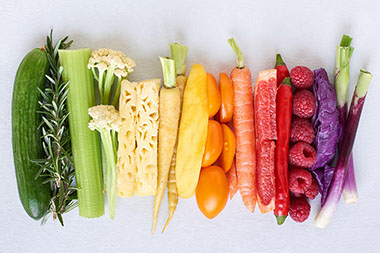
    Rainbow spectrum of healthy fresh fruit and vegetables.

    Choose a variety of colors when selecting fruits and vegetables. Different colors represent different phytonutrients. Phytonutrients are plant chemicals that have antioxidant and anti-inflammatory qualities. Every time you eat is an opportunity to strengthen your body and prevent disease.

    Red

    *  Improved memory

    *  A healthy heart

    *  Improved digestion

    *  Examples

    –  Tomatoes

    –  Beets

    –  Radishes

    –  Red peppers

    –  Red onions

    –  Rhubarb

    –  Cherries

    –  Red apples

    –  Red grapes

    –  Red pears

    –  Raspberries

    –  Strawberries

    –  Watermelon

    Orange/Yellow

    *  Good vision in low light

    *  A healthy heart

    *  Strength to fight off colds & illness

    *  Healthy skin

    *  Improved circulation

    –  Apricots

    –  Cantaloupe

    –  Nectarines

    –  Peaches

    –  Yellow apples

    –  Yellow pears

    –  Carrots

    –  Sweet potatoes

    –  Yellow peppers

    –  Yellow potatoes

    –  Yellow summer squash

    –  Sweet corn

    –  Yellow tomatoes

    –  Butternut squash

    White

    *  A healthy heart

    *  Lower risk for stroke

    *  Lower risk for some cancers

    –  Brown pears

    –  White peaches

    –  Cauliflower

    –  Kohlrabi

    –  Onions

    –  Garlic

    –  Potatoes

    –  White corn

    –  White nectarines

    Green

    *  Good vision in low light

    *  Strong bones & teeth

    *  Organ health

    –  Green apples

    –  Green grapes

    –  Green pears

    –  Honeydew

    –  String beans

    –  Spinach

    –  Broccoli

    –  Sugar snap peas

    –  Brussels sprouts

    –  Green cabbage

    –  Green onions

    –  Green peppers

    –  Cucumbers

    –  Leafy greens

    –  Lettuce

    –  Peas

    –  Asparagus

    –  Zucchini

    Blue/Purple

    *  Improved memory

    *  Healthy aging

    –  Blackberries

    –  Blueberries

    –  Dried plums

    –  Pitted prunes

    –  Purple asparagus

    –  Purple cabbage

    –  Eggplant

    –  Plums

    © American Institute for Preventive Medicine
  • Drink Water

    Healthylife® Weigh

    Part 3

    Elderly man drinking water.

    Water does many important jobs for your body:

    *  Transports nutrients

    *  Helps you digest food

    *  Carries waste from the body

    *  Regulates body temperature

    *  Gives a feeling of fullness

    *  Helps break down fat for energy

    *  Lubricates joints

    *  Helps prevent muscle cramps

    Action Steps:

    *  Drink a glass of water before meals and snacks. This may help you manage your appetite.

    *  Replace a sugar-sweetened drink with water.

    *  Eat foods that are high in water, like cucumbers, leafy greens, and watermelon.

    *  Drink water regularly throughout the day.

    *  Keep a water bottle handy that you can refill when needed.

    *  If you are increasing your fiber intake, also increase your water intake to reduce the risk of constipation.

    How much should I drink?

    Your water needs depend on your activity level and weight. A general rule of thumb is to drink 8 cups of water per day. You may need more if you are very active or sweat a lot.

    How do I know if I’ve had enough?

    Check your urine. When you are properly hydrated, your urine should be light yellow or clear. If it is a darker yellow, you need to drink more water.

    © American Institute for Preventive Medicine