Blog

  • Be Persistent

    Healthylife® Weigh

    Part 7

    Man at gym holding a water bottle and apple.

    You may be reading this page well before you reach your goal. That’s okay. Understand that weight loss takes time. Continue to build on what you do each day. Remember, it isn’t a single healthy meal or workout that will get you to your goal. It’s also not a single poor choice or skipped workout that will derail you.

    *  Build trends of healthy choices.

    *  Know and live your values.

    *  Treat your thoughts and actions with compassion.

    *  Don’t settle with just what you know now. Keep learning.

    *  Create a web of support.

    © American Institute for Preventive Medicine

  • Be A Wary Weight Loss Consumer

    Healthylife® Weigh

    Part 7

    Pills in glasses with tape measure.

    Be wary of miracle pills and quick fixes, even if offered by a “doctor” or someone claiming to be an expert. At many commercial weight loss centers, the staff may not have medical credentials or any advanced training in nutrition. They are often salespeople calling themselves “counselors,” without any medical training. Be wary of any center that pushes products and supplements over real food.

    Avoid injections or pills that advertise being able to block certain nutrients, like fat or carbohydrates. Avoid “fat burners” and anything claiming to target specific parts of your body for fat loss. These are likely a waste of money and can be dangerous.

    Having someone create your meal plan for you may help you get started, but be sure to learn how to do it yourself. Learn to make your own healthy choices. Avoid weight loss programs and schemes that encourage dependence on special products.

    © American Institute for Preventive Medicine

  • Banish Black & White Thoughts

    Healthylife® Weigh

    Part 4

    Three friends enjoying lunch at rooftop restaurant.

    Consider a thought that you tend to see as black and white. Consider some alternative thoughts or ideas you could have instead. Or, when one comes to mind, return to this page and complete the following chart to practice banishing black and white thinking.

    Black & White Thought

    Example: I can’t go to restaurants because I always overeat and ignore my healthy goals.

    Alternative Thoughts

    I can choose restaurants that have healthy choices that I find tasty. I can have a healthy snack before I go out to eat to help prevent overeating at the restaurant.

    As you make changes to your way of thinking, be self-kind, not self-critical. Thinking rationally is like putting on a new, clear pair of glasses. What looked blurry or confusing before may seem more clear. New solutions to a challenge may appear once you look at it differently.

    © American Institute for Preventive Medicine

  • Balance Of Choice

    Healthylife® Weigh

    Part 1

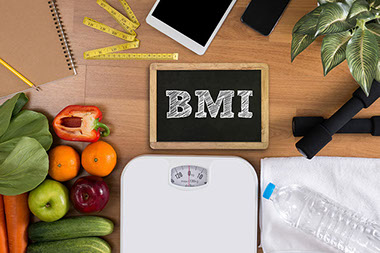
    Dumbbells, scale, towel, fruit, BMI body mass index formula rate formula in a board.

    Learn what is pulling you toward your goal and what is holding you back. All thoughts and feelings are valid. Is your goal more important to you than the challenges to achieve it? Are you pursuing this goal just because someone said you “should” do it? If you think of something later, come back to this to add another point.

    Benefits – “Pros” vs Costs-“Cons”

    Making a change.

    Pro Example: I will have more energy.

    Con Example: I won’t be able to have sweets as often as I do now.

    Not changing.

    Pro Example: I can keep all of my current habits.

    Con Example: I could keep putting on more weight.

    © American Institute for Preventive Medicine

  • Avoid Injury

    Healthylife® Weigh

    Part 5

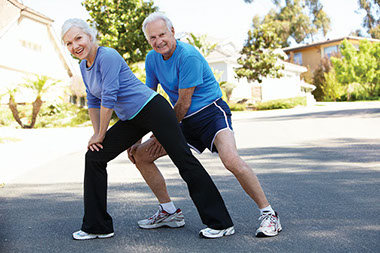
    Senior couple streching before workout.

    Learn how to do an exercise before you try it. Watch someone demonstrate it, either in person or in a video. If possible, do the exercise with someone who can correct poor form.

    Warm up before moderate or intense exercise. Start slowly. You should gradually start breathing harder and feel your heart rate increasing.

    Cool down after moderate or intense exercise. Cool down slowly. Do the activity that you were doing (e.g., walking, biking), but more slowly.

    Possible Cool Down

    *  Brisk walking: Walk around slowly

    *  Swimming: Walk in shallow end of pool

    *  Cycling: Cycle slowly on flat surface or walk

    *  Aerobics: Walk or stretch slowly

    © American Institute for Preventive Medicine

  • Avoid Drowsy Driving

    Healthylife® Weigh

    Part 3

    Alert driver.

    Driving while sleepy can severely impair your driving and cause an accident. Studies have linked sleepiness and fatigue to decreases in reaction time, decision-making, and mind and body coordination. All of these factors are very important for safe driving.

    According to estimates from the National Safety Council in 2017, one out of every five deadly traffic crashes is due to drowsy driving.

    Drive when you feel alert. On long drives, plan 15-minute breaks to get out and stretch your legs every 2 hours. Avoid using food to stay alert. Closing your eyes for even a second (called microsleep) can be enough to travel blindly down the road (or off the road). If you drive while you are fatigued, you and anyone around you is at serious risk.

    Signs of Fatigue

    *  You can’t stop yawning.

    *  You have trouble keeping your head up.

    *  Your eyes close for a moment or go out of focus.

    *  You have wandering, disconnected thoughts.

    *  You have no memory of driving the last few miles.

    *  You miss seeing a sign or your exit.

    *  You slow down when you don’t mean to or brake suddenly or too late.

    *  You drift across the road or veer off onto rumble strips.

    What to do:

    *  Pull to the side of the road or go to a rest stop.

    *  Take a 15-20-minute nap. If you can, have 250-300 mg of caffeine (about 2 cups of coffee) before the nap.

    *  Get a non-drowsy person to drive or find some way of getting to your destination without driving yourself.

    *  Drive to a motel or place where you can sleep.

    © American Institute for Preventive Medicine

  • Be Assertive

    Healthylife® Weigh

    Part 4

    Women with arms crossed looking convinced and confident.

    Learn the differences between passive, aggressive, and assertive communication.

    Passive

    *  You lack expression for yourself.

    *  You do not stand up for your rights and needs.

    Result: You usually do not achieve your goal.

    Aggressive

    *  You stand up for your rights and needs, but at the expense of someone else.

    Result: You usually put down or hurt someone else. You gain no respect.

    Assertive

    *  You stand up for your rights and needs without putting down or hurting someone else.

    *  You express your feelings without becoming victim to them.

    Result: You build self-respect and feel good about yourself.

    Example: Your aunt offers you a large piece of cherry pie that she said she made especially for you. You know that you have eaten enough for the meal and eating the piece of pie does not fit your eating goals.

    *  Passive Response: “Thank you. It’s delicious!” Thinking… “I really don’t want to eat this right now, but I don’t want to hurt her feelings.”

    *  Aggressive Response: “I can’t believe you’re offering me cherry pie when you know I’m trying to lose weight. You’re going to ruin my diet!”

    *  Assertive Response: “I appreciate that you went to the trouble of making this pie for me! It looks great and I’m sure it tastes great. I am very serious about losing weight so I’d like to split that piece with someone.”

    What Assertive Looks Like

    *  Body Posture: Be relaxed and natural. Avoid slouching, putting your hands in your pockets, and facing away from the person you are speaking with.

    *  Eye Contact: Good eye contact is vital to convey self-confidence and interest. Don’t stare at the other person; this comes across as a challenge.

    *  Voice, Tone, and Quality: Use a strong, varied tone. Speak clearly and firmly. Don’t shout or speak too softly. Don’t whine.

    *  Distance from the Person: Don’t position yourself too far or too close.

    *  Facial Expression: Let your face convey the same message as what you are saying.

    *  Content: Use short sentences. Be specific, clear, and firm.

    Practice First

    Plan or write down what you want to say. Have responses ready ahead of time to deal with questions and comments. Reinforce your remarks by saying what positive outcomes will occur for you and the other person. Practice in front of a mirror or with a friend.

    Benefits of Being Assertive

    *  You can feel comfortable saying “no.”

    *  You have more confidence to ask others for help.

    *  You gain more respect from others.

    *  You feel less angry with yourself and with others.

    *  You feel justified to say what you want to say.

    *  You feel comfortable requesting clarification.

    *  You accept compliments graciously.

    *  You can change your mind without feeling guilty.

    © American Institute for Preventive Medicine

  • Appreciate The Journey

    Healthylife® Weigh

    Part 5

    Two women enjoying a run together.

    Know why you are being physically active. This will help get you motivated to start and to keep going.

    1.Connect with your interests.If you enjoy hiking, find a new trail to explore. If you are in a new place, plan a day with lots of walking to learn about your new neighborhood. You may find you can be active for much longer when you have distracting, interesting scenery around you.

    2.Be reflective.Take time to reflect as part of your workout or your cool-down. Appreciate your abilities and strengths. Express gratitude for those who encourage and guide you.

    3.Have fun.Find an organized fun run or “Couch to 5k” program in your community. Fun runs often have a theme, like color runs, glow-in-the-dark runs, and obstacle courses. Many can be done as a team. Having a goal that is bigger than the physical activity itself can motivate you, keep you accountable, and keep you moving longer than you may have otherwise!

    4.Connect with others.Make memories with your friends and family that revolve around being active. Have tough conversations while on a long walk or hike. You may be more likely to find a solution or think more clearly while being active.

    5.Listen to music.Music can be inspiring and distract you from a tough workout. It can also help you keep up your pace.

    © American Institute for Preventive Medicine

  • Alter Your Eating Cues

    Healthylife® Weigh

    Part 4

    Rye sandwich with ricotta, herbs and basil.

    Eating cues are things that prompt you to eat. They come from links your brain has made between eating and other events. When done over and over again, the event itself triggers eating. Some examples of events that trigger eating are:

    *  Morning coffee breaks: Doughnuts, sweet rolls

    *  Watching football on TV: Potato chips, beer

    *  Shopping at the mall: Big cookies, soft pretzels, soda, specialty coffee

    *  Going to a movie: Buttered popcorn, soda, candy

    *  Going out to celebrate: Large meals, desserts, alcoholic beverages

    *  Attending sporting events: Beer, hot dogs, nachos with cheese, peanuts

    Focus on triggers that you face most often and that lead you to eat foods high in added sugar, saturated fat, and/or sodium.

    It is possible to break these links. The more you practice a new behavior, the stronger it becomes. You may want to replace eating with a non-eating behavior. Or, you may want to practice choosing a healthier food or drink at that time.

    Ways to Alter Eating Cues

    *  Eat a snack before going somewhere (including out to eat).

    *  If allowed, bring your own healthy snack.

    *  Bring or buy a “fun-sized” or small portion of the treat you are craving (if available).

    *  Eat meals and snacks in one specified place at home, such as the kitchen or dining room table.

    *  Never eat while standing-always be seated.

    *  Do no other activity, such as watching TV, while eating.

    *  Try to eat meals at the same time each day.

    *  Take along bottled water and high fiber snacks to places that trigger high-calorie drinking and eating.

    *  Take a walk break instead of a morning coffee break.

    *  Avoid walking by places that tempt you to eat while you shop.

    *  Go to places, be with people and/or do things not associated with eating.

    *  Take longer to eat a meal.

    *  Use utensils to eat.

    *  Put your fork or spoon down between bites.

    *  Chew & swallow each bite before taking another one.

    *  Take sips of water between bites.

    *  Split a meal or snack with someone else.

    © American Institute for Preventive Medicine

  • Air Travel

    Healthylife® Weigh

    Part 3

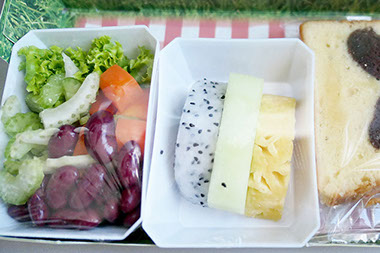
    Snacks for the airplane.

    Air travel can be time consuming because of the time it takes to get to the airport, get through security, wait for a flight, fly, and get to your final destination. Avoid going more than 3 to 4 hours without having something to eat. Plan to have a meal, a snack, or both!

    *  Bring one or more travel snacks with you.

    *  Look for these healthy snack options from to-go vendors. Read the Nutrition Facts on food labels, when available.

    – Fresh fruit

    – Low-sodium soup

    – Wraps and small sandwiches

    – Yogurt with cut-up fruit

    – Cottage cheese with fruit

    *  If you have time, choose a restaurant with healthy options on the menu. Sit and eat slowly to help digestion.

    *  Drink water. Bring an empty water bottle to the airport and re-fill it at a drinking fountain after going through security. Or, buy a water bottle once inside the airport terminal. Water is usually offered on the plane. Altitude and dry air can cause dehydration.

    *  Move around, both at the airport and while on the plane, if you can. Go for walks at the airport if you have a lot of waiting time. Stretch in your seat on the plane or walk to the restroom.

    If you won’t be traveling for a while, come back to this page for tips when it applies in the future. Or, share these tips with a spouse or friend who is traveling soon!

    © American Institute for Preventive Medicine