Blog

  • Vomiting & Nausea

    Abdominal & Urinary Conditions

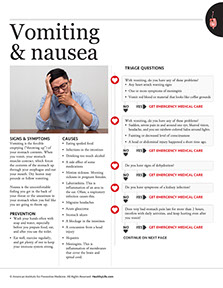
    Signs & Symptoms

    *  Vomiting is throwing up the stomach’s contents. Dry heaves may precede or follow vomiting.

    *  Nausea is when you feel like you’re going to throw up.

    Causes

    *  Viruses in the intestines. Eating spoiled food or eating or drinking too much.

    *  A side effect of some medications, such as certain antibiotics.

    *  Motion sickness. Morning sickness in pregnant females.

    *  Labyrinthitis. This is inflammation of an area in the ear. Often, a respiratory infection causes this.

    *  Migraine headaches.

    *  Acute glaucoma.

    *  Stomach ulcers.

    *  A blockage in the small or large intestine (bowel).

    *  A concussion from a head injury.

    *  Hepatitis.

    *  Meningitis. This is inflammation of membranes that cover the brain and spinal cord.

    Questions to Ask

    Self-Care / Prevention

    For Vomiting

    *  Don’t smoke, drink alcohol, or take aspirin.

    *  Don’t eat solid foods. Don’t drink milk.

    *  Drink clear liquids at room temperature (not too hot or cold). Good examples are water; sport drinks, such as Gatorade; diluted fruit juices; ginger ale, etc. Take small sips. Drink only 1 to 2 ounces at a time. Stir carbonated beverages to get all the bubbles out before you sip them. Suck on ice chips if nothing else will stay down. {Note: For children, contact your child’s doctor about using over- the-counter (OTC) mixtures, such as Pedialyte.}

    *  Gradually return to a regular diet, but wait about 8 hours from the last time you vomited. Start with foods like dry toast, crackers, rice, and other foods that are easy to digest. Or, eat foods as tolerated. Avoid greasy or fatty foods.

    For Nausea Without Vomiting

    *  Drink clear liquids. Eat small amounts of dry foods, such as soda crackers, if they help.

    *  Avoid things that irritate the stomach, such as alcohol and aspirin.

    *  For motion sickness, use an over-the-counter medicine, such as Dramamine. You could also try Sea-Bands, a wrist band product that uses acupressure on a certain point on the wrist to control motion sickness. Sporting goods stores and drugstores sell Sea-Bands.

    Resources

    Foodsafety.gov

    www.foodsafety.gov

    Healthier at Home book by the American Institute for Preventive Medicine. www.HealthyLife.com. All rights reserved.

    © American Institute for Preventive Medicine

  • Varicose Veins

    Women’s Health

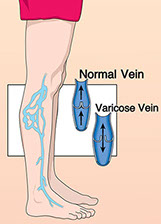
    Varicose veins may occur in almost any part of the body. They are most often seen in the back of the calf or on the inside of the leg between the groin and the ankle.

    Signs & Symptoms

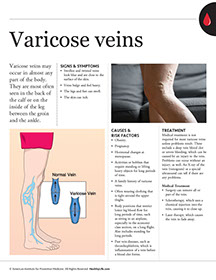
    Illustration of varicose veins.

    *  Swollen and twisted veins look blue and are close to the surface of the skin.

    *  Veins bulge and feel heavy.

    *  The legs and feet can swell.

    *  The skin can itch.

    Causes & Risk Factors

    *  Obesity.

    *  Pregnancy.

    *  Hormonal changes at menopause.

    *  Activities or hobbies that require standing or lifting heavy objects for long periods of time.

    *  A family history of varicose veins.

    *  Often wearing clothing that is tight around the upper thighs.

    *  Body positions that restrict lower leg blood flow for long periods of time. One example is sitting in an airplane, especially in the economy class section, on a long flight.

    *  Past vein diseases, such as thrombophlebitis. This is inflammation of a vein before a blood clot forms.

    Treatment

    Medical treatment is not required for most varicose veins unless problems result. These include a deep vein blood clot or severe bleeding, which can be caused by an injury to the vein. Problems can occur without an injury, as well. An X-ray of the vein (venogram) or a special ultrasound can tell if there are any problems.

    Medical Treatment

    *  Surgery can remove all or part of the vein.

    *  Sclerotherapy. This uses a chemical injection into the vein, causing it to close up.

    *  Laser therapy. This causes the vein to fade away.

    Questions to Ask

    Self-Care / Prevention

    *  Don’t cross your legs when sitting.

    *  Exercise regularly. Walking is a good choice. It improves leg strength and vein strength.

    *  Maintain a healthy weight. Lose weight if you are overweight.

    *  Don’t stand for long periods of time.

    *  If your job or hobby requires you to stand, shift your weight from one leg to the other every few minutes. Just wiggling your toes can help, too.

    *  Wear elastic support stockings or support hose, as advised by your doctor.

    *  Don’t wear clothing or undergarments that are tight or constrict your waist, groin, or legs.

    *  Eat high-fiber foods, like bran cereals, whole-grain breads, and fresh fruits and vegetables, to promote regularity. Constipation may be a factor in varicose veins.

    *  Elevate your legs when resting.

    *  Exercise your legs. From a sitting position, rotate your feet at the ankles, turning them first clockwise, then counterclockwise, using a circular motion. Next, extend your legs forward and point your toes to the ceiling then to the floor. Next, lift your feet off the floor and gently bend your legs back and forth at the knees.

    *  Get up and move about every 35 to 45 minutes when traveling by air or even when sitting in an all-day conference. Opt for an aisle seat in such situations.

    *  Stop and take short walks at least every 45 minutes when taking long car rides.

    Resources

    American Academy of Dermatology

    866.503.SKIN (503.7546)

    www.aad.org

    American College of Phlebology

    www.phlebology.org

    Women's Self-Care book by the American Institute for Preventive Medicine. www.HealthyLife.com. All rights reserved.

    © American Institute for Preventive Medicine

  • Vaginal Problems

    Women’s Health

    A number of vaginal problems occur in women over age 50. Often, the problems are due to changes in the vagina that come with menopause. These include:

    *  Vaginal dryness

    *  Thinning of the walls of the vagina

    *  Loss of elasticity in the muscles in the vagina

    *  Shrinkage of the labia (external genitals that cover and protect the opening of the vagina)

    These changes can lead to common vaginal problems, such as:

    *  Pain during and after intercourse

    *  Vaginitis – vaginal swelling, irritation, and/or infections.

    Less common vaginal problems in women over 50 are:

    *  Sexually transmitted infections (STIs).

    *  Cancer of the vagina, which is rare.

    *  Abnormal vaginal bleeding (unless still menstruating or on hormone therapy (HT)

    It is common for menstrual periods to be irregular for several years before menopause. This is normal vaginal bleeding. For premenopausal women, the most common causes of abnormal vaginal bleeding, in this order, are: Not ovulating; malignancy; pregnancy; endometriosis; and benign tumors. The most common cause after menopause is malignancy.

    The chart below lists signs and symptoms of vaginal problems and what to do about them. {Note: All vaginal bleeding that occurs after menstruation has stopped should be evaluated by your doctor.}

    Hemorrhage

    Signs & Symptoms

    Vaginal bleeding with:

    *  A known bleeding disorder and you also have blood in your urine or stool

    *  Heavy vaginal bleeding after taking a clot dissolving drug for a heart attack or stroke

    What to Do

    Get immediate care.

    Internal Injury

    Signs & Symptoms

    Vaginal bleeding after trauma to the abdomen, pelvis, or vagina or vaginal bleeding with any of these problems:

    *  Dizziness and very heavy bleeding (you saturate more than 1 full sized pad in an hour’s time)

    *  Pale and moist skin and a decreased level of consciousness

    *  Extreme shortness of breath or a very hard time breathing

    *  Severe abdominal pain

    What to Do

    Get immediate care.

    Pelvic Inflammatory Disease (PID)

    This is an infection of the uterus, fallopian tubes, and/or ovaries.

    Signs & Symptoms

    Vaginal bleeding with 2 or more of these problems:

    *  Abdominal tenderness and/or bloating

    *  Pain in the pelvis or back

    *  Pain during intercourse

    *  Skin on your abdomen feels sensitive

    *  Vaginal discharge with abnormal color or odor

    *  Change in menstrual flow, if still menstruating

    *  Fever, chills

    What to Do

    Contact doctor.

    Infection of the cervix, uterus, or vagina

    Cervical, uterine, or vaginal cancer.

    Signs & Symptoms

    Vaginal bleeding after menopause, unless on estrogen therapy (ET).

    What to Do

    Contact doctor.

    Gonorrhea or similar sexually transmitted infection (STI)

    Signs & Symptoms

    Abnormal vaginal bleeding with:

    *  Mild itching and burning around the vagina

    *  Burning or pain when urinating or urinating more often

    *  A vaginal discharge with abnormal color

    *  Abdominal discomfort

    What to Do

    Contact doctor.

    Genital Herpes

    Signs & Symptoms

    Sores and/or painful blisters in the genital area and sometimes on the thighs or buttocks

    What to Do

    Contact doctor.

    Trichomoniasis

    Signs & Symptoms

    *  Vaginal itching, burning, and redness

    *  Greenish-yellow vaginal discharge

    *  Burning or pain when urinating

    What to Do

    Contact doctor.

    Bacterial Vaginosis

    This is an infection from one or more types of bacteria that may or may not be sexually transmitted.

    Signs & Symptoms

    *  Mild vaginal irritation or burning

    *  A thin, gray, or milky white vaginal discharge. This has a fishy odor, which is noticed more after sex. (About half of females have no symptoms.)

    What to Do

    Contact doctor.

    Atrophic Vaginitis

    This is caused by a decrease in estrogen.

    Signs & Symptoms

    Vaginal dryness, irritation, itching, and burning

    What to Do

    Contact doctor.

    Vaginal Yeast Infection

    Signs & Symptoms

    *  Itching, irritation, and redness around the vagina

    *  Thick, white vaginal discharge that looks like cottage cheese and may smell like yeast

    *  Burning and/or pain when urinating or with sex

    What to Do

    Use self-care.

    Vaginitis from Contact Dermatitis

    Signs & Symptoms

    Itching and redness in the outer genital area without other symptoms

    What to Do

    Use self-care.

    Care

    Medical treatment depends on the cause.

    For Atrophic Vaginitis:

    Use a prescribed estrogen cream or prescribed estrogen pills.

    For Bacterial Vaginosis:

    Use a prescribed antibiotic cream or gel or prescribed antibiotic pills.

    For a Vaginal Yeast Infection:

    It is important, though, to make sure that you have the right problem diagnosed. A burning sensation could be a symptom of a urinary tract infection caused by bacteria, which requires an antibiotic. Antibiotics will not help yeast infections. They make them worse. Trichomoniasis mimics yeast infections, too.

    Chronic vaginal infections can be one of the first signs of diabetes, sexually transmitted diseases, or HIV in women.

    Self-care measures treat most vaginal yeast infections. Your doctor can prescribe a vaginal cream or suppositories or an oral antifungal medicine, such as Diflucan.

    For a Severe Case of Contact Dermatitis in the Vaginal Area:

    Use an ointment prescribed by your doctor.

    Other medical treatments are treating the specific cause, such as STIs, cervical cancer, and uterine cancer.

    Self-Care / Prevention

    For a Vaginal Yeast Infection or Bacterial Vaginosis:

    *  Bathe or shower often. Clean the inside folds of the vulva. Dry the vaginal area well.

    *  Wipe from front to back after using the toilet.

    *  Wear all-cotton underwear.

    *  Don’t wear garments that are tight in the crotch.

    *  Change underwear and workout clothes right away after sweating.

    *  If you still menstruate, use unscented tampons or sanitary pads and change them often.

    *  Don’t use bath oils, bubble baths, feminine hygiene sprays, or perfumed or deodorant soaps.

    *  Don’t sit around in a wet bathing suit.

    *  Shower after you swim in a pool to remove the chlorine from your skin. Dry the vaginal area well.

    *  Eat well. Include foods that contain live cultures of “lactobacillus acidophilus,” such as yogurt. If you can’t tolerate yogurt, take an over- the-counter product that contains lactobacillus acidophilus.

    *  Let your doctor know if you tend to get yeast infections whenever you take an antibiotic. He or she may have you also take a vaginal antifungal agent.

    When You Have a Vaginal Yeast Infection:

    *  Use an over-the-counter product for vaginal yeast infections, such as Monistat, Gyne-Lotrimin, etc.

    *  Douche with a mild solution of 1 to 3 tablespoons of vinegar mixed in 1 quart of warm water. Repeat only once a day (up to 7 days) until the symptoms subside. Don’t do this if you are pregnant or if you have a sexually transmitted disease.

    *  Limit sugar and foods with sugar.

    For Vaginal Dryness and Painful Intercourse:

    *  Don’t use deodorant soaps or scented products in the vaginal area.

    *  Use a water soluble lubricant, such as K-Y Jelly, Replens, etc. Avoid oils or petroleum-based products.

    *  Use an estrogen cream for the vagina. Your doctor needs to prescribe this.

    *  Keep sexually active.

    *  Don’t use antihistamines unless truly needed.

    For Contact Dermatitis in the Vaginal Area:

    *  Avoid products that cause the problem (scented items, douches, etc.).

    *  Apply an over-the-counter hydrocortisone cream to the affected area. Use this infrequently, though. Hydrocortisone can, itself, lead to thinning of the vaginal tissue. Follow package directions.

    *  Put a cool compress on the affected area.

    *  Wash your underwear in a gentle detergent. Rinse it twice. Use only plain water for the second rinse. Don’t use a fabric softener.
    Health at Home Lifetime book by the American Institute for Preventive Medicine. www.HealthyLife.com. All rights reserved.

    © American Institute for Preventive Medicine

  • Vaginal Infections

    Women’s Health

    Vaginal infections are the most common reason American females see their doctors. Vaginal infections result in vaginitis (swelling of the vagina).

    Signs, Symptoms & Causes

    For Bacterial Vaginosis (BV)

    Nearly half of females with clinical signs of BV report no symptoms. When present, symptoms include:

    *  A thin, gray, or milky white vaginal discharge. This has a fishy odor, which is more noted after intercourse.

    *  Mild vaginal irritation or burning.

    Bacterial vaginosis results when certain bacteria outnumber normal and protective bacteria in the vagina. The exact cause is not known.

    Risk factors for BV include douching, using an IUD, and a change or an increase in sexual partners.

    For Vaginal Yeast Infections

    Vaginal yeast infections are also called Monilia, Candida, and fungal infections. Signs and symptoms range from mild to severe. They include:

    *  Thick, white vaginal discharge that looks like cottage cheese and may smell like yeast.

    *  Itching, irritation, and redness around the vagina.

    *  Burning and/or pain when urinating or with sex.

    Vaginal yeast infections result from the overgrowth of the fungus Candida. This is normally present in harmless amounts in the vagina, digestive tract, and mouth.

    Risk Factors for Vaginal Yeast Infections

    *  Hormonal changes that come with pregnancy or monthly periods. Taking hormones or birth control pills.

    *  Antibiotic use, especially “broad spectrum” ones. Corticosteroid medicine use.

    *  High blood sugar. This can occur when diabetes is not controlled.

    *  Sex that irritates the vagina a lot.

    *  Using douches. Using feminine hygiene sprays.

    *  Using hot tubs and jacuzzis a lot.

    Chronic vaginal yeast infections can be one of the first signs of diabetes, STIs, and HIV.

    Diagnosis

    Different vaginal infections have the same symptoms. This makes it hard to tell one from another. A doctor may need to diagnose the cause. A sample of vaginal fluid is taken and tested. Often, this takes less than 3 minutes.

    Treatment

    For Bacterial Vaginosis

    Prescribed antibiotic creams, gels, or pills are needed. Male sex partner(s) may also need treatment. Feminine hygiene sprays that mask vaginal odor should not be used. Nor should OTC medications, such as ones for vaginal yeast infections. These do not treat BV.

    For Vaginal Yeast Infections

    Prescribed and OTC vaginal creams or suppositories get rid of the Candida overgrowth. Oral medicines, such as Diflucan®, may be prescribed.

    Questions to Ask

    Self-Care / Prevention

    *  Take medications, as prescribed.

    *  For a repeat vaginal yeast infection, use an over-the-counter (OTC) antifungal vaginal medication, such as Monistat. Use it as directed. {Note: Stop using any OTC product for a vaginal yeast infection at least 24 hours before a vaginal exam.}

    *  Ask your pharmacist about an OTC cream for itching and burning to help with symptoms during treatment.

    *  Bathe or shower often. Clean the inside folds of the vulva. Dry the vaginal area well.

    *  Wipe from front to back after using the toilet.

    *  If your vagina is dry, use a water soluble lubricant, such as K-Y Liquid®, when you have sex.

    *  Wear all-cotton underwear. Don’t wear garments that are tight in the crotch. Change underwear and workout clothes as soon as possible after you sweat.

    *  Don’t use bath oils, bubble baths, feminine hygiene sprays, or perfumed or deodorant soaps.

    *  Don’t sit around in a wet bathing suit. Shower after you swim in a pool to remove the chlorine from your skin. Dry the vaginal area well.

    *  Eat well. Limit sugar and foods with sugar. Eat foods, such as yogurt, that contain live cultures of “lactobacillus acidophilus.” If you can’t tolerate yogurt, take an OTC product that has this.

    *  Let your doctor know if you are prone to getting yeast infections whenever you take an antibiotic. You may be told to also use a vaginal antifungal product.

    *  If you still menstruate, use unscented tampons or sanitary pads and change them often.

    Women's Self-Care book by the American Institute for Preventive Medicine. www.HealthyLife.com. All rights reserved.

    © American Institute for Preventive Medicine

  • Facts And Fallacies About Vasectomies

    Men’s Health

    Image of smiling male.

    Sterilization is the ultimate method of birth control. Vasectomies are safe and can be performed in about 30 minutes under local anesthesia. (The procedure involves surgical removal of part of the vas deferens or sperm duct.) You don’t even have to go to the hospital.

    Some common misconceptions make many men reluctant to consider a vasectomy. Having a vasectomy does not lower your sex drive, leave you impotent, or cause hardening of the arteries. And a vasectomy won’t reduce pleasurable sensations during sex.

    If you’re considering a vasectomy:

    *  Consult a urologist who specializes in genitourinary surgery.

    *  Make sure all your questions are answered satisfactorily.

    *  Think the matter over carefully before you take action.

    A Year of Health Hints book by the American Institute for Preventive Medicine. www.HealthyLife.com. All rights reserved.

    © American Institute for Preventive Medicine

  • Uv Safety

    Skin Conditions

    Man holding sun block in hand with sun screen on face.

    Exposure to the sun’s UV rays causes most skin cancers. Even a few serious sunburns can raise the risk.

    Limit exposure to the sun. When in the sun, wear sun screen and lip balm with a sun protective factor (SPF) of 30 or higher.

    Ultraviolet (UV) radiation comes in three forms: UVA, UVB, and UVC. UVA and UVB rays cause skin and eye damage. UVC rays don’t reach the earth.

    UV rays also reflect off of surfaces like water, sand, and snow.

    Use sun screens that protect against both UVA and UVB rays. Choose eyewear that absorbs 99-100% of both UVA and UVB rays. Wrap-around sunglasses work best because they block UV rays from sneaking in from the side.

    High doses of UVA radiation comes from tanning beds.

    For the look of a tan, use sunless tanning lotions, sprays, and bronzers, instead of sun bathing, tanning beds, and sun lamps.

    Health at Home Lifetime book by the American Institute for Preventive Medicine. www.HealthyLife.com. All rights reserved.

    © American Institute for Preventive Medicine

  • Urinary Problems

    Women’s Health

    Common urinary problems in women are urinary incontinence, overactive bladder (OAB), and urinary tract infections (UTIs).

    Signs & Symptoms

    Urinary incontinence means you lose bladder control or can’t store urine like you should. Although there are many types, the most common ones in women are stress incontinence and urge incontinence.

    For Stress Incontinence

    Urine leaks out with a sudden rise in pressure in the abdomen. This can occur when you cough, sneeze, lift, jump, run, or strain to pass stool.

    For Urge Incontinence

    Urine is released before you can get to the toilet due to a sudden and intense urge to urinate.

    For Overactive Bladder

    You urinate often (8 or more times during the day and at least 2 times during the night) and you have a sudden and urgent need to urinate.

    For Urinary Tract Infections

    Bladder Infection Symptoms

    *  You urinate more often than usual. It burns or stings when you urinate.

    *  Your urine is bloody or cloudy.

    *  You have pain in the abdomen or over your bladder.

    *  Confusion or other change in mental status, especially if you are over age 70.

    Kidney Infection Symptoms

    *  Fever and shaking chills. Nausea and vomiting

    *  Pain in one or both sides of your mid back.

    Sometimes, there are no symptoms with a UTI.

    Causes & Risk Factors

    For Urinary Incontinence

    Problems occur with bladder muscles and nerves that help you hold or release urine and structures that support the bladder. This can be due to many factors:

    *  Physical changes due to aging or injury.

    *  Pregnancy and childbirth.

    *  Menopause.

    *  Multiple sclerosis.

    *  Spinal cord injury.

    For Overactive Bladder

    Abnormal nerves send signals to the bladder at the wrong time. This causes spasms in the bladder muscles to squeeze without warning.

    For Urinary Tract Infections

    Bacteria infect any part of the urinary tract – the kidneys, bladder, and ureters (tubes that connect the kidneys to the bladder).

    Treatment

    For Incontinence:

    *  Bladder training, pelvic floor muscle training, or Kegel exercises.

    *  Medications.

    *  Medical treatment, such as an electric or magnetic stimulation device.

    *  Surgical procedures.

    For Overactive Bladder

    Medications that help relax muscles of the bladder and prevent bladder spasms.

    For Urinary Tract Infections

    An antibiotic is prescribed to treat the specific infection. Pain relievers are taken as needed.

    Questions to Ask

    Self-Care / Prevention

    For Urinary Tract Infections (UTIs)

    *  Drink at least 8 glasses of water a day. Drink juice made from unsweetened cranberry juice concentrate. Take cranberry tablets.

    *  For pain, take acetaminophen, ibuprofen, naproxen sodium, or Uristat®, an over-the-counter medicine for bladder infection pain.

    *  Wear cotton underwear and loose-fitting slacks.

    *  Avoid alcohol, caffeine, and spicy foods.

    For Urinary Incontinence

    *  Avoid caffeine. Limit or avoid fluids 2 to 3 hours before bedtime.

    *  Limit carbonated drinks, alcohol, citrus juices, greasy and spicy foods, and artificial sweeteners.

    *  Empty your bladder before you leave the house, take a nap, or go to bed.

    *  Try to urinate often, even if you don’t feel the urge. When you urinate, empty your bladder as much as you can. Relax for a minute and try to go again.

    *  Keep a diary of when you leak urine. If you do this every 3 hours, empty your bladder every 2 hours. Use an alarm clock or wristwatch with an alarm to remind you.

    *  Wear absorbent pads or briefs, as needed.

    *  Ask your doctor if your type of incontinence could be managed by using self-catheters. These help to empty your bladder all the way. A doctor needs to prescribe self-catheters.

    Kegel Exercises

    Kegel exercises are pelvic floor exercises. These help treat or cure stress incontinence. Follow these steps:

    1.  Start to urinate, then hold back and try to stop. If you can slow the stream of urine, even a little, you are using the right muscles. You should feel muscles squeezing around the anus and the urethra (the tube through which urine is passed).

    2.  Relax your body. Close your eyes. Imagine that you are going to pass urine and then hold back from doing so. You should feel the muscles squeeze like you did in step 1.

    3.  Squeeze the muscles for 3 seconds. Then relax them for 3 seconds. When you squeeze and relax, count slowly. Start out doing this 3 times a day. Gradually work up to 3 sets of 10 contractions. Hold each one for 10 seconds at a time. You can do Kegel exercises when you lie down, sit, and/or stand.

    4.  When you do these exercises do not: Tense the muscles in your belly or buttocks; hold your breath; clench your fists or teeth; or make a face.

    5.  Squeeze your pelvic floor muscles right before and during whatever it is (jumping, etc.) that causes you to leak urine. Relax the muscles once the activity is over.

    6.  You can also use pelvic weights prescribed by your doctor. You insert a weighted cone into the vagina and squeeze the correct muscles to keep it from falling out.

    Do pelvic floor muscles daily. It may take several months to benefit from them. Get help to do them from:www.medicinenet.com/kegel_exercises_for_women/article.htm.

    FYI: Interstitial Cystitis (IC)

    Note: Symptoms of a condition called Interstitial Cystitis (IC) mimic those of an acute UTI. Intense pain and pressure in the lower abdomen come with the need to urinate. (This can be more than 50 times a day.) Nine out of 10 persons who have IC are women. Antibiotics do not give relief, because bacteria is not present with IC. This condition needs medical diagnosis and treatment.

    Resources

    National Institute of Diabetes and Digestive and Kidney Diseases (NIDDK)

    www2.niddk.nih.gov

    National Association for Continence (NAFC)

    800.BLADDER (252.3337)

    www.nafc.org

    Women's Self-Care book by the American Institute for Preventive Medicine. www.HealthyLife.com. All rights reserved.

    © American Institute for Preventive Medicine

  • Urinary Tract Infections

    Abdominal & Urinary Conditions

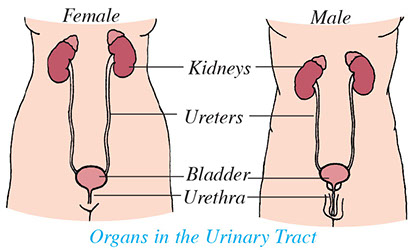
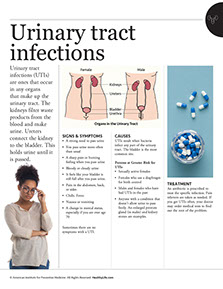
    Urinary tract infections (UTIs) are ones that occur in any organs that make up the urinary tract. The kidneys filter waste products from the blood and make urine. Ureters connect the kidney to the bladder. This holds urine until it is passed.

    Illustration of organs in the urinary tract.

    Signs & Symptoms

    *  A strong need to pass urine.

    *  You pass urine more often than usual.

    *  A sharp pain or burning feeling when you pass urine.

    *  Bloody or cloudy urine.

    *  It feels like your bladder is still full after you pass urine.

    *  Pain in the abdomen, back, or sides.

    *  Chills. Fever.

    *  Nausea or vomiting.

    *  A change in mental status, especially if you are over age 70.

    Sometimes there are no symptoms with a UTI.

    Causes

    UTIs result when bacteria infect any part of the urinary tract. The bladder is the most common site.

    Persons at Greater Risk for UTIs

    *  Sexually active females.

    *  Females who use a diaphragm for birth control.

    *  Males and females who have had UTIs in the past.

    *  Anyone with a condition that doesn’t allow urine to pass freely. An enlarged prostate gland (in males) and kidney stones are examples.

    Treatment

    An antibiotic is prescribed to treat the specific infection. Pain relievers are taken as needed. If you get UTIs often, your doctor may order medical tests to find out the problem.

    Questions to Ask

    Self-Care / Prevention

    To Treat a Urinary Tract Infection (UTI)

    *  Drink at least 8 glasses of water a day.

    *  Don’t have alcohol, spicy foods, and caffeine.

    *  Get plenty of rest.

    *  Take an over-the-counter (OTC) medicine for pain or one that relieves pain and spasms that come with a bladder infection (e.g., Uristat). {Note: Uristat helps with symptoms, but doesn’t get rid of the infection. See your doctor for diagnosis and treatment.}

    *  Go to the bathroom as soon as you feel the urge. Empty your bladder all the way.

    *  Don’t have sex until the infection is cleared up.

    To Help Prevent UTIs

    *  Drink plenty of water and other fluids every day.

    *  Empty your bladder as soon as you feel the urge.

    *  Drink a glass of water before you have sex. Go to the bathroom as soon as you can after sex.

    *  If you’re prone to UTIs, don’t take bubble baths.

    *  If you’re female, wipe from front to back after using the toilet. This helps keep bacteria away from the opening of the urethra. If you use a diaphragm, clean it after each use. Have your health care provider check your diaphragm periodically to make sure it fits properly.

    Resources

    National Institute of Diabetes and Digestive and Kidney Diseases (NIDDK)

    www.niddk.nih.gov

    Healthier at Home book by the American Institute for Preventive Medicine. www.HealthyLife.com. All rights reserved.

    © American Institute for Preventive Medicine

  • Uterine Cancer

    Women’s Health

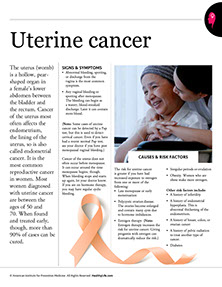
    The uterus (womb) is a hollow, pear- shaped organ in a female’s lower abdomen between the bladder and the rectum. Cancer of the uterus most often affects the endometrium, the lining of the uterus, so is also called endometrial cancer. It is the most common reproductive cancer in women. Most women diagnosed with uterine cancer are between the ages of 50 and 70. When found and treated early, though, more than 90% of cases can be cured.

    Signs & Symptoms

    *  Abnormal bleeding, spotting, or discharge from the vagina is the most common symptom.

    *  Any vaginal bleeding or spotting after menopause. The bleeding can begin as a watery, blood-streaked discharge. Later it can contain more blood.

    {Note: Some cases of uterine cancer can be detected by a Pap test, but this is used to detect cervical cancer. Even if you have had a recent normal Pap test, see your doctor if you have post menopausal vaginal bleeding.}

    Cancer of the uterus does not often occur before menopause. It can occur around the time menopause begins, though.

    When bleeding stops and starts up again, let your doctor know. If you are on hormone therapy, you may have regular cyclic bleeding.

    Causes, Risk Factors & Care

    The risk for uterine cancer is greater if you have had increased exposure to estrogen from one or more of the following:

    *  Late menopause or early menstruation

    *  Irregular periods or ovulation

    *  Polycystic ovarian disease. The ovaries become enlarged and contain many cysts due to hormone imbalances.

    *  Obesity. Women who are obese make more estrogen.

    *  Estrogen therapy. {Note: Estrogen therapy increases the risk for uterine cancer. Giving progestin with estrogen can dramatically reduce the risk.}

    Other risk factors include:

    *  A history of infertility

    *  A history of endometrial hyperplasia. This is abnormal thickening of the endometrium.

    *  A history of breast, colon, or ovarian cancer

    *  Diabetes

    Treatment includes one or more of the following:

    *  Surgery. Most women have a total hysterectomy. This removes the uterus, cervix, fallopian tubes, and ovaries.

    *  Radiation therapy

    *  Chemotherapy

    *  Hormonal therapy

    *  Clinical trials

    Self-Care

    Medical care, not self-care, is needed for uterine cancer.

    When to Seek Medical Care

    Contact Doctor When

    *  You have any “Signs & Symptoms” of uterine cancer.

    *  You need to schedule your yearly pelvic exam.

    Resources

    National Cancer Institute

    1-800-4-CANCER (422-6237)

    www.cancer.gov

    Health at Home Lifetime book by the American Institute for Preventive Medicine. www.HealthyLife.com. All rights reserved.

    © American Institute for Preventive Medicine

  • Use Choosemyplate.Gov

    Student Health

    ChooseMyPlate.gov logo.

    Find out about this at:www.choosemyplate.gov. At this Web site, you can:

    *  Get a Daily Food Plan based on your age, gender, height, weight, and physical activity level. Your plan shows how many calories you need each day and the number of servings from basic food groups, subgroups, and oils to meet your calorie needs. Serving sizes are given in cups; ½ cups, etc. (See an example for a 2,000 calorie plan in the chart below.)

    *  Use SuperTracker to help you plan and track your food intake and physical activities.

    *  Use Food-A-Pedia to look up nutrition information for over 8,000 foods. You can also compare foods side-by-side to help you make healthy choices.

    *  Get nutrition tips.

    *  Find out about healthy eating on a budget.

    Resources

    Page from Healthy Eating brochure book by the American Institute for Preventive Medicine. www.HealthyLife.com. All rights reserved.

    © American Institute for Preventive Medicine