Blog

  • Urinary Incontinence

    Abdominal & Urinary Conditions

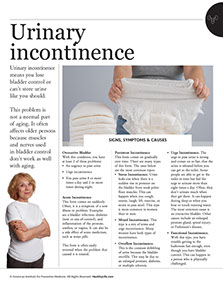
    Urinary incontinence means you lose bladder control or can’t store urine like you should. This problem is not a normal part of aging. It often affects older persons because muscles used in bladder control don’t work as well with aging.

    Signs, Symptoms & Causes

    For Acute Incontinence

    This form comes on suddenly. Often, it is a symptom of a new illness or problem. Examples are a bladder infection, diabetes (new or out-of- control), and inflammation of the prostate, urethra, or vagina. It can also be a side effect of some medicines, such as water pills.

    This form is often easily reversed when the problem that caused it is treated.

    For Persistent Incontinence

    This form comes on gradually over time. It lingers or remains, even after other problems have been treated. There are many types of this form. The ones below cause 80% of cases.

    *  Stress Incontinence. Urine leaks out when there is a sudden rise in pressure in the abdomen. This can happen when you cough, sneeze, laugh, lift, jump, run, or strain to pass stool. This type is more common in women than in men.

    *  Urge Incontinence. With this type, the urge to pass urine is so strong and comes on so fast, that the urine is released before you can get to the toilet. This type can be caused by an enlarged prostate gland, a spinal cord injury, or an illness, such as Parkinson’s disease.

    *  Mixed Incontinence. This type is a mix of stress and urge types of incontinence.

    *  Overflow Incontinence. This is the constant dribbling of urine because the bladder overfills. This may be due to an enlarged prostate, diabetes, or multiple sclerosis.

    *  Functional Incontinence. With this type, you have trouble getting to the bathroom fast enough, even though you have bladder control. This can happen in a person who is physically challenged.

    *  Total Incontinence. This is a rare type with complete loss of bladder control. Urine leakage can be constant.

    Treatment

    The first step is to find out if another problem causes the incontinence and to treat that problem. Other treatments include:

    *  Pelvic floor exercises, called Kegel exercises. (SeeSelf-Care/Prevention.)

    *  Medication.

    *  Collagen injections. These treat a certain type of stress incontinence.

    *  Surgery, as needed, to correct the problem.

    Overactive Bladder

    With this condition, you have at least 2 of these problems:

    *  An urgency to pass urine.

    *  Urge incontinence.

    *  You pass urine 8 or more times a day and 2 or more times during night.

    Questions to Ask

    Self-Care / Prevention

    *  Don’t have caffeine. Limit or avoid fluids 2 to 3 hours before bedtime.

    *  Limit carbonated drinks, alcohol, citrus juices, greasy and spicy foods, and items with artificial sweeteners.

    *  Empty your bladder before you leave the house, take a nap, or go to bed.

    *  Go to the bathroom often, even if you don’t feel the urge. When you pass urine, empty the bladder as much as you can. Relax for 1 to 2 minutes. Then try to pass urine again.

    *  Keep a diary of when you leak urine. If you find that you have accidents every 3 hours, empty your bladder every 2 hours. Use an alarm clock or wristwatch with an alarm to remind you.

    *  Wear clothes you can pull down easily when you use the bathroom. Wear elastic-waist bottoms. Wear items with velcro closures or snaps instead of buttons and zippers.

    *  Wear absorbent pads or briefs, if needed.

    *  Keep the pathway to your bathroom free of clutter and well lit. Leave the bathroom door open until you use it. Use a night light in the bathroom when it is dark.

    *  Use an elevated toilet seat and grab bars if these will make it easier for you to get on and off the toilet.

    *  Keep a bedpan, plastic urinal (for men), or portable commode chair near your bed.

    *  Ask your doctor if your type of incontinence could be managed by using self-catheters. These help to empty your bladder all the way. A doctor needs to prescribe self-catheters.

    Kegel Exercises

    *  Kegel exercises are pelvic floor exercises. These help treat or cure stress incontinence. Persons who have leaked urine for years can benefit greatly from these exercises. How do you do them?

    *  First, start to urinate, then hold back and try to stop. If you can slow the stream of urine, you are using the right muscles. You should feel muscles squeeze around the urethra and the anus. The urethra is the tube through which urine is passed. The anus is the opening through which stool is passed.

    *  Next, relax your body, and close your eyes. Imagine that you are going to pass urine, but hold back from doing so. You should feel the muscles squeeze like you did in the step before this one.

    *  Squeeze the muscles for 3 seconds. Then relax them for 3 seconds. When you squeeze and relax, count slowly. Start out doing this 3 times a day. Gradually work up to 3 sets of 10 contractions. Hold each one for 10 seconds at a time. You can do them when you lie down, and/or stand.

    *  When you do these exercises, do not tense the muscles in your belly or buttocks. Do not hold your breath, clench your fists or teeth, or make a face.

    *  Squeeze your pelvic floor muscles right before and during whatever it is (coughing, sneezing, jumping, etc.) that causes you to lose urine. Relax the muscles once the activity is over.

    *  Women can also use pelvic weights prescribed by their doctor. A women inserts a weighted cone into the vagina and squeezes the correct muscles to keep the weight from falling out.

    It may take several months to benefit from pelvic floor exercises. They should be done daily.

    Resources

    National Association for Continence (NAFC)

    800.BLADDER (252.3337)

    www.nafc.org

    Urology Care Foundation

    www.urologyhealth.org

    Healthier at Home book by the American Institute for Preventive Medicine. www.HealthyLife.com. All rights reserved.

    © American Institute for Preventive Medicine
  • Toxic Shock Syndrome

    Women’s Health

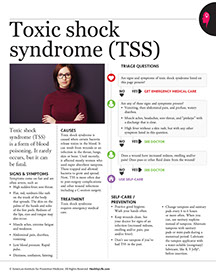
    Toxic shock syndrome (TSS) is a form of blood poisoning. It rarely occurs, but it can be fatal.

    Signs & Symptoms

    Symptoms come on fast and are often severe.

    *  High sudden fever. Sore throat.

    *  Flat, red, sunburn-like rash on the trunk of the body that spreads. The skin on the palms of the hands and soles of the feet peels. Redness of the lips, eyes, and tongue may also occur.

    *  Muscle aches. Extreme fatigue and weakness.

    *  Abdominal pain. Diarrhea. Vomiting.

    *  Rapid pulse.

    *  Dizziness. Confusion. Fainting.

    Causes

    Toxic shock syndrome is caused when certain bacteria release toxins in the blood. It can result from wounds or an infection in the throat, lungs, skin, or bone. Most often, though, it affects women who use super absorbent tampons. These trap and allow bacteria to grow and spread. Though not common, TSS can also occur after surgery, including a C-section.

    Treatment

    Toxic shock syndrome requires emergency medical care.

    Questions to Ask

    Self-Care / Prevention

    *  Practice good hygiene.

    *  Keep wounds clean. See your doctor for signs of an infection (increased redness, swelling, and/or pain, pus, and/or fever).

    *  Don’t use tampons if you’ve had TSS in the past.

    *  Change tampons and sanitary pads every 4 to 6 hours or more often. When you can, use sanitary napkins instead of tampons. Alternate tampons with sanitary pads or mini-pads during a menstrual period. Lubricate the tampon applicator with a water-soluble (nongreasy) lubricant, like K-Y Jelly®, before insertion.

    Resources

    National Women’s Health Information Center

    www.womenshealth.gov

    Women's Self-Care book by the American Institute for Preventive Medicine. www.HealthyLife.com. All rights reserved.

    © American Institute for Preventive Medicine
  • Trichomoniasis

    Sexual Health

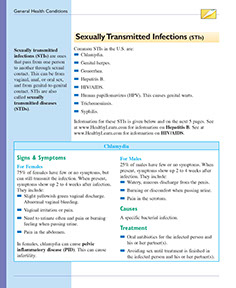
    Sexually transmitted infections (STIs) are ones that pass from one person to another through sexual contact. This can be from vaginal, anal, or oral sex, and from genital-to-genital contact. STIs are also called sexually transmitted diseases (STDs).

    Signs & Symptoms

    For Females

    Symptoms may not be present for years. If they do occur, symptoms include:

    *  Vaginal itching and burning.

    *  A yellow-green or gray vaginal discharge with an odor.

    *  Burning or pain when passing urine.

    *  Pain during sex.

    For Males

    Symptoms are not usually present. Males can infect their sexual partners and not know it. When present, symptoms in males include:

    *  Discomfort when passing urine.

    *  Pain during sex.

    *  Irritation and itching of the penis.

    Causes

    A protozoan.

    Treatment

    *  The oral medication metronidazole (Flagyl).

    *  Treating sexual partners to prevent spreading the infection and getting it again.

    Questions to Ask

    Self-Care / Prevention

    Safer Sex To Help Prevent STIs

    *  The only sure way to avoid STIs is not having sex. This includes intercourse, oral sex, anal sex, and genital-to-genital contact. Caressing, hugging, dry kissing, and masturbation are no risk or extremely low-risk practices. So is limiting your sexual contact to one person your entire life. This is if your partner does not have an STI and has sex only with you.

    *  Latex and polyurethane condoms can help reduce the risk of spreading HIV and other STIs (i.e., chlamydia, gonorrhea, and trichomoniasis). To do this, they must be used the right way for every sex act. They do not get rid of the risk entirely. Barriers made of natural membranes, such as from lamb, do not give good protection against STIs.

    *  Females and males should use latex or polyurethane condoms every time they have genital-to-genital contact and/or oral sex. Use polyurethane condoms if either partner is allergic to latex. You don’t need condoms to prevent STIs if you have sex only with one partner and neither of you has an STI.

    *  For oral-vaginal sex and oral-anal sex, use latex dams (“doilies”). These are latex squares.

    *  Latex condoms with spermicides, such as nonoxynol-9 (N-9) are no better than other lubricated condoms for preventing HIV/STIs. Spermicides with N-9 do not prevent chlamydia, cervical gonorrhea, or HIV. on’t use spermicides alone to prevent HIV/STIs. Using spermicides with N-9 often has been linked with genital lesions which may increase the risk of spreading HIV. Also, N-9 may increase the risk of spreading HIV during anal intercourse.

    *  Use water-based lubricants, such as K-Y Brand Jelly. Don’t use oil-based or “petroleum” ones, such as Vaseline. They can damage latex barriers.

    *  To lower your risk for HPV, use latex or polyurethane condoms. These work best at covering areas of the body that HPV is most likely to affect. A diaphragm does not prevent the spread of HPV.

    *  Don’t have sex while under the influence of drugs or alcohol. You are less likely to use “safer sex” measures.

    *  Limit sexual partners. Sexual contact with many persons increases the risk for STIs, especially if no protection is used.

    *  Discuss a new partner’s sexual history with him or her before you start having sex. Know that persons are not always honest about their sexual past.

    *  Avoid sexual contact with persons whose health status and health practices are not known.

    *  Follow your doctor’s advice to check for STIs.

    For Trichomoniasis

    Don’t drink alcohol for 24 hours before, during, and 24 hours after taking metronidazole. The combination causes vomiting, dizziness, and headaches.

    Resources

    American Social Health Association (ASHA)

    www.ashastd.org

    CDC National STD Hotline

    800.CDC.INFO (232.4636)

    www.cdc.gov/STD

    Healthier at Home book by the American Institute for Preventive Medicine. www.HealthyLife.com. All rights reserved.

    © American Institute for Preventive Medicine
  • Traumatic Brain Injury

    Brain & Nervous System

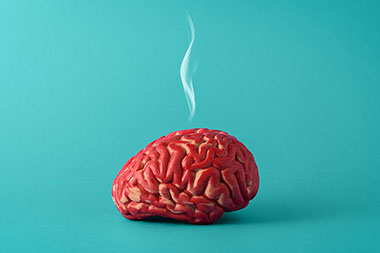
    Model brain with a puff of smoke above it.

    This type of brain injury may happen when there is a blow, bump, or jolt to the head. Sports injuries are a common cause of traumatic brain injury (TBI).

    Of all injuries, ones to the brain are most likely to result in death or disability for life.

    It may not look cool to wear a helmet when you ride a bike, rollerblade, etc., but doing so is the best way to prevent a severe head injury. Find out about protective helmets for the sport(s) you do from the Consumer Product Safety Commission atcpsc.gov.

    Learn more from the Brain Injury Association of America atbiausa.org.

    Health at Home Lifetime book by the American Institute for Preventive Medicine. www.HealthyLife.com. All rights reserved.

    © American Institute for Preventive Medicine
  • Toothaches

    Dental & Mouth Concerns

    Signs & Symptoms

    *  Pain in or around a tooth that throbs or occurs with a fever and/or general ill feeling. Tooth pain occurs after you eat or drink or have something hot, cold, or sweet.

    *  Gums are red, swollen, and/or bleed.

    *  Earache and/or swollen glands on one side of the face or neck.

    Causes

    *  A food particle, such as a popcorn hull, gets stuck between the gum and a tooth.

    *  Tooth grinding (bruxism). This can wear down teeth and cause cracks in them.

    *  A cavity or infection is beneath or around the gum of a tooth.

    *  Tooth abscess. This is swelling and/or infection in the bone and/or the tooth’s canals.

    *  Gum (periodontal) disease.

    *  Impacted teeth. Teeth may not fully erupt or can grow at odd angles.

    *  Temporary pain from recent dental work.

    *  TMJ.

    *  An injury to a tooth.

    *  A symptom of a sinus infection.

    *  A symptom of angina and a heart attack.

    Treatment

    Emergency care is needed for a heart attack. A dentist or doctor can diagnose and prescribe proper treatment for other problems.

    Questions to Ask

    Self-Care / Prevention

    To Treat Tooth Pain Until You See the Dentist

    *  Gargle with warm salt water every hour. Hold an ice pack on the jaw. Don’t drink hot or cold liquids. Avoid sweets, soft drinks, and hot or spicy foods. It may be best not to eat at all until you see your dentist.

    *  Gently floss around the tooth to remove food particles that could be between the teeth.

    *  Take an over-the-counter pain reliever. Don’t place a crushed aspirin on the tooth, though. Aspirin burns the gums and destroys tooth enamel.

    *  For a cavity, pack it with a piece of sterile cotton soaked in oil of cloves. You can get this at a drug store.

    Healthier at Home book by the American Institute for Preventive Medicine. www.HealthyLife.com. All rights reserved.

    © American Institute for Preventive Medicine
  • Seal Out Tooth Decay

    Dental & Mouth Concerns

    Image of older women smiling and pointing to her mouth.

    Even if you brush, floss, rinse with fluoride, and never eat a sticky sweet, decay-causing bacteria can invade the tiny pits and crevices in your molars, or chewing teeth. To head off that kind of decay, researchers have developed sealants-special plastic coatings that form an effective barrier between bacteria and the chewing surfaces of your teeth, where fluoride is less effective.

    Approximately 90 percent of the cavities in school-age children occur in crevices in the back teeth, so sealants are best applied when the permanent molars first emerge. (The American Dental Association reports a significant decrease in cavities in children who have sealants applied to their teeth.) But that doesn’t mean sealants aren’t useful or appropriate for adults who have cavity-prone teeth. So ask your dentist or dental hygienist about sealants the next time you have a dental checkup.

    The procedure is simple, pain-free, and won’t interfere with later dental work. Sealed teeth may need to be touched up periodically, though.

    A Year of Health Hints book by the American Institute for Preventive Medicine. www.HealthyLife.com. All rights reserved.

    © American Institute for Preventive Medicine

  • Temporomandibular Joint Syndrome

    Dental & Mouth Concerns

    Temporomandibular joint (TMJ) syndrome occurs when the muscles, joints, and ligaments of the jaw move out of alignment.

    Signs & Symptoms

    *  Pain is felt in or around an ear. Pain in the jaw spreads to the face or the neck and shoulders. Pain is felt when you open and close your mouth or you can’t fully open the mouth.

    *  Headaches. Toothaches.

    Causes

    *  Clenching or grinding the teeth (bruxism).

    *  Poor posture or sleeping in a way that misaligns the jaw or creates tension in the neck.

    *  Stress in life when it results in muscle tension in the neck and shoulder.

    *  Incorrect or uneven bite or injury to the jaw.

    Treatment

    *  Wearing a mouthguard or bite plate.

    *  Physical therapy.

    *  Medicine to reduce swelling. One type is given through a shot in the jaw joint. Muscle relaxants for a short period of time.

    *  Counseling if the TMJ is caused by stress.

    *  Surgery is a last resort.

    Questions to Ask

    Self-Care / Prevention

    Self-care measures may reduce the need for medical treatment.

    *  Massage the jaw area several times a day, first with your mouth open, then with it closed.

    *  Wear a mouth protector or mouth device, as prescribed by your doctor or dentist.

    *  Take medication, as prescribed.

    *  Don’t chew gum or eat foods that are hard to chew.

    *  Try not to open your jaw too wide when you yawn and when you bite into foods, such as an apple, triple-decker sandwich, etc.

    *  To help reduce muscle spasms that can cause pain, apply moist heat to the jaw area. Use a washcloth soaked in warm water.

    *  If stress is a factor, use relaxation exercises.

    *  Take steps to reduce the risk of jaw injuries.

    *  Maintain a good posture.

    Healthier at Home book by the American Institute for Preventive Medicine. www.HealthyLife.com. All rights reserved.

    © American Institute for Preventive Medicine

  • Tips To Protect Your Eyes

    Eye Conditions

    Man smiling wearing dark sunglasses.

    Look cool and protect your eyes at the same time!

    *  Anytime your eyes are exposed to ultraviolet (UV) light, wear eyewear that protects your eyes. Do this when it is sunny and even on cloudy days. Choose sunglasses that block 99 to 100% of both UVA and UVB rays.

    *  Pick the color lenses you want, but make sure they have UV protection.

    *  Take sunglasses you already have to your eye doctor or to an optical shop. A UV meter can measure the amount of UV a lens can absorb.

    *  The sun’s UV rays are the most harmful between 11 a.m. and 3 p.m.

    *  Reflected glare from snow or ice doubles the risk of UV damage.

    *  If you wear contact lenses, choose ones with UV protection and wear sunglasses that have it, too. These protect eye tissue that the contact lenses do not cover.

    Health at Home Lifetime book by the American Institute for Preventive Medicine. www.HealthyLife.com. All rights reserved.

    © American Institute for Preventive Medicine
  • Tips For A Healthier, Easier Pregnancy

    Pregnancy & Prenatal Care

    Close up image of 4 pregnant bellies.

    Healthy moms tend to have healthy babies. If you plan to become pregnant, take the following steps to help your baby get off to a good start.

    *  Have a complete medical exam, including a gynecological exam. A number of medical conditions, including obesity, high blood pressure, diabetes, smoking, alcohol use, nutritional deficiencies, and Rh negative blood factor (after the first pregnancy) can jeopardize the health of mother and child.

    *  Check with your doctor about the effects of any prescription or over-the-counter medication you take.

    *  If you have a chronic medical condition, ask your doctor how it may affect your pregnancy and whether or not you should change or adjust your medication.

    *  If you use an IUD or take birth control pills, use an alternative form of birth control for 1 to 2 months before trying to become pregnant.

    *  If you’re markedly overweight, plan to lose excess pounds before becoming pregnant.

    *  Exercise regularly.

    *  Consider genetic tests or counseling if you or your husband has a family history of genetic disorders, if you are 35 or older, or if your husband is 50 or older.

    You and your baby will do best if you follow these guidelines.

    *  Ask your doctor or a dietitian to outline a meal plan that meets the special nutritional needs created by pregnancy.

    *  Avoid caffeine, alcohol, nicotine, and illicit drugs, as they can harm you and your unborn baby.

    *  Consult your doctor before taking any medication.

    *  Ask your doctor what prenatal vitamin/mineral supplement you should take.

    *  Follow your health care provider’s advice about weight gain. The amount of weight you gain should depend on your pre-pregnancy weight and health status, as well as your ethnic background. If you are very overweight, plan to lose excess pounds before you get pregnant.

    *  Continue to exercise in moderation.

    *  Practice relaxation and other stress management techniques. (Doctors think emotional stress may constrict the blood supply to the uterus and placenta, the baby’s only source of oxygen and nutrients.)

    *  Enroll in childbirth preparation classes.

    *  If you own a cat, arrange for someone else to empty the litter box. Cat excrement can transmit a disease called toxoplasmosis. If you’re infected while pregnant, your baby may be stillborn, born prematurely, or suffer serious damage to the brain, eyes, or other parts of the body.

    A Year of Health Hints book by the American Institute for Preventive Medicine. www.HealthyLife.com. All rights reserved.

    © American Institute for Preventive Medicine

  • Tinnitus

    Ear, Nose & Throat Conditions

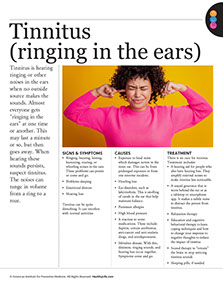
    Tinnitus is hearing ringing or other noises in the ears when no outside source makes the sounds. Almost everyone gets “ringing in the ears” at one time or another. This may last a minute or so, but then goes away. When hearing these sounds persists, suspect tinnitus. The noises can range in volume from a ring to a roar.

    Signs & Symptoms

    *  Ringing, buzzing, hissing, humming, roaring, or whistling noises in the ears. These problems can persist or come and go.

    *  Problems sleeping.

    *  Emotional distress.

    *  Hearing loss.

    Tinnitus can be quite disturbing. It can interfere with normal activities.

    Causes

    Exposure to loud noise which damages nerves in the inner ear is the most common cause. This can be from prolonged exposure or from one extreme incident.

    Other Causes

    *  Ear disorders, such as labyrinthitis. This is swelling of canals in the ear that help maintain balance.

    *  Persistent allergies.

    *  High blood pressure.

    *  A reaction to some medications. These include: Aspirin; levodopa (for Parkinson’s disease); quinidine (for irregular heartbeats); propranolol (for high blood pressure, etc.); and quinine (for leg cramps).

    *  Ménières disease. With this, dizziness, ringing sounds, and hearing loss occur together. Symptoms come and go.

    In some cases, no cause is found.

    Treatment

    There is no cure for tinnitus. Treatment includes:

    *  A hearing aid that plays a soothing sound to drown out the tinnitus.

    *  A tinnitus masker. This is worn behind the ear. It makes a subtle noise to distract the person from tinnitus. The masker does not interfere with hearing and speech.

    *  Relaxation therapy.

    *  Educational counseling or support groups for tinnitus.

    *  Sleeping pills, if needed.

    Questions to Ask

    Self-Care / Prevention

    *  Wear earplugs or earmuffs when exposed to loud noises. This can prevent noise-induced tinnitus.

    *  Treat an ear infection right away.

    *  For mild cases of tinnitus, play the radio or a white noise tape. White noise is a low, constant sound.

    *  Use biofeedback or other relaxation techniques.

    *  Limit your intake of caffeine, alcohol, nicotine, and aspirin.

    *  Talk to your doctor if you use the drugs listed in Causes on this page.

    *  If the noises started during or after traveling in an airplane, pinch your nostrils and blow through your nose. When you fly, chew gum or suck on hard candy to prevent ear popping and ringing sounds in the ear. If possible, avoid flying when you have an upper respiratory or ear infection.

    Benign Positional Vertigo (BPV)

    Vertigo is a feeling that you or the room around you is spinning or moving. This is due to a problem with the inner ear, nervous system, heart, or with blood pressure.

    The most common cause of vertigo is benign positional vertigo (BPV). With this, the feeling of spinning occurs quickly when you change the position of your head. (You turn over in bed, bend over, etc.).

    Resources

    The American Tinnitus Association

    800.634.8978

    www.ata.org

    Healthier at Home book by the American Institute for Preventive Medicine. www.HealthyLife.com. All rights reserved.

    © American Institute for Preventive Medicine