Blog

  • The Right Way To Use Mouthwash

    Dental & Mouth Concerns

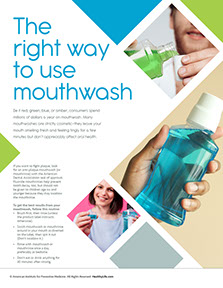
    Image of blue mouthwash.

    Be it red, green, blue, or amber, consumers spend millions of dollars a year on mouthwash. Many mouthwashes are strictly cosmetic-they leave your mouth smelling fresh and feeling tingly for a few minutes but don’t appreciably affect oral health. If you want to fight plaque, look for mouthwash containing cetylpridinium chloride or domiphen bromide, ingredients that dissolve this troublesome film of bacterial goo. If you want to fight cavities (especially cavities that form between teeth, where your toothbrush can’t reach), look for an anti-plaque, anti-gingivitis mouthrinse. Fluoride mouthrinses help prevent tooth decay, too, but should not be given to children age six and younger because they may swallow the mouthrinse.

    To get the best results from your mouthwash, follow this routine.

    *  Brush first, then rinse (unless the product label instructs otherwise).

    *  Swish mouthwash or mouthrinse around in your mouth as directed on the label, then spit it out. (Don’t swallow it.)

    *  Rinse with mouthwash or mouthrinse once a day, preferably at bedtime.

    *  Don’t eat or drink anything for 30 minutes after rinsing.

    A Year of Health Hints book by the American Institute for Preventive Medicine. www.HealthyLife.com. All rights reserved.

    © American Institute for Preventive Medicine

  • Signs Of Reye’s Syndrome

    Children’s Health

    Be on the lookout for Reye’s Syndrome after the flu or chickenpox. Reye’s Syndrome does not happen very often. But you should know about it. Look for these signs:

    *  Vomiting over and over again. Or vomiting that does not stop.

    *  Loss of pep and energy.

    *  Acting very, very sleepy.

    *  Acting very, very cranky.

    *  Striking out at others.

    *  Acting strange.

    *  Convulsions.

    (Note: If your child shows signs of Reye’s Syndrome, get medical care fast!)

    Children's Self-Care book by the American Institute for Preventive Medicine. www.HealthyLife.com. All rights reserved.

    © American Institute for Preventive Medicine

  • Repetitive Motion Injuries

    Bone & Muscle Problems

    Repetitive motion injuries (RMIs) are also called repetitive strain injuries (RSIs). They result from doing the same activity over and over for a long period of time. This can be at work, at home, during sports, and/or with hobbies.

    Signs & Symptoms

    Signs and symptoms depend on the injury.

    For Carpal Tunnel Syndrome (CTS)

    *  Thumb, index, middle, and ring fingers feel numb.

    *  Tingling feeling in the hand(s).

    *  Pain is felt in the thumb and fingers. The pain may be worse at night. It can wake you up.

    *  Pain starts in the hand and spreads to the arm. The pain can even travel to the shoulder.

    *  The fingers swell. It feels like your fingers are swollen. Your hands feel weak in the morning.

    *  You have trouble holding on to things. You drop things.

    *  You have a hard time writing with a pencil or pen, opening a jar, buttoning a blouse, etc.

    Causes

    In general, RMIs are caused by repeated movements that involve:

    *  Drilling or hammering.

    *  Lifting.

    *  Pushing or pulling.

    *  Squeezing.

    *  Twisting.

    *  Wrist, finger, and hand movements.

    For Carpal Tunnel Syndrome (CTS)

    Repeated motions, typing vibrations, etc. cause swelling of the tendons inside the carpal tunnel. This is the narrow tunnel in the wrist. The swelling puts pressure on the nearby nerves.

    Treatment

    For Carpal Tunnel Syndrome (CTS)

    This is easier to treat and less likely to cause future problems if it is found early. Women are more likely to get CTS than men, because their carpal tunnel is usually smaller. Once diagnosed, CTS can be treated with:

    *  Preventing further damage.

    *  Wearing a wrist brace, splint, etc. as advised. It may need to be worn while you sleep and during the day.

    *  Over-the- counter medicines to reduce pain and swelling. Examples are aspirin, ibuprofen, and naproxen sodium.

    *  Physical therapy.

    *  Occupational therapy.

    *  Cortisone shots in the wrist area.

    *  Surgery, if needed.

    Questions to Ask

    Self-Care / Prevention

    For Preventing Wrist and Hand Injuries

    Whenever your hands and wrists do the same activity time and again, you increase your risk for CTS and tendinitis. Change how you do a task and you may avoid some of these injuries.

    *  Do not hold an object in the same position for a long time. Even simple tasks, such as hammering nails, can cause injury when done over a period of time.

    *  Give your hands a break. Rest them for a few minutes each hour.

    *  Lift objects with your whole hand or with both hands. Gripping or lifting with the thumb and index finger puts stress on your wrist.

    *  If your line of work causes pain in your hands and wrists, alternate the stressful tasks with other work.

    *  Exercise your hands and wrists as often as you can. Here are two examples:

    – Place your hands in front of you. Spread your fingers as far apart as possible. Hold for 5 seconds. Relax. Repeat 5 times with each hand.

    – Turn your wrists in a circle, palms up and then palms down. Relax your fingers and keep your elbows still. Repeat 5 times.

    For Carpal Tunnel Syndrome

    *  Lose weight. CTS is linked to obesity.

    *  Take an over-the-counter medicine to reduce the pain and swelling as directed.

    *  Use a wrist splint. Many drug and medical supply stores carry splints that keep the wrist angled slightly back with the thumb parallel to the forearm. This position helps to keep the carpal tunnel open.

    Other Tips

    *  Keep your head upright and your ears, shoulders, and hips in a straight line.

    *  Keep your work within reach without having to stretch or strain your arms, shoulders, or back. Don’t stretch to reach items on an assembly line. Wait for the items to reach you.

    *  Change positions or tasks often. This avoids repeated stress on a single body part.

    *  Use the proper tools for the job. Use tools made to reduce vibration and/or pressure, if needed.

    Resources

    National Institute of Arthritis and Musculoskeletal and Skin Diseases (NIAMS)

    877.22.NIAMS (226.4267)

    www.niams.nih.gov

    Healthier at Home book by the American Institute for Preventive Medicine. www.HealthyLife.com. All rights reserved.

    © American Institute for Preventive Medicine

  • Regular Dental Care

    Dental & Mouth Concerns

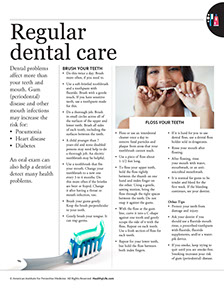
    Image of father brushing toddler's teeth.

    Dental problems affect more than your teeth and mouth. Gum (periodontal) disease and other mouth infections may increase the risk for:

    *  Pneumonia.

    *  Heart disease.

    *  Diabetes.

    Also, an oral exam can help a dentist detect many health problems. These include diabetes, eating disorders, heart disease, osteoporosis, and a lack of vitamins.

    Brush Your Teeth

    *  Do this twice a day. Brush more often, if you need to.

    *  Use a soft-bristled toothbrush and a toothpaste with fluoride. Brush with a gentle touch. If you have sensitive teeth, use a toothpaste made for this.

    *  Do a thorough job. Brush in small circles across all of the surfaces of the upper and lower teeth. Brush the outer, inner, and chewing surfaces. Brush the surfaces between the teeth.

    *  A child younger than 7 years old and some handicapped persons may need help to do a thorough job. A mechanical tooth brush may be helpful.

    *  Use a toothbrush that fits your mouth. Change your toothbrush to a new one every 3 to 4 months. Do this more often if the bristles are bent or frayed. Change it after having a throat or mouth infection, too.

    *  Brush your gums gently. Keep the brush perpendicular to your teeth.

    *  Gently brush your tongue. It can trap germs.

    Floss Your Teeth

    *  Floss or use an interdental cleaner once a day to remove food particles and plaque from areas that your toothbrush cannot reach.

    *  Use a piece of floss about 1-1/2 feet long.

    *  To floss your upper teeth, hold the floss tightly between the thumb on one hand and index finger on the other. Using a gentle, sawing motion, bring the floss through the tight spaces between the teeth. Do not snap it against the gums.

    *  With the floss at the gum line, curve it into a C-shape against one tooth and gently scrape the side of it with the floss. Repeat on each tooth. Use a fresh section of floss for each tooth.

    *  Repeat for your lower teeth, but hold the floss between both index fingers.

    *  Rinse your mouth after flossing.

    *  If it is hard for you to use dental floss, use a dental floss holder sold in drugstores.

    *  After flossing, rinse your mouth with water, mouthwash, or an anti-microbial mouthrinse.

    It is normal for gums to be tender and bleed for the first week. If the bleeding continues, see your dentist.

    More Tips

    *  Protect your teeth from damage and injury.

    *  Ask your dentist if you should use a fluoride mouth rinse, a prescribed toothpaste with fluoride, fluoride supplements, and/or a water-pik device.

    *  Don’t lay a baby down with a bottle left in the baby’s mouth if the bottle contains juice, milk, soda, etc. Water is okay, though.

    Get Regular Dental Checkups

    See your dentist every 6 months, at least every year, or as often as your dentist advises. Regular dental checkups are important to:

    *  Clean your teeth and remove plaque and tarter that buildup even after you brush and floss every day. Removing plaque and tartar helps prevent cavities, gum disease, and other problems.

    *  Check for cavities, gum disease, oral cancers, tooth grinding, bite problems, and other problems. When these are detected early, they are easier to treat.

    *  Address any areas of concern.

    *  Find out how to take care of your teeth and what dental care products you should use.

    Also, an oral exam can help a dentist detect other health problems, such as diabetes, heart disease, eating disorders, and osteoporosis.

    Diet & Dental Health Tips

    *  If your local water supply has fluoride, drink 6 to 10 cups of tap water every day. If not, make sure to use a fluoride toothpaste.

    *  Eat a well balanced diet. Limit between-meal snacks.

    *  Eat sticky, chewy, sugary foods with (not between) meals. Finish a meal with foods that help buffer acid formation. Examples are cheese, meat, fish, nuts, and dill pickles.

    *  Avoid sugar-sweetened gum and beverages. Chew a sugar-free gum instead, especially one with the artificial sweetener xylitol.

    *  Don’t eat sweets, fruit, or starchy foods just before bedtime. Your mouth makes less saliva during the night. This allows cavity-causing bacteria to feed on food particles. Brushing your teeth doesn’t effectively prevent this.

    Healthier at Home book by the American Institute for Preventive Medicine. www.HealthyLife.com. All rights reserved.

    © American Institute for Preventive Medicine

  • Reduce Eyestrain From Computer Use

    Eye Conditions

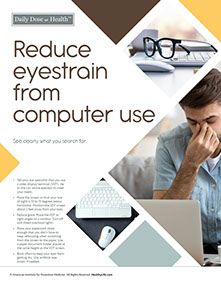
    Man holding glasses in one hand and rubbing eyes with the other hand.

    See clearly what you search for.

    *  Tell your eye specialist that you use a video display terminal (VDT). He or she can advise eyewear to meet your needs.

    *  Place the screen so that your line of sight is 10 to 15 degrees below horizontal. Position the VDT screen about 2 feet away from your eyes.

    *  Reduce glare. Place the VDT at right angles to a window. Turn off and shield overhead lights.

    *  Place your paperwork close enough that you don’t have to keep refocusing when switching from the screen to the paper. Use a paper document holder placed at the same height as the VDT screen.

    *  Blink often to keep your eyes from getting dry. Use artificial tear drops, if needed.

    Health at Home Lifetime book by the American Institute for Preventive Medicine. www.HealthyLife.com. All rights reserved.

    © American Institute for Preventive Medicine

  • Rectal Problems

    Abdominal & Urinary Conditions

    The rectum is the lowest part of the large bowel (colon). The opening of the rectum is the anus. Stool are passed from the anus.

    Signs & Symptoms

    *  Rectal pain.

    *  Rectal bleeding.

    *  Anal itching.

    *  Redness, swelling, or a rash in the rectal area.

    Causes

    Often there is no clear cause. Persons with diabetes and liver disease are more prone to rectal itching.

    For Anal / Rectal Pain and/or Bleeding

    *  Constipation. Straining to pass stool. Hemorrhoids.

    *  Anal fissures. These are splits or tears in the skin around the anus.

    *  Polyps or small growths.

    *  Injury due to anal intercourse or the insertion of a foreign object.

    *  Blockage in the intestines.

    *  Colon or rectal cancer.

    For Anal / Rectal Itching

    *  Dry skin. Products that irritate or cause a skin allergy in the anal area. Examples are over-the-counter anesthetic ointments that end in “caine,” such as benzocaine.

    *  Hemorrhoids.

    *  Psoriasis. This is a chronic skin disease. With this, itchy, scaly red patches form on a part of the body.

    *  Pinworms. These are intestinal parasites. They usually affect children. The anal itching is at night and can be painful.

    *  A fungal infection.

    Treatment

    Treatment for rectal problems depends on the cause. Any sign of rectal bleeding should be evaluated by a doctor. This includes blood on toilet paper. Colon cancer should be checked for, despite the person’s age or family history of this disease.

    Questions to Ask

    Self-Care / Prevention

    For Anal / Rectal Bleeding

    *  Don’t lift heavy things.

    *  Stop taking anti-inflammatory medicines and/or aspirin (unless prescribed and monitored by your doctor).

    *  Don’t strain to pass stool.

    For Anal / Rectal Itching

    *  Practice good hygiene. Clean the rectal area daily.

    *  Use an over-the-counter ointment, such as one with zinc oxide or one for hemorrhoids, such as Preparation H. Follow package directions.

    *  Wear clothes and undergarments that fit loosely.

    *  Take a warm bath or sitz bath. A sitz bath is a shallow, warm water bath. You can get a sitz bath device from a medical supply company and some drug stores. Then dry the rectal area well. Use talcum powder, as needed.

    *  Take warm tub baths.

    *  Lose weight if you are overweight.

    *  If you are diabetic, keep blood sugar under control.

    *  For pinworms:

    – Check for pinworms in this way: In a dark room, a few hours after bedtime, shine a flashlight on the anus. Pinworms, if present, will go back into the anus when the flashlight is shined on them.

    – Wash the hands often.

    – Keep fingernails closely trimmed.

    – Try to get your child to not suck his thumb and not bite his nails.

    – Wash underwear and bed linen in hot soapy water.

    – If medication for pinworms is prescribed, use it as directed.

    For Rectal Pain

    *  Take warm baths.

    *  Use a warm water sitz bath for 15 minutes, 2 to 3 times a day.

    *  Put towels soaked in warm water on the anal area. Or, apply a cold compress to the painful area, if this helps with the pain. You can buy a sitz bath from a medical supply or drug store.

    *  Follow measures to prevent constipation.

    *  Don’t strain to pass stool.

    *  Keep the rectal area clean.

    *  Use soft, plain, unscented, two-ply toilet paper. Take your own toilet paper to work or other places that may use harsh paper. Use wet, not dry, toilet paper, if that helps.

    *  Use an over-the-counter wipe, such as Tucks, after using toilet paper.

    *  Don’t sit for long periods of time. When you do sit, raise your legs, as often as you can.

    *  If needed, take an over-the-counter medicine for pain as directed.

    Healthier at Home book by the American Institute for Preventive Medicine. www.HealthyLife.com. All rights reserved.

    © American Institute for Preventive Medicine

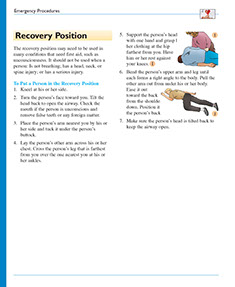
  • Recovery Position

    First Aid

    The recovery position may need to be used in many conditions that need first aid, such as unconsciousness. It should not be used when a person: Is not breathing; has a head, neck, or spine injury; or has a serious injury.

    To Put a Person in the Recovery Position

    1.  Kneel at his or her side.

    2.  Turn the person’s face toward you. Tilt the head back to open the airway. Check the mouth if the person is unconscious and remove false teeth or any foreign matter.

    3.  Place the person’s arm nearest you by his or her side and tuck it under the person’s buttock.

    4.  Lay the person’s other arm across his or her chest. Cross the person’s leg that is farthest from you over the one nearest you at his or her ankles.

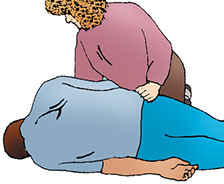
    5.  Support the person’s head with one hand and grasp his or her clothing at the hip farthest from you. Have him or her rest against your knees. See image A.

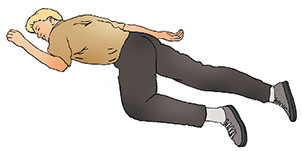
    6.  Bend the person’s upper arm and leg until each forms a right angle to the body. Pull the other arm out from under his or her body. Ease it out toward the back from the shoulder down. Position it parallel to the person’s back. See image B.

    7.  Make sure the person’s head is tilted back to keep the airway open.

    Illustration on how to place a person in the recovery position.

    Image A

    Illustration on how to put a person in a recovery position.

    Image B

    Healthier at Home book by the American Institute for Preventive Medicine. www.HealthyLife.com. All rights reserved.

    © American Institute for Preventive Medicine

  • Protect Your Heart

    Heart & Circulation Problems

    Man smiling make hands into heart shape.

    Wondering about your heart health? Look at your waist. Excess belly fat is linked to higher blood pressure and unhealthy blood lipid levels. For starters, adopt a heart-healthy diet of lean proteins, beans, lentils, veggies, fruits, and whole grains, and exercise regularly to reduce your heart disease risks. In fact, many heart-shaped fruits and vegetables are great sources of antioxidants, which help reduce your risk for heart disease and some cancers. Examples include strawberries, apples, raspberries, and bell peppers.

    Be More Earth-Friendly

    Reducing red meat in your diet is good for you and the earth. Beef production, far more than chicken or pork, has had a significant impact on the environment. A good first step is to adopt “Meatless Mondays.”

    Health at Home Lifetime book by the American Institute for Preventive Medicine. www.HealthyLife.com. All rights reserved.

    © American Institute for Preventive Medicine

  • Prostate Health

    Men’s Health

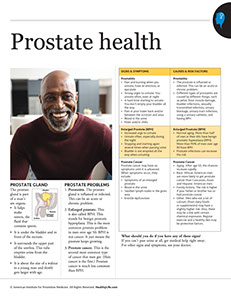
    The prostate gland is part of a man’s sex organs.

    *  It helps make semen, the fluid that contains sperm.

    *  It is under the bladder and in front of the rectum.

    *  It surrounds the upper part of the urethra. This tube empties urine from the bladder.

    *  It is about the size of a walnut in a young man and slowly gets larger with age.

    Prostate Problems

    1.  Prostatitis (PRAH-stuh-TY-tis). With this, the prostate gland is inflamed or infected. This can be an acute or chronic problem.

    2.  Enlarged prostate. This is also called BPH. This stands for benign (be-NINE) prostatic (prah- STAT-ik) hyperplasia (HY-per-PLAY-sha). This is the most common prostate problem in men over age 50. BPH is not cancer. It just means the prostate keeps growing.

    3.  Prostate cancer. This is the second most common type of cancer that men get. (Skin cancer is the first.) Prostate cancer is much less common than BPH.

    Signs & Symptoms

    For Prostatitis

    *  Pain and burning when you urinate, have an erection, or ejaculate

    *  Strong urges to urinate. You urinate often, even at night.

    *  A hard time starting to urinate. You don’t empty your bladder all the way.

    *  Pain in your lower back and/or between the scrotum and anus

    *  Blood in the urine

    *  Fever and/or chills

    For an Enlarged Prostate

    *  Increased urge to urinate.

    *  You urinate often, especially during the night.

    *  Delay in onset or decreased or slow stream when you urinate

    *  You don’t empty your bladder all the way.

    For Prostate Cancer

    Prostate cancer may have no symptoms until it is advanced. When symptoms occur, they include:

    *  Symptoms of an enlarged prostate

    *  Blood in the urine

    *  Swollen lymph nodes in the groin area

    *  Erectile dysfunction

    What should you do if you have any of these signs?

    If you can’t pass urine at all, get medical help right away. For other signs and symptoms, see your doctor.

    Causes

    For Prostatitis

    The prostate is inflamed or infected. This can be an acute or chronic problem.

    For an Enlarged Prostate

    *  Normal aging. More than half of men in their 60s have benign prostatic hyperplasia (BPH). Up to 80 percent of men in their 70s and 80s may have BPH.

    *  Prostate infections can increase the risk.

    For Prostate Cancer

    *  Aging. After age 50, the chances increase rapidly. About 80% of all cases occur in men over age 65.

    *  Race. African American men are twice as likely to get prostate cancer as Caucasian American men.

    *  Family history. The risk is higher than average if your father or brother has or had prostate cancer.

    *  Diet. Studies have shown that a diet high in dairy foods, calcium, or calcium supplements may raise the risk. A diet high in certain fruits and vegetables, including cooked tomato products, may lower the risk.

    Treatment

    For Prostatitis

    *  Acute and chronic bacterial infections are treated with antibiotics.

    *  For an inflamed prostate without a bacterial infection, treatment depends on the cause.  Medications to treat pain and other symptoms are part of the treatment.

    For BPH

    *  Watchful waiting. When symptoms are minor, no treatment may be needed at that time. The BPH is monitored to see if it causes problems or gets worse.

    *  Medicine. One type helps relax the bladder neck muscle and the prostate. Another type causes the prostate to shrink.

    *  Surgery.* There are many types and many new procedures.

    *{Note: Surgery for BPH can result in problems, such as impotence and/or incontinence. Discuss the benefits and risks of treatment options with your doctor. Most men who have surgery have no major problems.}

    Treatment for Prostate Cancer

    Treatment depends on the man’s age and general health. It also depends on how slow the cancer is expected to grow or if it has spread beyond the prostate gland.

    Treatment includes:

    *  Watchful waiting. This is also called active surveillance. It means getting no treatment at that time, but having tests, such as every 3, 6, or 12 months, to check for changes that may need treatment. If changes occur or if symptoms worsen, you may choose to have treatment.

    *  Surgery. There are many types. Ask your doctor which one(s) best meet your needs. Discuss the pros and cons for each type with your doctor.

    *  Radiation therapy. With one type, radioactive material is placed inside the prostate gland. Another type uses a large machine outside the body to target the cancer cells.

    *  Hormone therapy. This uses drugs or surgery to keep prostate cancer cells from getting male hormones, such as testosterone, which can cause prostate cancers to grow.

    *  Chemotherapy. Drugs, often given through an IV, kill cancer cells.

    *  Immunotherapy. This uses your own blood cells to make a vaccine that stimulates your immune system to kill the cancer cells.

    *  Clinical trials. Find out about clinical trials for prostate cancer fromwww.cancer.gov/clinicaltrials.

    Diagnosis

    *  Your doctor will do an exam and ask questions, such as, What symptoms do you have? How much do they bother you? Did your father or brother have prostate problems? Be ready to answer these questions before you see the doctor.

    *  Your doctor may ask for a sample of your urine. If this shows bacteria, an antibiotic is prescribed. This kills the germ that causes the infection. Some men keep getting this kind of infection. Why? They may have a defect in the prostate gland that allows bacteria to grow. Surgery can correct this problem.

    *  If no bacteria is found, your doctor looks for other problems that could cause your symptoms. He or she may order tests to screen for other prostate problems.

    The tests listed below help the doctor find out if the problem is an enlarged prostate or prostate cancer.

    *  Digital rectal exam. This is done in the doctor’s office. The doctor puts a glove on and inserts a finger into the rectum. The doctor feels the part of the prostate that sits next to the rectum. This test helps the doctor find out the size of the prostate.

    *  PSA blood test. A high PSA may be a sign of prostate cancer. It could be a sign of BPH or prostatitis, too. PSA blood tests are not a sure thing to detect prostate cancer.

    *  Imaging. Certain X-rays or other tests are done to get a picture of the prostate.

    *  Urine flow study. A special device you urinate into measures how fast your urine flows. A reduced flow could mean that you have BPH.

    Your doctor may do other tests, as needed, to check for prostate cancer.

    Self-Care

    For Prostatitis

    *  Take antibiotics, as prescribed.

    *  Rest until fever and pain are gone.

    *  Take an over-the-counter medicine for pain and swelling, if needed. Take it as directed.

    For BPH

    *  Stay sexually active.

    *  Don’t take over-the-counter (OTC) medications with antihistamines unless approved by your doctor.

    *  Discuss the use of the OTC plant extract saw palmetto with your doctor before you take it.

    For Both an Enlarged Prostate and Prostatitis

    *  Don’t smoke.

    *  Reduce stress.

    *  Take warm baths.

    *  Don’t let your bladder get too full. Urinate as soon as you get the urge. Relax when you urinate.

    *  Drink 8 or more glasses of water every day. Don’t drink liquids before going to bed.

    *  Avoid alcohol and caffeine, especially after dinner.

    Prostate problems are only one health concern for men. Get regular checkups to screen for other problems, too.

    Resources

    Urology Care Foundation

    www.urologyhealth.org
    Prostate Health brochure by the American Institute for Preventive Medicine. www.HealthyLife.com. All rights reserved.

    © American Institute for Preventive Medicine

  • Prostate Cancer

    Cancer

    Man sitting looking up and sideways.

    This cancer is rare in men younger than 40, but the risk of having prostate cancer rises after age 50.

    Men aged 50 to 69 years should discuss the benefits and risks of prostate cancer screening with their doctors. African American men and those with a family history of prostate cancer should do this starting at age 40.

    When present, symptoms of prostate cancer include:

    *  Passing urine often or having a hard time passing urine

    *  Pain and burning when you pass urine, have an erection, or ejaculate. Pain in the hips, pelvis, ribs, or spine

    *  Blood in the urine

    Let your doctor know if you have any of these symptoms, which can be the same ones for other prostate problems.

    Health at Home Lifetime book by the American Institute for Preventive Medicine. www.HealthyLife.com. All rights reserved.

    © American Institute for Preventive Medicine