Blog

  • Premenstrual Syndrome (Pms)

    Women’s Health

    Four out of 10 menstruating women have premenstrual syndrome (PMS). A syndrome is a group of signs and symptoms that indicate a disorder.

    Signs & Symptoms

    As many as 150 symptoms are linked to PMS. The most common ones are:

    *  Abdominal bloating. Weight gain.

    *  Anxiety. Depression.

    *  Breast tenderness.

    *  Fatigue.

    *  Feelings of hostility and anger.

    *  Feeling cranky.

    *  Food cravings, especially for chocolate or sweet and/or salty foods.

    *  Headache.

    *  Mood swings.

    *  Tension.

    For some women, symptoms are slight and may last only a few days before menstruation. For others, they can be severe and last the entire 2 weeks before every period. Also, other problems women have, such as depression, may be worse with PMS. This is known as “menstrual magnification.”

    Causes

    The exact cause or causes for PMS are not known. A female’s response to normal monthly changes in estrogen, progesterone, and testosterone appear to be involved. So do changes in the level of seratonin, a brain chemical. With PMS, symptoms must occur within 2 weeks before the menstrual period and go away shortly after the period begins. Symptoms are not present between days 4 and 12 of the menstrual cycle. True PMS usually stops with menopause.

    Treatment

    *  Self-care measures.

    *  Regular exercise. This includes 20 minutes of aerobic exercise, such as walking or aerobic dance, at least 3 times a week.

    *  Medications. These include:

    – A water pill called spironolactone.

    – An anti-anxiety medicine.

    – An antidepressant medicine, such as an SSRI (e.g., fluoxentine or sertraline). This is taken a week or 2 before the menstrual period.

    – Birth control pills.

    Questions to Ask

    Self-Care / Prevention

    *  Get emotional support.

    *  Do aerobic exercises. Swim. Walk. Bicycle.

    *  Rest. Take naps if you need to.

    *  Learn to relax. Try deep breathing. Meditate. Do yoga. Take a warm bath. Get a massage.

    *  Eat carbohydrate-rich foods. Examples are whole grain breads and cereals, fruits, and vegetables.

    *  Have good sources of calcium, such as skim milk, nonfat yogurt, collard greens, and kale. Choose cereals and juices that have added calcium. Get good sources of magnesium, too. These include spinach; other green, leafy vegetables; and whole grain cereals.

    *  Try to avoid stress when you have PMS.

    *  Limit or avoid caffeine, alcohol, and cigarettes 2 weeks before your period is due.

    *  Limit salt, fat, and sugar.

    *  If you need to satisfy a food craving, do so with a small serving. For example, if you crave chocolate, have a small chocolate bar or add chocolate syrup to skim milk. If you crave salt, eat a small bag of pretzels.

    *  The vitamin and minerals listed below seem to help some females with PMS. Ask your doctor if you should take any of them and in what amounts.

    – Calcium.

    – Magnesium.

    – Vitamin E.

    Resources

    National Women’s Health Information Center

    www.womenshealth.gov

    Women's Self-Care book by the American Institute for Preventive Medicine. www.HealthyLife.com. All rights reserved.

    © American Institute for Preventive Medicine

  • Plan For A Healthy Pregnancy

    Women’s Health

    To help a pregnancy get off to a good start, take these steps before you get pregnant:

    *  Get a medical checkup. Discuss your medical history and your family medical history with your doctor.

    *  Do you have a chronic medical problem, such as asthma, diabetes, or high blood pressure? If you do, ask your doctor if changes need to be made in your treatment plan.

    *  Find out what medicines you can take. Ask which ones you should not take. Tell or show your doctor all prescribed and over-the-counter medicines, vitamins, herbal products, etc. that you take. Ask if you need to change any of these while you try to get pregnant.

    *  Take 400 to 800 micrograms (.4 to .8 milligrams) of folic acid every day. This B vitamin can help prevent serious birth defects of the brain and spine. Make sure you take folic acid for at least one month before you get pregnant. Women who have had a baby with a serious problem of the brain or spine should take the amount of folic acid their doctors advise.

    *  Discuss current and past birth control methods.  Ask what method you should use until you decide to get pregnant.

    *  If you or your partner has a family history of sickle-cell disease, Tay-Sachs disease, etc., get genetic counseling. Do this, too, if you are older than age 35 or if your partner is age 60 or older.

    *  Do you smoke? Do you take street drugs? If so, now is the time to quit. Get help if you need it.

    *  Stop or limit alcohol use. This will make it easier to go without it when you are pregnant.

    *  Get vaccines, as advised by your doctor.

    *  Avoid exposure to X-rays.

    *  Caffeine is okay for women planning to get pregnant, but limit it to 400 milligrams a day. This is the amount in about two 8-ounce cups of coffee. Follow your doctor’s advice for caffeine during pregnancy.

    *  Get regular exercise.

    *  If you are overweight, lose weight before you get pregnant.

    *  Eat healthy foods. These include:

    – Fruits and vegetables.

    – Whole grain breads and cereals.

    – Low-fat dairy foods and other calcium-rich foods.

    Resources

    March of Dimes

    www.marchofdimes.com

    Women's Self-Care book by the American Institute for Preventive Medicine. www.HealthyLife.com. All rights reserved.

    © American Institute for Preventive Medicine

  • Pink Eye (Conjunctivitis)

    Eye Conditions

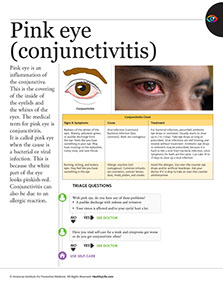
    Pink eye is an inflammation of the conjunctiva. This is the covering of the inside of the eyelids and the whites of the eyes. The medical term for pink eye is conjunctivitis. It is called pink eye when the cause is a bacterial or viral infection. This is because the white part of the eye looks pinkish-red. Conjunctivitis can also be due to an allergic reaction.

    Signs & Symptoms

    Questions to Ask

    Self-Care / Prevention

    For Pink Eye

    *  Wash your hands often. Don’t share towels, washcloths, etc.

    *  Avoid contact with other people as much as you can until you have used the prescribed antibiotic eye drops, etc. for 24 hours. Follow the rules of your workplace about pink eye. For children, follow the rules of their school.

    *  With your eyes closed, apply a cotton ball soaked in warm (not hot) water to the affected eye 3 to 4 times a day. Do this for at least 5 minutes at a time. Use a clean cotton ball each time.

    *  Throw away any makeup that could be contaminated. Don’t wear eye makeup until the infection is all cleared up. Don’t share makeup with others.

    *  Don’t share eye drops with others.

    *  Don’t put a cover or patch over the eye. This can make the infection grow.

    *  Don’t wear contact lenses while your eyes are infected. Replace contact lenses or disinfect them twice before re-using.

    For Allergic Conjunctivitis

    *  Avoid things you know you are allergic to.

    *  Use over-the-counter eye drops. These soothe irritation and help relieve itching.

    *  Apply a washcloth rinsed in cold water to the eyes. Do this several times a day.

    *  Use protective eyewear when you work with chemicals and fumes.

    Healthier at Home book by the American Institute for Preventive Medicine. www.HealthyLife.com. All rights reserved.

    © American Institute for Preventive Medicine

  • Phlebitis & Thrombosis

    Heart & Circulation Problems

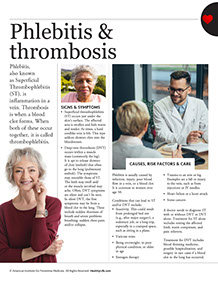
    Phlebitis is inflammation in a vein. Thrombosis is when a blood clot forms. When both of these occur together, it is called thrombophlebitis.

    Signs & Symptoms

    *  Superficial phlebitis (SP) occurs just under the skin’s surface. The affected area is swollen and feels warm and tender. At times, a hard ropy vein is felt. This type seldom showers clots into the bloodstream.

    *  Deep-vein thrombosis (DVT) occurs within a muscle mass (commonly the leg). It is apt to release showers of clots (emboli) that often go to the lung (pulmonary emboli). The symptoms may resemble those of SP; the limb may swell and/or the muscle involved may ache. Often, DVT symptoms are silent and can’t be seen. In silent DVT, the first symptoms may be from a blood clot to the lung. These include sudden shortness of breath and severe problems breathing; sudden chest pain; and/or collapse.

    Causes, Risk Factors & Care

    Phlebitis is usually caused by infection, injury, or poor blood flow in a vein. It is common in women over age 50. Conditions that can lead to SP and/or DVT include:

    *  Inactivity. This could result from prolonged bed rest, a sedentary job, or a long trip, especially in a cramped space, such as sitting in the economy class section of a plane.

    *  Varicose veins

    *  Being overweight, in poor physical condition, or older in age

    *  Estrogen therapy

    *  Trauma to an arm or leg. Examples are a fall or injury to the vein, such as from injections or IV needles.

    *  Heart failure or a heart attack

    *  Some cancers

    A doctor needs to diagnose SP with or without DVT or DVT alone. Treatment for SP alone includes resting the affected limb, warm compresses, and pain relievers.

    Treatment for DVT includes blood thinning medicine, possible hospitalization, and surgery if a blood clot to the lung has occurred.

    Prevention

    *  Avoid sitting or standing for long periods without moving around.

    *  Inform your doctor if you have a history of varicose veins, superficial phlebitis (SP), or deep-vein thrombosis (DVT) and take estrogen.

    *  Don’t sit with your legs crossed. Don’t wear tight garments below the waist, such as knee-high hosiery.

    *  On trips, drink a lot of fluids (no alcohol) and move about at least every hour. While sitting, exercise the legs.

    *  If you’re confined to a bed or a chair, stretch often. Push with the feet, pretending you’re pressing on a gas pedal and then release it. Do this with one foot, then the other.

    *  Avoid tobacco.

    Self-Care

    It is best to let your doctor diagnose if you have phlebitis or thrombosis. If SP is diagnosed, you may be told to follow these self-care measures:

    *  Wear elastic support stockings as prescribed by your doctor.

    *  Rest the affected limb as advised. Elevate it when you rest.

    *  Apply moist, warm compresses to the area of pain.

    *  Take an over-the-counter medicine for pain and inflammation. Take the one your doctor advises.

    *  Don’t massage or rub the limb.

    *  Don’t sit or stand for long periods of time. When you sit, elevate the limb. Continue with your regular activities, though, as much as you can.

    *  Follow “Prevention” measures in this topic.

    When to Seek Medical Care

    Contact Doctor When:

    You have 1 or more of these problems:

    *  Redness, pain, and a burning feeling in the leg

    *  Swelling and the feeling of a cordlike vein beneath the skin along the length of the vein

    Get Immediate Care When:

    *  You have symptoms of a blood clot to the lung:

    –  Sudden onset of chest pain with calf pain

    –  Sudden shortness of breath and severe problems breathing

    –  Rapid heartbeat

    –  Cough with bloody sputum (sometimes)

    –  Chest pain in a person who has had a recent operation or illness that has kept them in bed

    *  You have symptoms of deep-vein thrombosis (DVT):

    –  Swelling and warmth in the leg

    –  Pain in the ankle, calf, or thigh that does not go away with rest

    –  The affected skin area is red and tender.

    Health at Home Lifetime book by the American Institute for Preventive Medicine. www.HealthyLife.com. All rights reserved.

    © American Institute for Preventive Medicine

  • Peripheral Artery Disease

    Heart & Circulation Problems

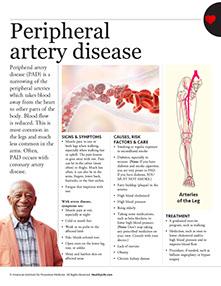
    Peripheral artery disease (PAD) occurs when blood vessels outside of the heart become too narrow to supply enough oxygen to the limbs. Blood flow is reduced. This is most common in the legs and much less common in the arms. Often, PAD occurs with coronary artery disease.

    Signs & Symptoms

    *  Muscle pain in one or both legs when walking, especially when walking fast or uphill. The pain lessens or goes away with rest. Pain can be in the calves (most often) or thighs. Much less often, it can also be in the arms, fingers, lower back, buttocks, or the foot arches.

    *  Fatigue that improves with rest

    With severe disease, symptoms are:

    *  Muscle pain at rest, especially at night

    *  Cold or numb feet

    *  Weak or no pulse in the affected limb

    *  Pale, bluish-colored toes

    *  Open sores on the lower leg, toes, or ankles

    *  Shiny and hairless skin on affected areas

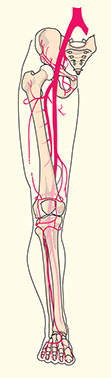
    Illustration of arteries of the leg.

    Arteries of the Leg

    Causes, Risk Factors & Care

    *  Smoking

    *  Diabetes, especially in women. {Note: If you have diabetes and smoke cigarettes, you are very prone to peripheral vascular disease. If you have diabetes, YOU MUST NOT SMOKE.}

    *  Fatty buildup (plaque) in the arteries High cholesterol

    *  High blood pressure

    *  Being elderly

    *  Taking some medications, such as beta- blockers, to lower high blood pressure. {Note: Don’t stop taking any prescribed medicines on your own. Consult with your doctor.}

    *  Agent Orange exposure

    Treatment for peripheral artery disease includes:

    *  A graduated exercise program, such as walking.

    *  Medicines, such as ones to lower cholesterol and/or high blood pressure and to improve blood flow

    *  Surgery, if needed, such as balloon angioplasty or bypass surgery

    Prevention

    *  Don’t smoke. If you smoke, quit.

    *  Do regular exercise.

    *  Get to and/or stay at a healthy weight.

    *  Follow a diet low in saturated fat and cholesterol.

    Self-Care

    *  Follow measures under “Prevention” in this topic.

    *  Follow a graduated walking program as advised by your doctor.

    *  Take medicines as prescribed.

    *  Take good care of your feet:

    – Check the feet daily.

    – Don’t walk barefoot.

    – Wear comfortable, roomy shoes. Avoid sandals and high heels.

    – Cut toenails straight across. Do not cut nails close to the skin.

    – Use an antifungal foot powder to avoid athlete’s foot.

    When to Seek Medical Care

    Contact Doctor When:

    *  You have any pain, redness, or a leg or foot wound and you have a history of diabetes or peripheral vascular disease.

    *  The pain, redness, and swelling extend up the ankle to the leg.

    *  The skin of your foot has turned grayish to black in color.

    *  Repeated muscle pain occurs in a leg when you walk and it goes away with rest.

    *  Leg pain occurs when you are at rest.

    Get Immediate Care When:

    You have all of these problems:

    *  Sudden onset of pain

    *  Rapid skin color changes: white, red, blue, grayish, or black

    *  You cannot feel sensation in your foot for the first time.

    Health at Home Lifetime book by the American Institute for Preventive Medicine. www.HealthyLife.com. All rights reserved.

    © American Institute for Preventive Medicine

  • Peptic Ulcers

    Abdominal & Urinary Conditions

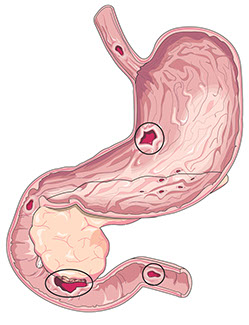
    Illustration of a peptic ulcer.

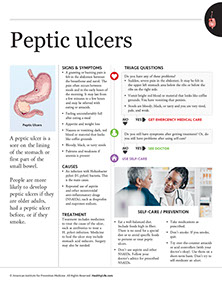
    A peptic ulcer is a sore in the stomach or first part of the small bowel.

    Peptic Ulcers

    Signs & Symptoms

    *  A gnawing or burning pain is felt in the abdomen between the breastbone and navel. The pain often occurs between meals and in the early hours of the morning. It may last from a few minutes to a few hours and may be relieved with eating or antacids.

    *  Appetite and weight loss.

    *  Nausea or vomiting dark, red blood or material that looks like coffee grounds.

    *  Bloody, black, or tarry stools.

    *  Paleness and weakness if anemia is present.

    Causes

    *  An infection with Helicobacter pylori (H. pylori) bacteria. This is the main cause.

    *  The repeated use of aspirin and other nonsteroidal anti-inflammatory drugs (NSAIDs), such as ibuprofen and naproxen sodium.

    A small percentage of peptic ulcers are caused by Zollinger-Ellison Syndrome. With this rare disorder, the body makes excess acid.

    Family history, smoking, caffeine, and making excess digestive acids play a role in peptic ulcers. So does stress, especially some types of physical stress (e.g., severe burns and major surgery).

    Treatment

    Treatment includes medicines to treat the problem and surgery, if needed.

    Questions to Ask

    Self-Care / Prevention

    *  Take medications as prescribed.

    *  Eat healthy foods. Include foods high in fiber.

    *  Don’t have coffee (regular and decaffeinated); tea and soft drinks with caffeine; and fruit juices high in acid like tomato juice. Don’t have alcohol or foods that bother you.

    *  Don’t use aspirin and other NSAIDs. Follow your doctor’s advice for prescribed NSAIDs.

    *  Try over-the-counter antacids or acid controllers (with your doctor’s okay). Use them on a short-term basis. Don’t try to self- medicate an ulcer.

    *  Don’t smoke. If you smoke, quit.

    Healthier at Home book by the American Institute for Preventive Medicine. www.HealthyLife.com. All rights reserved.

    © American Institute for Preventive Medicine

  • Pelvic Inflammatory Disease (Pid)

    Women’s Health

    Pelvic inflammatory disease (PID) is an infection that goes up through the uterus to the fallopian tubes. Both females and males carry the organisms that cause PID. These can be passed on to someone else. This occurs even when no symptoms are noticed.

    Signs & Symptoms

    When symptoms are present, they can vary from woman to woman. PID can be acute or chronic.

    Symptoms of Acute PID

    *  Pain in the abdomen or back. The pain can be severe.

    *  Vaginal discharge with a foul odor.

    *  Pain during sex.

    *  The abdomen is tender and/or bloated.

    *  Menstrual cramps are very painful.

    *  High fever.

    Symptoms of Chronic PID

    *  Pain in the abdomen or back is less severe. This often occurs halfway through the menstrual cycle or during a pelvic exam.

    *  Skin on the abdomen is sensitive.

    *  Vaginal discharge. Change in menstrual flow.

    *  Nausea.

    *  Low grade fever.

    Causes

    *  Sexually transmitted infections (STIs), such as gonorrhea and chlamydia. The organisms that cause these STIs spread into the internal reproductive organs. Many times, PID is caused by more than one of these organisms.

    *  Having had PID in the past.

    *  Recently having vaginitis.

    *  Bacteria normally found in the intestines can get into the pelvic cavity. Times this can happen:

    – After sex, especially having vaginal intercourse right after having anal intercourse.

    – With high risk sexual practices that increase the risk of infection. Examples are having multiple sex partners or having sex with a person who has many partners.

    – After an intrauterine device (IUD) is put in or adjusted. This is a low risk, though.

    Diagnosis

    The symptoms of PID are a lot like those of other conditions, such as endometriosis and urinary tract infections. This can make it hard to diagnose PID from symptoms alone. Most of the time your doctor can diagnose PID with an exam and simple laboratory tests. Rarely, your doctor may need to do a laparoscopy. This is a minor surgical procedure which allows your doctor to see all the structures inside your abdomen. An ultrasound may also be done.

    Treatment

    Antibiotics treat diagnosed PID. If the infection is severe, bed rest and antibiotics given through an IV may be needed. Treatment for an infected sex partner is also needed. This prevents getting the infection again.

    When PID is not treated, the infection can spread to other parts of the body. If it spreads to the blood, it may threaten life.

    Scarring from the infection can cause damage to a woman’s reproductive organs. It can cause infertility. Also, a woman who has had PID is at increased risk for:

    *  A tubal pregnancy.

    *  Premature labor and birth.

    Questions to Ask

    Self-Care / Prevention

    *  Wipe from front to back after a bowel movement to keep bacteria from getting into the vagina.

    *  When you menstruate, change tampons and/or pads often.

    *  Don’t have vaginal sex right after anal sex.

    *  Don’t have sex with anyone who has not been treated for a current case of PID or an STI or with anyone who has partners that haven’t been treated.

    *  Use barrier birth control methods with spermicides. These reduce the risk of getting PID from an infected partner. These include the male or female condom, cervical cap, or diaphragm. Use these even if you use other forms of birth control, such as the pill.

    *  Don’t use an IUD if you are at risk for STIs. If you use an IUD, have your doctor remove it if you become pregnant and then miscarry. If it is left in, your risk for PID goes up.

    *  Don’t smoke.

    *  Don’t use douches. These can spread bacteria further up the vagina.

    *  After childbirth, wait until you stop bleeding to have sex. After a D & C, abortion, or miscarriage, wait 1 week to have sex. Use a latex or polyurethane condom for 2 weeks after having an IUD put in.

    *  If you are at risk for PID, get tested for chlamydia and gonorrhea every 6 months.

    Resources

    National Women’s Health Information Center

    www.womenshealth.gov

    Women's Self-Care book by the American Institute for Preventive Medicine. www.HealthyLife.com. All rights reserved.

    © American Institute for Preventive Medicine

  • Parkinson’s Disease

    Brain & Nervous System

    Parkinson’s disease (PD) affects the nervous system. It occurs equally in men and women of all races and ethnic groups. It most often affects people over the age of 50. The average age of onset is 60 years.

    Signs & Symptoms

    Early symptoms can be subtle. They occur gradually and include:

    *  Feeling a little shaky. A person’s handwriting can look spidery.

    *  Being tired. Speaking too softly.

    *  Losing track of a word or thought.

    *  Having no facial expression.

    *  Feeling irritable or depressed for no known reason.

    The Four Main Symptoms

    *  Tremor. This may start in the hand while at rest, but can start in the head or leg. Tremor is not always present.

    *  Stiffness of the limbs and trunk.

    *  Slow movement. Less natural movement. The person may not be able to wash or dress quickly or easily.

    *  Loss of balance and coordination. This can lead to a stooped posture, a shuffling gait, and falls.

    Other Symptoms

    *  Problems with chewing and swallowing.

    *  Having a hard time changing positions.

    *  Depression. Anxiety.

    *  Speech changes. The person may speak too softly or in a monotone. The person may slur or repeat words, or speak too fast.

    *  Bladder or bowel problems, such as constipation.

    *  Skin that is too oily or too dry.

    *  Restless sleep. Being drowsy during the day. Having a harder time staying asleep at night.

    *  Dementia (in advanced stages).

    Causes

    The exact cause of Parkinson’s disease is not known. What is known, though, is that certain cells in the lower part of the brain can’t produce dopamine. Nerves need this to coordinate body movement.

    {Note: Some medicines can bring on symptoms like ones of Parkinson’s disease. Examples are strong tranquilizers and metoclopramide (Reglan), a drug used for some digestive problems.}

    Risk Factors

    *  Family history of the disease.

    *  Aging. For some persons, the neurons that produce dopamine wear away with aging.

    *  Rarely, repeated trauma to the head. This can happen to boxers. Muhammad Ali has this condition.

    *  Damage to nerve cells through a chemical process called oxidation.

    *  Toxins in the environment.

    Treatment

    Parkinson’s disease is not yet curable. Symptoms can be relieved or controlled. Treatment includes:

    *  Medicines, such as levodopa, selegiline, and apomorphine.

    *  Physical therapy. Speech therapy.

    *  Direct electrical brain stimulation.

    *  Neurosurgery.

    Questions to Ask

    Self-Care / Prevention

    *  Follow your treatment plan.

    *  Plan and maintain safety in the home. Replace razor blades with electric shavers. Use nonskid rugs and handrails to prevent falls, etc.

    *  Make tasks easy to do. Wear loafers, not tie shoes. Wear clothes that can be pulled on. Use items with snaps or Velcro closures instead of buttons.

    *  Prevent constipation.

    *  Stay as active as you can. Do the activities and exercises advised by your doctor and/or physical therapist.

    *  Take warm baths. Get massages to help with rigid muscles.

    *  Eat healthy foods. If you take levodopa, limit the protein in your diet, as advised by your doctor. A high protein diet can lessen the effects of levodopa.

    Resources

    National Parkinson Foundation (NPF)

    800.4PD.INFO

    800.473.4636

    www.parkinson.org

    Healthier at Home book by the American Institute for Preventive Medicine. www.HealthyLife.com. All rights reserved.

    © American Institute for Preventive Medicine

  • Pain

    General Health Conditions

    Pain is your awareness of hurt or discomfort and how you perceive it. This applies when you feel physical or emotional pain. The feeling of physical pain starts in nerve receptor cells that are below your skin and in organs inside your body. These nerve cells send a signal to nerves in your spinal cord and from there to your brain.

    Pain can be a sign that something is wrong, such as a skin injury, an infection, or an illness. It can range from a mild discomfort to pain that is extreme and severe. Emotional pain is often described as distress, mental anguish, or a “broken heart.”

    Physical pain and your emotions interact with each other. Your emotions have a direct impact on how you feel pain. You can use your emotions and your mind to help you manage pain.

    Types of Pain

    Acute Pain

    When the cause of the pain is treated with success, the pain goes away. This type of pain usually starts suddenly. It can range from mild to severe and is caused by another problem or event. Examples are:

    *  A temporary illness, such as an earache, the flu, or a sore throat

    *  An injury, such as a broken bone, or a burn, a sprain or strain

    *  Surgery or other medical procedure

    *  Labor and delivery

    Chronic Pain

    With this type, pain signals keep firing in the nervous system for weeks, months, or years. The pain can come and go or persist. It can range from mild to severe. The cause of chronic pain is not always known, but it may be due to or related to a number of reasons. These include:

    *  Arthritis

    *  Back problems

    *  Cancer or chemotherapy for cancer

    *  Headaches that persist

    *  Medical conditions that cause problems with nerve signals, such as diabetes and multiple sclerosis

    *  Other chronic health conditions, such as fibromyalgia and sickle cell anemia

    *  A past injury or illness

    Chronic pain can interfere with your daily activities and affect the way you eat, sleep, work, relate to others, and enjoy life in general. When you have chronic pain, it is common to be irritable, worried, angry, and depressed. Having chronic pain and depression increases the risk of suicide. The need to stop the pain can lead to:

    *  Unproven treatments that could be harmful

    *  Overuse and/or addiction to pain relieving medicines. Drug use.

    *  Repeated surgeries

    Identify & Explain Your Pain

    Answering the questions below will help you identify your pain and be able to explain it to your doctor or health care provider. Your answers also help you identify things that trigger your pain and how it affects your daily life. Make a copy of this chart. Take your answers with you to show your doctor or health care provider.

    Questions to Answer

    1.  Where does it hurt?

    2.  How much does it hurt?

    3.  When did the pain first start?

    4.  How long have you had it?

    5.  Does it last all the time or does it come and go?

    6.  Does it occur with any other problems or symptoms?

    7.  What makes the pain worse?

    8.  What medicines have you taken to relieve the pain?

    9.  What treatments other than medicines have you used?

    10. How has the pain affected your life?

    25 Methods to Manage Pain

    You have many options to manage pain. A brief summary of 25 methods is listed from A to Z.

    1.  Acupuncture. A trained therapist inserts hair-thin needles at specific areas just below the skin (acupoints) to stimulate the body’s self-healing abilities. Electroacupuncture adds wires to the needles to stimulate nerve endings. Some researchers believe this activates endorphins.

    2.  Biofeedback. This is a process of learning how to control and change internal functions to manage pain and other conditions. Biofeedback devices measure your breathing, heart rate, blood pressure, or other functions. Through training in relaxation or imagery, you learn to alter bodily functions to feel more relaxed and to help manage pain.

    3.  Cognitive-behavioral therapy (CBT). This helps a person identify and then modify thoughts and behaviors that focus on pain.

    4.  Cold treatment. Examples are placing an ice pack, a bag of frozen vegetables, or a cold washcloth on the area that aches. Apply cold treatment for 20 minutes at a time. For pain from an acute injury, use cold treatment for the first 48 hours.

    5.  Counseling. This can be individual, family, or group therapy that provides emotional support and teaches ways to identify and deal with stress and emotions that increase pain.

    6.  Dietary supplements. Examples are capsaicin for arthritis pain and ginger to reduce inflammation. Note: Follow your doctor’s advice for dietary supplements.

    7.  Distraction. This focuses your attention on something other than the pain, such as watching a movie, working on a hobby or project, and helping others.

    8.  Electrical stimulation called TENS. (This is transcutaneous electrical nerve stimulation). This uses a device that sends gentle electrical impulses through the skin at certain pain sites of the body to block pain signals before they reach the brain.

    9.  Endorphins. These are painkilling proteins that occur naturally in the body. The word endorphin is a Greek term that means “the morphine within.” Brisk walking, running, and other aerobic exercises may release endorphins. The endorphins lower pain.

    10. Exercise. Stretching and flexibility. These help with range of motion and reduce stiffness in joints that could lead to pain.

    11. Heat treatment. Examples are a heat pack, a hot water bottle, a heating pad (set on low), or warm shower water on the area that hurts. Apply heat treatment for 20 minutes at a time. For pain from an acute injury, use heat treatment after using cold treatment for 48 hours.

    12. Hypnosis. This uses refocusing techniques to block or transform pain.

    13. Massage. This gives a temporary relief of pain due to muscle stiffness and muscle spasms.

    14. Medications – Over-the-counter (OTC). Oral pain relievers. Examples are acetaminophen, aspirin, ibuprofen, and naproxen sodium. These also reduce fever and, except for acetaminophen, reduce swelling. Topical cremes, lotions, ointments, and gels. These offer temporary relief for localized areas of pain, such as fingers and knees due to arthritis. Substances in these include menthol, eucalyptus, capsaicin, and salicylates.

    15. Meditcations – Prescribed. Prescribed medicines come in many forms. These include pills, liquids, skin patches, suppositories, and ones that are injected or infused. Pain medicine can also be given using a machine that you control. You push a button when you feel pain. It is set up so you can’t get too much pain medicine. This is called Patient Controlled Analgesia (PCA). Most often, it is used in the hospital and health care facilities.

    16. Occupational therapy. This is learning how to do activities of daily living while managing pain.

    17. Physical therapy. This focuses on improving mobility, flexibility, strength and endurance through physical exercises and assistive devices.

    18. Placebos. These use the power of suggestion that a pill, etc., without actual medicine, will treat the pain because a person believes it will.

    19. Prayer. This is a spiritual way to meditate, which helps to lower heart rate and decreases muscle tension. Connecting to a higher power is a way to cope with pain and deal with things that cannot be changed.

    20. Relaxation. Examples are deep breathing and progressive muscle relaxation.

    21. Self-Soothing. This is giving compassion and reassurance to yourself like when a mother soothes a child who is in pain or is distressed. It is giving yourself permission to accept the pain and trying to stay calm and relaxed, even in the midst of your pain. It also includes seeking physical comfort, such as taking a warm bath.

    22. Support groups. These allow emotional support and a shared understanding for dealing with pain.

    23. Surgery. This may be needed to correct a physical problem that causes pain.

    24. Tai Chi. This form of exercise uses slow, gentle movements to improve balance and increase flexibility.

    25. Yoga. This uses breathing exercises, postures, and movements to unite the body, mind, and spirit. It also improves blood pressure and circulation.

    Pain Facts

    *  About 75 million persons living in the U.S. have chronic or recurrent pain.

    *  Pain affects more persons in the U.S. than diabetes, heart disease, and cancer combined.

    *  Pain is one of the most common reasons people seek medical care.

    *  Chronic pain costs over $100 billion dollars a year in medical costs, disability payments, lost productivity, and retraining workers.
    Manage Your Pain Self-Care book by the American Institute for Preventive Medicine. www.HealthyLife.com. All rights reserved.

    © American Institute for Preventive Medicine

  • Ovarian Cysts & Cancer

    Women’s Health

    The ovaries are two almond-sized organs. One is found on each side of the uterus. Growths called cysts or tumors can form in, on, or near the ovaries.

    Cysts are sacs filled with fluid or semisolid matter. Ovarian cysts are common in women before menopause. Rarely are these cysts cancer.

    Tumors are solid masses. Most often, tumors in the ovary are benign. Malignant tumors are ovarian cancer. This type of cancer occurs most often between the ages of 50 and 75. It can occur at other ages, too.

    Signs & Symptoms

    For Ovarian Cysts

    When symptoms occur, they include:

    *  A feeling of fullness or swelling of the abdomen.

    *  Weight gain.

    *  A dull, constant ache on either or both sides of the pelvis.

    *  Pain during sex.

    *  Delayed, irregular, or painful periods.

    *  Growth of facial hair.

    *  A cyst that bleeds, breaks, or twists can cause sharp, severe abdominal pain, fever, and vomiting.

    For Ovarian Cancer

    In many cases, the cancer has spread by the time it is found. When symptoms appear, they are vague problems and are often ignored. These symptoms, even in early-stage ovarian cancer, last almost daily for more than a few weeks:

    *  Bloating.

    *  Pain in the abdomen or pelvis.

    *  Difficulty eating or feeling full quickly.

    *  Urgent need to pass urine or passing urine often.

    Other symptoms can include:

    *  Back pain. Pain with intercourse.

    *  Constipation. Indigestion.

    *  Fatigue.

    *  Menstrual irregularities.

    Causes & Risk Factors

    For Ovarian Cysts

    *  Some cysts are due to normal changes in the ovaries.

    *  Some cysts result from cell growth. Most of these are benign, but need medical treatment. Examples are:

    – Dermoid cysts. These are growths filled with many types of tissue. Examples are fatty material, hair, teeth, bits of bone, and cartilage.

    – Polycystic ovaries. These are caused by a buildup of multiple small cysts from hormone problems. Irregular periods, body hair growth, and infertility can result.

    {Note: Taking hormones does not cause ovarian cysts.}

    Risk Factors for Ovarian Cysts

    *  Being between the ages of 20 and 35.

    *  Endometriosis. Pelvic inflammatory disease (PID). The eating disorder bulimia.

    *  Obesity.

    Risk Factors for Ovarian Cancer

    *  Not having children. Having children at an older age.

    *  Not ever taking birth control pills.

    *  Menopause after age 55.

    *  Family history of ovarian, colon, breast, prostate, or lung cancer.

    *  Personal history of breast, uterine, colon, or rectal cancer.

    *  Being Caucasian.

    *  Increasing age.

    Treatment

    Growths on ovaries are diagnosed with a pelvic exam and medical tests. Ways to detect growths include yearly pelvic and rectal exams and an ultrasound. No completely reliable test exists for ovarian cancer. A CA-125 blood test can detect the progression of ovarian cancer. It is not a reliable screening test.

    For Ovarian Cysts

    Treatment depends on the size and type of cyst(s); how severe symptoms are; the woman’s health status; and her desire to have children.

    Some cysts resolve without any treatment in 1 to 2 months. For others, hormones in birth control pills may suppress the cyst. Sometimes, surgery may be needed to remove it. The ovary and fallopian tube may need to be removed, too.

    For Ovarian Cancer

    The sooner the cancer is found and treated, the better the chance for recovery. Treatment includes:

    *  Surgery. The ovaries, uterus, and fallopian tubes are removed. If the cancer has spread, the surgeon removes as much of the cancer as possible.

    *  Chemotherapy.

    *  Radiation therapy.

    *  Clinical trials.

    Questions to Ask

    Self-Care / Prevention

    For Ovarian Cysts

    *  Limit caffeine.

    *  Have regular pelvic exams, as advised by your doctor.

    *  Take an over-the-counter medicine for pain as directed.

    For Ovarian Cancer

    *  Medical care, not self-care, is needed. Follow your doctor’s advice.

    *  Ask your doctor for advice if you have a family history of ovarian cancer.

    Resources

    National Women’s Health Information Center

    www.womenshealth.gov

    Women's Self-Care book by the American Institute for Preventive Medicine. www.HealthyLife.com. All rights reserved.

    © American Institute for Preventive Medicine