Blog

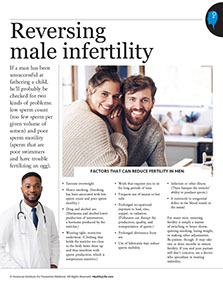
  • Reversing Male Infertility

    Men’s Health

    Image of male doctor.

    If a man has been unsuccessful at fathering a child, he’ll probably be checked for two kinds of problems: low sperm count (too few sperm per given volume of semen) and poor sperm motility (sperm that are poor swimmers and have trouble fertilizing an egg).

    Factors that can reduce fertility in men include:

    *  Extreme overweight.

    *  Heavy smoking. (Smoking has been associated with low sperm count and poor sperm motility.)

    *  Drug and alcohol use. (Marijuana and alcohol lower production of testosterone, a hormone produced by the testicles.)

    *  Wearing tight, restrictive underwear. (Clothing that holds the testicles too close to the body heats them up and thus interferes with sperm production, which is temperature sensitive.)

    *  Work that requires you to sit for long periods of time (for reasons similar to those above).

    *  Frequent use of saunas or hot tubs.

    *  Prolonged occupational exposure to lead, zinc, copper, or radiation. (Pollutants can disrupt the production, quality, and transportation of sperm.)

    *  Prolonged abstinence from sex.

    *  Use of lubricants, such as petroleum jelly and K-Y brand jelly, which can kill or immobilize sperm.

    *  Infection or other illness. (These hamper the testicles’ ability to do their job.)

    *  A varicocele (a congenital defect in the blood vessels to the testes).

    For many men, restoring fertility is simply a matter of switching to boxer shorts, quitting smoking, losing weight, or making other adjustments. Be patient, though. It may take two or three months to restore fertility. If your partner still doesn’t conceive, see a doctor who specializes in treating infertility.

    A Year of Health Hints book by the American Institute for Preventive Medicine. www.HealthyLife.com. All rights reserved.

    © American Institute for Preventive Medicine

  • Macular Degeneration

    Eye Conditions

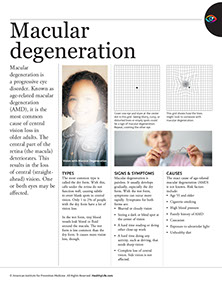
    Macular degeneration is a progressive eye disorder. Known as age-related macular degeneration (AMD), it is the most common cause of central vision loss in older Americans. The central part of the retina (the macula) deteriorates. This results in the loss of central (straight-ahead) vision. One or both eyes may be affected. The most common type is called the dry form. With this, cells under the retina do not function well, causing subtle to overt blank spots in central vision. Only 1 to 2% of people with the dry form have a lot of vision loss. In the wet form, tiny blood vessels leak blood or fluid around the macula. The wet form is less common than the dry form. It causes more vision loss, though.

    Signs & Symptoms

    Macular degeneration is painless. It usually develops gradually, especially the dry form. With the wet form, symptoms can occur more rapidly. Symptoms for both forms are:

    *  Blurred or cloudy vision.

    *  Seeing a dark or blind spot at the center of vision.

    *  A hard time reading or doing other close-up work.

    *  A hard time doing any activity, such as driving, that needs sharp vision.

    *  Complete loss of central vision. Side vision is not affected.

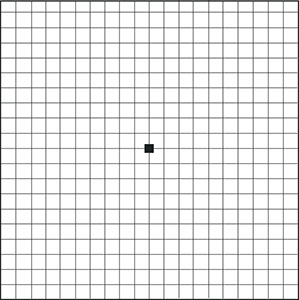
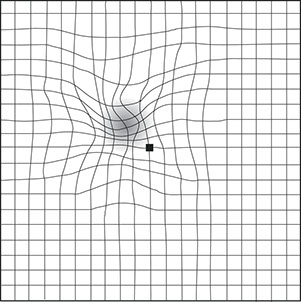
    Cover one eye and stare at the center dot in this grid. Seeing blurry, curvy, or distorted lines or empty spots could be a sign of macular degeneration. Repeat, covering the other eye.

    This grid shows how the lines might look to someone with macular degeneration.

    Causes

    The exact cause of age-related macular degeneration (AMD) is not known. Risk factors are:

    *  Advancing age.

    *  Cigarette smoking. High blood pressure.

    *  Family history of AMD.

    *  Having light-colored eyes.

    *  Exposure to ultraviolet light.

    *  Poor diet.

    Treatment

    Treatment for the wet form includes photodynamic therapy and laser therapy. Medicine called “anti-VEGF therapy” can also be given. Most dry form cases are not treatable. Your eye doctor may prescribe special eyeglasses and low vision aids. He or she may also prescribe a specific high dose vitamin and mineral to reduce the risk of advanced AMD.

    Questions to Ask

    Self-Care / Prevention

    To Reduce the Risk for AMD

    *  Don’t smoke. If you smoke, quit.

    *  Follow a healthy diet. Include green leafy vegetables and fish.

    *  Protect your eyes from the sun’s ultraviolet rays. Wear sunglasses with UV block. Wear a hat with a wide brim.

    *  Use Self-Care / Prevention measures to control high blood pressure and heart disease.

    To Treat AMD

    *  Wear the special eyeglasses and use other vision aids, such as magnifying devices, as advised by your doctor.

    *  Talk to your doctor before taking vitamin and mineral supplements.

    Resources

    Macular Degeneration Foundation

    www.eyesight.org

    National Eye Institute (NEI)

    www.nei.nih.gov

    Healthier at Home book by the American Institute for Preventive Medicine. www.HealthyLife.com. All rights reserved.

    © American Institute for Preventive Medicine

  • Lung Cancer

    Respiratory conditions

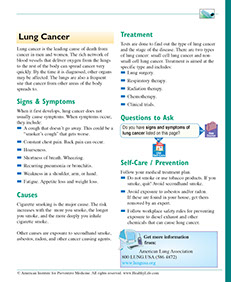
    Lung cancer is the leading cause of death from cancer in men and women. The rich network of blood vessels that deliver oxygen from the lungs to the rest of the body can spread cancer very quickly. By the time it is diagnosed, other organs may be affected. The lungs are also a frequent site that cancer from other areas of the body spreads to.

    Signs & Symptoms

    When it first develops, lung cancer does not usually cause symptoms. When symptoms occur, they include:

    *  A cough that doesn’t go away. This could be a “smoker’s cough” that gets worse.

    *  Constant chest pain. Back pain can occur.

    *  Hoarseness.

    *  Shortness of breath. Wheezing.

    *  Recurring pneumonia or bronchitis.

    *  Weakness in a shoulder, arm, or hand.

    *  Fatigue. Appetite loss and weight loss.

    Causes

    Cigarette smoking is the major cause. The risk increases with the  more you smoke, the longer you smoke, and the more deeply you inhale cigarette smoke.

    Other causes are exposure to secondhand smoke, asbestos, radon, and other cancer causing agents.

    Treatment

    Tests are done to find out the type of lung cancer and the stage of the disease. There are two types of lung cancer: small cell lung cancer and non-small cell lung cancer. Treatment is aimed at the specific type and includes:

    *  Lung surgery.

    *  Respiratory therapy.

    *  Radiation therapy.

    *  Chemotherapy.

    *  Clinical trials.

    Questions to Ask

    Self-Care / Prevention

    Follow your medical treatment plan.

    *  Do not smoke or use tobacco products. If you smoke, quit! Avoid secondhand smoke.

    *  Avoid exposure to asbestos and/or radon. If these are found in your house, get them removed by an expert.

    *  Follow workplace safety rules for preventing exposure to diesel exhaust and other chemicals that can cause lung cancer.

    Healthier at Home book by the American Institute for Preventive Medicine. www.HealthyLife.com. All rights reserved.

    © American Institute for Preventive Medicine

  • Love Your Heart

    Heart & Circulation Problems

    Heart shape plate with heart healthy foods.

    Show your heart some love with heart-healthy habits. Eating a healthy diet, maintaining a healthy weight, getting regular activity, avoiding smoke, and managing stress can all help keep your ticker on track.

    And, did you know that having a strong support system lowers your stress level, keeping your heart happy and healthy? So share a meal or enjoy a walk with a friend.

    You’ll love how you feel when you take care of your heart.

    Health at Home Lifetime book by the American Institute for Preventive Medicine. www.HealthyLife.com. All rights reserved.

    © American Institute for Preventive Medicine

  • Love Is Healthy For Your Heart

    Heart & Circulation Problems

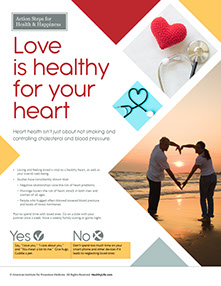
    Couple on beach making heart shape with their arms.

    Heart health isn’t just about not smoking and controlling cholesterol and blood pressure.

    *  Loving and feeling loved is vital to a healthy heart, as well as your overall well-being.

    *  Studies have consistently shown that:

    – Negative relationships raise the risk of heart problems.

    – Marriage lowers the risk of heart attack in both men and women of all ages.

    – People who hugged often showed lowered blood pressure and levels of stress hormones.

    Plan to spend time with loved ones. Go on a date with your partner once a week. Have a weekly family outing or game night.

    Say, “I love you,” “I care about you,” and “You mean a lot to me.” Give hugs. Cuddle a pet.

    Don’t spend too much time on your smart phone and other devices if it leads to neglecting loved ones.

    Health at Home Lifetime book by the American Institute for Preventive Medicine. www.HealthyLife.com. All rights reserved.

    © American Institute for Preventive Medicine

  • What To Do About Liver Spots

    Mature Health: Over Age 50

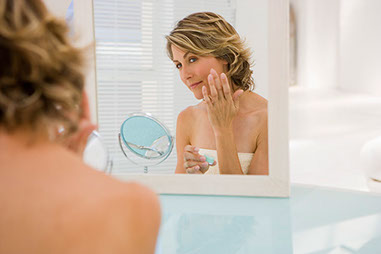
    Image of women looking in a mirror examing her face.

    Years spent soaking up the sun can result in circular patches of light brown pigmentation, called liver spots or age spots, on your face, arms, neck, and the back of your hands. Liver spots have nothing to do with the liver, though; they’re “superfreckles”-areas of dark pigment triggered by overexposure to the sun. Here’s what you can do to minimize liver spots.

    *  Apply a concealer (cover-up cream) that matches your skin tone.

    *  Always apply a sunscreen lotion with a sun protection factor (SPF) of 15 or higher 30 to 45 minutes before you go outdoors.

    *  Apply an over-the-counter bleaching cream to the discolored areas. (These products can take months to work and lighten spots only slightly.)

    If these tactics don’t help, consult a dermatologist. He or she may recommend one of the following medical treatments for liver spots.

    *  A prescription bleaching cream.

    *  A prescription peeling cream, like Retin-A.

    *  Chemical peels (a mild acid is applied with a cotton swab to each patch of pigment).

    *  Dermabrasion (the skin is numbed, then rubbed with a high-speed electrical device).

    These treatments all produce some discomfort and sometimes leave a permanent white spot where the skin has been treated, however.

    A Year of Health Hints book by the American Institute for Preventive Medicine. www.HealthyLife.com. All rights reserved.

    © American Institute for Preventive Medicine

  • Lice

    Children’s Health

    Lice are small, wingless insects about the size of a sesame seed. Lice lay up to 3 to 5 eggs a day. The eggs are called “nits.” The nits hatch in 7 to 10 days. In another 7 to 10 days, a female louse matures and begins laying her own eggs.

    Head lice is a common problem in children in day- care centers and schools. Head lice only affect humans. They thrive on human blood and can survive longer than 30 days. In general, head lice can’t survive longer than 24 hours off their human host. Lice can also infest areas of the body other than the scalp. This is called body lice. Lice on the hair around the groin is called pubic lice.

    Signs & Symptoms

    For Head Lice

    *  Nits can be seen on the hair. They are small yellowish-white, oval-shaped eggs that look like dandruff. Instead of flaking off the scalp, they stick firmly to the base of a hair shaft.

    *  Itching of the scalp is intense.

    *  Small, red bumps appear on the scalp and neck.

    *  When hatched, head lice are clear in color, so are hard to see.

    Causes

    Head lice does not imply poor hygiene. It is caused by the spread of the insects through direct contact of the hair or head with someone who has head lice. Sharing hats, towels, combs, helmets, etc. with an infected person can spread lice. Using pillows, head rests, etc. that an infected person used may also spread lice. Head lice don’t fly or jump, so can’t be spread through the air.

    Treatment

    Ask your child’s doctor about safe and nontoxic methods to treat lice. He or she may advise using an over-the-counter or prescribed medicine. Use the product as directed.

    Questions to Ask

    Self-Care / Prevention

    Check everyone in your home for lice and nits. Treat only those who have lice. Lice-killing products won’t prevent lice.

    *  Use an over-the-counter shampoo, lotion, or cream made to get rid of lice and nits. Follow the directions on the package.

    *  Wear plastic or latex gloves. Don’t use too much shampoo. Doing this will make the child’s head too dry.

    Things to Tell Your Child

    *  Don’t share hats, brushes, or combs. If you must share helmets, wipe them with a damp towel and wear a baseball cap under the helmet.

    *  Don’t lie on a pillow that another child uses.

    *  Wash your hair and bathe often.

    To Remove the Nits

    *  Shine a flashlight on the hair roots. Nits are gray and hard to see, especially in blond hair.

    *  Start at one spot and go row by row or even strand by strand. Use the nit comb that comes in the package. Dip the comb in vinegar first. This will help loosen the nits.

    *  Comb the hair from the roots to the ends. Check the comb for nits after each pass, or, break the hair up into 4 or 5 sections with hair clips. Lift about an inch of hair up and out. Put the comb against your child’s head. Comb all the way to the tips of the hair. Keep going until you’ve done the whole head.

    *  Soak all combs, brushes, hair clips, and barrettes for 1 to 2 hours in the insecticidal shampoo. Or, soak them for 1 hour in soap and water, rubbing alcohol, or Lysol.

    *  Check for nits every 2 to 3 days for 2 to 3 weeks until all lice and nits are gone.

    *  A week to 9 days later, use the shampoo for lice again to kill any newly hatched nits. You don’t have to remove nits after treatment is finished except for cosmetic reasons.

    Other Things You Should Do

    *  Vacuum all mattresses, pillows, rugs, and furniture made of cloth, especially where children play. Use the long, thin attachment to suck the lice or nits out of car seats, toys, etc. Put the vacuum cleaner bags outside in the trash.

    *  Wash bedding and clothes right away in water 130ºF or hotter. Put them in the dryer on high for 30 minutes. Heat kills the lice and nits. Dry-clean clothes and hats that you can’t wash.

    *  Don’t use bug spray on lice, furniture, stuffed animals, etc.

    *  As soon as you know your child has lice, call your child’s school, child-care center, parents of your child’s friends, etc.

    *  Check your children for head lice and nits once a week. Check more often if your child scratches his or her head. Look for nits behind the ears and on the back of the neck. Spread hairs apart using a nit comb to look for the nits on the hair shafts.

    Resources

    National Pediculosis Association

    www.headlice.org

    Healthier at Home book by the American Institute for Preventive Medicine. www.HealthyLife.com. All rights reserved.

    © American Institute for Preventive Medicine

  • Lessen Environmental Connections To Cancer

    Cancer

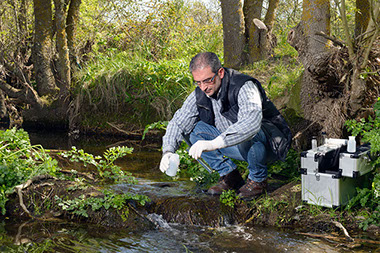
    Man collecting water samples from a water creek.

    *  Don’t smoke. Avoid secondhand smoke.

    *  Get your house tested for radon – the number 2 cause of lung cancer after smoking. You can buy a radon test kit from a hardware store.

    *  Take harmful waste products, such as empty aerosol cans; leftover paint, paint chips and thinners; and unused fertilizers and pesticides to a local hazardous waste drop-off site. Search for one near you atearth911.org.

    *  Restrict the use of pesticides, which are all toxic to some degree. Use nontoxic products to treat and maintain your lawn. Find ways to greenscape your lawn and yard fromepa.gov.

    *  Wear sunscreen (SPF of 30 or higher) and clothing to protect your skin from harmful UV rays.

    *  Get to and stay at a healthy weight. Eat plenty of plant-based foods: vegetables, fruit, whole grains, beans, lentils, nuts, and seeds. Avoid or limit alcohol to 1 drink a day (women and over 65) or 2 drinks a day (men).

    Health at Home Lifetime book by the American Institute for Preventive Medicine. www.HealthyLife.com. All rights reserved.

    © American Institute for Preventive Medicine

  • Leg Pain & Ankle Pain

    Bone & Muscle Problems

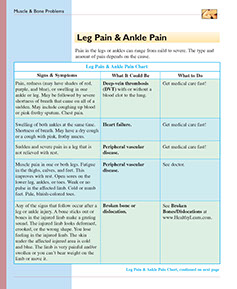
    Pain in the legs or ankles can range from mild to severe. The type and amount of pain depends on the cause.

    For Pain, in General

    *  Take an over-the-counter medicine for pain as directed on the label. If the pain is not better after a few doses, call your doctor.

    *  Use a heating pad (set on low), a hot pack, or a moist, warm towel on the area of pain. If the pain is due to an injury, don’t use heat for 48 hours. Use R.I.C.E.

    To Help Prevent Leg Pain & Ankle Pain

    *  Get to and stay at a healthy weight.

    *  Get regular exercise. This helps to keep ankle and leg muscles strong.

    *  Before you exercise, stretch and warm up your muscles. When you are done, cool them down.

    *  Protect your knees. Use knee pads when you garden or kneel. Always land on bent knees when jumping. Avoid deep knee bend exercises.

    *  Don’t wear high-heeled shoes. Keep your shoes in proper shape.

    *  Take good care of your feet.

    R.I.C.E.

    *  Rest the injured area for 24 to 48 hours.

    *  Ice the area as soon as possible. Keep doing this for 10 minutes every 2 hours for the first 48 hours. Use an ice pack, ice in a heavy plastic bag with a little water, a bag of frozen vegetables, etc. Put a thin towel between the ice pack and the skin.

    *  Compress the area. Wrap with an elastic bandage. Do not cut off circulation. Remove the bandage every 3 to 4 hours, for 15 to 20 minutes each time.

    *  Elevate the area above heart level, if possible. Place it on a pillow, folded blanket, stack of newspapers, etc.

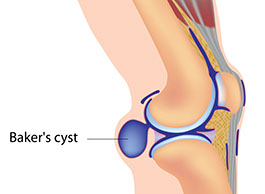
    Baker’s Cyst

    Illustration of baker's cyst.

    Signs & Symptoms

    Painless or painful swelling behind the knee. May feel like a water-filled balloon.

    What to Do

    Call doctor.

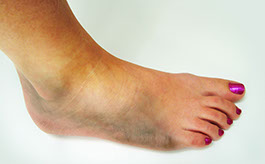
    Broken Bone or Dislocation

    Image of broken foot bone.

    Signs & Symptoms

    Any of the signs that follow occur after a leg or ankle injury. A bone sticks out or bones in the injured limb make a grating sound. The injured limb looks deformed, crooked, or the wrong shape. You lose feeling in the injured limb. The skin under the affected injured area is cold and blue. The limb is very painful and/or swollen or you can’t bear weight on the limb or move it.

    Bursitis

    Signs & Symptoms

    Pain and swelling around a knee or hip joint. The pain gets worse with movement. Fever (maybe).

    What to Do

    See doctor.

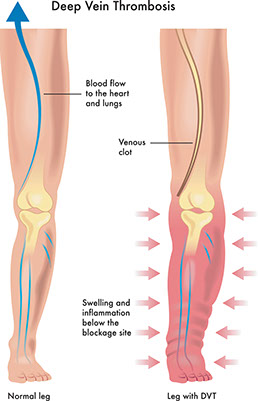
    Deep-vein thrombosis (DVT) with or without a blood clot to the lung

    Illustration of deep vein thrombosis.

    Signs & Symptoms

    Pain, redness (may have shades of red, purple, and blue), or swelling in one ankle or leg. May be followed by severe shortness of breath that came on all of a sudden. May include coughing up blood or pink-frothy sputum. Chest pain.

    What to Do

    Get medical care fast!

    Flu

    Signs & Symptoms

    Aches in leg muscles and joints with fever and/or chills. Headache. Dry cough. Sore throat. Fatigue.

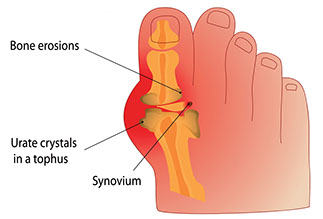
    Gout

    Illustration of gout.

    Signs & Symptoms

    Sudden, severe pain in a toe, knee, or ankle joint. The pain can be felt even when clothing is rubbed against the joint. The joint area is swollen, red, or purplish in color. It also feels warm, and is very tender to the touch.

    What to Do

    See doctor.

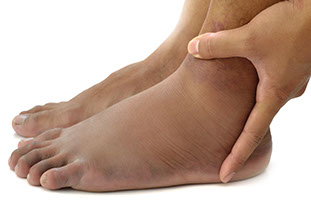
    Heart Failure

    Image of swollen feet.

    Signs & Symptoms

    Swelling of both ankles at the same time. Shortness of breath. May have a dry cough or a cough with pink, frothy mucus.

    What to Do

    Get medical care fast!

    Infection. Could also be Cellulitis.

    Signs & Symptoms

    Pain with fever, redness, tenderness, warmth and pus at a wound site. A red streak up the leg (rarely).

    What to Do

    See doctor.

    Leg Cramp

    Signs & Symptoms

    Sudden, sharp, tightening pain in the leg, often the calf. The muscle feels hard to the touch. The pain subsides after a minute or so and the muscle relaxes.

    Self-Care

    *  Walk on the leg.

    *  Shake the leg and then elevate it.

    *  Sit with your leg flat on the floor. Flex your foot upward, then toward your knee. Reach for your toes and pull them toward your knee. This stretches the calf muscles.

    *  Have someone massage the cramped muscle gently, but firmly.

    *  Apply a heating pad (set on low), a hot pack, or moist, warm towel to the muscle cramp.

    *  Rub the muscle that is cramping. Rub upward from the ankle toward the heart.

    (Note: Do not rub a leg if you suspect phlebitis or thrombosis.)

    To Prevent Leg Cramps

    *  Get good sources of calcium, potassium, and magnesium. See lists at left. Take calcium, potassium, and magnesium as advised by your doctor.

    *  Drink plenty of water and other fluids. Limit drinks with caffeine. Avoid drinks with alcohol. Doing these things can help prevent dehydration which could cause leg cramps.

    *  Warm up your muscles before you exercise. Cool down your muscles when you are done.

    *  With your doctor’s okay, wear elastic stockings while you are awake.

    *  Another way to stretch your calf muscles is to ride a stationary bicycle for a few minutes.

    *  Take a warm bath before bedtime.

    *  Sleep with loose-fitting blankets and night clothes. Keep your legs warm.

    *  If you have severe leg cramps or get them often, tell your doctor. Ask if any medication you take could cause your leg cramps. Ask for ways to treat your leg cramps.

    *  Before you go to bed, stretch your calf muscles. Here’s one way to do this:

    – Stand an arm’s length away from a wall. Lean against it with the palms of your hands.

    – Bend your left knee. Keep your right leg straight behind you. Keep both feet flat on the floor and your back straight.

    – Lean forward. Feel your right calf muscle stretch. Hold the stretch as you count to 10 slowly.

    – Repeat, switching leg positions.

    Lyme Disease

    Signs & Symptoms

    Muscle or joint pain and chronic swelling of the knee joints. These problems develop months or years after a deer-tick bite and a bulls-eye red rash with pale centers.

    What to Do

    See doctor.

    Osteoarthritis

    Signs & Symptoms

    Pain, stiffness, and sometimes swelling of the knee or ankle joints. Often, the joint has gotten tender over months or years and may look enlarged or deformed.

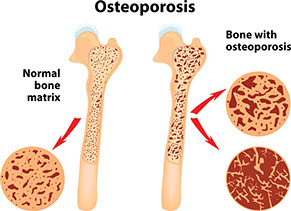
    Osteoporosis

    Illustration of osteoporosis.

    Signs & Symptoms

    Leg or ankle pain with gradual loss of height; stooped posture; backache; and/or past bone fractures, especially in the wrists and hips.

    Paget’s Disease

    This is a bone disorder that progresses slowly. Most persons with this disease do not develop symptoms.

    Signs & Symptoms

    Leg pain that radiates from the lower back. Pain or stiffness in the knees. Bowing of the legs or other bone deformity. Unexplained bone fractures. May have headache, dizziness, hearing loss, and/or ringing in the ears.

    What to Do

    See doctor.

    Self-Care / Prevention

    *  If needed, take an over-the-counter medicine for pain as directed on the label.

    *  Take other medicines as prescribed by your doctor.

    *  Get regular checkups to detect hearing loss.

    Peripheral Vascular Disease

    Signs & Symptoms

    Sudden and severe pain in a leg that is not relieved with rest.

    What to Do

    Get medical care fast!

    Signs & Symptoms

    Muscle pain in one or both legs. Fatigue in the thighs, calves, and feet. This improves with rest. Open sores on the lower leg, ankles, or toes. Weak or no pulse in the affected limb. Cold or numb feet. Pale, bluish-colored toes.

    What to Do

    See doctor.

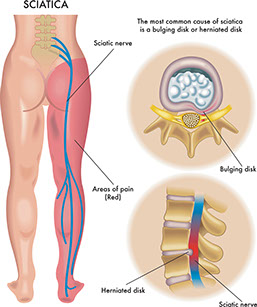
    Sciatica

    Illustration of sciatica.

    Signs & Symptoms

    Sharp pain from the buttocks down the leg. Numbness and tingling in the leg.

    Sprain, Strain, or Sport Injury

    Signs & Symptoms

    Pain in the leg or ankle after an injury that does not keep you from moving the limb.

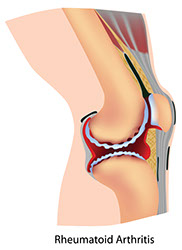
    Rheumatoid Arthritis

    Illustration of rheumatoid arthritis.

    Signs & Symptoms

    Pain, stiffness, and swelling, usually in both knees or ankle joints. The joint looks deformed. Weakness and fatigue. Dry mouth and dry, painful eyes.

    Varicose Veins

    Signs & Symptoms

    Pain or itching in the legs with swollen and twisted veins that look blue and are close to the surface of the skin. The veins bulge and feel heavy. Swelling in the legs and ankles.

    Healthier at Home book by the American Institute for Preventive Medicine. www.HealthyLife.com. All rights reserved.

    © American Institute for Preventive Medicine

  • Learn For Brain Health

    Brain & Nervous System

    Illustration of person standing with arms open holding large puzzle piece with brain.

    As adults grow older, it’s important for brain health to have new learning challenges, and to improve problem-solving and reasoning skills.

    Endless possibilities: Choose a subject or a skill you are curious about or wished you explored when you were younger. Want to learn a musical instrument? Become more computer-savvy? Improve car maintenance skills?

    Local learning: Take a course at a library, community college, or recreation center.

    Online and free: Check out the wide variety of free, online courses atedx.orgorcoursera.org.

    Health at Home Lifetime book by the American Institute for Preventive Medicine. www.HealthyLife.com. All rights reserved.

    © American Institute for Preventive Medicine