Blog

  • When To See A Gynecologist

    Women’s Health

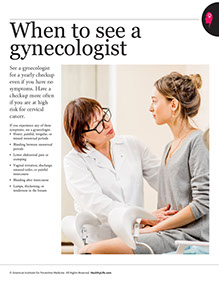
    Image of female doctor with female patient.

    If you experience any of these symptoms, see a gynecologist.

    *  Heavy, painful, irregular, or missed menstrual periods. Bleeding between menstrual periods.

    *  Lower abdominal pain or cramping.

    *  Vaginal irritation, discharge, or painful intercourse. Bleeding after intercourse.

    *  Lumps, thickening, or tenderness in the breasts.

    Also see a gynecologist for a yearly checkup even if you have no symptoms. Have a checkup more often if you are at high risk for cervical cancer.

    A Year of Health Hints book by the American Institute for Preventive Medicine. www.HealthyLife.com. All rights reserved.

    © American Institute for Preventive Medicine

  • Gum (Periodontal) Disease

    Dental & Mouth Concerns

    Image of women sitting in dental chair shaking hands with the dentist.

    Signs, Symptoms & Causes

    Gum (periodontal) diseases include:

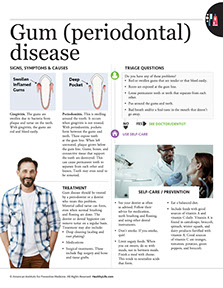
    Gingivitis. The gums are swollen due to bacteria from plaque and tartar on the teeth. With gingivitis, the gums are red and bleed easily.

    Periodontitis. This is swelling around the tooth. It occurs when gingivitis is not treated. With periodontitis, pockets form between the gums and teeth. These expose teeth at the gum line. When left untreated, plaque grows below the gum line. Gums, bones, and connective tissue that support the teeth are destroyed. This can cause permanent teeth to separate from each other and loosen. Teeth may even need to be removed.

    Treatment

    Gum disease should be treated by a periodontist or a dentist who treats this problem. Material called tartar can form, even when normal brushing and flossing are done. The dentist or dental hygienist can remove tartar on a regular basis. Treatment may also include:

    *  Deep cleaning (scaling and root planing).

    *  Medications.

    *  Surgical treatments. These include flap surgery and bone and tissue grafts.

    Questions to Ask

    Self-Care / Prevention

    *  See your dentist as often as advised. Follow his or her advice for medication, teeth brushing and flossing and using other dental instruments.

    *  Don’t smoke. If you smoke, quit.

    *  Eat a balanced diet.

    *  Limit sugary foods. When you eat sweets, do so with meals, not in between meals. Finish a meal with cheese. This tends to neutralize acids that form.

    *  Include foods with good sources of vitamin A and vitamin C daily. Vitamin A is found in cantaloupe, broccoli, spinach, winter squash, and dairy products fortified with vitamin A. Good sources of vitamin C are oranges, tomatoes, potatoes, green peppers, and broccoli.

    Healthier at Home book by the American Institute for Preventive Medicine. www.HealthyLife.com. All rights reserved.

    © American Institute for Preventive Medicine

  • Guard Against Macular Degeneration

    Mature Health: Over Age 50

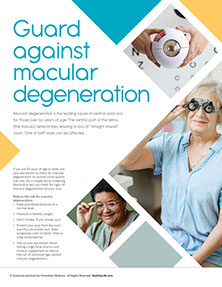
    Image of mature women receiving an eye exam.

    Macular degeneration is the leading cause of central vision loss for those over 55 years of age. The central part of the retina (the macula) deteriorates, leading to loss of “straight ahead” vision. One or both eyes can be affected. If you are 50 years of age or older, ask your eye doctor to check for macular degeneration at routine vision exams. Ask, too, for a simple home screening device that lets you check for signs of macular degeneration on your own.

    To reduce the risk for macular degeneration:

    *  Keep your blood pressure at a normal level.

    *  Maintain a healthy weight.

    *  Don’t smoke. If you smoke, quit.

    *  Protect your eyes from the sun’s harmful ultraviolet rays. Wear sunglasses with UV block. Wear a wide-brimmed hat.

    *  Talk to your doctor about taking a high dose vitamin and mineral supplement to reduce the risk of advanced age-related macular degeneration.

    A Year of Health Hints book by the American Institute for Preventive Medicine. www.HealthyLife.com. All rights reserved.

    © American Institute for Preventive Medicine

  • Gout: Relief At Last

    Abdominal & Urinary Conditions

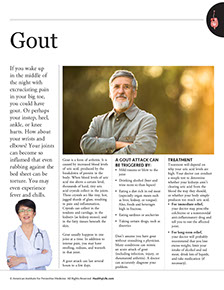
    If you wake up in the middle of the night with excruciating pain in your big toe, you could have gout. Or perhaps your instep, heel, ankle, or knee hurts. How about your wrists and elbows? Your joints can become so inflamed that even rubbing against the bed sheet can be torture. You may even experience fever and chills.

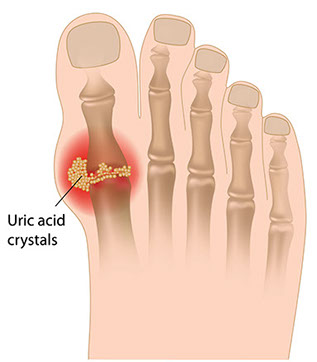
    Gout is a form of arthritis most common in men in their fifties. It is caused by increased blood levels of uric acid, produced by the breakdown of protein in the body. When blood levels of uric acid rise above a critical level, thousands of hard, tiny uric acid crystals collect in the joints. These crystals act like tiny, hot, jagged shards of glass, resulting in pain and inflammation. Crystals can collect in the tendons and cartilage, in the kidneys (as kidney stones), and in the fatty tissues beneath the skin.

    A gout attack can last several hours to a few days and can be triggered by:

    *  Mild trauma or blow to the joint.

    *  Drinking alcohol (beer and wine more so than distilled alcohol).

    *  Eating a diet rich in red meat (especially organ meats such as liver, kidney, or tongue).

    *  Eating sardines or anchovies.

    *  Taking certain drugs, such as diuretics.

    Illustration of gout.

    Don’t assume you have gout without consulting a physician. Many conditions can mimic an acute attack of gout (including infection, injury, or rheumatoid arthritis). A doctor can accurately diagnose your problem.

    If you do have gout, treatment will depend on why your uric acid levels are high. Your doctor can conduct a simple test to determine whether your kidneys aren’t clearing uric acid from the blood the way they should, or whether your body simply produces too much uric acid.

    The first goal, then, is to relieve the acute gout attack. The second goal is to normalize the uric acid levels to prevent a recurrence.

    *  For immediate relief, your doctor may prescribe colchicine or a nonsteroidal anti-inflammatory drug and tell you to rest the affected joint.

    *  For long-term relief, your doctor will probably recommend that you lose excess weight, limit your intake of alcohol and red meat, drink lots of liquids, and take medication (if necessary).

    A Year of Health Hints book by the American Institute for Preventive Medicine. www.HealthyLife.com. All rights reserved.

    © American Institute for Preventive Medicine

  • Tips For Good Digestion

    Mature Health: Over Age 50

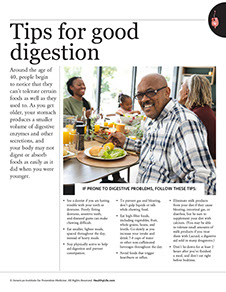
    Image of mature couple eating at home.

    Around the age of 40, people begin to notice that they can’t tolerate certain foods as well as they used to. As you get older, your stomach produces a smaller volume of digestive enzymes and other secretions, and your body may not digest or absorb foods as easily as it did when you were younger.

    If you are prone to digestive problems, follow these tips.

    *  See a dentist if you are having trouble with your teeth or dentures. Poorly fitting dentures, sensitive teeth, and diseased gums can make chewing difficult.

    *  Eat smaller, lighter meals, spaced throughout the day, instead of heavy meals. As a person ages, the blood supply to the small intestine declines, hindering the absorption of nutrients from a sudden, large delivery of food.

    *  To prevent gas and bloating, don’t gulp liquids or talk while chewing food.

    *  Limit the amount of gas-producing foods you eat. Cabbage, onions, and cooked dried beans are common offenders.

    *  Eliminate milk products from your diet if they cause bloating, intestinal gas, or diarrhea, but be sure to supplement your diet with calcium. (You may be able to tolerate small amounts of milk products if you treat them with Lactaid, a digestive aid sold in many health food stores.

    *  Avoid wearing tight clothing around your waist at mealtime.

    *  Don’t lie down for at least 2 hours after you’ve finished a meal, and don’t eat right before bedtime.

    A Year of Health Hints book by the American Institute for Preventive Medicine. www.HealthyLife.com. All rights reserved.

    © American Institute for Preventive Medicine

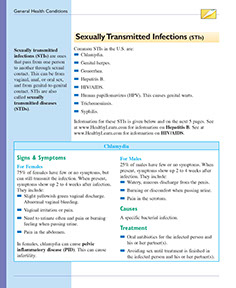
  • Gonorrhea

    Sexual Health

    Sexually transmitted infections (STIs) are ones that pass from one person to another through sexual contact. This can be from vaginal, anal, or oral sex, and from genital-to-genital contact. STIs are also called sexually transmitted diseases (STDs).

    Signs & Symptoms

    For Females

    Sixty to 80% of females have no symptoms. If present, they appear in 2 to 10 days and include:

    *  Mild vaginal itching and burning. Thick, yellow-green vaginal discharge.

    *  Burning when passing urine.

    *  Severe pain in the lower abdomen.

    For Males

    Males may have no symptoms, but usually have:

    *  Pain at the tip of the penis. Thick, yellow, cloudy, penile discharge.

    *  Pain and burning when passing urine.

    Causes

    A specific bacterial infection. If it is not treated, it can spread to joints, tendons, or the heart. In females, it can cause pelvic inflammatory disease (PID). This can cause infertility.

    Treatment

    *  Antibiotics.

    *  Pain relievers.

    *  Treating sexual partner(s) to avoid getting infected again.

    *  Follow-up test to find out if the treatment worked.

    Questions to Ask

    Self-Care / Prevention

    Safer Sex To Help Prevent STIs

    *  The only sure way to avoid STIs is not having sex. This includes intercourse, oral sex, anal sex, and genital-to-genital contact. Caressing, hugging, dry kissing, and masturbation are no risk or extremely low-risk practices. So is limiting your sexual contact to one person your entire life. This is if your partner does not have an STI and has sex only with you.

    *  Latex and polyurethane condoms can help reduce the risk of spreading HIV and other STIs (i.e., chlamydia, gonorrhea, and trichomoniasis). To do this, they must be used the right way for every sex act. They do not get rid of the risk entirely. Barriers made of natural membranes, such as from lamb, do not give good protection against STIs.

    *  Females and males should use latex or polyurethane condoms every time they have genital-to-genital contact and/or oral sex. Use polyurethane condoms if either partner is allergic to latex. You don’t need condoms to prevent STIs if you have sex only with one partner and neither of you has an STI.

    *  For oral-vaginal sex and oral-anal sex, use latex dams (“doilies”). These are latex squares.

    *  Latex condoms with spermicides, such as nonoxynol-9 (N-9) are no better than other lubricated condoms for preventing HIV/STIs. Spermicides with N-9 do not prevent chlamydia, cervical gonorrhea, or HIV. on’t use spermicides alone to prevent HIV/STIs. Using spermicides with N-9 often has been linked with genital lesions which may increase the risk of spreading HIV. Also, N-9 may increase the risk of spreading HIV during anal intercourse.

    *  Use water-based lubricants, such as K-Y Brand Jelly. Don’t use oil-based or “petroleum” ones, such as Vaseline. They can damage latex barriers.

    *  To lower your risk for HPV, use latex or polyurethane condoms. These work best at covering areas of the body that HPV is most likely to affect. A diaphragm does not prevent the spread of HPV.

    *  Don’t have sex while under the influence of drugs or alcohol. You are less likely to use “safer sex” measures.

    *  Limit sexual partners. Sexual contact with many persons increases the risk for STIs, especially if no protection is used.

    *  Discuss a new partner’s sexual history with him or her before you start having sex. Know that persons are not always honest about their sexual past.

    *  Avoid sexual contact with persons whose health status and health practices are not known.

    *  Follow your doctor’s advice to check for STIs.

    Resources

    American Social Health Association (ASHA)

    www.ashastd.org

    CDC National STD Hotline

    800.CDC.INFO (232.4636)

    www.cdc.gov/STD

    Healthier at Home book by the American Institute for Preventive Medicine. www.HealthyLife.com. All rights reserved.

    © American Institute for Preventive Medicine

  • Glaucoma

    Eye Conditions

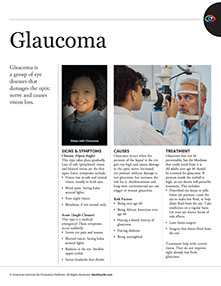
    Glaucoma is a group of eye diseases that damages the optic nerve and causes vision loss.

    Signs & Symptoms

    For Chronic (Open-Angle) Glaucoma

    This type takes place gradually, and causes no symptoms early on. Loss of side (peripheral) vision and blurred vision are the first signs.

    Later, symptoms include:

    *  Vision loss in side and central vision, usually in both eyes.

    *  Blind spots. Seeing halos around lights.

    *  Poor night vision.

    *  Blindness, if not treated early.

    For Acute (Angle-Closure) Glaucoma

    This type is a medical emergency! These symptoms occur suddenly:

    *  Severe eye pain and nausea.

    *  Blurred vision. Seeing halos around lights.

    *  Redness in the eye. Swollen upper eyelid.

    *  Severe headache that throbs.

    Causes

    Glaucoma occurs when the pressure of the liquid in the eye gets too high and causes damage to the optic nerve. Increased eye pressure without damage is not glaucoma, but increases the risk for it. Antihistamines and long-term corticosteroid use can trigger or worsen glaucoma.

    Risk Factors for Glaucoma

    *  Being over age 60, especially Mexican Americans.

    *  Being African American over age 40.

    *  Having a family history of glaucoma.

    *  Having diabetes.

    *  Being nearsighted.

    Treatment

    Treatments help with current vision. They do not improve sight already lost from glaucoma. Glaucoma may not be preventable, but the blindness that could result from it is. Get tested for glaucoma when you get regular vision exams. If pressure inside the eyeball is high, an eye doctor will prescribe treatment. This includes:

    Medicines used for acute glaucoma are prescribed for life. If medicines do not control the pressure, your doctor may advise:

    *  Laser beam surgery.

    *  Surgery that drains fluid from the eye.

    *  Medicines. These are the most common early form of treatment.

    – Prescribed eye drops or pills lower eye pressure, cause the eye to make less fluid, or help drain fluid from the eye.

    – Take medicines on a regular basis.

    – Let your eye doctor know of side effects.

    Questions to Ask

    Self-Care / Prevention

    *  Don’t smoke. If you smoke, quit.

    *  Do not take any medicine, including over-the-counter ones, without first checking with your doctor or pharmacist. Most cold medications and sleeping pills, for example, can cause the pupil in the eye to dilate. This can lead to increased eye pressure.

    *  If prescribed eye drops for glaucoma, use them as directed.

    *  Ask your eye doctor about low vision services and devices.

    *  Try not to get upset and fatigued. These can increase pressure in the eye.

    Resources

    National Eye Institute (NEI)

    www.nei.nih.gov

    Healthier at Home book by the American Institute for Preventive Medicine. www.HealthyLife.com. All rights reserved.

    © American Institute for Preventive Medicine

  • Getting Your Kids To Eat Right

    Children’s Health

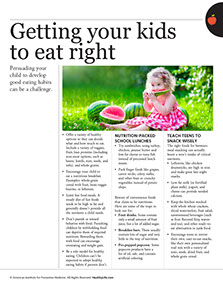
    Image of young girl eating watermelon.

    Persuading your child to develop good eating habits can be a challenge. Here are some pointers.

    *  Start your child’s day with a good breakfast. Hot cereal is a better choice than over-sweetened breakfast foods that are heavily advertised to kids.

    *  Buy snacks that are low in fat, sugar, and salt. Fresh fruit, unbuttered popcorn, whole-grain muffins, juice, milk, and yogurt are tasty, nutritious foods that appeal to kids. Crackers with small amounts of peanut butter or cheese are also acceptable between-meal treats.

    *  Limit fast-food meals. A steady diet of fast-food menu items tends to be high in fat and generally doesn’t provide all the essential nutrients a child needs.

    *  Don’t punish or reward behavior with food. Punishing children by withholding food can deprive them of required nutrients. Rewarding them with food can encourage overeating and weight gain.

    *  Set a good example. Children can’t be expected to adopt good eating habits if parents don’t.

    For nutrition-packed school lunches:

    *  Try sandwiches, using turkey, chicken, peanut butter with no added oil or sugar, and low-fat cheese or tuna fish instead of processed lunch meats.

    *  Pack finger foods like grapes, carrot sticks, celery stalks, and other fruit or crunchy vegetables instead of potato chips. Single-serving cans of fruit or applesauce are also handy ways to round out a lunch.

    Beware of convenience foods that claim to be nutritious.

    Here are some of the traps to look out for.

    *  Fruit drinks. Some contain only a small amount of fruit juice, but a lot of added sugar.

    *  Breakfast bars. These usually contain lots of sugar and very little in  the way of nutrition.

    *  Pre-popped popcorn. Some popcorn products have a lot of oil, salt, and contain artificial coloring.

    Teach Teens to Snack Wisely

    Once kids reach their teens, they tend to eat what they want, when they want it. But these years of rapid growth and change call for added nutrients which might be lacking in diets that are hit-or-miss. And as their bones grow rapidly, teens need plenty of calcium. Adolescent girls need plenty of iron to offset iron lost due to menstrual flow. If the right foods are available, between-meal snacking can actually boost a teen’s intake of those critical nutrients.

    *  Leftovers, like chicken drumsticks, are high in iron and make good late-night snacks.

    *  Low-fat milk, yogurt, and cheese can provide needed calcium.

    *  Keep the kitchen stocked with whole wheat crackers, sliced watermelon, fruit salad, and other ready-to-eat alternatives to junk food.

    *  Encourage teens to invent their own, easy-to-eat snacks, like “ants on a log”-celery stalks stuffed with peanut butter and dotted with raisins.

    Resources

    Page from A Year of Health Hints book by the American Institute for Preventive Medicine. www.HealthyLife.com. All rights reserved.

    © American Institute for Preventive Medicine

  • Getting Ready For Childbirth

    Pregnancy & Prenatal Care

    What to Do First

    *  Choose where you want to have your baby.

    *  Choose a health care provider.

    How to Get Ready

    *  Read books on pregnancy and childbirth.

    *  Take a childbirth class, if you can.

    *  Get regular prenatal care from your health care provider.

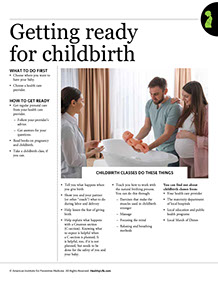
    Childbirth Classes Do These Things

    *  Tell you what happens when you give birth

    *  Show you and your partner (or other “coach”) what to do during labor and delivery

    *  Help lessen the fear of giving birth

    *  Help explain what happens with a Cesarean section (C-section). Knowing what to expect is helpful when a C-section is planned. It is helpful, too, if it is not planned, but needs to be done for the safety of you and your baby.

    *  Teach you how to work with the natural birthing process. You can do this through:

    – Exercises that make the muscles used in childbirth stronger

    – Massage

    – Focusing the mind

    – Relaxing and breathing methods

    You can find out about childbirth classes from:

    *  Your health care provider

    *  The maternity department of local hospitals

    *  Local education programs

    *  Local March of Dimes

    Prenatal Self-Care book by the American Institute for Preventive Medicine. www.HealthyLife.com. All rights reserved.

    © American Institute for Preventive Medicine

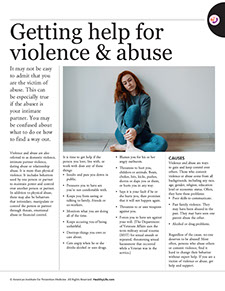
  • Getting Help For Violence And Abuse

    Women’s Health

    Violence uses force, power, or threats to cause physical or emotional harm on purpose.

    Abuse is one form of violence. It can be emotional, physical, financial, and/or sexual.

    It may not be easy to admit that you are the victim of abuse. You may be confused about what to do or how to find a way out.

    Time to Get Help When

    It is time to get help if the person you love, live with, or work with does any of these things:

    *  Puts you down in public.

    *  Criticizes you for little things.

    *  Keeps you from seeing or talking to family, friends, or co-workers.

    *  Monitors what you are doing all of the time.

    *  Keeps accusing you of being unfaithful.

    *  Destroys things you own or care about.

    *  Gets angry when he or she drinks alcohol or uses drugs.

    *  Blames you for his or her angry outbursts.

    *  Threatens to hurt you, children, or animals. Beats, chokes, hits, kicks, pushes, shoves, or slaps you or them, or hurts you in any way.

    *  Says it is your fault if he or she hurts you, then promises that it will not happen again.

    *  Threatens to or uses weapons against you.

    *  Forces you to have sex against your will. {The Department of Veterans Affairs uses the term military sexual trauma (MST) for sexual assault or repeated, threatening sexual harassment that occurred while a Veteran was in the service.}

    Causes

    Violence and abuse are ways to gain and keep control over others. Persons who commit violence or abuse come from all ethnic groups and backgrounds. Often, they have these problems:

    *  Poor skills to communicate.

    *  Past family violence. They may have been abused in the past. They may have seen one parent beat the other.

    *  Alcohol or drug problems.

    Regardless of the cause, no one deserves to be abused! Most often, persons who abuse others or commit violence, find it hard to change their behavior without expert help. If you are a victim of violence or abuse, get help and support.

    Getting Help

    *  If you are assaulted or threatened or need emergency help, call 911!

    *  If you are not in immediate danger, have a plan for times you feel unsafe or in danger or when you decide to leave the abusive setting.

    – Decide who you will call (e.g., police, neighbors, relatives, and a shelter). Make a list of these telephone numbers. Memorize the numbers, too.

    – Decide where you will go. If you have children, plan how you will take them with you. Have a plan for where they should go if you can’t get away. Practice these safety plans with your children. Plan how you will take your pets, too, if you can.

    *  To help recover from sexual assault or trauma, contact your doctor or health care provider for proper counseling and treatment. {Note: Veterans can receive free treatment for military sexual trauma (MST) at all VA health care facilities.}

    Be prepared to leave an abusive setting. Keep important items in a safe place (unknown to the person who is abusing you) until you are ready to leave or if you have to leave quickly. Get these items together ahead of time.

    *  Extra keys to your car, house, and safety deposit box.

    *  Cash. Credit cards and ATM card. Checkbook, bankbooks, and investment records or their account numbers.

    *  Jewelry or other small objects that you can sell in case you need money.

    *  Cell phone, a phone calling card, and phone numbers that you need.

    *  Personal papers for you and your children. These can be the original forms, copies of them, or information, such as numbers and dates written on paper. Items include:

    – Birth certificates and social security numbers.

    – Driver’s license, state ID, and passports.

    – Car registration, title, and insurance information.

    – Medical ID cards and medical records for you and your children.

    – Marriage license, divorce papers, legal papers for custody, restraining orders, etc.

    – House deed or lease agreement.

    Resources

    National Domestic Violence Hotline

    800.799.SAFE (799.7233)

    Rape, Abuse, and Incest National Network (RAINN)

    www.rainn.org

    National Sexual Assault Hotline

    800.656.HOPE (656.4673)

    National Sexual Assault Online Hotline

    https://ohl.rainn.org/online

    Women's Self-Care book by the American Institute for Preventive Medicine. www.HealthyLife.com. All rights reserved.

    © American Institute for Preventive Medicine