Blog

  • How Aging Affects The Eyes

    Eye Conditions

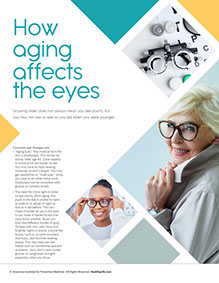
    Growing older does not always mean you see poorly. But you may not see as well as you did before. Common changes that affect your eyes are:

    *  “Aging Eyes.” The medical term for this is presbyopia (prez-bee-OH-pea-ah). This comes on slowly after age 40. Close objects or small print are harder to see. You may have to hold reading materials at arm’s length. You may get headaches or “tired eyes” while you read or do other close work. Presbyopia can be corrected with glasses or contact lenses.

    *  The need for more light in order to see clearly. With aging, the pupil in the eye is unable to open as wide or to adapt to light as fast as it did before. This can make it harder to see in the dark. It can make it harder to tell one color from another. Blues can look like different shades of gray. To help with this, add more and brighter lights in places around the house, such as at work counters, stairways, and favorite reading places. This may help you see better and can sometimes prevent accidents. Also, don’t wear tinted glasses or sunglasses at night, especially when you drive.

    Signs & Symptoms and What It Could Be

    Signs & Symptoms: Sudden loss of all or part of vision, especially in one eye with sudden weakness or numbness on one side.

    What It Could Be: Stroke

    What to Do: Get immediate care. Call 9-1-1.

    Signs & Symptoms: Vision loss after head or eye injury. Sudden vision loss or blurred vision, and seeing dark spots, or flashes of light all of a sudden.

    What It Could Be: Detached or torn retina.

    What to Do: Get immediate care.

    Signs & Symptoms: Severe pain in and above the eye. Eye redness, swollen upper eyelid. Dilated and fixed pupil. Very blurred vision, halos around lights.

    What It Could Be: Angle-closure glaucoma.

    What to Do: Get immediate care.

    Signs & Symptoms: Object or chemical in the eye.

    What It Could Be: Eye irritation or injury.

    See “Eye Irritations & Injuries” for more information.

    Signs & Symptoms: Gradual loss of side vision. Blurred vision. Halos around lights. Poor night vision.

    What It Could Be: Open-angle or chronic glaucoma.

    See “Glaucoma” for more information.

    Signs & Symptoms: Dark or blind spot in center of vision. Blurred or cloudy vision. Straight lines look wavy.

    What It Could Be: Macular degeneration.

    See “Macular Degeneration” for more information.

    Signs & Symptoms: Cloudy, fuzzy, foggy, or filmy vision. Halos around lights. Problems with glare from lamps or the sun.

    What It Could Be: Cataract.

    See “Cataracts” for more information.

    Signs & Symptoms: Pus discharge from the eye; the white of the eye and eyelid are red; crusting of the eyelid in the morning; feeling of sand in the eye

    What It Could Be: Conjunctivitis (“Pink Eye”).

    See “Conjunctivitis (Pink Eye)” for more information.

    Signs & Symptoms: Firm lump on eyelid or tender pimple on the edge of the eyelid.

    What It Could Be: Stye.

    See “Stye” for more information.

    Signs & Symptoms: Seeing spots, specks, wavy lines, or streaks of light.

    What It Could Be: Floaters and/or flashes.

    See “Floaters and/or flashes” for more information.

    Signs & Symptoms: Blurred vision when you look at close objects; headaches; eyestrain.

    What It Could Be: “Aging Eyes” or presbyopia.

    What to Do: Call eye doctor for an appointment and advice.
    Health at Home Lifetime book by the American Institute for Preventive Medicine. www.HealthyLife.com. All rights reserved.

    © American Institute for Preventive Medicine

  • How Aging Affects Memory

    Brain & Nervous System

    Image of 2 elderly male friends hugging.

    Many people are afraid that growing old means losing the ability to think, reason, or remember.

    Some short-term memory loss does come with aging. You may, for example, forget where you put your keys or not remember the name of a person you just met. This is normal. Memory lapses that interfere with your normal activities, though, are not a normal part of aging. Nor is confusion.

    People who have changes in personality, behavior, or skills may have a brain or nervous system condition. These problems could also be a side effect of certain medicines, too much alcohol, or depression. This chapter gives information on common brain and nervous conditions in older persons.

    Health at Home Lifetime book by the American Institute for Preventive Medicine. www.HealthyLife.com. All rights reserved.

    © American Institute for Preventive Medicine

  • Age Spots

    Skin Conditions

    Age spots are skin blemishes that come with aging. All age spots are generally harmless. They are more a cosmetic issue than a medical one. It is important, though, to distinguish them from skin cancer.

    Signs & Symptoms

    *  Small or large, flat, freckle-like marks that are different shades of brown (liver spots). These most often appear on the arms, backs of hands, back, face, or shoulders.

    *  Brown or yellow slightly raised spots (seborrheic warts)

    *  Red, pinpoint blemishes (cherry angiomas)

    Causes

    Aging skin is thinner and more sensitive to the sun’s rays. Small, dark patches appear in response.

    In general, age spots do not need medical treatment. A doctor can freeze an age spot with liquid nitrogen or remove it in a minor surgical procedure, if skin cancer is suspected.

    Prevention

    Reduce exposure to the sun. When you are outdoors, use a sunscreen with a sun protection factor (SPF) of 15 or higher.

    Self-Care

    To Help Make Age Spots Less Noticeable:

    *  Avoid sun exposure.

    *  Try a bleaching cream.

    *  Apply lemon juice twice a day to age spots.

    *  Dab buttermilk on spots and lightly pat dry.

    *  Use fresh aloe gel on spots. Do this twice a day for a month.

    *  Use a mild, moisturizing make-up.

    When to Seek Medical Care

    Contact Doctor When:

    *  You suspect the spots are skin cancer.

    *  An age spot bleeds, itches, or tingles.

    *  You have bothersome age spots that resist fading after using self-care.

    *  You want advice on removing age spots; on creams with the medicine Retin-A; or on chemical peels.

    Health at Home Lifetime book by the American Institute for Preventive Medicine. www.HealthyLife.com. All rights reserved.

    © American Institute for Preventive Medicine
  • Brace Yourself For Adult Orthodontics

    Dental & Mouth Concerns

    Image of adult women with braces.

    Each year, over four million people-many of them adults-are fitted for braces.  If you have any of the following dental problems, you may be a likely candidate for braces.

    *  Crowded or crooked teeth.

    *  Buckteeth, misaligned teeth, or lower teeth that protrude.

    *  Poor bite or wide spaces between teeth.

    It takes about two years for braces to realign teeth. In the meantime, you can avoid damage to the braces and decrease the risk of tooth decay and gum disease by practicing the following:

    *  Don’t chew gum.

    *  Don’t eat nuts or sticky candy or bite down hard on candy or ice.

    *  Don’t bite into whole apples, pears, or other crunchy fruit. Instead, cut them into bite-size pieces. Don’t eat corn from the cob.

    *  After eating, brush your teeth with a fluoride toothpaste. Some orthodontists also recommend cleaning your teeth with a water irrigation appliance after you brush.

    *  To guard against decay, rinse your mouth daily with a fluoride mouthwash.

    *  If sores develop in your mouth, or if your gums become red or swollen or bleed easily, contact your orthodontist for advice.

    *  If a wire from the braces becomes loose, don’t try to repair it yourself. See your orthodontist.

    A Year of Health Hints book by the American Institute for Preventive Medicine. www.HealthyLife.com. All rights reserved.

    © American Institute for Preventive Medicine

  • Acne For Children

    Children’s Health

    Acne is a skin condition. With acne you get pimples. The pimples can be white-heads, blackheads, or raised red ones that hurt. Acne can pop up on the shoulders, back, neck, and face. Acne mostly occurs in teenagers and young adults. Many people still have acne or acne scars when they are adults.

    Signs & Symptoms

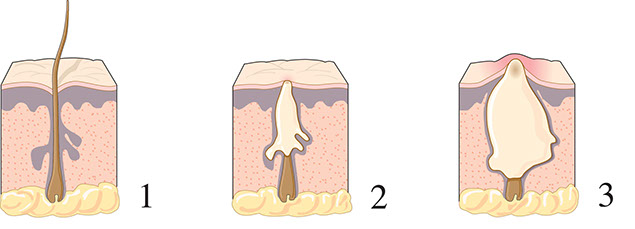
    You get acne when the glands under your skin make a certain kind of oil. The oil ducts get clogged and mix with bacteria on the skin. Then bumps pop up on the skin.

    Babies 2 to 4 weeks old can get a little acne from their mother’s hormones. These things help cause acne:

    *  Hormone changes in teenagers.

    *  A girl’s hormones before her period or when she is pregnant.

    *  Heavy lotions or greasy makeup.

    *  Stress.

    *  Vitamin pills that have iodine.

    *  Some medicines, such as steroids, and lithium.

    Causes

    Chocolate, nuts, greasy foods, and cola do not cause acne.

    Self-Care Tips treat mild acne. When this is not enough, your child’s doctor can prescribe special creams, lotions, gels, or liquids. Ask the doctor for advice. Don’t do anything special for a baby’s acne. Just wash the skin gently.

    For very bad acne, a doctor may prescribe a strong medicine, such as Accutane®. Know that this kind of medicine may lead to depression and even suicide. It can also cause birth defects.

    Questions to Ask

    Self-Care / Prevention

    *  Keep the skin clean. Wash often with plain soap and water. Use a washcloth. Work the soap into the skin gently for a minute or two. Rinse well. Don’t scrub.

    *  Have your child use a clean washcloth every day. Bacteria grow on a wet washcloth, and they can give your child more pimples.

    *  Have your child try an astringent lotion, degreasing pads, or a face scrub.

    *  Ask your child’s doctor for the name of a good acne soap.

    *  Leave your child’s skin alone! Tell your child not to squeeze, scratch, or poke at pimples. They can get infected and leave scars.

    *  Buy a lotion, cream, or soap that has benzoyl peroxide. Follow what the label states. (Some people are allergic to benzoyl peroxide. Try a little on your child’s arm first to make sure it doesn’t hurt the skin.)

    *  Have your child wash after he or she exercises and sweats.

    *  Have your child wash his or her hair at least every other day.

    *  Have your child use only water- based makeup. Don’t let him or her use greasy or oily creams, lotions, or makeups.

    *  Don’t let your child spend too much time in the sun.

    *  Don’t let your child use a sun lamp.

    Children's Self-Care book by the American Institute for Preventive Medicine. www.HealthyLife.com. All rights reserved.

    © American Institute for Preventive Medicine
  • Acne

    Skin Conditions

    Acne is a common skin condition. It occurs most often in teenagers and young adults, but can persist into adulthood.

    Signs & Symptoms

    *  Whiteheads and/or blackheads.

    *  Red and painful pimples.

    *  Deeper lumps (cysts or nodules).

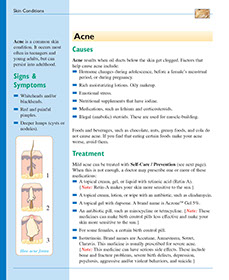
    How acne forms.

    Illustration of acne forming.

    Causes

    Foods and beverages, such as chocolate, nuts, greasy foods, and cola do not cause acne. If you find that eating certain foods make your acne worse, avoid them.

    Acne results when oil ducts below the skin get clogged. Factors that help cause acne include:

    *  Hormone changes during adolescence, before a female’s menstrual period, or during pregnancy.

    *  Rich moisturizing lotions. Oily makeup.

    *  Emotional stress.

    *  Nutritional supplements that have iodine.

    *  Medications, such as lithium and corticosteroids.

    *  Illegal (anabolic) steroids. These are used for muscle-building.

    Treatment

    Mild acne can be treated with Self-Care / Prevention. When this is not enough, a doctor may prescribe one or more of these 1 medications:

    *  A topical cream, gel, or liquid with retinoic acid (Retin-A). {Note: Retin-A makes your skin more sensitive to the sun.}

    *  A topical cream, lotion, or wipe with an antibiotic, such as clindamycin.

    *  A topical gel with dapsone. A brand name is AczoneTM Gel 5%.

    *  An antibiotic pill, such as minocycline or tetracycline. {Note: These medicines can make birth control pills less effective and make your skin more sensitive to the sun.}

    *  For some females, a certain birth control pill.

    *  Isotretinoin. Brand names are Accutane, Amnesteem, Sotret, Claravis. This medicine is usually prescribed for severe acne. {Note: This medicine can have serious side effects. These include bone and fracture problems, severe birth defects, depression, psychosis, aggressive and/or violent behaviors, and suicide.}

    Treatments Other Than Medications

    *  Chemical peels.

    *  Laser treatments.

    *  Surgery for acne scarring.

    Questions to Ask

    Self-Care / Prevention

    *  Keep your skin clean. Gently wash your skin, where the acne appears, twice a day. Use a mild soap, such as Neutrogena. Use a clean washcloth every time. Work the soap into your skin gently for 1 to 2 minutes and rinse well. Don’t scrub.

    *  Don’t squeeze, scratch, or poke at pimples. They can get infected and leave scars.

    *  Wash after you exercise or sweat.

    *  Use an over-the- counter lotion or cream that has benzoyl peroxide. (Some people are allergic to benzoyl peroxide. Try a little on your arm first to make sure it doesn’t hurt your skin.) Follow the directions as listed.

    *  Use only oil-free and water-based makeups. Don’t use greasy or oil-based creams, lotions, or makeups.

    *  For males, wrap a warm towel around your face before you shave. Shave along the natural grain of the beard.

    *  Don’t spend too much time in the sun especially if you take antibiotics for acne. Don’t use sun lamps.

    Resources

    American Academy of Dermatology

    866.503.SKIN (503.7546)

    www.aad.org

    National Institute of Arthritis and Musculoskeletal and Skin Diseases (NIAMS)

    www.niams.nih.gov

    Healthier at Home book by the American Institute for Preventive Medicine. www.HealthyLife.com. All rights reserved.

    © American Institute for Preventive Medicine
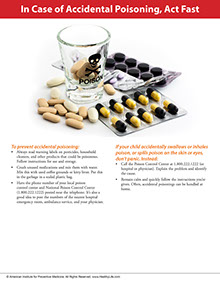
  • In Case Of Accidental Poisoning, Act Fast

    First Aid

    Image of skull and bones that represent poison.

    To prevent accidental poisoning:

    *  Always read warning labels on pesticides, household cleaners, and other products that could be poisonous. Follow instructions for use and storage.

    *  Crush unused medications and mix them with water. Mix this with used coffee grounds or kitty litter. Put this in the garbage in a sealed plastic bag.

    *  Have the phone number of your local poison control center and National Poison Control Center (1.800.222.1222) posted near the telephone. It’s also a good idea to post the numbers of the nearest hospital emergency room, ambulance service, and your physician.

    If your child accidentally swallows or inhales poison, or spills poison on the skin or eyes, don’t panic. Instead:

    *  Call the Poison Control Center at 1.800.222.1222 (or hospital or physician). Explain the problem and identify the cause.

    *  Remain calm and quickly follow the instructions you’re given. Often, accidental poisonings can be handled at home.

    A Year of Health Hints book by the American Institute for Preventive Medicine. www.HealthyLife.com. All rights reserved.

    © American Institute for Preventive Medicine
  • Abdominal Pain

    Abdominal & Urinary Conditions

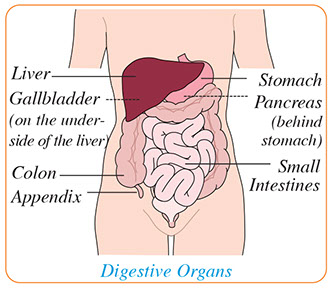
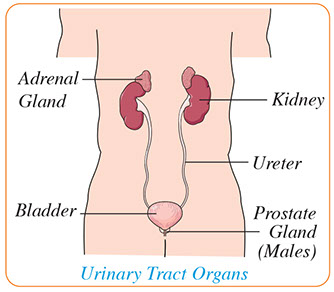
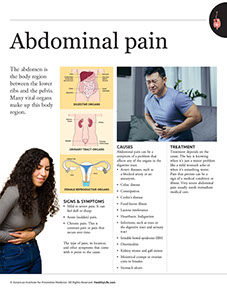
    The abdomen is the body region between the lower ribs and the pelvis. Many vital organs make up this body region.

    Signs & Symptoms

    The type of pain, its location, and other symptoms that come with it point to the cause.

    *  Mild to severe pain. It can feel dull or sharp.

    *  Acute (sudden) pain.

    *  Chronic pain. This is constant pain or pain that recurs over time.

    Illustration of digestive organs.
    Illustraion of urinary tract organs.
    Illustration of female reproductive organs.

    Causes

    Abdominal pain can be a symptom of a problem that affects any of the organs. Causes of abdominal pain include:

    *  Artery diseases, such as a blocked artery or an aneurysm.

    *  Celiac disease.

    *  Constipation.

    *  Crohn’s disease.

    *  Food poisoning.

    *  Gallstones.

    *  Heartburn. Indigestion.

    *  Infections, such as ones in the digestive tract and urinary tract.

    *  Irritable bowel syndrome (IBS).

    *  Kidney stones.

    *  Menstrual cramps or ovarian cysts in females.

    *  Reflux.

    *  Stomach ulcers.

    Treatment

    Treatment depends on the cause. The key is knowing when it’s just a minor problem like a mild stomach ache or when it’s something worse. Pain that persists can be a sign of a medical condition or illness. Very severe abdominal pain usually needs immediate medical care.

    Questions to Ask

    Self-Care / Prevention

    *  Find a comfortable position. Relax.

    *  Take an over-the-counter pain medicine as directed on the label.

    *  Apply a heating pad set on low (adults only).

    *  Don’t wear clothes that fit tight.

    *  Don’t exercise too hard.

    *  Use a hot water bottle on the area that aches.

    Crohn’s Disease

    Crohn’s Disease is a chronic problem that can cause abdominal pain and diarrhea. Other symptoms are fever, fatigue, and, at times, rectal bleeding or drainage. Symptoms occur when the disease flares up. This is followed by periods when symptoms go away or lessen.

    With Crohn’s disease, any part of the GI tract, from the mouth to the anus, can be inflamed. Usually, the colon and the last part of the small intestine, the ileum, are affected.

    Treatment for Crohn’s disease includes medicines, nutrition supplements, and surgery.

    Resources

    Crohn’s & Colitis Foundation of America

    www.ccfa.org

    Healthier at Home book by the American Institute for Preventive Medicine. www.HealthyLife.com. All rights reserved.

    © American Institute for Preventive Medicine
  • Abc’S Of Skin Care

    Skin Conditions

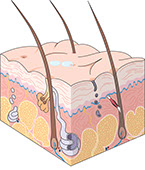
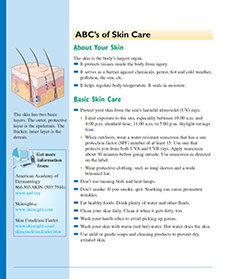
    The skin has two basic layers. The outer, protective layer is the epidermis. The thicker, inner layer is the dermis.

    Illustration of the skin.

    About Your Skin

    The skin is the body’s largest organ.

    *  It protects tissues inside the body from injury.

    *  It serves as a barrier against chemicals, germs, hot and cold weather, pollution, the sun, etc.

    *  It helps regulate body temperature. It seals in moisture.

    Basic Skin Care

    *  Protect your skin from the sun’s harmful ultraviolet (UV) rays.

    – Limit exposure to the sun, especially between 10:00 a.m. and 4:00 p.m. standard time; 11:00 a.m. to 5:00 p.m. daylight savings time.

    – When outdoors, wear a broad-spectrum sunscreen that has a sun protection factor (SPF) number of at least 15. Use one that protects you from both UVA and UVB rays. Apply sunscreen about 30 minutes before going outside. Use sunscreen as directed on the label.

    – Wear protective clothing, such as long sleeves and a wide brimmed hat.

    *  Don’t use tanning beds and heat lamps.

    *  Don’t smoke. If you smoke, quit. Smoking can cause premature wrinkles.

    *  Eat healthy foods. Drink plenty of water and other fluids.

    *  Clean your skin daily. Clean it when it gets dirty, too.

    *  Wash your hands often to avoid picking up germs.

    *  Wash your skin with warm (not hot) water. Hot water dries the skin.

    *  Use mild or gentle soaps and cleaning products to prevent dry, irritated skin.

    *  Moisturize your skin daily and/or when it is dry. Dry, cracked skin lets harmful germs and other irritants in. Use moisturizers that don’t have alcohol.

    *  Protect your skin from the wind and cold weather. Wear gloves, a hat, a scarf, etc.

    *  Protect your skin from injury. Wear gloves when you garden, work with chemicals, etc. When shaving, soften the beard with a warm washcloth. Use plenty of shaving cream. With a sharp blade, shave in the direction of hair growth. Using a back and forth motion causes skin irritation.

    *  Avoid items that cause allergic reactions and/or irritate the skin.

    Cosmetic Safety

    With so many products to choose from, how do you know which ones are safe to use? How do you know if they give the results they promote?

    *  If you have skin concerns or problems, consult your primary care doctor or a dermatologist.

    *  Before using a cosmetic, read the label. The label must give directions for safe use and/or warning statements. Heed the warnings. For example, products with an alpha hydroxy acid (AHA) may list the following on the label: “Sunburn alert: This product contains an alpha hydroxy acid (AHA) that may increase your skin’s sensitivity to the sun and the possibility of sunburn. Use a sunscreen and limit sun exposure while using this product and for a week afterwards.”

    *  Follow directions on the label.

    *  Test a small amount of a new product on your skin to find out how your skin reacts to it.

    *  When sampling a cosmetic at a store’s cosmetic counter, test it with a new, unused cotton swab.

    *  Keep make-up containers tightly closed when not in use.

    *  Throw away any cosmetic that has developed an odor or changed color.

    *  If you have an eye infection, such as pink eye, don’t use eye cosmetics. Throw away the ones you were using when you first noticed the infection.

    *  Use products for your skin type (dry, normal, oily, or sensitive, etc.). If you have dry skin, don’t use astringents and products with alcohol. They take moisture away from the skin.

    Resources

    American Academy of Dermatology

    866.503.SKIN (503.7546)

    www.aad.org

    Skinsight

    www.skinsight.com

    Skin Condition Finder

    www.skinsight.com

    Healthier at Home book by the American Institute for Preventive Medicine. www.HealthyLife.com. All rights reserved.

    © American Institute for Preventive Medicine