Blog

  • Strengthen Your Home Team

    SleepWell® Program

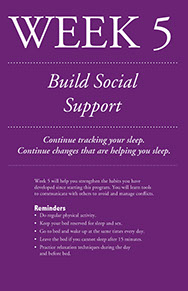
    Week 5

    Image of sitting together laughing.

    Discuss your sleep needs with people you live with. They need to understand your schedule and what you are doing to improve your sleep.

    *  Post a calendar with your work schedule.

    *  Include your sleeping hours on the calendar.

    *  Share what you have learned about creating a healthy sleep environment.

    *  Share what you have learned about why sleep is important.

    *  Explain why you are making changes to your routines.

    *  Agree upon a plan for noise and light levels in the house during your sleep hours (especially if you are sleeping during daylight hours).

    *  Ask for help if you need it to do household chores like cleaning, grocery shopping, and getting kids ready for school. Agree upon tasks and post a schedule where everyone can see it.

    *  Schedule deliveries, repairs, and appointments during times you plan on being awake.

    Plan ahead as much as possible. Write out a plan that includes your schedule and the schedule of those in your household. This will help you see if and when you need help and give you time to plan for it. Planning ahead can help reduce anxiety and last-minute scrambling to cover tasks.

    © American Institute for Preventive Medicine

  • Stop Hitting The Snooze!

    SleepWell® Program

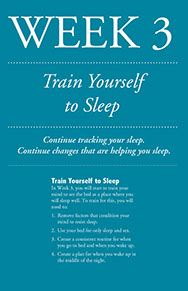
    Week 3

    Image of vintage alarm clock.

    Hitting Snooze Hurts Sleep

    Your body prepares to wake up before your alarm goes off. Hormones that make you feel alert increase in the body. When you first wake up you may still feel groggy and hit the snooze button. Confused, your body releases sleep-promoting hormones. Getting out of bed becomes harder and you may feel worse when you do get out of bed.

    Tips for Avoiding the Snooze Trap

    Set only one alarm. If you know you have a back-up alarm set, it is tempting to go back to sleep.

    Keep your alarm clock or cell phone alarm well out of arm’s reach. Make it necessary to stand up and cross the room in order to turn off the alarm.

    Relaxing for up to five minutes after you wake is okay, but get out of bed within five minutes. Think about what you are going to do first when you wake up-go to the bathroom, start making coffee, take a shower, stretch, etc.

    © American Institute for Preventive Medicine

  • Stimulus Control

    SleepWell® Program

    Week 3

    Image of women awake in bed.

    Your mind is very powerful. How you link things affects how you behave in a particular situation. When you walk into a dark room, you probably look for a light switch. When you always watch TV in bed a lot, you probably reach for the remote as soon as you go to bed. Habits and routines get stronger as you repeat them.

    You are not locked in to these patterns. You can train your brain to respond to cues in a different way. Stimulus control is part of cognitive-behavioral therapy, an effective and well-researched sleep enhancement strategy.

    Be patient with yourself. It may take several weeks of repeating a new routine for it to seem normal.

    What’s On Your Mind?

    Walk into your bedroom. What are you thinking about? How do you feel? Are you worried about another sleepless night? Are you thinking about everything that needs to be done tomorrow? Are you remembering an angry discussion that happened in this room last month?

    Removing the link between your bedroom and negative, unpleasant thoughts takes time.

    Associate Your Bed with Sleep

    *  Limit your bedroom activities to sleep and sex. While sex is stimulating for most people, it may help you sleep as well. This is the only activity other than sleep that should be allowed in your bed.

    *  Complete work and pay bills in another room. Don’t use the bedroom as a home office.

    *  If you can’t avoid working in the bedroom:

    – Don’t sit on the bed while you work.

    – Sit in a chair facing away from the bed.

    – Put all work materials away or cover them so you can’t see them at bedtime.

    *  Have difficult conversations in another room.

    *  If possible, have your partner give you a massage or back rub. Take deep breaths and clear your mind.

    © American Institute for Preventive Medicine

  • Sleep Well, Be Well

    Sleep Well

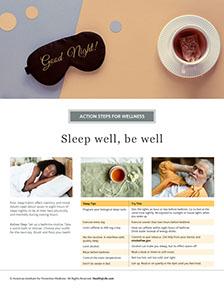
    A cup of tea and an eye mask with the word "Good Night!"

    Poor sleep habits affect memory and mood. Adults need about seven to eight hours of sleep nightly to be at their best physically and mentally during waking hours.

    Action Step: Set up a bedtime routine. Take a warm bath or shower. Choose your outfit for the next day. Brush and floss your teeth.

    © American Institute for Preventive Medicine

  • Sleep Tips

    Sleep Well

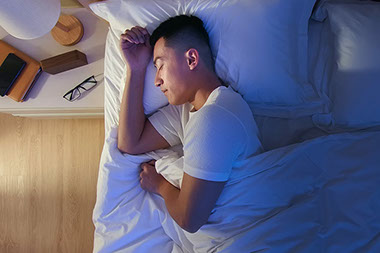
    Man sleeping.

    Nothing makes you feel better than a good night’s sleep.

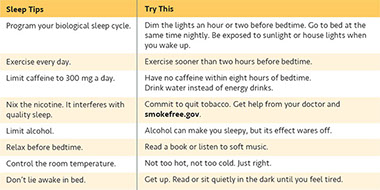
    *  Do physical exercise daily.

    *  Follow a regular daily schedule for meals and snacks.

    *  Don’t have more than 1 alcoholic drink with or after dinner. Avoid large meals near bedtime.

    *  Plan to wake up about the same time everyday. Avoid long naps during the day.

    *  Get sunlight everyday, especially in the afternoon.

    *  Dim the lights in the house an hour or two before going to bed.

    *  Follow a bedtime routine. Keep your bedroom dark, quiet, and comfortable.

    *  Limit caffeine. Do not have any for 6 hours before bedtime.

    © American Institute for Preventive Medicine

  • Why Sleep Enhancement Is Important

    SleepWell® Program

    Week 1

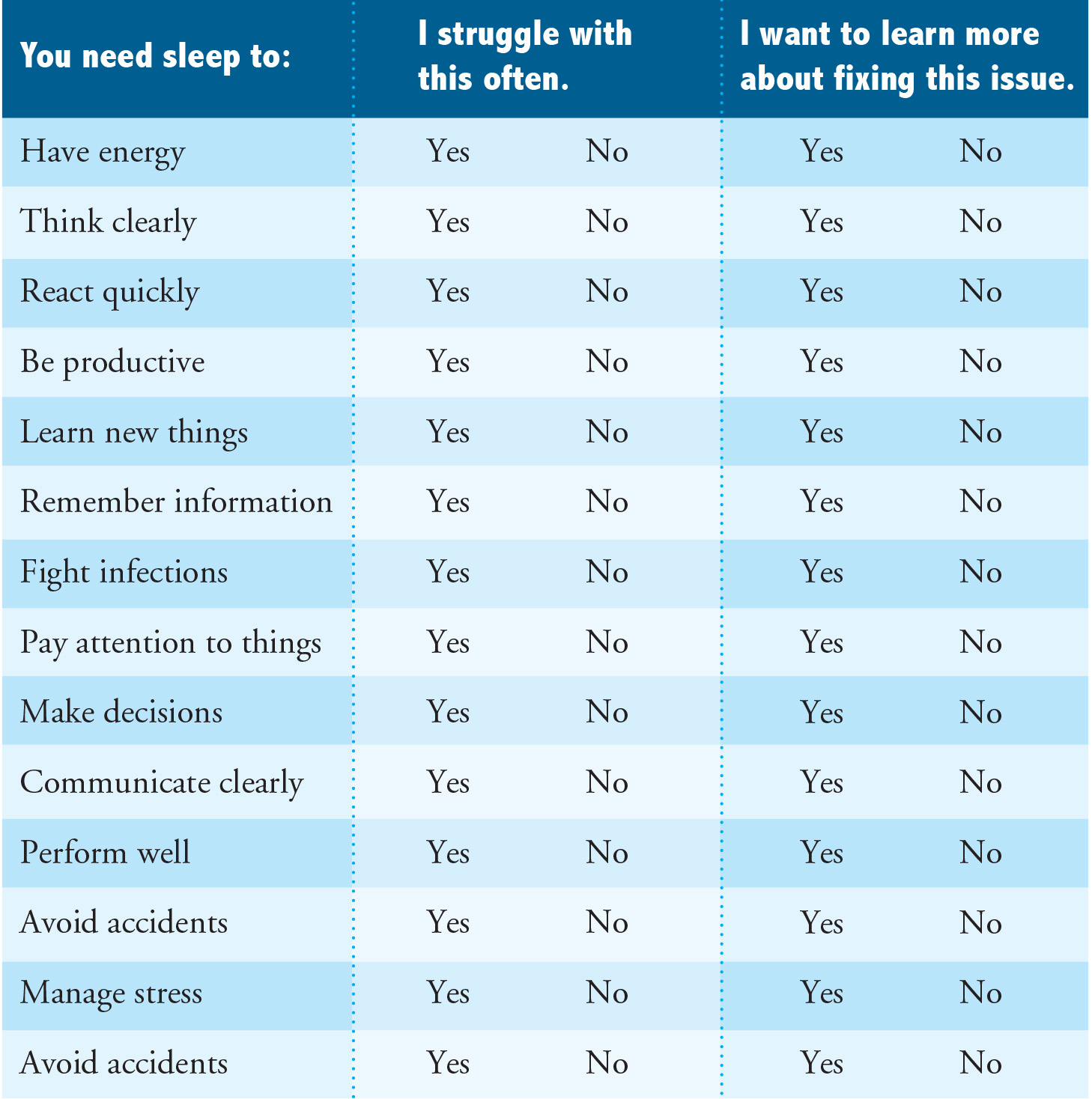
    Getting enough sleep helps you maintain good health and function your best during the day. Click on the image below to download your sleep enhancement questionnaire.

    Image of the SleepWell Tracker.

    © American Institute for Preventive Medicine

  • Sleep Disorders & Snoring 2

    Sleep Well

    Not getting enough sleep can cause you to be sleepy during the day. It can make you less able to function. Snoring and sleep disorders can cause these problems, too.

    Insomnia

    Signs & Symptoms

    *  Having trouble falling asleep. Waking up in the middle of the night. Waking up too early and not being able to get back to sleep.

    *  Feeling like you didn’t get enough sleep.

    Causes

    *  Too much caffeine. Drinking alcohol and/or smoking before bedtime.

    *  Too much noise when falling asleep.

    *  Emotional stress. Depression. Anxiety. The manic phase of bipolar disorder.

    *  Fibromyalgia.

    *  Over active thyroid gland.

    *  Any condition, illness, injury, or surgery that causes enough pain or discomfort to interrupt sleep. Heart or lung conditions that cause shortness of breath when lying down. Side effects of some medicines, such as over-the-counter diet pills or decongestants.

    *  Changes in sleep/wake schedules, such as with work shift changes and jet lag.

    *  In children, nightmares or bed-wetting.

    Treatment

    *  Self-care and prevention tips.

    *  Treating the problem.

    *  Prescribed short-acting sleeping pills.

    Self-Care / Prevention

    *  Avoid caffeine for 8 hours before bedtime.

    *  Avoid long naps during the day.

    *  Have no more than 1 alcoholic drink with or after dinner.

    *  Avoid using electronic devices, such as a laptop computer before falling asleep and in the middle of the night. The type of light that emits from these devices makes it hard to fall asleep.

    *  Avoid nicotine. Don’t smoke. Stay away from secondhand smoke.

    *  Get regular exercise, but not within a few hours of going to bed.

    *  Before bedtime, take a warm bath or read a book, etc. Avoid things that hold your attention, such as watching a suspense movie.

    *  Keep your bedroom quiet, dark, and comfortable.

    *  Follow a bedtime routine. Lock or check doors and windows, brush your teeth, etc.

    *  Count sheep! Picture a repeated image. Doing this may bore you to sleep.

    *  Listen to recordings that help promote sleep.

    *  Take over-the- counter sleep aids, (e.g., melatonin, Tylenol PM, etc.) as advised by your doctor. Don’t take anyone else’s sleeping pills.

    *  If you wake up and can’t get back to sleep or can’t fall asleep, after 30 minutes, get out of bed. Read a relaxing book or sit quietly in the dark. In about 20 minutes, go back to bed. Do this as many times as needed.

    Restless Leg Syndrome (RLS) and Periodic Limb Movements in Sleep (PLMS)

    Signs & Symptoms

    *  Creeping, crawling, pulling and/or painful feelings in one or both legs.

    *  Jerking or bending leg movements that you can’t control during sleep.

    Causes

    The cause is not known. These factors play a role:

    *  Family history of RLS.

    *  The last months of a pregnancy.

    *  Chronic diseases, such as kidney failure, diabetes, and rheumatoid arthritis.

    Treatment

    *  Self-care and prevention tips.

    *  Prescribed medicines to control symptoms.

    *  A type of electric nerve stimulation.

    Self-Care / Prevention

    *  Take medications as prescribed. Let your doctor know if the medicine no longer helps.

    *  For relief, move the legs. Walk, rub, or massage them or do knee bends.

    *  Limit or avoid caffeine.

    *  Take a warm bath before bedtime.

    Sleep Apnea

    Signs & Symptoms

    *  Loud snoring and snorting sounds while sleeping on the back.

    *  Repeated periods when breathing stops 10 or more seconds during sleep.

    *  Waking up many times during the night. Excessive daytime sleepiness.

    *  Exhaustion. Hard time concentrating. Acting very cranky. Depression or other mental changes.

    *  Early morning headaches.

    Causes

    *  Too much muscle tissue is in the airway or the tissue relaxes and sags. These things narrow or block the airway. Persons who snore loudly and are overweight are more prone to these problems.

    *  A physical problem in the nose or upper airway.

    Treatment

    The goal is to keep the airway open during sleep. This is done with self-care measures and one of these treatments:

    *  A mouth guard dental device custom made by a dentist. This is worn during sleep. It pushes the lower jaw forward to open the air passage behind the tongue.

    *  A nasal continuous positive airway pressure (CPAP) device. Pressure from an air blower forces air through the nasal passages using a mask worn over the nose during sleep.

    *  Surgery to correct the cause of the airway obstruction.

    Self-Care / Prevention

    *  Lose weight, if you are overweight.

    *  Don’t drink alcohol. Don’t use tobacco products.

    *  Don’t take sleeping pills or sedatives.

    *  Use methods, such as those listed under Self-Care / Prevention – For Snoring to keep from sleeping on your back.

    Snoring

    Signs & Symptoms

    *  Loud sounds. Harsh breathing. Snorting sounds. These occur during sleep.

    Causes

    *  Sleeping on the back. The tongue falls back toward the throat and partly closes the airway.

    *  Nasal congestion from allergies or colds. Smoking. Drinking alcohol. Taking sedatives. Overeating (especially before bedtime).

    *  Sleep apnea or chronic respiratory disease.

    *  An obstructed airway. This can be due to enlarged tonsils or being overweight.

    *  Changes in hormones, such as during menopause or the last month of pregnancy.

    Treatment

    Self-care treats most cases. Other options are:

    *  Wearing a dental device that holds the jaw in a forward position.

    *  Surgery, if needed, to correct the problem.

    *  Treatment for sleep apnea, if needed.

    Self-Care / Prevention

    *  Sleep on your side. Prop an extra pillow behind your back so you won’t roll over. Sleep on a narrow sofa for a few nights to get used to staying on your side.

    *  Sew a large marble or tennis ball into a pocket on the back of your pajamas. This can help you stay on your side when you sleep.

    *  If you must sleep on your back, raise the head of the bed 6 inches on bricks or blocks. Or buy a wedge that is made to be placed between the mattress and box spring to elevate the head section.

    *  Lose weight, if you are overweight. Excess fatty tissue in the throat can cause snoring. Losing 10% of your body weight will help.

    *  Don’t smoke. If you do, quit. Limit or don’t have alcohol, sedatives, or a heavy meal within 3 hours of bedtime.

    *  To relieve nasal congestion, try a decongestant before you go to bed.

    *  Get rid of allergens in the bedroom. These include dust, down-filled (feathered) pillows, and down-filled bed linen.

    *  Try over-the-counter “nasal strips.” These keep the nostrils open and lift them up. This helps lessen congestion in nasal passages.

    Questions to Ask

    How Much Sleep is Needed?

    *  Adults need between 7 and 9 hours of sleep each night.

    *  Teens need at least 8-1/2 to 9-1/4 hours of sleep each night.

    *  After 6 months of age, most children sleep between 9 and 12 hours at night. Up to age 5, children may also take daytime naps for a total of 1/2 to 2 hours a day.

    Resources

    National Center on Sleep Disorders Research (NCSDR)

    301.435.0199

    www.nhlbi.nih.gov/about/ncsdr

    National Sleep Foundation

    703.243.1697

    www.sleepfoundation.org

    Healthier at Home book by the American Institute for Preventive Medicine. www.HealthyLife.com. All rights reserved.

    © American Institute for Preventive Medicine

  • Sleep Apnea

    Sleep Well

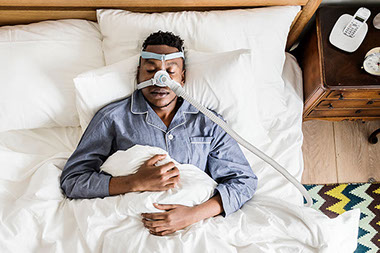
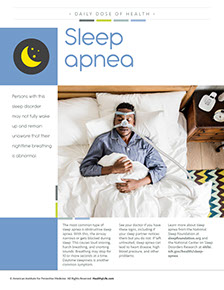
    Man wearing a CPAP machine while sleeping.

    Persons with this sleep disorder may not fully wake up and remain unaware that their nighttime breathing is abnormal.

    The most common type of sleep apnea is obstructive sleep apnea. With this, the airway narrows or gets blocked during sleep. This causes loud snoring, harsh breathing, and snorting sounds. Breathing may stop for 10 or more seconds at a time. Daytime sleepiness is another common symptom.

    See your doctor if you have these signs, including if your sleep partner notices them but you do not. If left untreated, sleep apnea can lead to heart disease, high blood pressure, and other problems.

    Learn more about sleep apnea from the National Sleep Foundation atsleepfoundation.organd the National Center on Sleep Disorders Research atnhlbi.nih.gov/health/sleep-apnea.

    © American Institute for Preventive Medicine

  • Show You Care

    SleepWell® Program

    Week 5

    Image of family enjoying dinner together in the backyard.

    Plan blocks of time to be with family and friends. Plan moments of closeness with your partner and/or children.

    *  Eat meals together.

    *  Do physical activities together. Walk after dinner. Go to a park as a couple or as a family.

    *  Play board games together.

    *  Let your kids know about your job and what you do. Ask them about their day and their interests.

    *  Help your kids with their homework. Tuck them into bed.

    Stay Connected in the “Real World”

    Connect with people in person, by phone, video/web-chat, or other interactive methods. These conversations can be more meaningful and fulfilling than text messages. Texting can be used to ask short questions or to relay simple information. But, texting isn’t talking and does not reveal body language, tone of voice, or emotions very well. Conversations through texts or emails can be misinterpreted. This can cause anxiety, confusion, and loneliness.

    *  Have important conversations in person or over the phone.

    *  Show affection with your voice and physical actions.

    *  Use texts for short information (e.g. confirm that your child is home from school or let your partner know you need something from the store).

    Reflect & Review

    *  Two ways I plan to strengthen my home team.

    *  People who know that I am trying to improve my sleep and ways they support my change.

    © American Institute for Preventive Medicine

  • Be Mindful Of…Setting Up For Sleep

    Sleep Well

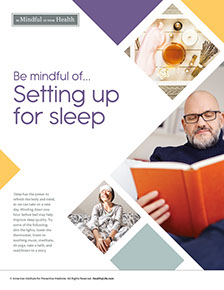
    Man reading a book.

    Sleep has the power to refresh the body and mind, so we can take on a new day. Winding down one hour before bed may help improve sleep quality.

    Try some of the following:

    *  Dim the lights

    *  Lower the thermostat

    *  Listen to soothing music

    *  Meditate

    *  Do yoga

    *  Take a bath

    *  Read/listen to a story

    © American Institute for Preventive Medicine