Blog

  • Wise Food Choices When You’re Pressed For Time

    Nutrition

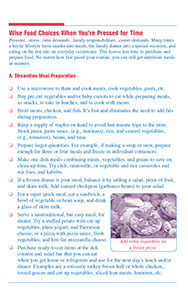
    Pressure…stress…time demands…family responsibilities…career demands. Many times a hectic lifestyle turns snacks into meals, the family dinner into a special occasion, and eating on the run into an everyday occurrence. This leaves less time to purchase and prepare food. No matter how fast paced your routine, you can still get nutritious meals in minutes.

    Streamline Meal Preparation

    *  Use a microwave to thaw and cook meats, cook vegetables, pasta, etc.

    *  Buy pre-cut vegetables and/or baby carrots to eat while preparing meals, as snacks, to take in lunches, and to cook with meats.

    *  Broil meats, chicken, and fish. It’s fast and eliminates the need to add fats during preparation.

    *  Keep a supply of staples on hand to avoid last minute trips to the store. Stock pasta, pasta sauce, (e.g., marinara), rice, and canned vegetables, (e.g., tomatoes), beans, and tuna.

    *  Prepare larger quantities. For example, if making a soup or stew, prepare enough for three or four meals and freeze in individual containers.

    *  Make one dish meals combining meats, vegetables, and grains to save on clean-up time. Try chili, ratatouille, or vegetable and rice casseroles and stir fries, and kabobs.

    *  If a frozen dinner is your meal, balance it by adding a salad, piece of fruit, and skim milk. Add canned chickpeas (garbanzo beans) to your salad.

    *  For a super quick meal, eat a sandwich, a bowl of vegetable or bean soup, and drink a glass of skim milk.

    *  Serve a nontraditional, but easy meal, for dinner. Try a stuffed potato with cut-up vegetables, plain yogurt, and Parmesan cheese, or a pizza with pizza sauce, fresh vegetables, and low-fat mozzarella cheese.

    *  Purchase ready-to-eat items at the deli counter and salad bar that you can eat when you get home or refrigerate and use for the next day’s lunch and/or dinner. Examples are a rotisserie turkey breast half or whole chicken, tossed greens and cut-up vegetables, sliced lean meats, hummus, etc.

    Choose Healthy Snacks

    *  Stock your kitchen with quick snack foods that are nutrient dense, such as low-fat yogurt, fresh fruit, cut-up vegetables, dry cereal, bagels, and whole grain crackers.

    *  Practice smart snacking with convenience foods that offer both taste and nutrition. It takes only seconds to pour a glass of milk, open a box of cereal, or wash a piece of fresh fruit.

    *  Practice moderation in your snack choices. Substitute fruit, yogurt, and plain popcorn for high-calorie snacks like chips and cookies. Pass on fat-free crackers and desserts. These may be lower in fat than regular varieties, but still have about the same number of calories.

    *  Prepare healthy snacks, such as muffins, mixed fruit, or a fresh vegetable dip with pita wedges.

    On the Go

    Image of a man with one hand on his laptop computer and the other holding a fork about to take a bite of his healthy salad.

    *  Make an effort to include fruits and vegetables. Order skim milk with your meal.

    *  Pack a piece of fruit in your briefcase or purse for an afternoon snack or keep dried fruit in your desk drawer for an instant high fiber snack.

    *  Take along individually portioned juices, raw vegetables, low-fat cheese or peanut butter, and whole grain crackers.

    *  Opt for bottled water instead of sweetened soft drinks.

    *  At the vending machine, choose low-fat options like pretzels, plain popcorn, oatmeal raisin cookies, gingersnaps, vanilla wafers, or low-fat yogurt.

    *  When you go out for breakfast, try cereal with skim milk, waffles or pancakes with fresh fruit toppings, a bagel, or toast with fruit or juice.

    *  At the fast food restaurant, opt for grilled chicken, fish, or lean meat entrees. Choose a salad, baked potato, or bean chili, going light on the toppings.

    *  Order healthy “carry out” choices, such as grilled chicken, stir-fried dishes with rice (not fried noodles), pizza with a lot of vegetables and half the cheese, etc.

    Page from HealthyLife Weigh book by the American Institute for Preventive Medicine. www.HealthyLife.com. All rights reserved.

    © American Institute for Preventive Medicine

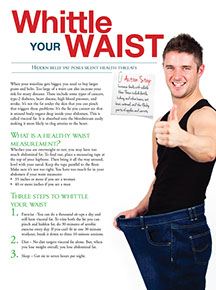
  • Whittle Your Waist

    Weight Control

    Hidden belly fat poses silent health threats.

    When your waistline gets bigger, you need to buy larger pants and belts. Too large of a waist can also increase your risk for many diseases. These include some types of cancers, type-2 diabetes, heart disease, high blood pressure, and stroke. It’s not the fat under the skin that you can pinch that triggers these problems. It’s the fat you cannot see that is around body organs deep inside your abdomen. This is called visceral fat. It is absorbed into the bloodstream easily making it more likely to clog arteries to the heart.

    What is a healthy waist measurement?

    Whether you are overweight or not, you may have too much abdominal fat. To find out, place a measuring tape at the top of your hipbone. Then bring it all the way around, level with your naval. Keep the tape parallel to the floor. Make sure it’s not too tight. You have too much fat in your abdomen if your waist measures:

    *  35 inches or more if you are a woman

    *  40 or more inches if you are a man

    Three steps to whittle your waist:

    1.  Exercise −You can do a thousand sit-ups a day and still have visceral fat. To trim both the fat you can pinch and hidden fat, do 30 minutes of aerobic exercise every day. If you can’t fit in one 30 minute workout, break it down to three 10-minute sessions.

    2.  Diet − No diet targets visceral fat alone. But, when you lose weight overall, you lose abdominal fat.

    3.  Sleep – Get six to seven hours per night.

    Action Step

    Increase foods with soluble fiber. These include lentils, kidney and other beans, oat bran, oatmeal, and the fleshy parts of apples and carrots.

    Page from Ways to Well-Being book by the American Institute for Preventive Medicine. www.HealthyLife.com. All rights reserved.

    © American Institute for Preventive Medicine

  • When To Eat If You’re Going To Exercise

    Fitness

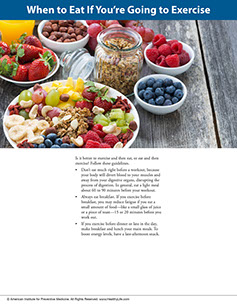
    Is it better to exercise and then eat, or eat and then exercise? Follow these guidelines.

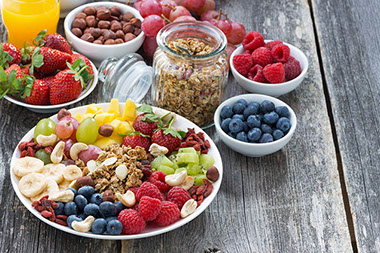
    Image of varity of fruits and nuts ready to eat.

    *  Don’t eat much right before a workout, because your body will divert blood to your muscles and away from your digestive organs, disrupting the process of digestion. In general, eat a light meal about 60 to 90 minutes before your workout.

    *  Always eat breakfast. If you exercise before breakfast, you may reduce fatigue if you eat a small amount of food-like a small glass of juice or a piece of toast-15 or 20 minutes before you work out.

    *  If you exercise before dinner or late in the day, make breakfast and lunch your main meals. To boost energy levels, have a late-afternoon snack.

    Page image from A Year of Health Hints book by the American Institute for Preventive Medicine. www.HealthyLife.com. All rights reserved.

    © American Institute for Preventive Medicine

  • What To Know About Irradiated Food

    Nutrition

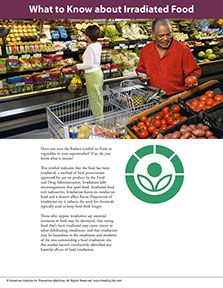
    Have you seen the Radura symbol on fruits or vegetables in your supermarket? If so, do you know what it means?

    This symbol indicates that the food has been irradiated, a method of food preservation approved for use on produce by the Food and Drug Administration. Irradiation kills microorganisms that spoil food. Irradiated food isn’t radioactive. Irradiation leaves no residue on food and it doesn’t affect flavor. Proponents of irradiation say it reduces the need for chemicals typically used to keep food fresh longer.

    Those who oppose irradiation say essential nutrients in food may be destroyed, that eating food that’s been irradiated may cause cancer or other debilitating conditions, and that irradiation may be hazardous to the employees and residents of the area surrounding a food irradiation site. But studies haven’t conclusively identified any harmful effects of food irradiation.

    Page from A Year of Health Hints book by the American Institute for Preventive Medicine. www.HealthyLife.com. All rights reserved.

    © American Institute for Preventive Medicine

  • What To Do If Turista Strikes

    Healthy Travel

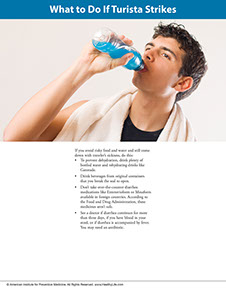
    Image of man rehydrating with liquids.

    If you avoid risky food and water and still come down with traveler’s sickness, do this:

    *  To prevent dehydration, drink plenty of bottled water and rehydrating drinks like Gatorade.

    *  Drink beverages from original containers that you break the seal to open.

    *  Don’t take over-the-counter diarrhea medications like Enterovioform or Mesaform available in foreign countries. According to the Food and Drug Administration, these medicines aren’t safe.

    *  See a doctor if diarrhea continues for more than three days, if you have blood in your stool, or if diarrhea is accompanied by fever. You may need an antibiotic.

    Page image from A Year of Health Hints book by the American Institute for Preventive Medicine. www.HealthyLife.com. All rights reserved.

    © American Institute for Preventive Medicine

  • What Is Your Ear-Q?

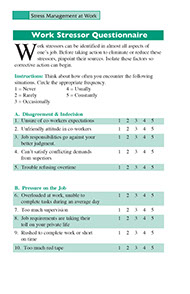
    Systematic Stress Management Program

    Step 7: Communication & Stress Section

    Introduction

    What is Your Ear-Q?

    Ten Blocks to Effective Listening

    Listening Blocks in My Life

    Skills for Active Listening

    Improving Your Ear-Q

    Assertiveness

    Assertiveness Inventory

    Assertiveness with Other People

    The Benefits of Assertiveness

    Assertiveness Training – The L.A.D.D.E.R. Technique

    My Practice L.A.D.D.E.R.

    Just like measuring an I.Q. (Intelligence Quotient), you can also learn about your Ear-Q. How well do you rate as a listener? Do the key people in your life listen well? Review each question below and fill in your responses. People frequently overrate themselves as listeners. You may also find your listening skills are sharper with certain people, such as bosses or best friends.

    1. On a scale of 1 – 100, how would you rate yourself as a listener?

    What listening characteristics do you have that made you decide on the above rating?

    2. On a scale of 1 – 100, how would these people rate you as a listener?

    *  Supervisor

    *  Siblings

    *  Co-worker

    *  Spouse

    *  Employee

    *  Children

    *  Parents

    *  Best friend

    3. Name a person who is a good listener.

    What makes this person a good listener?

    Page from the Systematic Stress Management book by the American Institute for Preventive Medicine. www.HealthyLife.com. All rights reserved.

    © American Institute for Preventive Medicine

    Step 1: Understanding Stress

    Step 3: Type A & B Behavior Patterns

    Step 5: Thinking Differently

    Step 7: Communication & Stress

    Step 2: Stress Management at Work

    Step 4: Biofeedback Training & Relaxation

    Step 6: Time Management

    Steps to Systematic Stress Management™

    RELATED ARTICLES

    © American Institute for Preventive Medicine  –  All Rights Reserved.Disclaimer|www.HealthyLife.com
  • Cholesterol Basics

    Nutrition

    Cholesterol is a waxy, fat-like substance. It occurs naturally in the body. It helps carry fat through your blood vessels.

    What is Cholesterol?

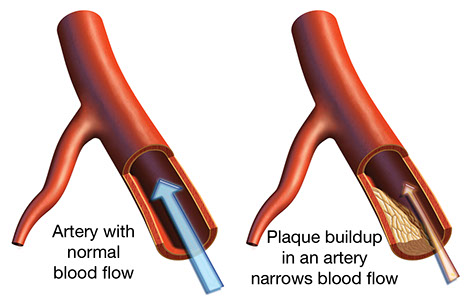
    Image of an artery with normal blood flow and another with plaque buildup.

    Your body also needs cholesterol to:

    *  Make cell walls

    *  Make vitamin D and some hormones

    *  Give structure to the covering (myelin) that protects nerve fibers

    *  Make bile. This helps your body digest fat.

    Your body only needs a small amount of cholesterol in your blood to meet these needs.

    Too much cholesterol in your blood can collect with other fats and calcium to make plaque. This can clog the walls of the arteries and slow down or block blood flow to the heart or brain. The higher your blood cholesterol, the greater your chance of this buildup.

    Where Does Cholesterol Come From?

    *  Cholesterol the body makes (mostly in the liver)

    *  Cholesterol in animal foods (dietary cholesterol)

    Plants do not have cholesterol. Some plant foods have saturated and trans fat (hydrogenated oils) which raise blood cholesterol.

    Cholesterol Test

    A “lipoprotein profile” blood test checks your blood cholesterol (lipid) numbers. For accurate results, do not eat or drink anything, except water, for 9-12 hours before the test. A non-fasting test can screen for total and HDL-cholesterol levels.

    Who should get a blood cholesterol test?

    *  All men age 35 and older

    *  Men ages 20-35 and women age 45 and older who are at an increased risk for coronary artery disease

    *  Persons with diabetes and/or heart disease

    Get tested as often as advised by your doctor.

    What Should Your Cholesterol Numbers Be?

    For cholesterol to travel through blood, it is coated with a protein. This makes a “lipoprotein.” Total blood cholesterol is made up of these lipoproteins:

    *  LDL (low density lipoprotein) cholesterol

    *  HDL (high density lipoprotein) cholesterol

    *  VLDL (very low density lipoprotein) cholesterol.

    *Note: Your doctor will discuss and prescribe treatment and medication based on your target blood cholesterol numbers, plus other risk factors:

    *  Your age and health conditions, such as diabetes and cardiovascular disease (CVD)

    *  Your LDL-cholesterol and 10-year risk for CVD

    *  A family history of premature CVD

    *  Other CVD risk factors

    Heart Disease Risk Factors

    Remember, blood cholesterol is only one risk factor for cardiovascular disease. Others are include:

    *  You have had a heart attack or stroke.

    *  Cigarette smoking. Secondhand smoke.

    *  High blood pressure

    *  High LDL-cholesterol level

    *  Diabetes or insulin resistance

    *  Being overweight or obese.

    *  Lack of exercise.

    *  Sleep apnea.

    *  Being male 45 years+ or female 55 years+

    *  Heart disease in a father or brother before age 55; in a mother or sister before age 65

    *  Kidney disease

    *  Excess alcohol

    *  Stress, often with anger, can trigger a heart attack.

    *  Metabolic syndrome.

    – Waist size ≥ 40 inches for men; ≥ 35 inches for women

    – Blood pressure ≥ 130 mm Hg systolic and/or ≥ 85 mm Hg diastotic or you take medicine to lower blood pressure

    – A fasting blood sugar ≥ 100 mg/dL or you have diabetes

    – Triglycerides ≥ 150 mg/dL

    – HDL-cholesterol < 40 mg/dL for men; < 50 mg/dL for women.

    Eat Healthy

    *  Choose foods low in saturated fat and with zero trans fat. These raise LDL (bad) cholesterol in the blood more than anything else in the diet. Read food labels. Trans fats are in foods that have hydrogenated oils.

    *  Eat foods with plant sterols and stanols, such as margarines and salad dressings made with these.

    *  Choose monounsaturated and polyunsaturated fats.

    *  Limit meat serving sizes. Choose lean cuts of beef, pork and lamb. Trim fat from meat. Choose chicken and turkey. Take the skin off poultry before you eat it.

    *  Eat fish 2 to 3 times a week (e.g., salmon). Fish has omega-3 fatty acids, a healthy unsaturated fat. So does cod liver oil. Ask your doctor about fish oil supplements. Find out about mercury and other pollutants in fish fromwww.epa.gov.

    *  Get 20 to 35 grams of dietary fiber a day, especially the water-soluble type from oat bran, oatmeal, kidney and other beans, lentils, apples, oranges, and carrots.

    *  Eat a variety of whole-grain breads, cereals, and pastas; fruits and vegetables; lentils; beans, etc. These plant foods are low in saturated fat and have no cholesterol (if you do not add fatty toppings and spreads). Have soy milk, soy yogurt, and tofu.

    *  Limit alcohol to 2 drinks a day for men and 1 drink a day for women and persons age 65 and older. One drink = 4 to 5 oz. of wine, 12 oz. of beer, or 1-1/2 oz. of 80 proof liquor (whiskey, vodka, etc.).

    *  Your doctor may tell you to limit dietary cholesterol to 300 milligrams (mg) a day (200 mg a day if your cholesterol is high).

    Prescribed Medicines

    Your doctor may prescribe cholesterol-lowering medication. This is used with, not instead of, life style changes.

    Types of Cholesterol-Lowering Medicines

    *  Statins. These help your body make less cholesterol and help the liver remove LDL (bad) cholesterol already in the blood. Examples are lovastatin and pravastatin. Statins lower LDL (bad)cholesterol more than any other type of drugs. They also lower triglycerides and raise HDL (good) cholesterol.

    *  Resins. These bind with cholesterol-containing bile acids in the intestines and are then passed in the stool. Examples are cholestyramine and colestipol. These lower LDL (bad) cholesterol.

    *  Nicotinic Acid or Niacin. This is a B vitamin. You can buy this over-the-counter, but a doctor should prescribe the amount you take and monitor its use. Niacin lowers LDL (bad) cholesterol and triglycerides and raises HDL (good) cholesterol.

    *  Fibrates. These medicines lower triglycerides and raise HDL (good) cholesterol. Examples are gemfibrozil and fenofibrate.

    Tips On Taking Your Medication

    *  Take your medication as prescribed. If you have questions, talk to your doctor or pharmacist.

    *  Tell your doctor about side effects. Common side effects with many cholesterol-lowering medicines are bloating, gas, abdominal pain, constipation, and nausea. Hot flashes or flushing is common with niacin. Ask your doctor how to minimize these side effects. Often they wane with time. Make sure to tell your doctor if you have muscle soreness or weakness, and/or brown urine.

    Resources

    American Heart Association

    800.AHA.USA1 (242.8721)

    www.heart.org/HEARTORG

    National Heart, Lung, and Blood Institute

    www.nhlbi.nih.gov

    Cover image to the Cholesterol brochure by the American Institute for Preventive Medicine. www.HealthyLife.com. All rights reserved.

    © American Institute for Preventive Medicine