Blog

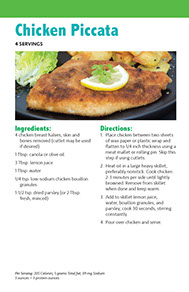
  • Turkey (Or Chicken) Piccata

    Nutrition

    4 Servings

    Ingredients:

    1 pound turkey breast cut lengthwise into 4 slices or 4 chicken breast halves, skin and bones removed (cutlet may be used if desired)

    1 Tbsp. margarine or oil

    3 Tbsp. lemon juice

    1 Tbsp. water

    1/4 tsp. low-sodium chicken bouillon granules

    1-1/2 tsp. dried parsley (or 2 Tbsp. fresh, minced)

    Directions:

    1.  Place turkey or chicken between two sheets of wax paper or plastic wrap and flatten to 1/4 inch thickness using a meat mallet or rolling pin. Skip this step if using cutlets.

    2.  Heat margarine or oil in a large heavy skillet, preferably nonstick. Cook turkey or chicken 2-3 minutes per side until lightly browned. Remove from skillet when done and keep warm.

    3.  Add to skillet lemon juice, water, bouillon granules, and parsley; cook 30 seconds, stirring constantly.

    4.  Pour over turkey or chicken and serve.

    Per Serving:

    Calories – 195-220

    Total fat – 4-6 grams

    Sodium – 89 mg
    Page from HealthyLife Weigh Recipe book by the American Institute for Preventive Medicine. www.HealthyLife.com. All rights reserved.

    © American Institute for Preventive Medicine
  • Tune Out To Tune In

    Stress Management

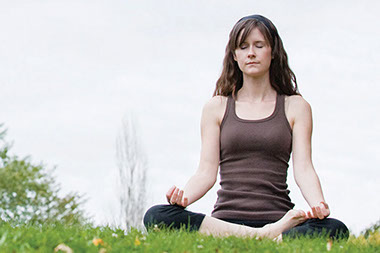
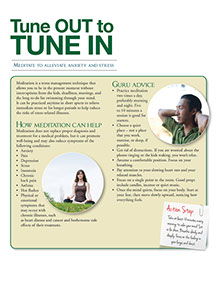
    Image of women meditating.

    Meditate to alleviate anxiety and stress.

    Meditation is a stress management technique that allows you to be in the present moment without interruptions from the kids, deadlines, meetings, and the long to-do list swimming through your mind. It can be practiced anytime in short spurts to relieve immediate stress or for longer periods to help reduce the risks of stress-related illnesses.

    How meditation can help

    Meditation does not replace proper diagnosis and treatment for a medical problem, but it can promote well-being and may also reduce symptoms of the following conditions:

    *  Anxiety

    *  Pain

    *  Depression

    *  Stress

    *  Insomnia

    *  Chronic back pain

    *  Asthma

    *  Hot flashes

    *  Physical or emotional symptoms that may occur with chronic illnesses, such as heart disease and cancer and bothersome side effects of their treatment.

    Guru advice:

    *  Practice meditation two times a day, preferably morning and night. Five to 10 minutes a session is good for starters.

    *  Choose a quiet place – not a place that you work, exercise, or sleep, if possible.

    *  Get rid of distractions. If you are worried about the phone ringing or the kids waking, you won’t relax.

    *  Assume a comfortable position. Focus on your breathing.

    *  Pay attention to your slowing heart rate and your relaxed muscles.

    *  Focus on a single point in the room. Good props include candles, incense or quiet music.

    *  Once the mind quiets, focus on your body. Start at your feet, then move slowly upward, noticing how everything feels.

    Action Step

    Take at least 10 minutes every morning to calm your mind. Sit or lie down. Breathe slowly and deeply. Focus on the feeling in your lungs and chest.

    Page from Ways to Well-Being book by the American Institute for Preventive Medicine. www.HealthyLife.com. All rights reserved.

    © American Institute for Preventive Medicine
  • Trim Your Waist & Environmental Waste

    Weight Control

    Women filling up a jar of nuts from a store's dispenser.

    *  Waist measurements of more than 40 inches for men and more than 35 inches for women increase the risk for diabetes, heart disease, and high blood pressure. Exercise more and eat less to trim your waist. Limit high calorie foods.

    *  Cut calories and car exhaust at the same time – walk and bike more; drive less. Doing these saves money on gas, too.

    *  Ride the bus and subway and carpool when you can.

    *  When you shop, BYOB (bring your own bag). Use a cloth bag, one made out of recycled materials, or re-use paper or plastic bags from past shopping trips. When you can, walk to local stores and markets.

    *  Control portion sizes.

    *  To reduce packaging, buy food items in bulk when you can. Divide bulk food items into single serving re-usable containers. Buy concentrated household products, such as laundry detergent, too.

    Page from HealthyLife Weigh book by the American Institute for Preventive Medicine. www.HealthyLife.com. All rights reserved.

    © American Institute for Preventive Medicine
  • Trim The Fat & Trim Pounds

    Weight Control

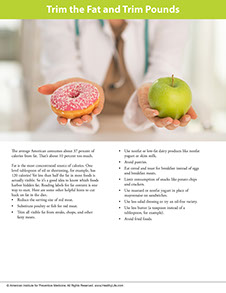
    Image of doctor holding a donut in one hand and an apple in the other hand.

    The average American consumes about 37 percent of calories from fat. That’s about 10 percent too much.

    Fat is the most concentrated source of calories. One level tablespoon of oil or shortening, for example, has 120 calories! Yet less than half the fat in most foods is actually visible. So it’s a good idea to know which foods harbor hidden fat. Reading labels for fat content is one way to start. Here are some other helpful hints to cut back on fat in the diet.

    *  Reduce the serving size of red meat.

    *  Substitute poultry or fish for red meat.

    *  Trim all visible fat from steaks, chops, and other fatty meats.

    *  Use nonfat or low-fat dairy products like nonfat yogurt or skim milk.

    *  Avoid pastries.

    *  Eat cereal and toast for breakfast instead of eggs and breakfast meats.

    *  Limit consumption of snacks like potato chips and crackers.

    *  Use mustard or nonfat yogurt in place of mayonnaise on sandwiches.

    *  Use less salad dressing or try an oil-free variety.

    *  Use less butter (a teaspoon instead of a tablespoon, for example).

    *  Avoid fried foods.

    Page from A Year of Health Hints book by the American Institute for Preventive Medicine. www.HealthyLife.com. All rights reserved.

    © American Institute for Preventive Medicine

  • Traveling

    Healthy Travel

    Smiling women standing in front of the Leaning Tower of Pisa, holding a camera.

    The best of travel plans can be ruined if you get sick or aren’t able to deal with health problems on your trip. Discuss your travel plans with your doctor.

    Make sure to take enough medicines you need for the whole trip.

    Depending on your destination, this may include insect repellant, sunscreen (SPF 30 or higher), hand sanitizer (60% alcohol or higher), and face masks.

    Find out if and what your health insurance covers if you need medical care during your trip. You may consider purchasing additional travel health insurance. Find out where to go for care, if needed.

    Certain vaccines may be required by some countries before you visit them. Find out if and what vaccines are required for places that you plan to travel from the CDC Travelers’ Health Web site atcdc.gov/travel.

    Page from HealthyLife Weigh book by the American Institute for Preventive Medicine. www.HealthyLife.com. All rights reserved.

    © American Institute for Preventive Medicine

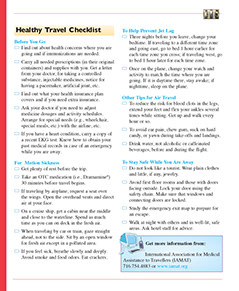
  • Travel Safely Checklist

    Healthy Travel

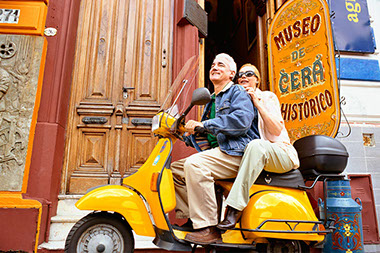
    Image of couple taking a selfie on vacation.

    Before You Go

    *  Find out about health concerns where you are going and if immunizations are needed.

    *  Carry all needed prescriptions (in their original containers) and supplies with you. Get a letter from your doctor, for taking a controlled substance, injectable medicines, notice for having a pacemaker, artificial joint, etc.

    *  Find out what your health insurance plan covers and if you need extra insurance.

    *  Ask your doctor if you need to adjust medicine dosages and activity schedules. Arrange for special needs (e.g., wheelchair, special meals, etc.) with the airline, etc.

    *  If you have a heart condition, carry a copy of a recent EKG test. Know how to obtain your past medical records in case of an emergency while you are away.

    For Motion Sickness

    *  Get plenty of rest before the trip.

    *  Take an OTC medication (i.e., Dramamine®) 30 minutes before travel begins.

    *  If traveling by airplane, request a seat over the wings. Open the overhead vents and direct air at your face.

    *  On a cruise ship, get a cabin near the middle and close to the waterline. Spend as much time as you can on deck in the fresh air.

    *  When traveling by car or train, gaze straight ahead, not to the side. Sit by an open window for fresh air except in a polluted area.

    *  If you feel sick, breathe slowly and deeply. Avoid smoke and food odors. Eat crackers.

    To Help Prevent Jet Lag

    *  Three nights before you leave, change your bedtime. If traveling to a different time zone and going east, go to bed 1 hour earlier for each time zone you cross; if traveling west, go to bed 1 hour later for each time zone.

    *  Once on the plane, change your watch and activity to match the time where you are going. If it is daytime there, stay awake; if nighttime, sleep on the plane.

    To Stay Safe While You Are Away

    *  Do not look like a tourist. Wear plain clothes and little, if any, jewelry.

    *  Avoid first floor rooms and those with doors facing outside. Lock your door using the safety chain. Make sure that windows and connecting doors are locked.

    *  Study the emergency exit map to prepare for an escape.

    *  Walk at night with others and in well-lit, safe areas. Ask hotel staff for advice.

    Other Tips for Air Travel

    *  To reduce the risk for blood clots in the legs, extend your feet and flex your ankles several times while sitting. Get up and walk every hour or so.

    *  To avoid ear pain, chew gum, suck on hard candy, or yawn during take-offs and landings.

    *  Drink water, not alcoholic or caffeinated beverages, before and during the flight.

    Resources

    International Association for Medical Assistance to Travellers (IAMAT)

    716.754.4883

    www.iamat.org

    Page from the Healthier at Home book by the American Institute for Preventive Medicine. www.HealthyLife.com. All rights reserved.

    © American Institute for Preventive Medicine
  • Travel Hints For Retirees On The Go

    Healthy Travel

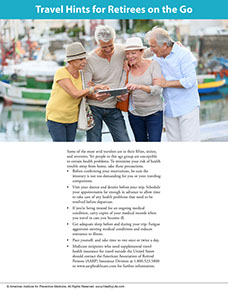
    Image of retired couple traveling.

    Some of the most avid travelers are in their fifties, sixties, and seventies. Yet people in this age group are susceptible to certain health problems. To minimize your risk of health trouble away from home, take these precautions.

    *  Before confirming your reservations, be sure the itinerary is not too demanding for you or your traveling companions.

    *  Visit your doctor and dentist before your trip. Schedule your appointments far enough in advance to allow time to take care of any health problems that need to be resolved before departure.

    *  If you’re being treated for an ongoing medical condition, carry copies of your medical records when you travel in case you become ill.

    *  Get adequate sleep before and during your trip. Fatigue aggravates existing medical conditions and reduces resistance to illness.

    *  Pace yourself, and take time to rest once or twice a day.

    *  Medicare recipients who need supplemental travel health insurance for travel outside the United States should contact the American Association of Retired Persons (AARP) Insurance Division at 1.800.523.5800 orwww.aarphealthcare.comfor further information.

    Page image from A Year of Health Hints book by the American Institute for Preventive Medicine. www.HealthyLife.com. All rights reserved.

    © American Institute for Preventive Medicine

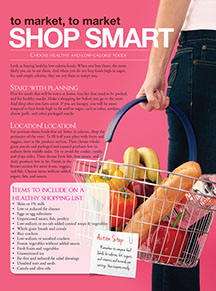
  • To Market, To Market, Shop Smart

    Nutrition

    Choose healthy and low-calorie foods.

    Look at buying healthy, low-calorie foods. When you buy them, the more likely you are to eat them. And when you do not buy foods high in sugar, fat, and empty calories, they are not there to tempt you.

    Start with planning.

    Plan for meals that will be eaten at home, lunches that need to be packed, and for healthy snacks. Make a shopping list before you go to the store. And shop after you have eaten. If you are hungry, you will be more tempted to buy foods high in fat and/or sugar, such as cakes, cookies, cheese puffs, and other packaged snacks.

    Location! location!

    For nutrient-dense foods that are lower in calories, shop the perimeter of the store. To fill half your plate with fruits and veggies, start at the produce section. Then choose whole-grain cereals and packaged and canned products low in sodium from middle aisles. Try to avoid the cookie, candy, and chips aisles. Then choose fresh fish, lean meats, and dairy products low in fat. Finish in the freezer section for more fruits, veggies, and fish. Choose items without added sugars, fats, and sauces.

    Items to include on a healthy shopping list:

    *  Skim or 1% milk

    *  Low or reduced-fat cheeses

    *  Eggs or egg substitute

    *  Unprocessed meats, fish, poultry

    *  Low-sodium or no-salt added canned soups & vegetables

    *  Whole grain breads and cereals

    *  Rice crackers

    *  Low-sodium or unsalted crackers

    *  Frozen vegetables without added sauces

    *  Fresh fruits and vegetables

    *  Unsweetened tea

    *  Fat-free and reduced-fat salad dressings

    *  Unsalted nuts and seeds

    *  Canola and olive oils

    Action Step

    Remember to compare food labels for calories, fat, sugars, and vitamins and minerals per serving. Use coupons wisely.

    Page from Ways to Well-Being book by the American Institute for Preventive Medicine. www.HealthyLife.com. All rights reserved.

    © American Institute for Preventive Medicine
  • Tired Of Doing The Same Exercises?

    Fitness

    Man jogging outside.

    *  Vary the activities you do.

    –  Choose ones unique to the four seasons.

    –  Select both indoor and outdoor exercises.

    –  Try ones you do alone and ones you do with others.

    *  Pair exercise with other things you like, such as your favorite music, being with friends, etc.

    *  Check out new ways to exercise. Take dance lessons. Learn yoga. Exercise to a kick-boxing video.

    Page from HealthyLife Weigh book by the American Institute for Preventive Medicine. www.HealthyLife.com. All rights reserved.

    © American Institute for Preventive Medicine

  • Tips For Dining Out Without Pigging Out

    Nutrition

    Image of friends eating out.

    People who are watching what they eat can stick to their diets when eating in restaurants. Eating establishments don’t have to be automatic waistline expanders if you observe the following recommendations.

    *  Choose a restaurant that offers a wide variety of food, to increase the odds of finding fewer fatty, highly caloric foods.

    *  Avoid “all-you-can-eat” restaurants.

    *  Ask to have the bread basket (or at least the butter dish) removed from the table.

    *  Refuse french fries, potato chips, and desserts, even if they’re included in the price of your meal.

    *  Ask for food broiled without butter, salad without dressing, and baked or steamed food that’s normally fried.

    *  If servings seem especially large, portion off the excess and put it aside before you begin eating.

    *  Leave some food on your plate, or take it home for tomorrow’s lunch.

    *  Share one meal with a companion.

    *  Order a la carte so you won’t feel obligated to eat side dishes just because you’ve paid for them.

    Here are some ways to join the party and not blow your diet.

    *  At a buffet dinner, first look over all the food presented, then decide what you will and will not eat.

    *  If possible, inquire ahead of time as to what will be served at a party. If nothing on the menu is allowed on your diet, plan to eat at home first.

    *  Ask your host or hostess if you can provide a platter of raw vegetables or other low-calorie offering, so you’ll be assured of something you can munch on during the party.

    *  To avoid being tempted to eat hors d’oeuvres and snacks, don’t sit near them.

    *  Politely inform your host and hostess of your diet and ask them not to coax you to overeat.

    *  Choose mineral water or diet soda instead of alcoholic beverages, or at least alternate them with alcoholic drinks.

    *  Make a point to socialize with other people or enjoy the entertainment rather than concentrating on eating.

    Partying Down to a Slimmer You

    As with most festive occasions, food plays a prominent role at most parties. It gives people something to look at, something to do, something to talk about, and something to remember. But you don’t have to stay home just because you’re dieting.

    Page from A Year of Health Hints book by the American Institute for Preventive Medicine. www.HealthyLife.com. All rights reserved.

    © American Institute for Preventive Medicine