Blog

  • Pick Plant-Based

    Nutrition

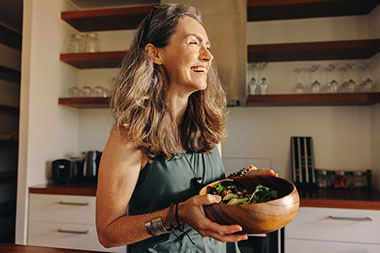
    Women smiling while holding a wooden bowl filled with a salad mix.

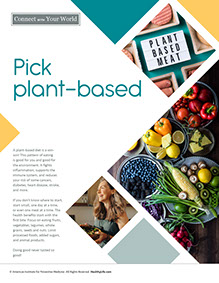
    A plant-based diet is a win-win! This pattern of eating is good for you and good for the environment. It fights inflammation, supports the immune system, and reduces your risk of some cancers, diabetes, heart disease, stroke, and more.

    If you don’t know where to start, start small, one day at a time, or even one meal at a time. The health benefits start with the first bite. Focus on eating fruits, vegetables, legumes, whole grains, seeds and nuts. Limit processed foods, added sugars, and animal products.

    Doing good never tasted so good!

    Page from HealthyLife Weigh book by the American Institute for Preventive Medicine. www.HealthyLife.com. All rights reserved.

    © American Institute for Preventive Medicine

  • Pick & Pack A Healthy Lunch

    Nutrition

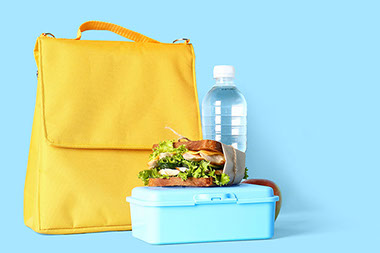
    Sandwich and water bottle sitting next to lunch bag.

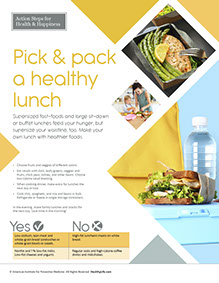
    Supersized fast-foods and large sit-down or buffet lunches feed your hunger, but supersize your waistline, too. Make your own lunch with healthier foods.

    *  Choose fruits and veggies of different colors.

    *  Eat salads with dark, leafy greens; veggies and fruits; chick peas, kidney, and other beans. Choose low-calorie salad dressing.

    *  When cooking dinner, make extra for lunches the next day or two.

    *  Cook chili, spaghetti, and rice and beans in bulk. Refrigerate or freeze in single storage containers.

    In the evening, make family lunches and snacks for the next day. Save time in the morning!

    Yes:

    *  Low-sodium, lean meat and  whole-grain bread sandwiches or whole-grain bowls or salads.

    *  Nonfat and 1% low-fat milks. Low-fat cheeses and yogurts.

    No:

    *  High-fat luncheon meats on white bread.

    *  Regular soda and high-calorie coffee drinks and milkshakes.

    Page from HealthyLife Weigh book by the American Institute for Preventive Medicine. www.HealthyLife.com. All rights reserved.

    © American Institute for Preventive Medicine

  • Pick And Pack A Healthy Lunch

    Nutrition

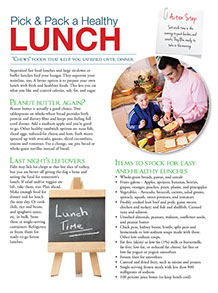
    “Chews” foods that keep you satisfied until dinner.

    Supersized fast food lunches and large sit-down or buffet lunches feed your hunger. They supersize your waistline, too. A better option is to prepare your own lunch with fresh and healthier foods. This lets you eat what you like and control calories, salt, fat, and sugar.

    Peanut butter again?

    Peanut butter is actually a good choice. Two tablespoons on whole-wheat bread provides both protein and dietary fiber and keeps you feeling full until dinner. Add a medium apple and you’re good to go.  Other healthy sandwich options are tuna fish, sliced eggs, reduced-fat cheese and lean, fresh meats spruced up with avocado, greens, sliced cucumbers, onions and tomatoes. For a change, use pita bread or whole-grain tortillas instead of bread.

    Last night’s leftovers

    Fido may lick his chops at that last slice of turkey, but you are better off giving the dog a bone and saving the food for tomorrow’s lunch. If salad and/or veggies are left, take them, too. Plan ahead. Make enough food for dinner and for lunch the next day. Or cook chili, rice and beans, and spaghetti sauce, etc. in bulk.  Store these in single-serving containers. Refrigerate or freeze them for ready-to-go future lunches.

    Items to stock for easy and healthy lunches

    *  Whole wheat breads, pasta, and cereals

    *  Fruits galore – Apples, apricots, bananas,  berries, grapes, oranges, peaches, pears, plums, and pineapples

    *  Vegetables – Broccoli, carrots, salad greens, green beans, spinach, squash, sweet potatoes, and tomatoes

    *  Freshly cooked lean beef and pork; game meats; chicken and turkey; and fish and shellfish. Canned tuna and salmon.

    *  Unsalted almonds, peanuts, walnuts, sunflower seeds, and peanut butter

    *  Chick peas, kidney beans, lentils, split peas and homemade or low-sodium soups made with these. Other low-sodium soups.

    *  Fat-free (skim) or low-fat (1%) milk or buttermilk; fat-free, low-fat, or reduced-fat cheese, fat-free or  low-fat yogurt or yogurt smoothies

    *  Frozen fruit for smoothies

    *  Canned and dried fruit, such as raisins and prunes

    *  Single-serving frozen meals with less than 800 milligrams of sodium

    *  100 percent juice boxes (to keep lunch cool)

    Action Step

    Set aside time in the evening to pack lunches and snacks. You’ll be happier in the morning and during your lunch break.
    Page from Ways to Well-Being book by the American Institute for Preventive Medicine. www.HealthyLife.com. All rights reserved.

    © American Institute for Preventive Medicine

  • Pedal For Fitness

    Fitness

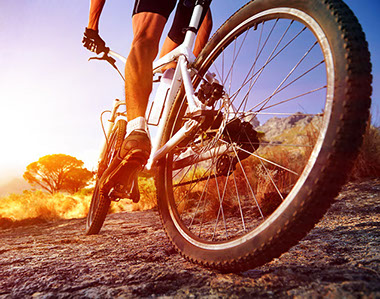
    A closeup image of a bike tire while a cyclist rides through a trail.

    Riding a bicycle is good for body and soul. Cycling gets you out in the fresh air, leaves you feeling invigorated, and can do wonders for cardiovascular health. And you don’t have to ride fast and furiously to benefit from cycling.

    Here’s what to do to avoid undue muscle aches when you cycle.

    *  To avoid back and knee problems, take your bike to a bike shop and have the handlebars and seat adjusted to fit you properly. The seat should be adjusted so that when one leg is extended and bent slightly, the ball of your foot contacts the pedal at the lowest point of its revolution. Handlebars should be positioned no lower than your seat.

    *  Stretch your shoulders, back, and legs slowly and gently before and after biking.

    Page image from A Year of Health Hints book by the American Institute for Preventive Medicine. www.HealthyLife.com. All rights reserved.

    © American Institute for Preventive Medicine

  • Painless Ways To Eat Less Without Starving

    Weight Control

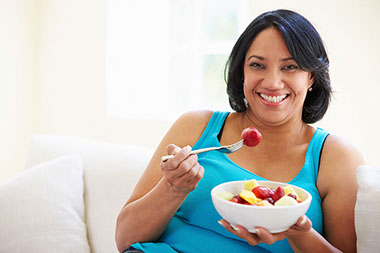
    It’s not always what you eat that determines whether or not you lose weight. Sometimes, small changes in the way you eat can help eliminate those extra pounds. Try these suggestions.

    *  Eat smaller amounts of food more often, and eat at least half of your intake earlier in the day (to increase your metabolism). You’ll burn off more calories that way. (Eat no more than six times a day-including snacks-however.)

    *  Use small plates, so portions look larger.

    *  Put less food on your fork or spoon, and take smaller bites. Chew slowly, and pause between mouthfuls.

    *  Wait 10 minutes before snacking. (The urge might pass.) Don’t prepare snacks for other people.

    *  If you feel like binge eating, put on tight clothes-it will discourage you.

    *  Choose more high-fiber and high-water foods like celery, watermelon, and plain popcorn. (You get more to eat without eating very many calories.)

    *  Mentally imagine yourself thinner–it’ll keep you going.

    *  Keep low-calorie snacks easily available.

    *  Never skip breakfast.

    *  Don’t eat anything after dinner.

    *  Brush your teeth after every meal. (You’ll be less inclined to continue nibbling.)

    *  Eat only if you feel relaxed to avoid “nervous munching.”

    *  Take the light bulb out of your refrigerator–it will cut down on “search-and-consume” forays.

    *  Drink lots of water every day, to suppress appetite.

    *  Never starve yourself all day in order to eat a special dinner. (You’ll be more likely to overeat.)

    Page from A Year of Health Hints book by the American Institute for Preventive Medicine. www.HealthyLife.com. All rights reserved.

    © American Institute for Preventive Medicine

  • Pack A Traveler’s First-Aid Kit

    Healthy Travel

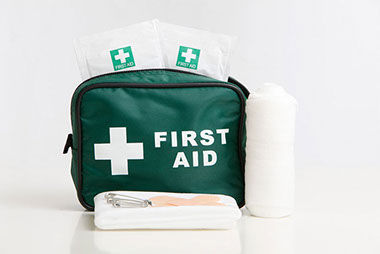
    Image of first aid kit.

    You can handle many minor medical emergencies that crop up as you travel if you have the right supplies at hand. Use the following list as a guideline for packing your own first-aid kit.

    *  Rubbing alcohol or alcohol wipes.

    *  Antibacterial cream or spray.

    *  Adhesive strips, gauze pads, and cotton swabs.

    *  Elastic bandages.

    *  Mild pain relievers, such as aspirin, acetaminophen, or ibuprofen.

    *  Antacids.

    *  Cough and cold remedies.

    *  Diarrhea medication.

    *  Broad-spectrum antibiotic (requires a doctor’s prescription).

    To conserve space in your baggage, purchase supplies in trial-size containers. If you’re going to travel by airplane, avoid aerosol products. They can explode if subjected to drastic changes in air pressure.

    You should also carry your medical insurance card and the name, address, and phone number of your doctor.

    Page image from A Year of Health Hints book by the American Institute for Preventive Medicine. www.HealthyLife.com. All rights reserved.

    © American Institute for Preventive Medicine

  • Find Out If You’re Overweight Or Overfat

    Weight Control

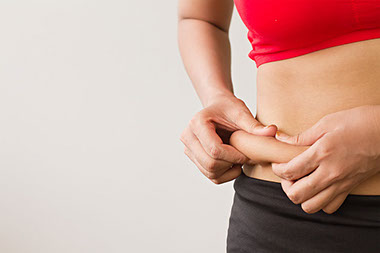
    Image of person doing the pinch test.

    Many people fret about how much they weigh. The real issue of concern is what percentage of their body weight is made up of fat. The ideal is about 16 percent for men and about 20 percent for women. Standard height and weight charts ignore this issue.

    Here’s a simple test to do at home to determine if you are fat, or exceed the average level of body fat.

    The Pinch Test

    Pinch a fold of skin from these three areas.

    *  Upper side of upper arm.

    *  Midway up the back of the thighs.

    *  Just to one side of your abdomen.

    Measure the thickness with a skin caliper or ruler. If you can pinch 1 inch or less of flesh, your body fat level is low or moderate. Every 1/4 inch above that represents 10 pounds of excess fat.

    Knowing your level of body fat is critical if you’ve been on a crash diet or if you’ve lost weight quickly, because unless you’ve been exercising regularly, the loss may be in muscle tissue, not in actual body fat. In other words, you may look slimmer, but still be overfat. A scale will not show this, but a measurement of body fat will.

    Page from A Year of Health Hints book by the American Institute for Preventive Medicine. www.HealthyLife.com. All rights reserved.

    © American Institute for Preventive Medicine

  • One More Veggie A Day

    Nutrition

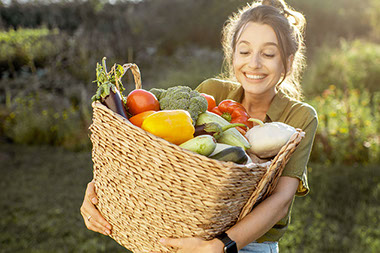
    Women carrying a basket filled with vegetables.

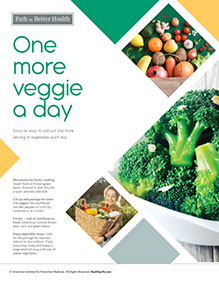
    Focus on ways to add just one more serving of vegetables each day.

    *Microwave for faster cooking:Steam fresh or frozen green beans, broccoli or bok choy for a quick and easy side dish.

    *Cut up and package for later:Use veggies like cauliflower and bell peppers in a stir-fry, casserole or as a snack.

    *Frozen – just as nutritious as fresh:Good buys include frozen peas, corn and green beans.

    *Enjoy vegetable soups:Look on the package for reduced-sodium or low-sodium. If you have time, make and freeze a large batch of soup with lots of added vegetables.

    Page from HealthyLife Weigh book by the American Institute for Preventive Medicine. www.HealthyLife.com. All rights reserved.

    © American Institute for Preventive Medicine

  • Nourish Your Body & The Environment

    Nutrition

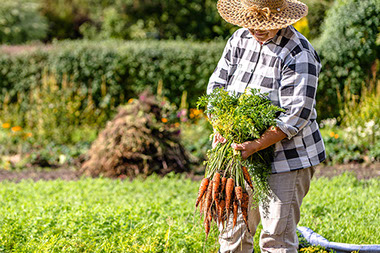
    Harvesting carrots.

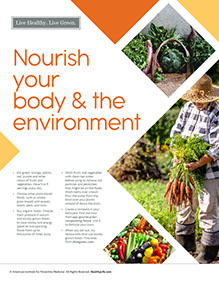
    *  Eat green, orange, yellow, red, purple and other colors of fruits and vegetables. Have 5 to 9 servings every day.

    *  Choose other plant-based foods, such as whole-grain breads and cereals, beans, peas, and nuts.

    *  Buy organic foods. Choose fresh produce in season and locally grown foods to save money and energy spent on transporting foods from up to thousands of miles away.

    *  Wash fruits and vegetables with clean tap water before using to remove soil particles and pesticides that might be on the foods. Wash items over a bowl. Pour the water from the bowl over your plants instead of down the drain.

    *  Create a compost in your backyard. Find out how fromepa.gov/recycle/composting-home. Use it to fertilize your lawn.

    *  When you eat out, try restaurants that use locally grown foods. Find ones fromdinegreen.com.

    Page from HealthyLife Weigh book by the American Institute for Preventive Medicine. www.HealthyLife.com. All rights reserved.

    © American Institute for Preventive Medicine