Blog

  • Nine Tips For Healthier Fast-Food Meals

    Nutrition

    Image of restaurant neon sign.

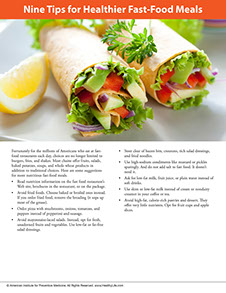
    Fortunately for the millions of Americans who eat at fast-food restaurants each day, choices are no longer limited to burgers, fries, and shakes. Most chains offer fruits, salads, baked potatoes, soups, and whole wheat products in addition to traditional choices. Here are some suggestions for more nutritious fast-food meals.

    *  Read nutrition information on the fast food restaurant’s Web site, brochures in the restaurant, or on the package.

    *  Avoid fried foods. Choose baked or broiled ones instead. If you order fried food, remove the breading (it sops up most of the grease).

    *  Order pizza with mushrooms, onions, tomatoes, and peppers instead of pepperoni and sausage.

    *  Avoid mayonnaise-laced salads. Instead, opt for fresh, unadorned fruits and vegetables. Use low-fat or fat-free salad dressings.

    *  Steer clear of bacon bits, croutons, rich salad dressings, and fried noodles.

    *  Use high-sodium condiments like mustard or pickles sparingly. And do not add salt to fast food. It doesn’t need it.

    *  Ask for low-fat milk, fruit juice, or plain water instead of soft drinks.

    *  Use skim or low-fat milk instead of cream or nondairy creamer in your coffee or tea.

    *  Avoid high-fat, calorie-rich pastries and dessert. They offer very little nutrients. Opt for fruit cups and apple slices.
    Page from A Year of Health Hints book by the American Institute for Preventive Medicine. www.HealthyLife.com. All rights reserved.

    © American Institute for Preventive Medicine

  • New Year, New You

    Weight Control

    Smiling man.

    Take action now to reach your resolution to lose weight.

    *  Set an exercise goal you can reach. For example, by the end of this month, I will walk at least 20 minutes a day, five days a week.

    *  When you reach a goal, give yourself a nonfood reward, such as a new workout video or a new lunch bag.

    *  Substitute water for sweetened beverages.

    *  Eat fruits and veggies for snacks instead of candy, chips, and cookies.

    Action Step:Chew food slowly to give your body time to send a signal to your brain that you’ve had enough. You’ll enjoy your food more and eat less.

    Choose foods that won’t sabotage your goals.

    Page from HealthyLife Weigh book by the American Institute for Preventive Medicine. www.HealthyLife.com. All rights reserved.

    © American Institute for Preventive Medicine
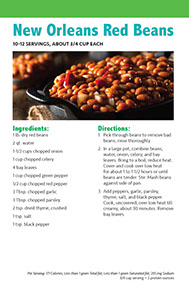
  • New Orleans Red Beans

    Nutrition

    8 Servings, 1-1/4 cup each

    Ingredients:

    1 lb. dry red beans

    2 qt. water

    1-1/2 cups chopped onion

    1 cup chopped celery

    4 bay leaves

    1 cup chopped green pepper

    3 Tbsp. chopped garlic

    3 Tbsp. chopped parsley

    2 tsp. dried thyme, crushed

    1 tsp. salt

    1 tsp. black pepper

    Directions:

    1.  Pick through beans to remove bad beans; rinse thoroughly.

    2.  In a large pot, combine beans, water, onion, celery, and bay leaves. Bring to a boil; reduce heat. Cover and cook over low heat for about 1-1/2 hours or until beans are tender. Stir. Mash beans against side of pan.

    3.  Add green pepper, garlic, parsley, thyme, salt, and black pepper. Cook, uncovered, over low heat till creamy, about 30 minutes. Remove bay leaves.

    4.  Serve with hot, cooked brown rice, if desired.

    Per Serving:

    Calories – 171

    Total fat – Less than 1 gram

    Saturated fat – Less than 1 gram

    Sodium – 285 mg

    Page from HealthyLife Weigh Recipe book by the American Institute for Preventive Medicine. www.HealthyLife.com. All rights reserved.

    © American Institute for Preventive Medicine

  • Navigate The Holiday Buffet

    Nutrition

    Table filled with different food dishes.

    There’s a healthy way to get around the buffet table and avoid over-eating during the holidays.

    *Make a plan:First, take a lap around the buffet table to plan what to choose and what to limit.

    *Go for color:Start your meal with a veggie-packed salad with lots of variety.

    *Take your time:Eat slowly. Enjoy your meal and be mindful to recognize when you’ve had enough.

    *Add healthy options:Arrive at a holiday party with a festive vegetable platter to increase your healthy choice options.

    Page from HealthyLife Weigh book by the American Institute for Preventive Medicine. www.HealthyLife.com. All rights reserved.

    © American Institute for Preventive Medicine
  • If You Suspect A Narcotics Overdose, Act Fast

    Substance Use & Abuse

    Horse. Harry. Scag. Junk. Lords. Schoolboy. Morpho. Hocus. Unkie. Powder. Joy. Snow. Miss Emma. Dollies. These are just a few of the street names for narcotic drugs. Heroin, morphine, and cocaine are the three most common illegally used drugs. Each is powerfully addictive. Obvious symptoms of ongoing drug use include:

    *  Euphoria.

    *  Drowsiness.

    *  Apathy.

    *  Mood swings.

    *  Constricted pupils.

    *  Flushed skin.

    *  Red, raw nostrils (in cocaine users).

    *  Scars, “tracks,” or abscesses at injection sites on the arms or legs.

    Signs of overdose include:

    *  Constricted, pinpoint pupils.

    *  Clammy skin, with a bluish tint.

    *  Slow pulse.

    *  Shallow breathing (which can lead to respiratory arrest).

    *  Convulsions.

    *  Coma.

    If you suspect someone has overdosed on drugs, call an ambulance or drive the victim to the nearest hospital emergency room immediately.

    Page from A Year of Health Hints book by the American Institute for Preventive Medicine. www.HealthyLife.com. All rights reserved.

    © American Institute for Preventive Medicine

  • Debunking Myths On Exercise And Weight Loss

    Weight Control

    Exercise is a critical component in any effective weight-control regimen. Unfortunately, some people have misconceptions about weight and exercise. Here are some of the more common popular fallacies.

    Myth: Exercise increases your appetite.

    Fact: Appetite is actually more manageable after exercise. Furthermore, any slight increase in food intake from physical exercise is more than offset by calories expended by the exercise.

    Myth: In order for exercise to be worthwhile, you must work out every day.

    Fact: Three times a week for around 20 minutes each time will burn off a significant number of calories. (Of course, if you exercise longer-say, 45 minutes to an hour–you’ll bum even more calories.)

    Myth: Exercise must be extremely vigorous to achieve weight loss.

    Fact: Moderate exercise like walking, if done on a regular basis, can be effective. Daily 30-minute walks can burn up to 15 pounds a year.

    Myth: Only aerobic exercise burns calories.

    Fact: Aerobic exercise (cycling, walking, swimming, etc.), speed up your metabolism for 4 to 8 hours after you stop exercising, so calories will be burned when you exercise and after you finish working out. Nonaerobic exercise like weight lifting, burns calories when you exercise and adds lean muscle tissue, which burns more calories than fat. Both types of exercise are important components of fitness.

    Myth: The more you sweat, the faster you lose weight.

    Fact: There is no benefit to excessive sweating. It can even be dangerous. So don’t overdress for exercise, and don’t wear “sauna suits.”

    Page from A Year of Health Hints book by the American Institute for Preventive Medicine. www.HealthyLife.com. All rights reserved.

    © American Institute for Preventive Medicine

  • Move Your Way

    Fitness

    Man wearing apron and cleaning gloves, using a broom stick as a guitar.

    The key to moving more is finding and doing activities you really enjoy. Dancing, walking, gardening…if it moves you and makes you happy, it works! When you do move, work toward 20 minutes a day of moderate to vigorous levels of movement. Regular physical activity helps with weight management and improving cardiovascular health. Add some weighted hand gloves for increased resistance and to build muscle while you move.

    Be More Earth-Friendly

    Want to help the earth while exercising? Plogging – or picking up trash while you jog or walk – is one way you can do your part to keep your community, and the environment, clean.

    Page from HealthyLife Weigh book by the American Institute for Preventive Medicine. www.HealthyLife.com. All rights reserved.

    © American Institute for Preventive Medicine
  • Move More. Eat Fewer Calories.

    Weight Control

    Women with headphones on, singing and dancing.

    Like interest on a credit card, extra calories turn into body fat which is hard to “pay off.” To tip the scale in your favor, expend more energy and spend less on calories. Here are some action steps to help you.

    *  Sit less. Spend more time being active.

    *  Limit TV time. Hours watched per day the start of this month: _____; at the end of this month: _____.

    *  Exercise while watching TV. (Walk in place. Ride a stationary bike. Lift dumbbells.)

    *  Walk more throughout the day.

    *  Use a pedometer to track steps. Set a goal to walk 10,000 steps a day.

    *  Drink water before meals. Sip water during meals.

    *  Limit high calorie foods, such as desserts. Start by eating half of what you usually eat.

    *  Slow down when you eat so you can notice when your body sends your brain signals that it’s full and satisfied.

    Page from HealthyLife Weigh book by the American Institute for Preventive Medicine. www.HealthyLife.com. All rights reserved.

    © American Institute for Preventive Medicine
  • Motivation Is The Gateway For Adopting Healthy Changes

    Weight Control

    Female standing outside with arms open taking in the fresh air.

    *  Decide what changes YOU want to achieve, not what someone else wants you to do.

    *  Remind yourself, daily, why you want to make a health change. Picture the change taking place.

    *  Post reminders around the house.

    *  List things you have achieved and are proud of. Use your successes to realize that you can accomplish any goal you set your mind to.

    Dos

    *  Choose salads with low-calorie dressing and limit portions when eating out.

    *  Keep healthy snacks handy so the healthy choices are the easy choices.

    *  Be patient. It takes up to 6 weeks to make a new habit.

    Don’ts

    *  Don’t supersize a fast food meal.

    *  Don’t choose coffee beverages with syrup as a daily habit.

    *  Don’t let slip-ups keep you from making permanent, healthy changes.

    Page from HealthyLife Weigh book by the American Institute for Preventive Medicine. www.HealthyLife.com. All rights reserved.

    © American Institute for Preventive Medicine

  • Modify Ingredients In Recipes 2

    Nutrition

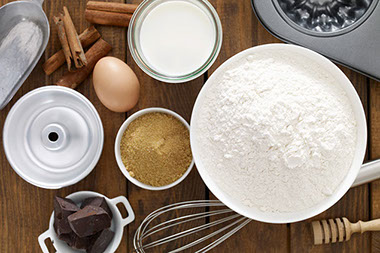
    Image of different ingredients.

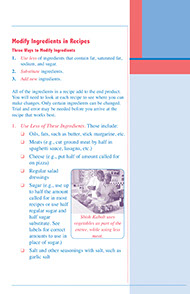
    Three Ways to Modify Ingredients

    1. Use less of ingredients that contain fat, saturated fat, sodium, and sugar.

    2. Substitute ingredients.

    3. Add new ingredients.

    All of the ingredients in a recipe add to the end product. You will need to look at each recipe to see where you can make changes. Only certain ingredients can be changed. Trial and error may be needed before you arrive at the recipe that works best.

    1. Use Less of These Ingredients

    These include:

    *  Oils, fats, such as butter, stick margarine, etc.

    *  Meats (e.g., cut ground meat by half in spaghetti sauce, lasagna, etc.)

    *  Cheese (e.g., put half of amount called for on pizza)

    *  Regular salad dressings

    *  Sugar (e.g., use up to half the amount called for in most recipes or use half regular sugar and half sugar substitute. See labels for correct amounts to use in place of sugar.)

    *  Salt and other seasonings with salt, such as garlic salt

    2. Substitute Ingredients

    * Diet margarine’s high water content may alter the texture of baked products. It works well, though, in sauces, as spreads, and for sauteing vegetables.

    ** When using yogurt for sour cream in heated sauces, mix 1 Tbsp. of cornstarch with 1 Tbsp. of the yogurt then add to the rest of the yogurt. Stir over medium heat until sauce thickens. This will prevent the yogurt from separating.

    3. Add New Ingredients

    Here are some examples:

    *  Vanilla and other flavor extracts. Adding vanilla or adding extra vanilla can make foods taste sweeter than they are.

    *  Vegetables to casseroles, stews, soups, etc. that are not in the original recipe. For example, add mushrooms and green pepper to lasagna and pizza and cut down on or don’t use any meats.

    *  Spices and herbs to add or enhance flavor. For example:

    – Sprinkle dill weed or tarragon on baked or broiled fish along with the lemon juice the recipe may call for.

    – Put pumpkin pie spice on cooked winter squash.

    – Add fresh ripe fruit or mashed cooked vegetables to muffins and quick breads for added flavor, moistness, and nutrients.

    *  Garnish dishes with fresh fruit slices and cut-up vegetables.

    *  Add grains, pastas, starchy vegetables, (potatoes, etc.) legumes (beans, peas, lentils) to thicken soups.

    *  Practice with changing recipes. The savings in total fat, saturated fat, trans fat, sodium, sugar, and calories can be great.

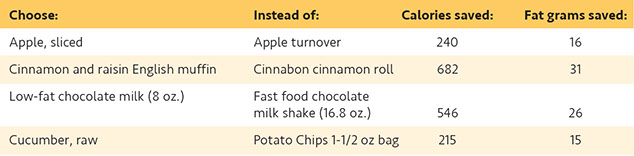
    Modify ingredients in the example below to lower fat, sugar, sodium, and calories.

    Resources

    American Heart Association

    www.heart.org/HEARTORG

    Search for “Nutrition Center.”

    National Heart, Lung, and Blood Institute (NHLBI)

    www.nhlbi.nih.gov

    Search for “Healthy Recipes.”

    NUTRITION.GOV

    www.nutrition.gov

    Search for “Healthy Eating.”

    Page from HealthyLife Weigh book by the American Institute for Preventive Medicine. www.HealthyLife.com. All rights reserved.

    © American Institute for Preventive Medicine