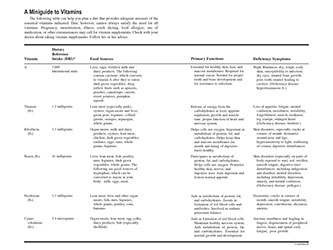
The following can help you plan a diet that provides adequate amounts of the essential vitamins indicated. Diet, however, cannot always satisfy the need for all vitamins. Pregnancy, menstruation, illness, crash dieting, food allergies, use of medication, or other circumstances may call for vitamin supplements. Check with your doctor about taking vitamin supplements. Follow his or her advice.
Vitamin A
Primary Functions
Essential for healthy skin, hair, and mucous membranes. Required for normal vision. Needed for proper tooth and bone development and for resistance to infection.
Food Sources
Liver, eggs, fortified milk and dairy products. The following contain carotene, which converts to vitamin A after they’re eaten: dark green vegetables; deep yellow fruits such as apricots, peaches, cantaloupe, carrots, sweet potatoes, pumpkin, squash.
Dietary Reference Intake (DRI)*
3,000 International units
Deficiency Symptoms
Night Blindness; dry, rough, scaly skin; susceptibility to infection; dry eyes; stunted bone growth; poor tooth enamel leading to cavities. (Deficiency disease: hypovitaminosis A.)
Thiamin (Vitamin B-1)
Primary Functions
Release of energy from the carbohydrates in food, appetite regulation, growth and muscle tone, proper function of heart and nervous system.
Food Sources
Lean meat (especially pork), oysters, organ meats and liver, green peas, legumes, collard greens, oranges, asparagus, whole grains.
Dietary Reference Intake (DRI)*
1.2 milligrams
Deficiency Symptoms
Loss of appetite, fatigue, mental confusion, moodiness, irritability, forgetfulness, muscle weakness, leg cramps, enlarged heart. (Deficiency disease: beriberi.)
Riboflavin (Vitamin B-2)
Primary Functions
Helps cells use oxygen. Important in metabolism of protein, fat, and carbohydrates. Helps keep skin and mucous membranes (in mouth and lining of digestive tract) healthy.
Food Sources
Organ meats, milk and dairy products, oysters, lean meat, chicken, dark green vegetables, sardines, eggs, tuna, whole grains, legumes.
Dietary Reference Intake (DRI)*
1.3 milligrams
Deficiency Symptoms
Skin disorders, especially cracks at corners of mouth; dermatitis around nose and lips; hypersensitivity to light; reddening of cornea; digestive disturbances.
Niacin (Vitamin B-3)
Primary Functions
Participates in metabolism of protein, fat, and carbohydrates. Helps cells use oxygen. Promotes healthy skin, nerves, and digestive tract. Aids digestion and fosters normal appetite.
Food Sources
Liver, lean meat, fish, poultry, nuts, legumes, dark green vegetables, whole grains. The following are good sources of tryptophan, which can be converted to niacin in your body: milk, eggs, meat.
Dietary Reference Intake (DRI)*
16 milligrams
Deficiency Symptoms
Skin disorders (especially on parts of body exposed to sun); red, swollen, smooth tongue; digestive tract disturbances, including indigestion and diarrhea; mental disorders, including irritability, depression, anxiety, and mental confusion. (Deficiency disease: pellegra.)
Pyridoxine (Vitamin B-6)
Primary Functions
Aids in metabolism of protein, fat, and carbohydrates. Assists in formation of red blood cells and antibodies. Involved in sodium-potassium balance.
Food Sources
Lean meat, liver and other organ meats, fish, nuts, legumes, whole grains, poultry, corn, bananas.
Dietary Reference Intake (DRI)*
1.3 milligrams
Deficiency Symptoms
Dermatitis, cracks at corners of mouth, smooth tongue, irritability, depression, convulsions, dizziness, anemia.
Cyanocobalamin (Vitamin B-12)
Primary Functions
Aids in formation of red blood cells. Maintains healthy nervous system. Aids metabolism of protein, fat, and carbohydrates. Essential for normal growth and development.
Food Sources
Organ meats, lean meat, egg yolks, dairy products, fish (especially shellfish).
Dietary Reference Intake (DRI)*
2.4 micrograms
Deficiency Symptoms
Anemia; numbness and tingling in fingers; degeneration of peripheral nerves, brain, and spinal cord; fatigue; poor growth.
Folate
Primary Functions
Aids in the formation of hemoglobin in red blood cells and of enzymes and other body cells. Can help prevent serious birth defects of the brain and spine.
Food Sources
Liver and other organ meats, dark green leafy vegetables, asparagus, lima beans, whole grains, nuts, legumes.
Dietary Reference Intake (DRI)*
400 micrograms+
Deficiency Symptoms
Anemia; red, swollen, smooth tongue; diarrhea; poor growth.
Women should take 400 to 800 micrograms of folic acid for at least one month before getting pregnant and during the pregnancy. Women who have had a baby with a serious problem of the brain or spine should take the amount of folic acid their doctors advise.
Pantothenic Acid
Primary Functions
Helps in the metabolism of protein, fat, and carbohydrates. Involved in formation of hormones and nerve-regulating substances.
Food Sources
In all plant and animal foods, but best sources are organ meats, whole grains, fresh vegetables, egg yolks.
Dietary Reference Intake (DRI)*
5 milligrams
Deficiency Symptoms
Fatigue, tingling in hands and feet, severe abdominal cramps, nausea, difficulty sleeping.
Biotin
Primary Functions
Helps release energy from protein. Also involved in metabolism of fats and carbohydrates and formation of fatty acids. Works with other B vitamins.
Food Sources
Liver and other organ meats, egg yolks, nuts, legumes, cauliflower, mushrooms, green beans, dark green vegetables.
Dietary Reference Intake (DRI)*
30 micrograms
Deficiency Symptoms
Deficiencies do not occur under normal circumstances. Raw egg whites can destroy biotin, and metabolic disturbances can interfere with use, causing anemia, nausea, muscular pain, fatigue, depression, poor appetite.
Vitamin C (Ascorbic Acid)
Primary Functions
Forms collagen to hold body cells together. Helps maintain walls of blood vessels and capillaries. Helps maintain bones and teeth. Helps heal wounds. Helps absorb iron and aids resistance to infection. Prevents destruction of B vitamins through oxidation.
Food Sources
Brussels sprouts, strawberries, oranges, broccoli, green peppers, grapefruit, collard greens, cauliflower, cantaloupe, tangerines, cabbage, tomatoes, asparagus.
Dietary Reference Intake (DRI)*
90 milligrams
Deficiency Symptoms
Weakness; fatigue; loss of appetite; weight loss; irritability; slow growth; increased risk of infection; swollen, inflamed, and bleeding gums; swollen and aching joints; easy bruising; nosebleeds; delayed wound healing. (Deficiency disease: scurvy.)
Vitamin D
Primary Functions
Increases absorption of calcium and phosphorus. Assists in several phases of calcium and phosphorus metabolism, aiding in bone and tooth development. Seems to protect against colon cancer in some way.
Food Sources
Fortified milk, egg yolks, organ meats, fortified breakfast cereals. Vitamin D is formed in skin exposed to sunlight.
Dietary Reference Intake (DRI)*
600 International units
Deficiency Symptoms
During growth years: poor bone and tooth formation, bowed legs, stunted growth, muscle weakness (causing protruding abdomen). Later in life: softening of bones; loss of calcium from bones; pain in pelvis, back, and legs; easily broken bones; muscle twitching and spasms. (Deficiency diseases: rickets in children and osteomalacia in older adults.)
Vitamin E
Primary Functions
Protects essential fatty acids and vitamin A from oxidation. Protects red blood cells. Helps cells use oxygen to yield energy.
Food Sources
Plant oils (used in margarine and salad dressings), wheat germ, green leafy vegetables, nuts, whole grains, liver, egg yolks, legumes, fruits, other vegetables.
Dietary Reference Intake (DRI)*
22.5 International units
Deficiency Symptoms
Red blood cell breakage and muscle weakness. Deficiency is highly unlikely in humans, as vitamin E is widely distributed in foods and stored in the body.
Vitamin K
Primary Functions
Aids in formation of blood clotting proteins. Aids in regulation of blood calcium.
Food Sources
Green leafy vegetables, cabbage-family vegetables, liver, egg yolks, milk. (Also, bacteria synthesizes vitamin K in the digestive tract.)
Dietary Reference Intake (DRI)*
120 micrograms
Deficiency Symptoms
Tendency to hemorrhage, delayed blood clotting.
* Reference Daily Intake (RDI) is a value set by the Food and Drug Administration (FDA) for use in nutrition labeling. It is based on the highest Recommended Dietary Allowance (RDA) for each nutrient, to assure that needs be met for all age groups.