Blog

  • Healthy Travel Basics

    Healthy Travel

    Travel Tips

    *  Leave your trip’s itinerary with someone.

    *  Do not look like a tourist. Wear plain clothes and little, if any, jewelry.

    *  Walk at night with others and in well-lit, safe areas. Ask hotel staff for advice.

    *  Take healthy snacks or buy them at a nearby grocery.

    *  Use the hotel stairs as a stair stepper.

    *  Stretch using a bath towel or exercise with a jump rope.

    Traveler’s First-Aid Kit

    *  Rubbing alcohol or alcohol wipes

    *  Antibacterial cream or spray

    *  Bandages and gauze pads

    *  Elastic bandages

    *  Mild pain reliever (e.g., acetaminophen, ibuprofen). Before your trip, ask your doctor what you should take.

    *  Antacids

    *  Cough and cold remedies

    *  Diarrhea medication

    *  Broad-spectrum antibiotic (requires a doctor’s prescription)

    Reducing Travel Stress

    *  Prepare for your trip well in advance. Make a list of things to do each day.

    *  Finish packing your bags at least one full day before you leave. Devote the remaining time to getting organized, i.e. plants watered.

    *  Allow plenty of time to reach your destination or flight.

    *  Don’t over-schedule activities.

    *  Sleep enough, exercise, and don’t overeat.

    *  Schedule your return so you have a day to “decompress”.

    Airplane & Car

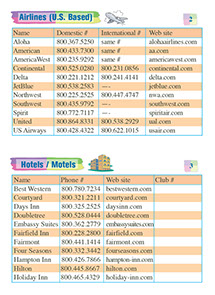
    Airlines (US only)

    Aloha

    800.367.5250  *www.alohaaircargo.com

    American

    800.433.7300  *www.aa.com

    Delta

    800.221.1212  *www.delta.com

    JetBlue

    800.538.2583  *www.jetblue.com

    Southwest

    800.435.9792  *www.southwest.com

    Spirit

    800.772.7117  *www.spiritair.com

    United

    800.864.8331  *www.ual.com

    US Airways

    800.428.4322  *www.usair.com

    Jet Lag

    *  Three nights before you leave, change your bedtime. If traveling to a different time zone and going east, go to bed 1 hour earlier for each time zone you cross; if you’re traveling west, go to bed one hour later for each time zone you cross.

    *  Once on the plane, change your watch to match the time where you are going. Act according to that time. For example, if it is time to sleep in the place you are going, try to sleep on the plane. If it is daytime, do activities that keep you awake.

    *  Ask your doctor about using melatonin, an OTC product that may help “reset” your natural awake/sleep cycle. Also ask about taking vitamin B12 and vitamin C supplements.

    *  During the flight, avoid sleeping pills, alcohol, and caffeine. Drink plenty of fluids to avoid dehydration.

    *  If you arrive at your destination during the day, plan to spend some time outdoors. Try to expose yourself to as many hours of daylight as the number of time zones you crossed.

    *  Don’t go to bed until evening.

    In-Flight Ear Pops

    Note: Consult your physician if you have an acute ear infection, a severe head cold, or sinusitis before flying.

    *  Swallow frequently, yawn, or gently blow through your nose while pinching the nostrils shut to equalize pressure within your ears. (Don’t do this if you have a head cold as it will promote an ear infection.)

    *  If you have a mild head cold, use a nasal spray to keep the nasal passages open. You can also take a decongestant if okay with your doctor.

    Infants and Young Children

    *  Have your infant suck on a pacifier or bottle during the takeoff and landing. (Nursing a baby also helps.)

    *  Ask your doctor about giving children a mild decongestant and antihistamine 1 hour before takeoff and 1 hour before landing.

    Fitness in Flight

    *  Tense your feet for 5 seconds, then relax them. Repeat with each muscle group, including your calves, thighs, buttocks, shoulders, neck, forearms, and hands.

    *  Drop your head forward. Then slowly move it to your right and continue rotating your head to the back, to the left, and to the front again. Repeat four times. Then reverse direction and repeat five times.

    *  Raise both shoulders, then move them back, down, and forward in a circular motion.

    *  Reaching toward the ceiling, stretch your right arm. Then repeat with your left arm.

    To promote leg circulation

    *  Flex and extend your feet, pointing your toes up and down.

    *  Try to get up and walk at least once every 2 hours, if possible. You should also make an effort to breathe slowly and deeply. Aircraft air is lower in oxygen than outdoor air. Deep breathing helps you to get enough oxygen into your blood and avoid fatigue or sluggishness.

    Alamo:  800.462.5266  *www.alamo.com

    Avis:  800.230.4898  *www.avis.com

    Budget:  800.527.0700  *www.budgetrentacar.com

    Dollar:  800.800.3665  *www.dollar.com

    Enterprise:  800.736.8222  *www.enterprise.com

    Hertz:  800.654.3131  *www.hertz.com

    National:  800.227.7368  *www.nationalcar.com

    Payless:  800.237.2804  *www.paylesscar.com

    Thrifty:  800.847.4389  *www.thrifty.com

    Auto Europe: 888.223.5555  *www.autoeurope.com

    Hotel

    Hotel Safety

    *  When you enter your room, prop the door open, turn on the lights, and check all areas before you close the door.

    *  Make sure that windows and connecting doors are locked.

    *  Avoid first floor rooms and those with doors facing outside.

    *  Lock your door using the safety chain.

    *  When you are not in your room, turn the TV on and hang the “Do Not Disturb” sign.

    *  Study the emergency exit map to prepare for an escape.

    Best Western:  800.780.7234  *www.bestwestern.com

    Courtyard:  800.321.2211  *www.courtyard.com

    Days Inn:  800.325.2525  *www.daysinn.com

    Doubletree:  800.528.0444  *www.doubletree.com

    Embassy Suites:  800.362.2779  *www.embassysuites.com

    Fairmont:  800.441.1414  *www.fairmont.com

    Four Seasons:  800.332.3442  *www.fourseasons.com

    Hampton Inn:  800.426.7866  *www.hampton-inn.com

    Hilton:  800.445.8667  *www.hilton.com

    Holiday Inn:  800.465.4329  *www.holiday-inn.com

    Howard Johnson:  800.654.2000  *www.hojo.com

    Hyatt:  800.233.1234  *www.hyatt.com

    LaQuinta:  800.531.5900  *www.laquinta.com

    Le Meridien:  800.543.4300  *www.lemeridien.com

    Marriott:  800.228.9290  *www.marriott.com

    Motel 6:  800.4motel6  *www.motel6.com

    Omni:  800.843.6664  *www.omnihotels.com

    Radisson:  800.333.3333  *www.radisson.com

    Ramada:  800.228.2828  *www.ramada.com

    Red Lion:  800.733.5466  *www.redlion.com

    Red Roof: 800.843.7663  *www.redroof.com

    Residence Inn:  800.331.3131  *www.residenceinn.com

    Ritz Carlton:  800.241.3333  *www.ritzcarlton.com

    Sheraton:  800.325.3535  *www.sheraton.com

    Super8:  800.848.8888  *www.super8.com

    Travel Lodge:  800.255.3050  *www.travelodge.com

    Westin:  888.625.5144  *www.westin.com

    Wyndham:  800.822.4200  *www.wyndham.com

    Motel Sickness

    Preventing Motion Sickness

    Aboard a ship

    *  Spend as much time as you can on deck in the fresh air.

    *  If you’re going to be spending nights on a boat, try to get a cabin near the middle and close to the waterline where there’s less pitching and rolling.

    On a plane

    *  Request a seat over the wings. Avoid sitting in the tail section as it’s the bumpiest.

    *  Open the overhead vents and direct air at your face.

    On a train or car

    *  Fix your gaze on the scenery straight ahead, not to the side.

    *  Sit by an open window for fresh air unless in a polluted area.

    *  If you’re traveling by car, offer to drive. The driver doesn’t usually get motion sickness.

    Other Tips

    *  Get plenty of rest before setting out. Fatigue makes you more vulnerable to motion sickness.

    *  Avoid drinking alcohol before or during travel and don’t overindulge the night before.

    *  Take an OTC medication (i.e., Dramamine®) 30 minutes before travel begins.

    *  If OTC products don’t bring relief, ask your doctor about a prescription medication with scopolamine (a patch).

    *  Don’t read while traveling and don’t try to focus on any other stationary object. Aboard a ship, lie down on your back and close your eyes.

    *  If any of your traveling companions get motion sickness, move away, otherwise you may get sick.
    Page from the Travel CareKit book by the American Institute for Preventive Medicine. www.HealthyLife.com. All rights reserved.

    © American Institute for Preventive Medicine
  • Healthy Exercise Tips For Children

    Fitness

    Image of 2 young kids running.

    *  Set a good example. Be active and get your family to join you. Have fun together. Play with the kids or pets. Go for a walk. Tumble in the leaves. Play catch.

    *  Take the President’s Challenge as a family. Keep track of physical activities each of you does. Earn awards for active lifestyles atwww.presidentschallenge.org.

    *  Get into a routine. Set aside time each day as activity time. Walk, jog, skate, cycle, or swim. Adults need at least 30 minutes of physical activity most days of the week. Children need 60 minutes everyday or most days of the week.

    *  Have an activity party. Make the next birthday party centered on physical activity. Try backyard Olympics or relay races. Have a bowling or skating party.

    *  Set up a home gym. Use things you have in the house. Use canned foods for weights. Use stairs for stair machines.

    *  Move it! Limit TV watching and computer time. When you watch TV, exercise or at least get up and move during TV ads. When you talk on the phone, lift weights or walk around.

    *  Give activity gifts. Give gifts that promote physical activity. Give sporting equipment or active games.

    *  Promote group sports. Children get regular exercise during practice and during games. Being part of a team can be good for children’s self-esteem, too.

    Page image from the Children's Self-Care Book by the American Institute for Preventive Medicine. www.HealthyLife.com. All rights reserved.

    © American Institute for Preventive Medicine

  • Healthy Eating 4

    Nutrition

    Family sitting around table eating.

    Choose foods that help lower LDL (bad) cholesterol and raise HDL (good) cholesterol. Medicines have a big impact on improving blood cholesterol (lipid) levels.  Follow your doctor’s advice for taking medications.

    Action Step:Take a walk at least 30 minutes a day, five days a week. Lose weight. Weight loss and moderate physical activity raise HDL (good) cholesterol.

    Page from HealthyLife Weigh book by the American Institute for Preventive Medicine. www.HealthyLife.com. All rights reserved.

    © American Institute for Preventive Medicine
  • Healthy Eating Basics

    Nutrition

    Healthy eating means getting enough (but not too much) of the nutrients you need for good health. These are protein, carbohydrates, fat, vitamins, minerals, and water.

    The Dietary Guidelines for Americans* give the basics for healthy eating. (These guidelines are for persons aged two years and older.)

    * Get updates for these fromwww.DietaryGuidelines.gov.

    What is Healthy Eating?

    Eat a balanced diet that stays within your calorie needs.

    A balanced diet gives nutrients that your body needs. It also limits saturated and trans fats, cholesterol, salt, added sugars, and alcohol. These things increase the risk of health problems, like heart disease, high blood pressure, and obesity.

    Maintain body weight in a healthy range.

    Balance the calories you eat with physical activity. To prevent weight gain over time, make small decreases in calories and increase physical activity. Lose weight if you are overweight.

    Choose and prepare foods with less salt.

    Health experts suggest limiting sodium to 2,300 mg a day; 1,500 mg if you have high blood pressure, are African-American, or are middle aged or older. You can easily get this amount from foods you eat without adding salt at the table.

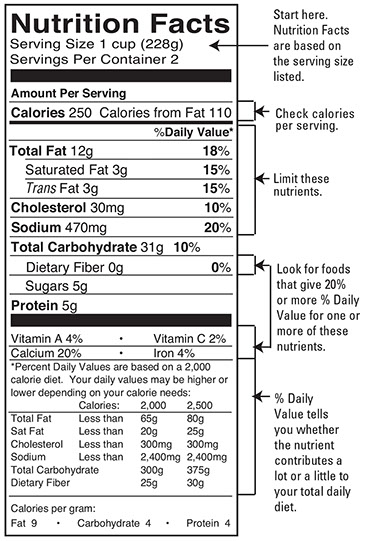
    *  Read the “Nutrition Facts” on food labels for sodium content. Choose ones low in sodium and that are labeled “no added salt,” “reduced sodium,” and “low-sodium.”

    *  Choose fresh or frozen fish, shellfish, poultry, and meat over processed ones, like luncheon meats.

    *  Have potassium-rich foods, such as oranges,  bananas, potatoes, and other fruits and vegetables.

    *  Use spices and herbs, rather than salt, to enhance the flavor of food. Leave the salt shaker off the table. Go easy on condiments, such as soy sauce, ketchup, mustard, pickles, and olives

    If you drink alcoholic beverages, do so in moderation.

    This means no more than 1 drink a day for women and persons over age 65; no more than 2 drinks a day for men.

    1 Alcoholic Drink  =  12 oz. beer (150 calories), 4 to 5 oz. wine (100 calories), or 1-1/4 oz. 80 proof liquor (100 calories).

    Choose a variety of whole grains daily.

    Examples are whole-wheat bread, whole-grain ready-to-eat cereals, oatmeal, whole barley in soup, and cracked wheat in tabouli salad. Whole grains provide energy, vitamins and minerals, dietary fiber, and healthy plant chemicals. Limit high-fat choices, like croissants, pastries, and granola. Limit sugar-sweetened cereals.

    Choose a variety of fruits and vegetables.

    *  Strive for five or more servings a day. Choose ones of different colors to get a variety of vitamins, minerals, and healthy plant chemicals.

    *  Every week, choose vegetables from five subgroups (dark green; orange, yellow, and red; beans and lentils; starchy vegetables, such as green peas; and other vegetables).

    *  Keep ready-to-eat fruits and vegetables on the counter and in clear containers in the front of your refrigerator. Use these for snacks or meals-on-the-go.

    *  Limit fried vegetables and ones in cream or cheese sauces.

    Keep food safe to eat.

    *  Wash your hands before you handle food. Use clean utensils and clean surfaces when you prepare foods.

    *  Separate raw, cooked, and ready-to-eat foods while shopping, preparing, or storing.

    *  Cook foods to a safe temperature. Check and follow the label or recipe.

    *  Keep hot foods higher than 140ºF and cold foods at 40ºF or below. Do not eat these foods when kept for more than 2 hours between 40ºF and 140ºF.

    *  Refrigerate perishable foods promptly. When in doubt, throw it out.

    Choose a diet that is low in saturated and trans fats and cholesterol and moderate in total fat.

    *  Have as little trans fats as possible. These come from foods with hydrogenated oils (e.g., stick margarine, shortenings, processed snack foods, such as crackers). Trans fats are thought to raise LDL (“bad”) cholesterol.

    *  Add little fat to food. When you do, use monounsaturated fats (e.g., canola and olive oils) or polyunsaturated fats (e.g., corn and soybean oils). Limit foods with creamy sauces.

    *  Use nonfat and low-fat dairy products. Use soy milks and yogurts.

    *  Choose lean cuts of beef, pork, lamb, chicken, and turkey. Trim fat from meat. Take skin off poultry before eating. Limit fried meats, etc.

    *  Eat fish 2 to 3 times a week (e.g., salmon, mackerel, anchovies, and tuna). Fish has omega-3 fatty acids, a healthy unsaturated fat. This is in cod liver oil, too. Some fish have mercury, a harmful substance. Follow your doctor’s advice on eating fish, especially if you are pregnant.

    *  Read food labels. Choose foods low in total fat and saturated fat.

    *  Limit dietary cholesterol, as advised by your doctor.

    Choose and prepare foods and beverages with little added sugars or caloric sweeteners.

    *  Read food labels for sugar content. This is listed under “Total Carbohydrate” in the “Nutrition Facts” section. Sugar content includes the natural sugar in the food and added sugars, if any. Look at the ingredient list. Avoid or limit foods that list sugar, high fructose corn syrup, etc. as the 1st or 2nd ingredient.

    *  Between meals, limit foods and beverages with  sugars and starches. If you do have them, brush your teeth afterwards to reduce the risk of tooth decay. Chew a sugar-free gum with the artificial sweetener xylitol.

    *  Sugar substitutes (acesulfame, aspartame, saccharin, and sucralose) provide a sweet taste without the calories of sugar. Use them in moderation, if at all.

    *  Choose water, unsweetened beverages, and nonfat milk over beverages high in added sugars, such as soft drinks and fruitades.

    *  Choose fruit for desserts and snacks. Limit cakes, cookies, pies, and candy.

    Use ChooseMyPlate.gov

    ChooseMyPlate.gov logo

    Find out about this at:www.choosemyplate.gov. At this Web site, you can:

    *  Get a Daily Food Plan based on your age, gender, height, weight, and physical activity level. Your plan shows how many calories you need each day and the number of servings from basic food groups, subgroups, and oils to meet your calorie needs. Serving sizes are given in cups; ½ cups, etc.

    *  Use SuperTracker to help you plan and track your food intake and physical activities.

    *  Use Food-A-Pedia to look up nutrition information for over 8,000 foods. You can also compare foods side-by-side to help you make healthy choices.

    *  Get nutrition tips.

    *  Find out about healthy eating on a budget.

    Read Food Labels

    Look at dates on the label. Don’t buy food items that are spoiled or will spoil before you use them.

    *  Read the ingredients. Check for items that you or family members are allergic or sensitive to, such as peanuts, milk, eggs, and wheat.

    *  Know that ingredients are listed in order from most to least used. Avoid or limit foods that list fats and sugar sources first or second.

    Sample of a food label with breakdowns on what each section means.

    Healthy Eating Tips

    When you shop for foods, buy whole grains, fruits and vegetables (fresh, frozen, etc.), nonfat dairy foods, lean meats, etc. Limit high fat, high calorie snack foods.

    *  Drink 6 to 8 or more glasses of water a day.

    *  Eat at regular times each day. Don’t skip breakfast.

    *  Eat when you are truly hungry, not as a response to emotions.

    *  Get recommended grams (gms.) of dietary fiber/day. Males age 50 and younger need 38 gms./day; 30 gms./day if over age 50. Women age 50 and younger need 25 gms./day; 21gms./day if over age 50. Fiber is a type of carbohydrate (from plant foods only) that the body does not digest. Read food labels for dietary fiber content. Increase fiber gradually. Drink plenty of water, too.

    For Eating Out

    *  Choose a restaurant that offers low-fat choices. Order an item from the menu instead of opting for the “all-you-can-eat” buffet.

    *  Order appetizer or side dish sizes for entrees. Ask for half orders or share an order with another person. When served whole orders, eat half. Take the rest home for another meal.

    *  Choose baked, roasted, poached, and steamed items. Limit fried items.

    *  Ask that sauces and salad dressings be served on the side. Use small amounts, if any.

    *  At fast-food places, order small sandwiches, salads, and low-fat milk or unsweetened drinks. Limit jumbo double decker sandwiches, etc. Don’t supersize meals. Go easy on regular salad dressings and fatty sauces.

    *  Order pizza with lots of vegetables, less meat, and half the cheese.

    *  When going to a party where many high-fat foods will be served, offer to take a fresh fruit or vegetable dish.

    For a Busy Lifestyle

    *  Take healthy snacks with you. Examples are fresh fruits, bagels, and meal replacement drinks or bars.

    *  Drink bottled water instead of regular and diet colas and other beverages with caffeine.

    *  When you cook, prepare enough for 3 or 4 meals. Freeze meals in portions. Reheat as needed.

    *  For a super quick meal, eat a sandwich, a bowl of vegetable soup, fresh fruit, and drink a glass of skim milk. If you eat out, you can get these at a deli and grocery stores.

    Resources

    ChooseMyPlate.gov

    www.choosemyplate.gov

    Food & Drug Administration

    www.fda.gov/Food/default.htm

    Nutrition.Gov

    www.nutrition.gov

    Office of Dietary Supplements National Institutes of Health

    www.ods.od.nih.gov

    Cover image to the Healthy Eating brochure by the American Institute for Preventive Medicine. www.HealthyLife.com. All rights reserved.

    © American Institute for Preventive Medicine

  • A Shopper’s Guide To Exercise Equipment

    Fitness

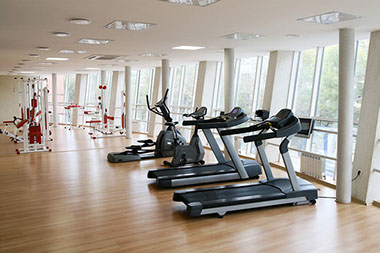
    Image of exercise equipment.

    Treadmills, stationary bikes, trampolines, rowing machines, and cross-country ski simulators have been called dream machines because people sometimes expect belts, cogs, pulleys, and wheels to help make all their fitness dreams come true. And exercise equipment is a universal fixture in many homes as well as health clubs.

    This “hardware for soft bodies” can provide a good workout. But you have to understand what the equipment is designed to do for you. A stationary bike, for instance, is good for burning calories, toning the lower body, and conditioning your heart. But it won’t tighten your abdominal muscles or strengthen your upper arms.

    Once you’ve decided what type of apparatus you need, you can narrow the selection down to the best choice if you:

    *  Find out if the company who makes the equipment (and the dealer who sells it) is reputable.

    *  Talk to other people who own the model you’re considering (or one like it).

    *  Decide if the price fits your budget.

    *  Test the equipment.

    *  Determine if it’s easy to assemble, install, or move, and what maintenance it requires.

    *  Look for a reasonable warranty.

    *  Be sure the equipment will challenge you, so you don’t “grow out of it” in a short time.

    Page image from A Year of Health Hints book by the American Institute for Preventive Medicine. www.HealthyLife.com. All rights reserved.

    © American Institute for Preventive Medicine
  • Good Cheer For Holiday Dieting 2

    Weight Control

    Image of holiday inspired strawberries.

    Big holiday coming up? Don’t panic. With a good game plan and strategic planning you and your diet can not only survive holidays but you can actually thrive on them. Holidays do not have to be a time of feast or famine-you can strike a happy balance between gorging and self-sacrifice.

    *  Review your eating habits from the previous year’s celebration. Does food take center stage at Thanksgiving, Christmas, Fourth of July, and other big holidays? Do you genuinely enjoy foods like fruitcake, for example, or do you just eat them out of custom and tradition?

    *  Decide which customary holiday food habits you could easily change. (If you like to cook out for the Fourth of July, for example, consider barbecued chicken without skin instead of hot dogs.)

    *  Before digging in at a big holiday feast, imagine how you will feel after eating it. Visualize the bloated, uncomfortable, and guilty feelings you’ve experienced on past occasions.

    *  Forget about being “perfect” on holidays. Stringent dieting may be unrealistic and you could sabotage your efforts by setting standards that are too high. Don’t set yourself up for failure by only thinking of what you can’t have. Concentrate instead on what is available on your diet plan.

    *  Learn to be festive without depending on alcohol. A drink here, a toast there-the calories of alcohol can add up. Substitute club soda or mineral water for alcohol.

    *  If you’re invited to someone’s home for dinner, ask if you can contribute a dish, then make it low-calorie. (And be sure to make plenty. Low-calorie foods are usually very popular.)

    *  Remember that the major purpose of the holidays is to enjoy family and friends. Food and alcohol are secondary factors.

    Page from A Year of Health Hints book by the American Institute for Preventive Medicine. www.HealthyLife.com. All rights reserved.

    © American Institute for Preventive Medicine
  • Go For The Good Oils

    Nutrition

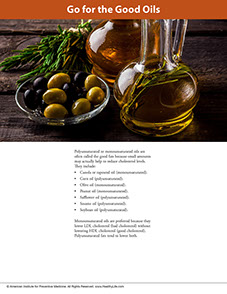
    Image of olive oil and olives.

    Polyunsaturated or monounsaturated oils are often called the good fats because small amounts may actually help to reduce cholesterol levels. They include:

    *  Canola or rapeseed oil (monounsaturated).

    *  Corn oil (polyunsaturated).

    *  Olive oil (monounsaturated).

    *  Peanut oil (monounsaturated).

    *  Safflower oil (polyunsaturated).

    *  Sesame oil (polyunsaturated).

    *  Soybean oil (polyunsaturated).

    Monounsaturated oils are preferred because they lower LDL cholesterol (bad cholesterol) without lowering HDL cholesterol (good cholesterol). Polyunsaturated fats tend to lower both.

    Page from A Year of Health Hints book by the American Institute for Preventive Medicine. www.HealthyLife.com. All rights reserved.

    © American Institute for Preventive Medicine

  • Give Water Exercise A Try

    Fitness

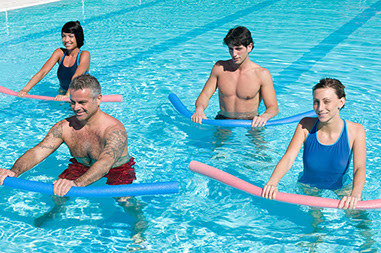
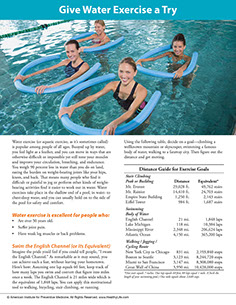
    Water exercise class in session.

    Water exercise (or aquatic exercise, as it’s sometimes called) is popular among people of all ages. Buoyed up by water, you feel light as a feather, and you can move in ways that are otherwise difficult or impossible yet still tone your muscles and improve your circulation, breathing, and endurance. You weigh 90 percent less in water than you do on land, easing the burden on weight-bearing joints like your hips, knees, and back. That means many people who find it difficult or painful to jog or perform other kinds of weight-bearing activities find it easier to work out in water. Water exercises take place in the shallow end of a pool, in waist- to chest-deep water, and you can usually hold on to the side of the pool for safety and comfort.

    Swim the English Channel (or Its Equivalent)

    Imagine the pride you’d feel if you could tell people, “I swam the English Channel.” As remarkable as it may sound, you can achieve such a feat, without leaving your hometown. Here’s how: Assuming one lap equals 60 feet, keep track of how many laps you swim and convert that figure into miles once a week. The English Channel is 21 miles wide which is the equivalent of 1,848 laps. You can apply this motivational tool to walking, bicycling, stair climbing, or running. Using the following table, decide on a goal-climbing a well-known mountain or skyscraper, swimming a famous body of water, walking to a faraway city. Then figure out the distance and get moving.

    Water exercise is excellent for people who:

    *  Are over 50 years old.

    *  Suffer joint pain.

    *  Have weak leg muscles or back problems.

    Page image from A Year of Health Hints book by the American Institute for Preventive Medicine. www.HealthyLife.com. All rights reserved.

    © American Institute for Preventive Medicine
  • Get Your Fruits & Vegetables

    Nutrition

    Man gardening vegetables.

    *  Buy a variety of fruits and vegetables and put them in places that make them handy to eat.

    *  Keep fruit in a bowl on your table or counter.

    *  Keep cut up veggies in clear containers in the refrigerator and at eye level when you open the door.

    *  Add raisins and other dried fruits to cereal, yogurt, and salads.

    *  Add onions, green pepper, mushrooms, etc. to scrambled eggs, casseroles, etc.

    *  Choose restaurants that offer vegetables, salad bars, and fruits for dessert.

    *  Get lunch or dinner at a produce store or deli that offers a lot of fruits and vegetables. Before eating them, wash the skins at the store’s water fountain.

    Page from HealthyLife Weigh book by the American Institute for Preventive Medicine. www.HealthyLife.com. All rights reserved.

    © American Institute for Preventive Medicine