Blog

  • Get Up & Go With Better Breakfasts

    Nutrition

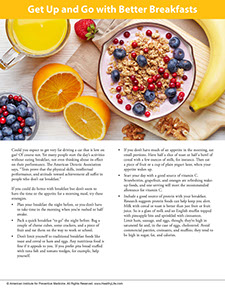
    Image of breakfast with fruit and orange juice.

    Could you expect to get very far driving a car that is low on gas? Of course not. Yet many people start the day’s activities without eating breakfast, not even thinking about its effect on their performance. The American Dietetic Association says, “Tests prove that the physical skills, intellectual performance, and attitude toward achievement all suffer in people who don’t eat breakfast.”

    If you could do better with breakfast but don’t seem to have the time or the appetite for a morning meal, try these strategies.

    *  Plan your breakfast the night before, so you don’t have to take time in the morning when you’re rushed or half awake.

    *  Pack a quick breakfast “to go” the night before. Bag a couple of cheese cubes, some crackers, and a piece of fruit and eat them on the way to work or school.

    *  Don’t limit yourself to traditional breakfast foods like toast and cereal or ham and eggs. Any nutritious food is fine if it appeals to you. If you prefer pita bread stuffed with tuna fish and tomato wedges, for example, help yourself.

    *  If you don’t have much of an appetite in the morning, eat small portions. Have half a slice of toast or half a bowl of cereal with a few ounces of milk, for instance. Then eat a piece of fruit or a cup of plain yogurt later, when your appetite wakes up.

    *  Start your day with a good source of vitamin C. Strawberries, grapefruit, and oranges are refreshing wake-up foods, and one serving will meet the recommended allowance for vitamin C.

    *  Include a good source of protein with your breakfast. Research suggests protein foods can help keep you alert. Milk with cereal or toast is better than just fruit or fruit juice. So is a glass of milk and an English muffin topped with pineapple bits and sprinkled with cinnamon. Limit ham, sausage, and eggs, though; they’re high in saturated fat and, in the case of eggs, cholesterol. Avoid commercial pastries, croissants, and muffins; they tend to be high in sugar, fat, and calories.

    Page from A Year of Health Hints book by the American Institute for Preventive Medicine. www.HealthyLife.com. All rights reserved.

    © American Institute for Preventive Medicine

  • Get The Nutrients You Need

    Nutrition

    To get needed nutrients, vary your food choices.

    Whole Grains

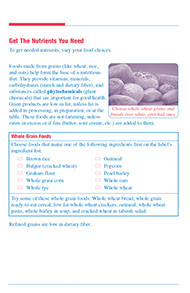
    A variety of whole grains.

    Foods made from grains (like wheat, rice, and oats) help form the base of a nutritious diet. They provide vitamins, minerals, carbohydrates (starch and dietary fiber), and substances called phytochemicals (plant chemicals) that are important for good health. Grain products are low in fat, unless fat is added in processing, in preparation, or at the table. These foods are not fattening, unless eaten in excess or if fats (butter, sour cream, etc.) are added to them.

    Whole Grain Foods

    Choose foods that name one of the following ingredients first on the label’s ingredient list:

    *  Brown rice

    *  Oatmeal

    *  Bulgur (cracked wheat)

    *  Popcorn

    *  Graham flour

    *  Pearl barley

    *  Whole grain corn

    *  Whole oats

    *  Whole rye

    *  Whole wheat

    Try some of these whole grain foods: Whole wheat bread, whole grain ready-to-eat cereal, low-fat whole wheat crackers, oatmeal, whole wheat pasta, whole barley in soup, and cracked wheat in tabouli salad.

    Refined grains are low in dietary fiber.

    Fruits & Vegetables

    These foods are nutrient dense. This means that they give a lot of nutrients, but are low in calories. Fruits and vegetables provide essential vitamins and minerals, dietary fiber, and a variety of phytochemicals (plant chemicals) that may play a role in preventing certain diseases.

    Good Sources of Nutrients in Fruits and Vegetables

    Good Sources of Vitamin A (carotenoids). Vitamin A is needed for night vision and helps fight infections.

    * Orange vegetables, such as carrots, sweet potatoes, and pumpkin

    * Dark-green leafy vegetables, such as spinach, collards, and turnip greens

    * Mango; cantaloupe; apricots; and tomatoes

    Good Sources of Vitamin C. Vitamin C helps heal wounds and aids iron absorption.

    *  Citrus fruits and juices; kiwi fruit; strawberries; cantaloupe

    *  Broccoli; peppers; tomatoes; cabbage; and potatoes

    *  Leafy greens, such as romaine lettuce, turnip greens, and spinach

    Good Sources of Folate (a B vitamin). Folate prevents some birth defects and is needed to make red blood cells and for growth.

    *  Cooked dry beans and peas; peanuts

    *  Oranges and orange juice

    *  Dark-green leafy vegetables, such as spinach and mustard greens; romaine lettuce; green peas

    Good Sources of Potassium. Potassium is needed for fluid balance and helps control activity of heart muscle, kidneys, and nervous system.

    *  Baked white or sweet potatoes; cooked greens, such as spinach; winter (orange) squash

    *  Bananas; potatoes; dried fruits, such as apricots and prunes; orange juice

    *  Lentils; cooked, dry beans, such as baked beans

    Guidelines for choosing fruits and vegetables.

    *  Strive to eat 5 servings a day of fruits and vegetables. Do not add fat.

    *  Also, eat a variety of fruits and vegetables daily. Choose from fresh, canned, frozen, etc.

    *  Choose fruits and vegetables of different colors, to get a variety of phytochemicals (plant chemicals). Certain plant chemicals have been linked with the prevention and treatment of cancer, diabetes, heart disease, and high blood pressure.

    *  Regularly choose whole or cut up fruits and vegetables over juices. Juices have little or no fiber. Chewing fruits and vegetables takes more time and can be more filling than swallowing juice.

    *  Wash fresh fruits and vegetables before using.

    *  Refrigerate most fruits and vegetables to retain nutrients. Exceptions are bananas, onions, garlic, and tomatoes. After you cut or peel these, though, put them in the refrigerator.

    *  Find ways to include different fruits and vegetables in your meals and snacks.

    *  Keep ready-to-eat raw vegetables handy in a clear container in the front of your refrigerator for snacks or meals-on-the-go.

    *  Enjoy fruits as a naturally sweet end to a meal.

    *  When eating out, choose a variety of vegetables at a salad bar. Another idea is to get your lunch at a produce store. Some have salad bars and sandwiches made to order. All have plenty of fresh fruits and vegetables to choose from. Wash these at the store’s water fountain before you eat them.

    *  When you cook vegetables, do so quickly and in as little water as possible. Some vitamins, like vitamin C, are destroyed when soaked in water and/or overcooked.

    Dietary Fiber

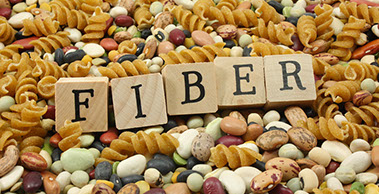
    A variety of fiber enriched food with the word fiber spelled out with blocks.

    What Is Dietary Fiber?

    Fiber is a carbohydrate. It does not provide 4 calories per gram that other carbohydrates do because the body does not break down fibers and absorb them. Foods with fiber do, however, have calories. Fiber is found in plant foods. Animal foods do not have fiber.

    How Much Fiber Do You Need Each Day?

    Daily Reference Values are guidelines for nutrient needs. These are listed on food labels and depend on total caloric intake. The Daily Reference Value (DRV) for fiber is 11.5 grams per 1000 calories. So, if you eat 1200-1300 calories a day, you should aim to get at least 15 grams of fiber per day; at least 18 grams per day for 1500-1600 calories; and at least  20 grams per day for 1800 calories.

    Most persons get only 11 to 15 grams of fiber a day. Many health officials advise getting 20 to 35 grams of fiber a day. To get this much fiber when you limit calories, you need to do the following:

    * Have whole-grain breads, cereals, and pasta instead of white and refined breads, cereals, and pasta.

    * Have legumes (beans, etc.) in salads, soups, chili, etc.

    * Regularly choose whole fruits over fruit juices.

    * Snack on raw vegetables instead of high-fat and high-calorie snacks like chips, cookies, etc.

    * Discuss taking fiber supplements with your doctor.

    Resources

    Fruits & Veggies ─ More Matters®www.fruitsandveggiesmorematters.org

    Page from HealthyLife Weigh book by the American Institute for Preventive Medicine. www.HealthyLife.com. All rights reserved.

    © American Institute for Preventive Medicine

  • Get The Health Benefits Of Fish

    Nutrition

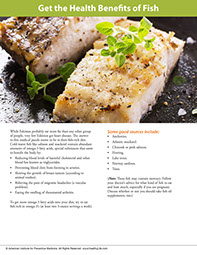
    Image of cooked fish ready to eat on a plate.

    While Eskimos probably eat more fat than any other group of people, very few Eskimos get heart disease. The answer to this medical puzzle seems to lie in their fish-rich diet. Cold-water fish like salmon and mackerel contain abundant amounts of omega-3 fatty acids, special substances that seem to benefit the body by:

    *  Reducing blood levels of harmful cholesterol and other blood fats known as triglycerides.

    *  Preventing blood clots from forming in arteries.

    *  Slowing the growth of breast tumors (according to animal studies).

    *  Relieving the pain of migraine headaches (a vascular problem).

    *  Easing the swelling of rheumatoid arthritis.

    To get more omega-3 fatty acids into your diet, try to eat fish rich in omega-3’s (at least two 3-ounce servings a week). Some good sources include:

    *  Anchovies.

    *  Atlantic mackerel.

    *  Chinook or pink salmon.

    *  Herring.

    *  Lake trout.

    *  Norway sardines.

    *  Tuna.

    {Note: These fish may contain mercury. Follow your doctor’s advice for what kind of fish to eat and how much, especially if you are pregnant. Discuss whether or not you should take fish oil supplements, too.}

    Page from A Year of Health Hints book by the American Institute for Preventive Medicine. www.HealthyLife.com. All rights reserved.

    © American Institute for Preventive Medicine

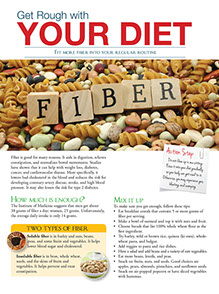
  • Get Rough With Your Diet

    Nutrition

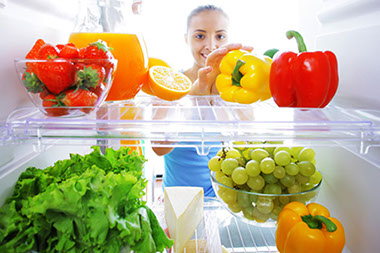
    Image of fresh produce in the fridge.

    Fit more fiber into your regular routine.

    Fiber is good for many reasons. It aids in digestion, relieves constipation, and normalizes bowel movements. Studies have shown that it can help with weight loss, diabetes, cancer, and cardiovascular disease. More specifically, it lowers bad cholesterol in the blood and reduces the risk for developing coronary artery disease, stroke, and high blood pressure. It may also lessen the risk for type 2 diabetes.

    How much is enough

    The Institute of Medicine suggests that men get about 38 grams of fiber a day; women, 25 grams. Unfortunately, the average daily intake is only 14 grams.

    Mix it up

    To make sure you get enough, follow these tips:

    *  Eat breakfast cereals that contain 5 or more grams of fiber per serving.

    *  Make a bowl of oatmeal and top it with nuts and fruit.

    *  Choose breads that list 100% whole wheat flour as the first ingredient.

    *  Try barley, wild or brown rice, quinoa (ki-nwa), whole-wheat pasta, and bulgur.

    *  Add veggies to pasta and rice dishes.

    *  Have a salad and add beans and a variety of raw vegetables.

    *  Eat more beans, lentils, and peas.

    *  Snack on fruits, nuts, and seeds. Good choices are apples, pears, almonds, pistachios, and sunflower seeds.

    *  Snack on air-popped popcorn or have sliced vegetables with hummus.

    Two types of fiber

    Soluble fiber is in barley and oats, beans, peas, and some fruits and vegetables. It helps lower blood sugar and cholesterol.

    Insoluble fiber is in bran, whole wheat, seeds, and the skins of fruits and vegetables. It helps prevent and treat constipation.

    Action Step

    Do not fiber up in one sitting. Ease it into your diet gradually so your body can get used to it. Otherwise, you may experience gas, bloating, and cramping.

    Page from Ways to Well-Being book by the American Institute for Preventive Medicine. www.HealthyLife.com. All rights reserved.

    © American Institute for Preventive Medicine

  • Get More Food & Nutrients For The Calories You Eat

    Nutrition

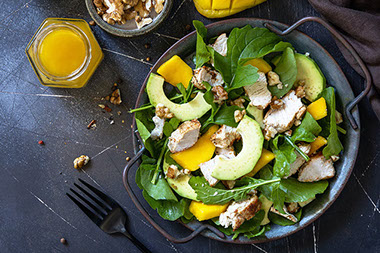
    Salad with walnuts, mangos, chicken and avocado.

    See how much more you can eat when you choose nutrient-dense foods over ones with the same number of calories, but less healthy nutrients.

    Frosted doughnut, coffee, nondairy creamer and sugar

    Calories: 325; Total Fat: 16 grams

    Fiber: 1 gram

    Hot dog, chips and cola

    Calories: 570; Total Fat: 25 grams

    Fiber: 2 grams

    1 frosted brownie

    Calories: 200; Total Fat: 9 grams

    Fiber: 1 gram

    Oat cereal, blueberries, strawberries, apple, skim milk and black coffee

    Calories: 300; Total Fat: 3 grams

    Fiber: 11 grams

    Pasta with beans and vegetables. Unsweetened ice tea with lemon.

    Calories: 500; Total Fat: 10 grams

    Fiber:  16 grams

    Corn flakes, fruit and skim milk

    Calories: 200; Total Fat: 1 gram

    Fiber: 3 grams

    Action Step:Read the Nutrition Facts on food labels to find out if you get any nutrients for the calories per serving. Look at dietary fiber, vitamins A and C, calcium, potassium, and iron.

    Page from HealthyLife Weigh book by the American Institute for Preventive Medicine. www.HealthyLife.com. All rights reserved.

    © American Institute for Preventive Medicine

  • Where To Get Help For A Drinking Problem

    Substance Use & Abuse

    Image of man seeking help.

    Problem drinkers have many options to help conquer their problem.

    *  Psychotherapy. Counseling, one-on-one with a therapist or in group sessions, focuses on feelings and situations related to drinking. The goal is to help an individual cope with emotional problems and other stresses so that he or she no longer relies on alcohol.

    *  Support groups. Organized groups like Alcoholics Anonymous provide assistance, encouragement, and guidance (including a 12-step recovery plan) for members who share an alcohol problem.

    *  Medication. One type blocks the craving for alcohol and the pleasure of getting high. A second type reduces the physical distress and emotional effects people usually get when they quit drinking. A third type causes physical reactions, such as vomiting, when drinking alcohol.

    *  Alcohol treatment centers. Affiliated with hospitals, medical clinics, or community health centers, alcohol treatment centers generally combine more than one approach. People who need help are either treated as an outpatient or admitted as an inpatient, depending on how serious the problem is.

    For help, consult the following resources.

    *  Your family physician. A doctor who knows the drinker (and the drinker’s family) can determine what type of treatment would be appropriate. Also, anyone with a history of heavy drinking should have a thorough medical exam to uncover any medical conditions that may have been caused or aggravated by alcohol abuse.

    *  Family service agencies. Most communities have agencies that run outpatient alcoholic treatment programs or can refer you to one. Look in your telephone directory or contact your local social services department.

    *  Your religious adviser. Talk with your priest, minister, or rabbi.

    Page from A Year of Health Hints book by the American Institute for Preventive Medicine. www.HealthyLife.com. All rights reserved.

    © American Institute for Preventive Medicine

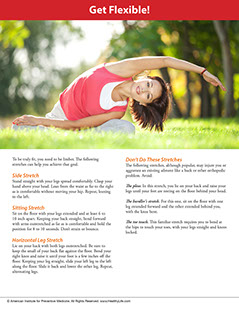
  • Get Flexible!

    Fitness

    To be truly fit, you need to be limber. The following stretches can help you achieve that goal.

    Side Stretch

    Stand straight with your legs spread comfortably. Clasp your hand above your head. Lean from the waist as far to the right as is comfortable without  moving your hip. Repeat, leaning to the left.

    Sitting Stretch

    Sit on the floor with your legs extended and at least 6 to 10 inch apart. Keeping your back straight, bend forward with arms outstretched as far as is comfortable and hold the position for 8 to 10 seconds. Don’t strain or bounce.

    Horizontal Leg Stretch

    Lie on your back with both legs outstretched. Be sure to keep the small of your back flat against the floor. Bend your right knee and raise it until your foot is a few inches off the floor. Keeping your leg straight, slide your left leg to the left along the floor. Slide it back and lower the other leg. Repeat, alternating legs.

    Don’t Do These Stretches

    The following stretches, although popular, may injure you or aggravate an existing ailment like a back or other orthopedic problem. Avoid:

    The plow. In this stretch, you lie on your back and raise your legs until your feet are resting on the floor behind your head.

    The hurdler’s stretch. For this one, sit on the floor with one leg extended forward and the other extended behind you, with the knee bent.

    The toe touch. This familiar stretch requires you to bend at the hips to touch your toes, with your legs straight and knees locked.

    Page image from A Year of Health Hints book by the American Institute for Preventive Medicine. www.HealthyLife.com. All rights reserved.

    © American Institute for Preventive Medicine

  • Get Fit For A Cause

    Fitness

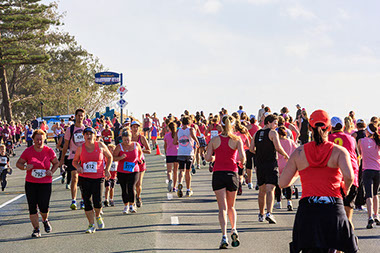
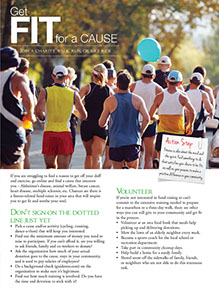
    People running a marathon for charity.

    Join a charity walk, run, or bike ride.

    If you are struggling to find a reason to get off your duff and exercise, go online and find a cause that interests you – Alzheimer’s disease, animal welfare, breast cancer, heart disease, multiple sclerosis, etc. Chances are there is a fitness-related fund-raiser in your area that will inspire you to get fit and soothe your soul.

    Don’t sign on the dotted line just yet.

    *  Pick a cause and/or activity (cycling, running, dance-a-thon) that will keep you interested.

    *  Find out the minimum amount of money you need to raise to participate. If you can’t afford it, are you willing to ask friends, family and co-workers to donate?

    *  Ask the organization how much of your actual donation goes to the cause, stays in your community, and is used to pay salaries of employees?

    *  Do a background check (www.guidestar.com) on the organization to make sure it’s legitimate.

    *  Find out how much training is involved. Do you have the time and devotion to stick with it?

    Volunteer.

    If you’re not interested in fund-raising or can’t commit to the extensive training needed to prepare for a marathon or a three-day walk, there are other ways you can still give to your community and get fit in the process.

    *  Volunteer at an area food bank that needs help picking up and delivering donations.

    *  Mow the lawn of an elderly neighbor every week.

    *  Become a sports coach for the local school or recreation department.

    *  Take part in community cleanup days.

    *  Help build a home for a needy family.

    *  Shovel snow off the sidewalks of family, friends, or neighbors who are not able to do this strenuous task.

    Action Step

    Fitness is also about the mind and the spirit. Find something to do that satisfies your desire to be fit, as well as your passion to make a positive difference in your community.

    Page image from Ways to Well-Being book by the American Institute for Preventive Medicine. www.HealthyLife.com. All rights reserved.

    © American Institute for Preventive Medicine

  • General Stress Management

    Systematic Stress Management Program

    Step 5: Thinking Differently Section

    Introduction

    Match the Self-Talk to the Theory

    Catch Questionable Comparisons

    Thought Habits Become Language Patterns

    How to Dispute a Belief

    Thought Control Techniques

    The Power of Creative Imagination

    Steps for Developing the Most Effective Creative Imagery

    General Stress Management Guidelines

    A variety of stress management techniques are available for our use and health enhancement. Some will be more useful than others. Try each of them several times to know which are the most effective for you. Keep in mind the following guidelines for learning stress management.

    1.  Changing behaviors should be thought of as a process that takes time. Don’t look for quick fixes, but rather strive for long-term results.

    2.  Don’t try to change everything overnight. Pick one or two areas of stress to work on.

    3.  Think about your choices. Take small steps. Don’t tackle your biggest problem right away. Choose situations that will bring immediate success and satisfaction.

    4.  Expect some setbacks, but don’t get discouraged by them. Return to your techniques.

    5.  Keep your self-worth separate from your stress management efforts. It’s the trying that’s important.

    6.  Expect change in small areas first. Most stressful situations need to be tackled individually.

    7.  Let others help. Share your goals with them and ask them to help with your stress management efforts.

    8.  Keep a journal or diary of your progress. It helps focus your efforts and keeps you aware of what you are doing.

    9.  Practice several of the techniques you have learned. Don’t rely on just one.

    10. You must really use these techniques to benefit from them. Don’t put your materials away and forget what you’ve learned. Reuse the information frequently. Set a goal to read this information in three, six, and twelve months.

    Page from the Systematic Stress Management book by the American Institute for Preventive Medicine. www.HealthyLife.com. All rights reserved.

    © American Institute for Preventive Medicine

    Step 1: Understanding Stress

    Step 3: Type A & B Behavior Patterns

    Step 5: Thinking Differently

    Step 7: Communication & Stress

    Step 2: Stress Management at Work

    Step 4: Biofeedback Training & Relaxation

    Step 6: Time Management

    Steps to Systematic Stress Management™

    RELATED ARTICLES

    © American Institute for Preventive Medicine  –  All Rights Reserved.Disclaimer|www.HealthyLife.com

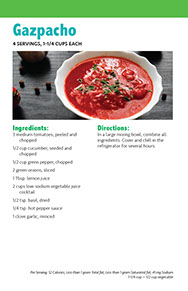
  • Gazpacho

    Nutrition

    4 Servings, 1-1/4 cups each

    Ingredients:

    3 medium tomatoes, peeled and chopped

    1/2 cup cucumber, seeded and chopped

    1/2 cup green pepper, chopped

    2 green onions, sliced

    1 Tbsp. lemon juice

    2 cups low-sodium vegetable juice cocktail

    1/2 tsp. basil, dried

    1/4 tsp. hot pepper sauce

    1 clove garlic, minced

    Directions:

    In a large mixing bowl, combine all ingredients. Cover and chill in the refrigerator for several hours.

    Per Serving:

    Calories – 52

    Total fat – Less than 1 gram

    Saturated fat – Less than 1 gram

    Sodium – 41 mg

    Page from HealthyLife Weigh Recipe book by the American Institute for Preventive Medicine. www.HealthyLife.com. All rights reserved.

    © American Institute for Preventive Medicine