Blog

  • Driving Yourself To Drink

    Substance Use & Abuse

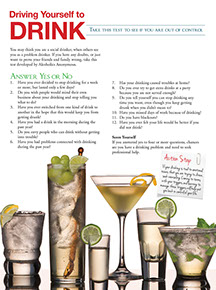
    Take this test to see if you are out of control.

    You may think you are a social drinker, when others see you as a problem drinker. If you have any doubts, or just want to prove your friends and family wrong, take this test developed by Alcoholics Anonymous.

    Answer Yes or No:

    1.  Have you ever decided to stop drinking for a week or more, but lasted only a few days?

    2.  Do you wish people would mind their own business about your drinking and stop telling you what to do?

    3.  Have you ever switched from one kind of drink to another in the hope that this would keep you from getting drunk?

    4.  Have you had a drink in the morning during the past year?

    5.  Do you envy people who can drink without getting into trouble?

    6.  Have you had problems connected with drinking during the past year?

    7.  Has your drinking caused troubles at home?

    8.  Do you ever try to get extra drinks at a party because you are not served enough?

    9.  Do you tell yourself you can stop drinking any time you want, even though you keep getting drunk when you didn’t mean to?

    10. Have you missed days of work because of drinking?

    11. Do you have blackouts?

    12. Have you ever felt your life would be better if you did not drink?

    Score Yourself: If you answered yes to four or more questions, chances are you have a drinking problem and need to seek professional help.

    Action Step

    If your drinking is tied to emotional issues that you are trying to drown, seek counseling. Coming to terms with your triggers and learning to manage those triggers will help put you back in control of your life.
    Page from Ways to Well-Being book by the American Institute for Preventive Medicine. www.HealthyLife.com. All rights reserved.

    © American Institute for Preventive Medicine

  • Drink Your Fill

    Nutrition

    Hand pouring water into a glass.

    Our bodies continually lose water throughout the day. With water being vital for your body to function optimally, it’s important to stay hydrated. Although water-intake needs differ from person to person, an easy rule to aim for is 8×8 – drink eight-ounce glasses eight times a day. When the air is drier, such as in winter, you may need to drink even more water each day to replenish your skin so that it stays moist. You also need more when you do an activity that makes you sweat.

    Be More Earth-Friendly

    Using less plastic means eliminating it from the start. Choose brands that select non-plastic packaging or buy in bulk, using bags and bottles you bring from home.

    Page from HealthyLife Weigh book by the American Institute for Preventive Medicine. www.HealthyLife.com. All rights reserved.

    © American Institute for Preventive Medicine

  • Drink Water, The Nutrient For Every Cell

    Nutrition

    Image of person filling up glass with tap water.

    Two-thirds of your body is composed of water, making it your body’s most vital nutrient. Water:

    *  Provides a valuable source of minerals, like calcium and magnesium.

    *  Helps digest food and absorb nutrients into the body.

    *  Carries nutrients to organs via the bloodstream.

    *  Moistens mucous membranes and lubricates the joints.

    *  Carries away bodily waste products.

    *  Cools the body through perspiration.

    Many people underestimate their need for water. The average adult should drink six to eight 8-ounce glasses of water (or its equivalent) a day. You can meet part of that quota by consuming high water content foods.

    Some examples include:

    *  Iceberg lettuce (95 percent water).

    *  Cantaloupe (91 percent water).

    *  Raw carrots (88 percent water).

    Page from A Year of Health Hints book by the American Institute for Preventive Medicine. www.HealthyLife.com. All rights reserved.

    © American Institute for Preventive Medicine

  • Drink Responsibly

    Substance Use & Abuse

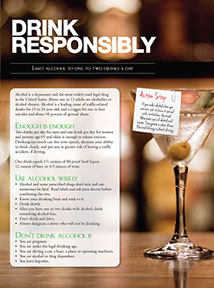
    Limit alcohol to one to two drinks a day.

    Alcohol is a depressant and the most widely used legal drug in the United States. About one in 13 adults are alcoholics or alcohol abusers. Alcohol is a leading cause of traffic-related deaths for 15 to 24 year olds and a trigger for one in four suicides and about 50 percent of spousal abuse.

    Enough is enough.

    Two drinks per day for men and one drink per day for women and persons age 65 and older is enough to release tension. Drinking too much can slur your speech, decrease your ability to think clearly, and put you at greater risk of having a traffic accident, if driving.

    One drink equals 1-1/2 ounces of 80-proof hard liquor, 12 ounces of beer, or 4-5 ounces of wine.

    Use alcohol wisely:

    *  Alcohol and some prescribed drugs don’t mix and can sometimes be fatal. Read labels and ask your doctor before combining the two.

    *  Know your drinking limit and stick to it.

    *  Drink slowly.

    *  After you have one to two drinks with alcohol, drink something alcohol-free.

    *  Don’t drink and drive.

    *  Always designate a driver who will not be drinking.

    Don’t drink alcohol if:

    *  You are pregnant.

    *  You are under the legal drinking age.

    *  You are driving a car, a boat, a plane or operating machines.

    *  You are alcohol or drug dependent.

    *  You have hepatitis.

    Action Step

    If you order alcohol when you eat out, ask to have it served with, not before, the meal. Alternate sips of alcohol and water. Designate a sober driver. Buzzed driving is drunk driving.

    Page from Ways to Well-Being book by the American Institute for Preventive Medicine. www.HealthyLife.com. All rights reserved.

    © American Institute for Preventive Medicine

  • Don’t Let Appetite Triggers Shoot Down Your Diet

    Weight Control

    Image of friends eating out.

    When you eat may be influenced by triggers or cues in the environment. Perhaps you associate eating with events like watching television, talking with friends, or reading. Over time, responding to such frequent cues can lead to weight gain.

    The following behavior changes can help to eliminate eating cues that can sabotage your diet.

    *  To make you more aware of your eating cues, keep a diet diary, noting where you were and what you were doing when you ate.

    *  Eat in only one room of the house.

    *  Eat each meal at the same time each day.

    *  Don’t do anything else while you’re eating,

    *  When you go to parties, focus your attention on the guests, entertainment, surroundings-anything but food and beverages.

    *  Turn down the volume or switch channels during food commercials on television to help you tune out eating cues.

    Page from A Year of Health Hints book by the American Institute for Preventive Medicine. www.HealthyLife.com. All rights reserved.

    © American Institute for Preventive Medicine
  • Don’t Forget Your Medication

    Healthy Travel

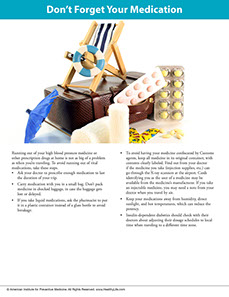
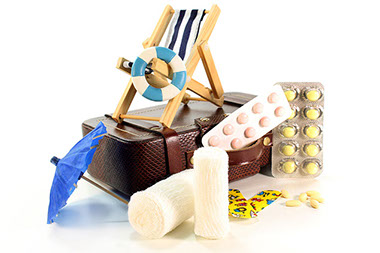
    Image of medication with miniature suitcase and beach chair.

    Running out of your high blood pressure medicine or other prescription drugs at home is not as big of a problem as when you’re traveling. To avoid running out of vital medications, take these steps.

    *  Ask your doctor to prescribe enough medication to last the duration of your trip.

    *  Carry medication with you in a small bag. Don’t pack medicine in checked luggage, in case the baggage gets lost or delayed.

    *  If you take liquid medications, ask the pharmacist to put it in a plastic container instead of a glass bottle to avoid breakage.

    *  To avoid having your medicine confiscated by Customs agents, keep all medicine in its original container, with contents clearly labeled. Find out from your doctor if the medicine you take (injection supplies, etc.) can go through the X-ray scanners at the airport. Cards identifying you as the user of a medicine may be available from the medicine’s manufacturer. If you take an injectable medicine, you may need a note from your doctor when you travel by air.

    *  Keep your medications away from humidity, direct sunlight, and hot temperatures, which can reduce the potency.

    *  Insulin-dependent diabetics should check with their doctors about adjusting their dosage schedules to local time when traveling to a different time zone.

    Page image from A Year of Health Hints book by the American Institute for Preventive Medicine. www.HealthyLife.com. All rights reserved.

    © American Institute for Preventive Medicine

  • Don’t Crash Diet

    Weight Control

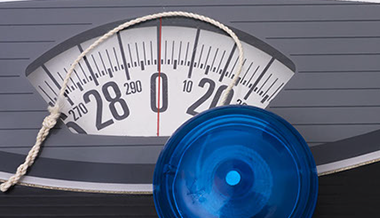
    Image of a yo-yo on a scale.

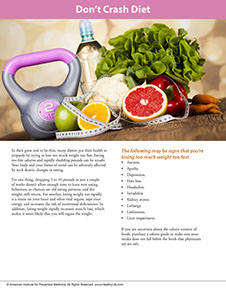
    In their great zeal to be thin, many dieters put their health in jeopardy by trying to lose too much weight too fast. Eating too few calories and rapidly shedding pounds can be unsafe. Your body and your frame of mind can be adversely affected by such drastic changes in eating.

    For one thing, dropping 5 to 10 pounds in just a couple of weeks doesn’t allow enough time to learn new eating behaviors, so chances are old eating patterns-and the weight-will return. For another, losing weight too rapidly is a strain on your heart and other vital organs, zaps your energy, and increases the risk of nutritional deficiencies. In addition, losing weight rapidly increases muscle loss, which makes it more likely that you will regain the weight.

    The following may be signs that you’re losing too much weight too fast.

    *  Anemia.

    *  Apathy.

    *  Depression.

    *  Hair loss.

    *  Headaches.

    *  Irritability.

    *  Kidney stones.

    *  Lethargy.

    *  Listlessness.

    *  Liver impairment.

    If you are uncertain about the calorie content of foods, purchase a calorie guide to make sure your intake does not fall below the levels that physicians say are safe.

    Page from A Year of Health Hints book by the American Institute for Preventive Medicine. www.HealthyLife.com. All rights reserved.

    © American Institute for Preventive Medicine

  • Don’t Be Seduced By Cocaine

    Substance Use & Abuse

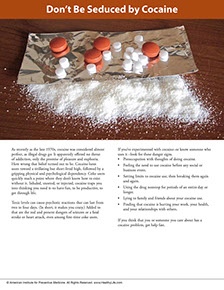
    As recently as the late 1970s, cocaine was considered almost perfect, as illegal drugs go: It apparently offered no threat of addiction, only the promise of pleasure and euphoria. How wrong that belief turned out to be. Cocaine lures users toward a titillating but short-lived high, followed by a gripping physical and psychological dependency. Coke users quickly reach a point where they don’t know how to exist without it. Inhaled, snorted, or injected, cocaine traps you into thinking you need it-to have fun, to be productive, to get through life.

    Toxic levels can cause psychotic reactions that can last from two to four days. (In short, it makes you crazy.) Added to that are the real and present dangers of seizures or a fatal stroke or heart attack, even among first-time coke users.

    If you’ve experimented with cocaine-or know someone who uses it-look for these danger signs.

    *  Preoccupation with thoughts of doing cocaine.

    *  Feeling the need to use cocaine before any social or business event.

    *  Setting limits to cocaine use, then breaking them again and again.

    *  Using the drug nonstop for periods of an entire day or longer.

    *  Lying to family and friends about your cocaine use.

    *  Finding that cocaine is hurting your work, your health, and your relationships with others.

    If you think that you or someone you care about has a cocaine problem, get help fast.

    Page from A Year of Health Hints book by the American Institute for Preventive Medicine. www.HealthyLife.com. All rights reserved.

    © American Institute for Preventive Medicine
  • Don’t Be Afraid To Cry

    Stress Management

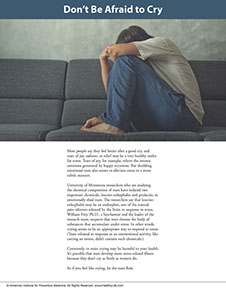
    Image of person with hands over face.

    Most people say they feel better after a good cry, and tears of joy, sadness, or relief may be a very healthy outlet for stress. Tears of joy, for example, relieve the intense emotions generated by happy occasions. But shedding emotional tears also seems to alleviate stress in a more subtle manner.

    University of Minnesota researchers who are studying the chemical composition of tears have isolated two important chemicals, leucine-enkephalin and prolactin, in emotionally shed tears. The researchers say that leucine-enkephalin may be an endorphin, one of the natural pain relievers released by the brain in response to stress. William Frey, Ph.D., a biochemist and the leader of the research team, suspects that tears cleanse the body of substances that accumulate under stress. In other words, crying seems to be an appropriate way to respond to stress. (Tears released in response to an unemotional activity, like cutting an onion, didn’t contain such chemicals.)

    Conversely, to resist crying may be harmful to your health. It’s possible that men develop more stress-related illness because they don’t cry as freely as women do.

    So if you feel like crying, let the tears flow.

    Page from A Year of Health Hints book by the American Institute for Preventive Medicine. www.HealthyLife.com. All rights reserved.

    © American Institute for Preventive Medicine