Blog

  • Create A Waking Routine

    SleepWell® Program

    Week 3

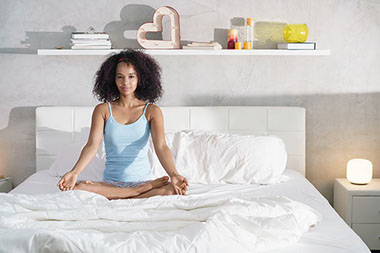
    Image of women mediating in bed after waking up.

    As soon as you wake up, get exposure to bright light. This is especially important if you need to work or do activities in the night-time hours. Exposure to bright light helps reset your biological clock and tells your body to wake up.

    Avoid lying in bed when you wake up or pressing snooze on your alarm. Remember, only associate your bed with sleep and sex. Get up. Don’t lie awake thinking about what you need to do or what you are going to wear.

    Sample Waking Routine:

    1. Turn off the alarm.

    2. Get out of bed.

    3. Stretch my arms above my head.

    4. Make my bed so it is inviting for sleep later.

    5. Brush and floss my teeth.

    6. Wash my face.

    7. Make and eat breakfast.

    © American Institute for Preventive Medicine

  • Create A Bedtime Routine

    SleepWell® Program

    Week 3

    Image of mom reading to child before bedtime.

    Follow a bedtime routine that gets your body and mind ready for sleep. Train your brain to know that it is time to sleep. If you work shifts that have you sleep during the day, developing a bedtime routine is a very important step to help you sleep.

    Sample Bedtime Routine:

    1. Turn most lights off an hour before bedtime. Dim lights that can be dimmed.

    2. Lock or check doors and windows.

    3. Check on any sleeping children.

    4. Put my pajamas on.

    5. Brush and floss my teeth.

    6. Wash my face.

    7. Put lotion on my hands and feet.

    8. Do 5 minutes of relaxation exercises (see Week 4 activities or take 15 deep, slow breaths).

    9. Turn off the bedside light.

    10. Pull down the covers and get into bed.

    © American Institute for Preventive Medicine

  • Clean Up Psychological Pollution

    SleepWell® Program

    Week 4

    Image of family playing a game at the living room table.

    Skip the evening news. Watching or listening to the news can be stressful. Stories of crime, the economy, political battles, and community issues can be worrying and depressing. Stress hormones can make you feel more alert and less ready to sleep.

    Avoid social media right before you go to bed, too. Positive or negative stories from friends and family may keep you awake. Add these to your “to-do” list if you need to follow-up. Give yourself a media curfew.

    © American Institute for Preventive Medicine

  • Circadian Rhythm

    SleepWell® Program

    Week 1

    Image of tree split with daytime on one side and night on the other side.

    This is a natural process the body follows over a 24-hour cycle. Our 24-hour cycle is adapted to the 24-hour light-dark cycle of the earth. This creates our internal clock that many body systems follow. These include heart, kidney and immune system functions, and release of certain hormones. Due to this rhythm, we are more likely to feel sleepy and to fall asleep when it is dark outside.

    Sleep Drive

    The longer you stay awake, the more likely you are to fall asleep and stay asleep. This natural force is known as your sleep drive. Sleep drive helps keep your body functioning. It can overpower your desire to stay awake if you build up too much of a sleep debt. A healthy sleep drive follows a predictable cycle. When you go to bed, you should feel that you are responding to your body’s natural drive to sleep.

    Sleep enhancement is not about actively trying to sleep.Sleep enhancement is about creating conditions that allow your body to fulfill a natural need. Lifestyle habits, schedules, and thought processes can throw off your body’s natural rhythm. Using this guide will help you “re-set” your sleep drive.

    Shift Work

    About 20% of the U.S. workforce is employed in some type of shift work or works non-traditional hours. Often, shift work does not follow the body’s natural circadian rhythm. Working during normal sleep-time can put shift workers at high risk for sleep deficiency. Without enough sleep, the risk for accidents and health problems increases. You can take special steps to promote healthy sleep if you work shifts other than usual daytime hours. Check out the tips for shift workers throughout this guide.

    © American Institute for Preventive Medicine

  • Can I Have A Nap?

    SleepWell® Program

    Week 3

    Image of man napping on coach.

    Naps during the day can take away from the sleep drive your body builds up when you are awake. Think of sleep drive like hunger-you would not want to eat a big meal in the afternoon if you knew you were having a feast for dinner! Avoid taking long naps during the day or avoid the naps altogether. It will be easier to fall asleep at bedtime if you have not napped during the day. If you do nap, do so for less than one hour. The best time for the body to nap, if needed, is between 1:00 and 4:00 p.m. Your body temperature naturally drops during this time period and your body is ready to sleep.

    If you do not feel tired at bedtime, limit napping until your sleeping habits are more regular.

    Things to Do When You Feel Like Taking a Nap

    *  Take a walk.

    *  Drink a cold glass of water.

    *  Take 10 slow, deep breaths.

    *  Step outside in the sunshine (if during daylight hours).

    *  Stretch your back, neck, and legs.

    *  Splash cold water on your face.

    *  Watch or read something funny.

    *  Massage your hands together.

    *  Have a mint or chew mint gum.

    Napping for Shift Workers

    Before your shift starts, a 20-30 minute nap may help you feel more alert. A longer nap may leave you feeling groggy. Find what helps you be the most alert.

    Nap during your “lunch hour” if possible. Allow 10-15 minutes to wake up and be fully alert after your nap. Napping may not be a good idea if you work in a job that requires you to have quick reactions or make decisions under pressure.

    A 30-45 minute nap at the end of a shift may help you to be more alert for the drive home.

    © American Institute for Preventive Medicine

  • Blue Light & Electronics

    SleepWell® Program

    Week 2

    Image of laptop.

    How far are you from your cell phone right now? If you are like many people, your phone is probably within arm’s reach. Not only is digital overload a problem during the day, but taking your phone to bed with you or using it right before bedtime can cause problems for sleep.

    Melatonin, the sleep hormone in the brain, is naturally released in the body when natural light dims. The light from a screen (cell phone, tablet, laptop, PC, etc.) can interfere with this production of melatonin. Using a device in bed or close to bedtime can delay going to sleep and make it more difficult to do so.

    Tips for Reducing Blue Light Exposure Before Sleep:

    *  Keep your phone out of the bed.

    *  Turn off as many notification sounds as possible. Keep only your main ringer on for emergencies.

    *  Turn your phone over to avoid the front light waking you up, especially if it is charging.

    *  Set boundaries with media. Consider a media curfew. After a certain time, avoid looking at any screen device. Make this at least an hour before bed. A quick peek at your phone just before bed may not have a big effect, but staring at it before bed for more than a few minutes may interfere with sleep.

    *  Don’t watch TV or use the computer within 30 minutes of going to bed.

    *  Looking at news stories or skimming social media can also be stressful and keep your mind alert when you are trying to wind down.

    © American Institute for Preventive Medicine

  • Biofeedback

    SleepWell® Program

    Week 4

    Chalk illustratiion of a heartbeat diagram.

    Biofeedback is the process of getting information (feedback) about your biological (body) functions. Simple examples of everyday biofeedback devices include a thermometer, a scale, and a mirror. A thermometer provides feedback on your body temperature. A scale gives you feedback on weight loss or gain. A mirror can show you if you are pale or flushed.

    Training with biofeedback tools teaches voluntary control over some bodily responses which are linked to stress.

    Personal Biofeedback Tools

    Pulse Rate. On your wrist, gently trace with two or three fingers from the base of your palm toward your thumb where a bone generally protrudes. Your fingers will gently slide into a slight groove where you should feel a pulse beat.

    1. Count the number of beats in 10 seconds.

    2. Multiply that figure times six to get your pulse rate per minute.

    3. Take your pulse before and after practicing a relaxation technique. You should have a lower pulse rate after you successfully complete a relaxation exercise.

    Stress Control Card or Stress Dot. This card that you hold or a dot that sticks to your skin measures the temperature of your hand.

    1. The colors black, brown, and red report cold temperatures and indicate moderate to high levels of stress.

    2. When you are more relaxed, the circulation to your hands and feet returns to normal and your hands should be warmer. Green, blue, or violet colors report low levels of stress.

    3. Using this card before and after a relaxation technique can give you feedback on how well the technique is working for you.

    4. The exact colors are not as important as being able to modify a color. This shows you have made a connection between your mind and your body.

    Perceived Muscle Tension (PMT). This is a self-measurement of muscle tension using a subjective scale.

    1. Ask yourself, “Where do I feel tension?” and “Where do I feel relaxation?”

    2. This tension and relaxation inventory lets you know the difference between tension and relaxation in your body. It links a bodily feeling to the words tension and relaxation. The answer you give to the questions in step 1 above is your feedback.

    3. You may even use a number to describe how relaxed or tense a body part feels.

    © American Institute for Preventive Medicine

  • Be Assertive 3

    SleepWell® Program

    Week 5

    Image of man practicing speech in mirror.

    Passive

    *  You lack expression for yourself.

    *  You do not stand up for your rights and needs.

    Result: You usually do not achieve your goal.

    Aggressive

    *  You stand up for your rights and needs, but at the expense of someone else.

    Result: You usually put down or hurt someone else. You gain no respect.

    Assertive

    *  You stand up for your rights and needs without putting down or hurting someone else.

    *  You increase the chance of achieving your goals.

    *  You express your feelings without becoming victim to them.

    Result: You build self-respect and feel good about yourself.

    What Assertive Looks Like

    Body Posture: Be relaxed and natural. Avoid slouching, putting your hands in your pockets, and facing away from the person you are speaking with.

    Eye Contact: Good eye contact is vital to convey self-confidence and interest. Don’t stare at the other person; this comes across as a challenge.

    Voice, Tone, and Quality: Use a strong, varied tone. Speak clearly and firmly. Don’t shout or speak too softly. Don’t whine.

    Distance from the Person: Don’t position yourself too far or too close.

    Facial Expression: Let your face convey the same message as what you are saying.

    Content: Use short sentences. Be specific, clear, and firm.

    Benefits of Being Assertive

    *  You can feel comfortable saying “no.”

    *  You have more confidence to ask others for help.

    *  You gain more respect from others.

    *  You feel less angry with yourself and with others.

    *  You feel justified to say what you want to say.

    *  You feel comfortable to request clarification.

    *  You accept compliments graciously.

    *  You can change your mind without feeling guilty.

    Practice First

    Plan or write down what you want to say. Have responses ready ahead of time to deal with questions and comments. Reinforce your remarks by saying what positive outcomes will occur for you and the other person. Practice in front of a mirror or with a friend.

    Use the L.A.D.D.E.R. Technique

    This is a step-by-step way to be more assertive.

    *Look at your needs, wants, rights, and feelings about the situation.

    *Arrange a meeting that is convenient for you and the other person to talk.

    *Define the problem or issue clearly to the other person.

    *Describe your feelings using “I messages.” I messages let you take charge of your feelings.

    *Express your needs and desires in an assertive manner using a few clear sentences. Be aware of your eye contact, hand gestures, posture, voice and facial expression.

    *Reinforce your remarks by saying what positive outcomes will occur for you and the other person.

    Example:

    L – I wish my partner would help with household chores so I don’t stay up so late at night finishing what needs to get done.

    A – I’ll plan to talk with him or her after dinner tomorrow.

    D – Tell your partner, “When I stay up late doing household chores, I do not get enough sleep at night. I don’t have enough energy to be alert and productive at work the next day.”

    D – “I feel I could get more sleep with your help.”

    E – “I would like to divvy up household to-dos between us. I know we are each better at different tasks.

    R – “This change would help me get more sleep at night and I will have more energy when we spend time together.”
    © American Institute for Preventive Medicine

  • Basics Of Sleep

    SleepWell® Program

    Week 1

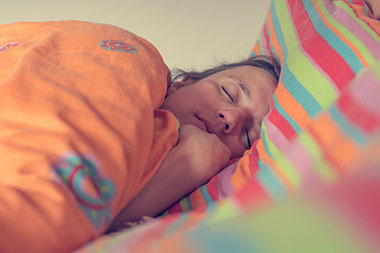
    Image of women sleeping.

    You move through several stages during sleep. Each stage has an important role. The first REM sleep cycle is reached about 90 minutes after falling asleep.

    Stage 1

    Your muscle activity decreases and your eyes move slowly. It is easy to wake someone in this stage.

    Stage 2

    Your body temperature and heart rate decrease as your body prepares for deep sleep. Your brain waves slow.

    Stage 3

    Deep sleep with slow brain waves occurs. Your body repairs damaged cells.

    Stage 4

    Deep sleep with very slow brain waves takes place. You have no muscle activity. It is difficult to wake someone in this stage.

    REM Sleep

    Your breathing rate increases, brain waves speed up, and your eyes move rapidly. Your heart rate, blood pressure, and body temperature rise. Dreams occur in this stage. REM sleep helps you to feel refreshed and energetic upon waking.

    © American Institute for Preventive Medicine

  • Respond To A Bad Night Of Sleep

    SleepWell® Program

    Week 6

    Image of women waking up with a headache.

    If you have a few poor nights of sleep, shift back to a more restrictive sleep window to increase your sleep drive.

    Recall what helped you to improve your sleep. Focus on these strategies to help re-set your healthy sleep.

    Example:

    *  Stay up late to increase sleep drive.

    *  Get out of bed when you can’t sleep.

    *  Clear your head by writing down your thoughts and worries.

    *  Track your sleep.

    You will never be back at “square one” because you have learned so many things about healthy sleep. If what you tried before does not work, go back through this guide and try new tools. You may need to use different skills to address the new challenge to your sleep.

    See Slip-Ups in a Positive Light

    No one is perfect. If you slip back into old habits, like watching TV late in bed, you may feel guilt or conflict. Also, you may view the slip-up as being due to a lack of willpower or strength. You may feel a sense of being helpless or hopeless. These feelings are not productive or motivating.

    It is important to understand the feelings that relate to a slip-up. You have not failed. You now have a new challenge to address. Define a new goal. Apply what you already know. Seek out new skills, tools, or support that you need for success.

    © American Institute for Preventive Medicine