Blog

  • Tips For A Healthy Budget

    FINANCIAL HEALTH

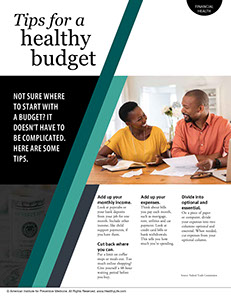
    Couple smiling going over budget.

    Not sure where to start with a budget? It doesn’t have to be complicated. Here are some tips.

    Add up your monthly income.

    Look at paystubs or your bank deposits from your job for one month. Include other income, like child support payments, if you have them.

    Cut back where you can.

    Put a limit on coffee stops or meals out. Too much online shopping? Give yourself a 48-hour waiting period before you buy.

    Add up your expenses.

    Think about bills you pay each month, such as mortgage, rent, utilities and car payment. Look at credit card bills or bank withdrawals. This tells you how much you’re spending.

    Divide into optional and essential.

    On a piece of paper or computer, divide your expenses into two columns: optional and essential. When needed, cut expenses from your optional column.

    Source: Federal Trade Commission

    © American Institute for Preventive Medicine

  • The Truth About Fast Food

    HEALTHY EATING

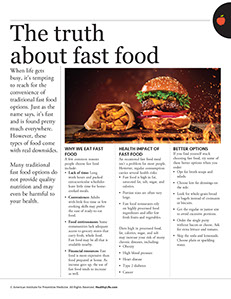
    Burger with french fries and fire.

    When life gets busy, it’s tempting to reach for the convenience of traditional fast food options. Just as the name says, it’s fast and is found pretty much everywhere. However, these types of food come with real downsides.

    Many traditional fast food options do not provide quality nutrition and may even be harmful to your health.

    Why we eat fast food

    A few common reasons people choose fast food include:

    *Lack of time:Long work hours and packed extracurricular schedules leave little time for home-cooked meals.

    *Convenience:Adults with little free time or few cooking skills may prefer the ease of ready-to-eat food.

    *Food environment:Some communities lack adequate access to grocery stores that carry fresh, whole food. Fast food may be all that is available nearby.

    *Financial resources:Fast food is more expensive than food prepared at home. As income goes up, the use of fast food tends to increase as well.

    Health impact of fast food

    An occasional fast food meal isn’t a problem for most people. However, regular consumption carries several health risks:

    *  Fast food is high in fat, saturated fat, salt, sugar, and calories.

    *  Portion sizes are often very large.

    *  Fast food restaurants rely on highly processed food ingredients and offer few fresh fruits and vegetables.

    Diets high in processed food, fat, calories, sugar, and salt may increase your risk of many chronic diseases, including:

    *  Obesity

    *  High blood pressure

    *  Heart disease

    *  Type 2 diabetes

    *  Cancer

    Better options

    If you find yourself stuck choosing fast food, try some of these better options when you order:

    *  Opt for broth soups and salads.

    *  Choose low-fat dressings on the side.

    *  Look for whole-grain bread or bagels instead of croissants or biscuits.

    *  Get the regular or junior size to avoid excessive portions.

    *  Order the single patty without bacon or cheese. Ask for extra lettuce and tomato.

    *  Skip the soda and lemonade. Choose plain or sparkling water.

    © American Institute for Preventive Medicine

  • The Teen Driver ‘Danger Zones’

    FAMILY LIFE

    Teen sitting in driver seat of car.

    Every day, six teens are killed in car crashes. But many of these injuries and deaths can be prevented. Know the eight “danger zones” of teen driving to help keep them safe.

    1.Inexperience.Make sure your teen gets at least 30 to 50 hours of driving practice with an adult. Practice at different times and in different places.

    2.Teen passengers.Limit your teen’s passengers for at least the first six months. Keep the number of passengers at zero or one.

    3.Nighttime driving.Limit their nighttime driving for at least the first six months.

    4.Not using seat belts.Tell them everyone buckles up. Always.

    5.Distracted driving.Don’t play with the radio or eating while driving. And absolutely NO cell phones.

    6.Drowsy driving.Don’t let them drive when they might be tired. Make sure they get enough sleep.

    7.Reckless driving.Teach them to leave space between cars and obey speed limits and traffic laws.

    8.Impaired driving.Stress that alcohol and driving don’t mix. Even one drink is too many.

    What is distracted driving?

    Anything that takes your attention away from driving is a distraction. This includes:

    *  Looking at a map or directions

    *  Eating

    *  Talking on the phone

    *  Sending a text message or looking at email

    When you send or read a text message, you take your eyes off the road for about 5 seconds. This is long enough to go the length of a football field at 55 mph.

    Source: Centers for Disease Control and Prevention

    © American Institute for Preventive Medicine

  • The Skinny On Processed Foods

    HEALTHY EATING

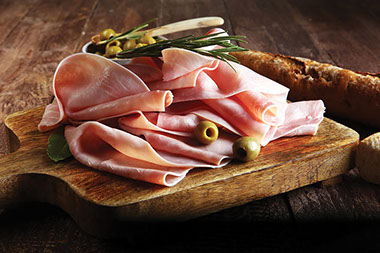
    Turkey deli on cutting board.

    White bread, packaged cookies and turkey bacon. What do these foods have in common? They are all processed foods. Processed food is the opposite of “whole food,” or food in its natural state.

    What does “processed foods” mean?

    It means the food has been changed from its natural state. White bread, for instance, may contain wheat flour that has been bleached and stripped of some of its nutrients. Packaged cookies may have bleached and stripped flour in addition to added sweeteners, artificial colors, preservatives and flavors. Turkey bacon is cured, processed and packaged.

    Not all processed  foods are bad

    There is a difference between foods that are minimally processed and “junk foods.” Frozen vegetables, for instance, may be considered “minimally processed.” They are not quite the same as picking the vegetables right from a garden. But if they don’t have added sugar or salt, frozen vegetables are a very healthy option.

    In addition, some foods that are considered “processed” can help people eat better. Canned fruit (without added sugar) or bagged salads are a convenient option for many people. They eliminate the extra work of gathering the food, washing it and cutting it.

    Sugar & salt overload

    Many processed “junk” foods contain too much added sugar or salt. Also, they may have little to no fiber or vitamins.

    Processed foods, including crackers and packaged snacks, are a major reason that people get too much sodium in their diets. Too much sodium raises the risk of high blood pressure and heart disease.

    Many processed foods also contain added sugars. The American Heart Association says we should limit added sugars to 6 teaspoons a day for women and 9 teaspoons for men. One 12-ounce soda exceeds that amount. Too much added sugar increases risk for type 2 diabetes and heart disease.

    Processed = weight gain?

    A recent study by the National Institutes of Health suggests that processed foods can cause weight gain. Participants who were given processed foods ate about 500 calories more per day than people who ate unprocessed foods. They also gained weight, while the people who ate unprocessed foods lost weight. You don’t have to cut all processed foods out of your diet. But cutting back on them – and eating more whole foods – will help you work toward a healthier weight.

    Sources: Academy of Nutrition and Dietetics, American Academy of Family Physicians, American Heart Association, National Institutes of Health

    © American Institute for Preventive Medicine

  • The Mighty Cruciferous

    HEALTHY EATING

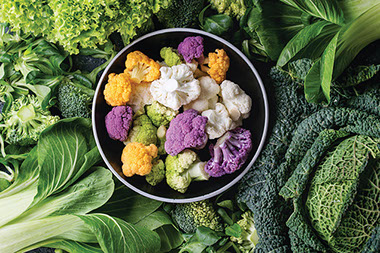
    Different colored cauliflower in bowl, surrounded by bok choy, cabbage, kale.

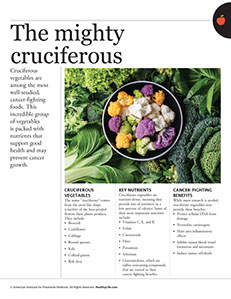
    Cruciferous vegetables are among the most well-studied, cancer-fighting foods. This incredible group of vegetables is packed with nutrients that support good health and may prevent cancer growth.

    Cruciferous vegetables

    The name “cruciferous” comes from the cross-like shape (crucifer) of the four-petaled flowers these plants produce. They include:

    *  Broccoli

    *  Cauliflower

    *  Cabbage

    *  Brussel sprouts

    *  Kale

    *  Collard greens

    *  Bok choy

    Key nutrients

    Cruciferous vegetables are nutrient-dense, meaning they provide lots of nutrition in a low amount of calories. Some of their most important nutrients include:

    *  Vitamins C, E, and K

    *  Folate

    *  Carotenoids

    *  Fiber

    *  Potassium

    *  Selenium

    *  Glucosinolates, which are sulfur-containing compounds that are central to their cancer-fighting benefits.

    Cancer-fighting benefits

    While more research is needed, cruciferous vegetables may provide these benefits:

    *  Protect cellular DNA from damage

    *  Neutralize carcinogens

    *  Have anti-inflammatory effects

    *  Inhibit tumor blood vessel formation and metastasis

    *  Induce tumor cell death

    © American Institute for Preventive Medicine

  • The Importance Of Chores

    FAMILY LIFE

    Child holding a load of clothes in her arms.

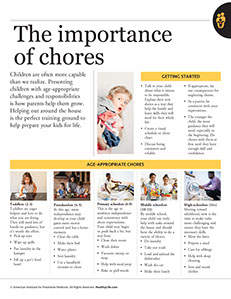
    Children are often more capable than we realize. Presenting children with age-appropriate challenges and responsibilities is how parents help them grow. Helping out around the house is the perfect training ground to help prepare your kids for life.

    Getting started

    *  Talk to your child about what it means to be responsible. Explain their new duties as a way they help the family and learn skills they will need for their whole life.

    *  Create a visual schedule or chore chart.

    *  Discuss being consistent and reliable.

    *  If appropriate, lay out consequences for neglecting chores.

    *  As a parent, be consistent with your expectations.

    *  The younger the child, the more guidance they will need, especially in the beginning. Do chores with them at first until they have enough skill and confidence.

    Age-appropriate chores

    Toddlers (2-3)

    Toddlers are eager helpers and love to do what you are doing. They will need lots of hands-on guidance, but it’s worth the effort.

    *  Pick up toys

    *  Wipe up spills

    *  Put laundry in the hamper

    *  Fill up a pet’s food bowl

    Preschoolers (4-5)

    At this age, more independence may develop as your child gains more motor control and has a better memory.

    *  Clear the table

    *  Make their bed

    *  Water plants

    *  Sort laundry

    *  Use a handheld vacuum to clean

    Primary schoolers (6-9)

    This is the age to reinforce independence and consistency with chore expectations. Your child may begin to push back a bit, but stay firm.

    *  Clean their room

    *  Wash dishes

    *  Vacuum, sweep, or mop

    *  Help with meal prep

    *  Rake or pull weeds

    Middle schoolers (10-13)

    By middle school, your child can truly help with tasks around the house and should have the ability to do a variety of chores.

    *  Do laundry

    *  Take out trash

    *  Load and unload the dishwasher

    *  Wash the car

    *  Make their lunch

    High-schoolers (14+)

    Moving toward adulthood, now is the time to make tasks more challenging and ensure they have the necessary skills.

    *  Mow the lawn

    *  Prepare a meal

    *  Care for siblings

    *  Help with deep cleaning

    *  Iron and mend clothes

    © American Institute for Preventive Medicine

  • The Family That Plays Together Stays Together

    FAMILY LIFE

    Family playing Jenga.

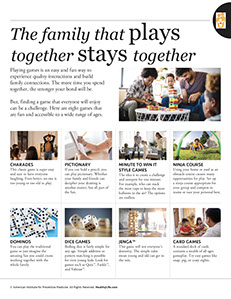
    Playing games is an easy and fun way to experience quality interactions and build family connections. The more time you spend together, the stronger your bond will be. But, finding a game that everyone will enjoy can be a challenge. Here are eight games that are fun and accessible to a wide range of ages.

    Charades

    This classic game is super easy and sure to have everyone laughing. Even better, no one is too young or too old to play.

    Pictionary

    If you can hold a pencil, you can play pictionary. Whether your family and friends can decipher your drawing is another matter, but all part of the fun.

    Minute to win it style games

    The idea is to create a challenge and compete for one minute. For example, who can stack the most cups or keep the most balloons in the air? The options are endless.

    Ninja course

    Using your home or yard as an obstacle course creates many opportunities for play. Set up a ninja course appropriate for your group and compete in teams or race your personal best.

    Dominos

    You can play the traditional game or just imagine the amazing fun you could create working together with the whole family.

    Dice games

    Rolling dice is fairly simple for any age. Simple addition or pattern matching is possible for even young kids. Look for games such as Quix™, Farkle™, and Yahtzee™.

    Jenga™

    This game will test everyone’s dexterity. The simple rules mean young and old can get in the mix.

    Card games

    A standard deck of cards contains a wealth of all-ages gameplay. Try easy games like snap, pig, or crazy eights.

    © American Institute for Preventive Medicine

  • The Facts About Donating Organs

    MEDICAL NEWS

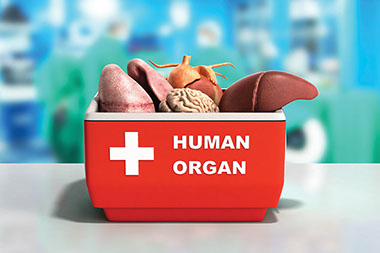
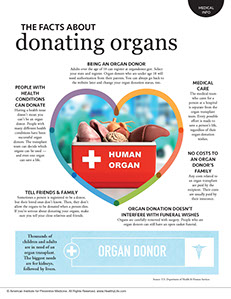
    Illustration of organs.

    Thousands of children and adults are in need of an organ transplant. The biggest needs are for kidneys, followed by livers.

    Being an organ donor

    Adults over the age of 18 can register at organdonor.gov. Select your state and register. Organ donors who are under age 18 will need authorization from their parents. You can always go back to the website later and change your organ donation status, too.

    People with health conditions can donate

    Having a health issue doesn’t mean you can’t be an organ donor. People with many different health conditions have been successful organ donors. The transplant team can decide which organs can be used – and even one organ can save a life.

    Tell friends & family

    Sometimes a person is registered to be a donor, but their loved ones don’t know. Then, they don’t allow the organs to be donated when a person dies. If you’re serious about donating your organs, make sure you tell your close relatives and friends.

    Medical care

    The medical team who cares for a person at a hospital is separate from the organ transplant team. Every possible effort is made to save a person’s life, regardless of their organ donation wishes.

    No costs to an organ donor’s family

    Any costs related to an organ transplant are paid by the recipient. Their costs are usually paid by their insurance.

    Organ donation doesn’t interfere with funeral wishes

    Organs are carefully removed with surgery. People who are organ donors can still have an open casket funeral.

    Source: U.S. Department of Health & Human Services

    © American Institute for Preventive Medicine