Blog

  • The Causes Of Coughing

    SELF-CARE CORNER

    Man holding his throat and head.

    It’s the season for colds and flu – and that means coughing. Coughing is an important function in your body. It helps clear your airways. Many times, a mild cough will go away on its own. But when should you see a doctor about a cough?

    Common cold

    A common cold may cause some coughing. When you have a runny nose, the fluids drain down your throat. This causes your cough reflex to kick in. It’s a way your body protects your lungs. Although a cough from a cold can be annoying, it usually goes away quickly. Antibiotics won’t help with a cough related to a cold.

    Bronchitis

    Bronchitis is an inflammation in the tiny tubes in the lungs. These tubes are called bronchioles. Viruses and bacteria can get into the bronchioles and make you sick. Chemicals and toxins like tobacco smoke can also invade the bronchioles and lead to bronchitis.

    Symptoms of bronchitis include:

    *  Coughing, especially with mucus

    *  Wheezing or feeling short of breath

    *  Low fever

    *  Chest pain

    Bronchitis is most often caused by a virus so antibiotics will not help. Rest, drinking more fluids and a humidifier can help you feel better.

    Pneumonia

    Pneumonia is an infection in the air sacs inside the lungs. These sacs are called alveoli. Pneumonia can range from mild to serious. If you have pneumonia, you may notice:

    *  Cough with greenish, yellow or bloody mucus

    *  Fever, sweating and chills

    *  Trouble breathing

    *  Stabbing chest pain that hurts when you cough or take a deep breath

    *  Loss of appetite

    *  Feeling weak or tired

    *  Nausea and vomiting (common in small children)

    Many times, a doctor will give you antibiotics for pneumonia. Be sure to take them exactly as your doctor tells you. Pneumonia can be life-threatening if it is not treated effectively.

    Pertussis (Whooping cough)

    Pertussis is very contagious. It may seem like a cold at first. People may have a runny nose or mild cough.

    As it gets worse, pertussis causes a severe cough that can last weeks or even months. The cough makes a high-pitched “whoop” sound. It’s especially dangerous for babies and people with weak immune systems.

    The best way to protect against pertussis is to get vaccinated. If you aren’t sure whether you’re vaccinated, ask your doctor. Pertussis is treated with antibiotics.

    Sources: American Lung Association, Centers for Disease Control and Prevention, National Heart, Lung, and Blood Institute

    © American Institute for Preventive Medicine

  • Telemedicine: Pros & Cons

    SELF-CARE CORNER

    Doctor smilng and waving Hi while on a telemedicine call.

    For some people, seeing their doctor from the comfort of their own home has made accessing care easier. But, for others, the lack of in-person care makes managing their health difficult.

    Telemedicine is unlikely to go away. As a patient, you need to know how to get the most out of virtual visits and when an in-person visit might be the way to go.

    Pros of telemedicine

    *  Fast and flexible access to care

    *  Decreased exposure to other ill patients

    *  No need to leave home when dealing with a minor illness or concern

    *  Less time spent driving

    *  Ease of follow-up for existing health issues

    *  Less time lost at work

    Cons of telemedicine

    *  Insurance may not cover video visits; check your plan carefully

    *  Not everyone has access to technology

    *  Diagnosing a new condition may not be possible over video

    *  Challenges in monitoring vital signs, like blood pressure, etc.

    *  Loss of meaningful relationship with healthcare providers

    *  Important symptoms may get missed

    Get the most from telemedicine

    *  Check your technology set-up in advance.

    *  Keep your doctor’s phone number handy in case you get disconnected.

    *  Write down a list of symptoms and questions.

    *  Write down measurements your doctor may need (height, weight, blood pressure, etc.).

    *  Have your medication list on-hand.

    *  Choose a quiet room where you won’t be interrupted.

    *  Be on time.

    *  If your doctor recommends any tests or follow-ups, make those appointments right away.

    When in-person is best

    Not every situation is right for a telemedicine visit. Here are times when in-person may be recommended:

    *  Pediatric visits

    *  Emergency situations

    *  Yearly physicals

    *  Situations where a physical exam is needed

    © American Institute for Preventive Medicine

  • Telehealth: What To Know

    MEDICAL NEWS

    Phone and stethoscope.

    Telehealth or telemedicine uses video calls or other technology to help you see your doctor. This allows you to have medical appointments from home instead of going to the doctor’s office.

    Getting ready

    If you want to use telehealth, but don’t know how, contact your doctor’s office. Different doctors and hospitals use different apps and technology for their telemedicine appointments. Ask them for instructions on how to get set up.

    Before your appointment, check with your insurance company about coverage for telehealth appointments. Prepare a list of questions to ask your doctor so you’ll be sure to cover everything.

    If you need help

    If you’re feeling overwhelmed, ask a tech-savvy friend or family member to help. Usually, you only need:

    1.  A strong internet connection. Your connection needs to be fast enough for video chats.

    2.  A smartphone, tablet or computer that connects to your wi-fi and has a working microphone, speaker and camera. Most newer devices have all of these built in.

    Telehealth can be a safe and convenient way to have your medical appointments. Don’t be intimidated by technology. With a little help, you can be up and running – and it may become your favorite way to have your doctor visits!

    Source: National Institutes on Aging

    © American Institute for Preventive Medicine

  • Tea Time: Is Tea Good For You?

    HEALTHY EATING

    A tea pot with two cups of tea and lemons.

    Many people drink tea every day. The most popular teas are black, green and oolong. Matcha tea is also becoming more popular.

    Black, green, oolong and matcha teas come from a plant known as Camellia sinensis. Each of these teas looks and tastes different because of how they are processed.

    Caffeine content

    Tea, like coffee, naturally contains caffeine and can be different in each cup. If you steep your tea longer, it will have more caffeine than a quick steep.

    Estimates of the caffeine content per 8-ounce cup:

    *  Coffee: 95 milligrams

    *  Black tea: 48 milligrams

    *  Oolong tea: 38 milligrams

    *  Green tea: 29 milligrams

    *  Decaffeinated tea: Very small amounts

    Some tea packages will tell you how much caffeine it contains. Look for this on the product label.

    Watch your caffeine intake

    You can still drink too much caffeine from tea if you’re not careful. Too much caffeine can make you feel nervous or shaky. It can also make it hard for you to sleep.

    Most healthy adults can tolerate up to 400 milligrams of caffeine each day. People who are more sensitive to caffeine may need to consume much less than this amount.

    Decaf teas are a good option if you love tea but want to cut back on caffeine. They still contain only small amounts of caffeine.

    Are herbal teas really “tea”?

    Herbal teas are not made from the tea plant Camellia sinensis. Instead, they are made from the roots, leaves, flowers and other parts of certain plants.

    For instance, chamomile tea is made from chamomile flowers. Peppermint and spearmint teas are made from the plant’s leaves.

    Herbal teas don’t contain any caffeine. They are usually safe in regular amounts. But ask a doctor before you consume herbal tea if you are taking medicine or have any health conditions. These teas can interfere with some medications or cause side effects in some people.

    © American Institute for Preventive Medicine

  • Talking About Oral Cancer

    MEDICAL NEWS

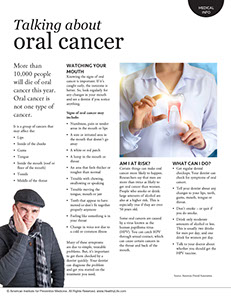
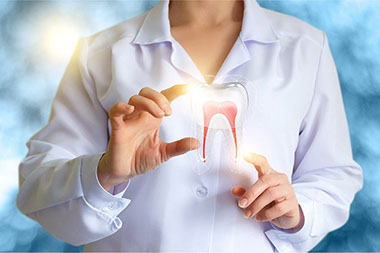
    Image of dentist with illustration of a tooth.

    More than 10,000 people will die of oral cancer this year. Oral cancer is not one type of cancer.

    It is a group of cancers that may affect the:

    *  Lips

    *  Inside of the cheeks

    *  Gums

    *  Tongue

    *  Inside the mouth (roof or floor of the mouth)

    *  Tonsils

    *  Middle of the throat

    Watching your mouth

    Knowing the signs of oral cancer is important. If it’s caught early, the outcome is better. So, look regularly for any changes in your mouth and see a dentist if you notice anything.

    Signs of oral cancer may include:

    *  Numbness, pain or tender areas in the mouth or lips

    *  A sore or irritated area in the mouth that doesn’t go away

    *  A white or red patch

    *  A lump in the mouth or throat

    *  An area that feels thicker or rougher than normal

    *  Trouble with chewing, swallowing or speaking

    *  Trouble moving the tongue, mouth or jaw

    *  Teeth that appear to have moved or don’t fit together properly anymore

    *  Feeling like something is in your throat

    *  Change in voice not due to a cold or common illness

    Many of these symptoms are due to simple, treatable problems. But, it’s important to get them checked by a dentist quickly. Your dentist can diagnose the problem and get you started on the treatment you need.

    Am I at risk?

    Certain things can make oral cancer more likely to happen. Researchers say that men are more than twice as likely to get oral cancer than women. People who smoke or drink large amounts of alcohol are also at a higher risk. This is especially true if they are over 50 years old.

    Some oral cancers are caused by a virus known as the human papilloma virus (HPV). You can catch HPV through sexual contact, which can cause certain cancers in the throat and back of the mouth.

    What can I do?

    *  Get regular dental checkups. Your dentist can check for symptoms of oral cancer.

    *  Tell your dentist about any changes to your lips, teeth, gums, mouth, tongue or throat.

    *  Don’t smoke – or quit if you do smoke.

    *  Drink only moderate amounts of alcohol or less. This is usually two drinks for men per day, and one drink for women per day.

    *  Talk to your doctor about whether you should get the HPV vaccine.

    Source: American Dental Association

    © American Institute for Preventive Medicine

  • Talking About Adoption: Do’s & Don’ts

    FAMILY LIFE

    Image of family waking along sidewalk.

    Many families include one or more children who are adopted. If you know someone with an adopted child, there are respectful ways to talk about it with them. And, if you have an adopted child, share these do’s and don’ts with friends and family members so they can be respectful to you.

    DO: Use the terms “birth child,” “adopted child,” “birth parents” or “biological parents” only when necessary. This may be during a discussion about the adoption itself. Otherwise, simply use “child” and “parent” with no other description. Once a child is adopted, they are their parents’ child and are no different than a child that was born biologically to them.

    DON’t: Use words like “real child,” “natural child,” “real parents” or “natural parents.” These terms can be hurtful to the family and imply that they don’t have a real relationship.

    DO: Treat all siblings in a family the same. Parents love all their children equally, whether they were adopted or not.

    DON’t: Bring up differences between adopted and biological children or refer to them as “adopted son” or “adopted daughter.” The word “adopted” is often not relevant or needed.

    DO: Speak about birth parents as choosing to make the best decision for their child through adoption. Children need to know that their birth parents wanted the best for them.

    DON’t: Say words like “put up” or “given up” for adoption. Also, don’t say “they chose not to keep” the child. This makes it sound like the birth parents didn’t care or didn’t want the child.

    DO: Celebrate cultural or racial differences within a family.

    DON’t: Ignore a child’s ethnicity, race or heritage. Children need support from family and friends to overcome stereotypes and racism.

    DO: Support parents who choose to adopt. Adoption is a beautiful gift for both the child and parents. Understand that the parents may be overwhelmed after adoption and may have financial stress. They may also be anxious about having a new child in the family.

    DON’t: Ask, “what did you pay for your child?” Children are not sold or bought. Adoption fees go toward social workers, court fees, paperwork, travel and other necessary expenses.

    Source: American Academy of Pediatrics

    © American Institute for Preventive Medicine

  • Take Care Of  Bleeding Gums

    SELF-CARE CORNER

    Man smiling at dentist office with dentist about to start exam.

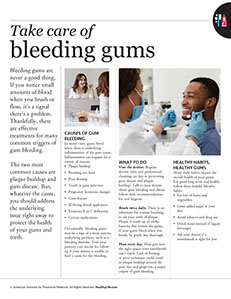
    Bleeding gums are never a good thing. If you notice small amounts of blood when you brush or floss, it’s a signal there’s a problem. Thankfully, there are effective treatments for many common triggers of gum bleeding.

    The two most common causes are plaque buildup and gum disease. But, whatever the cause, you should address the underlying issue right away to protect the health of your gums and teeth.

    Causes of gum bleeding

    In many cases, gums bleed when there is underlying inflammation of the gum tissue. Inflammation can happen for a variety of reasons.

    *  Plaque buildup

    *  Brushing too hard

    *  Poor flossing

    *  Tooth or gum infection

    *  Pregnancy hormone changes

    *  Gum disease

    *  Ill-fitting dental appliances

    *  Vitamins K or C deficiency

    *  Certain medications

    Occasionally, bleeding gums may be a sign of a more serious underlying problem, such as a bleeding disorder. Visit your primary care doctor for follow-up if your dentist is unable to find a cause for the bleeding.

    What to do

    Visit the dentist. Regular dentist visits and professional cleanings are key to preventing gum disease and plaque buildup. Talk to your dentist about gum bleeding and always follow their recommendations for oral hygiene.

    Brush twice daily. There is no substitute for routine brushing to rid your teeth of plaque. Plaque is made up of sticky bacteria that irritate the gums. If your gums bleed when you brush, be gentle but thorough.

    Floss every day. Floss gets into the tight spaces your toothbrush can’t reach. Lack of flossing or poor technique could result in plaque buildup around the gum line and gingivitis, a major culprit of gum bleeding.

    Healthy habits, healthy gums

    Many daily habits impact the overall health of your gums. For good long-term oral health, follow these healthy lifestyle habits.

    *  Eat lots of fruits and vegetables

    *  Limit added sugar in your diet

    *  Avoid tobacco and drug use

    *  Drink water instead of sugary beverages

    *  Ask your dentist if a mouthwash is right for you

    © American Institute for Preventive Medicine
  • Take A Shot At Allergies

    SELF-CARE CORNER

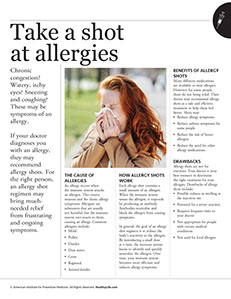
    Women outside using a tissue while sneezing.

    Chronic congestion? Watery, itchy eyes? Sneezing and coughing? These may be symptoms of an allergy.

    If your doctor diagnoses you with an allergy, they may recommend allergy shots. For the right person, an allergy shot regimen may bring much-needed relief from frustrating and ongoing symptoms.

    The cause of allergies

    An allergy occurs when the immune system attacks an allergen. This creates mucous and the classic allergy symptoms. Allergens are substances that are usually not harmful, but the immune system over-reacts to them, causing an allergy. Common allergens include:

    *  Mold

    *  Pollen

    *  Dander

    *  Dust mites

    *  Grass

    *  Ragweed

    *  Animal dander

    How allergy shots work

    Each allergy shot contains a small amount of an allergen. When the immune system senses the allergen, it responds by producing an antibody. Antibodies neutralize and block the allergen from causing symptoms.

    In general, the goal of an allergy shot regimen is to reduce the body’s reactivity to the allergen. By introducing a small dose at a time, the immune system learns to identify and quickly neutralize the allergen. Over time, your immune system becomes more efficient and reduces allergy symptoms.

    Benefits of allergy shots

    Many different medications are available to treat allergies. However, for some people, those do not bring relief. Their doctor may recommend allergy shots as a safe and effective treatment to help them feel better. Shots may:

    *  Reduce allergy symptoms

    *  Reduce asthma symptoms for some people

    *  Reduce the risk of future allergies

    *  Reduce the need for other allergy medications

    Drawbacks

    Allergy shots are not for everyone. Your doctor is your best resource to determine the right treatment for your allergies. Drawbacks of allergy shots include:

    *  Possible redness or swelling at the injection site

    *  Potential for a severe reaction

    *  Requires frequent visits to your doctor

    *  Not appropriate for people with certain medical conditions

    *  Not used for food allergies

    © American Institute for Preventive Medicine