Blog

  • Should You Be Taking Daily Aspirin?

    SELF-CARE CORNER

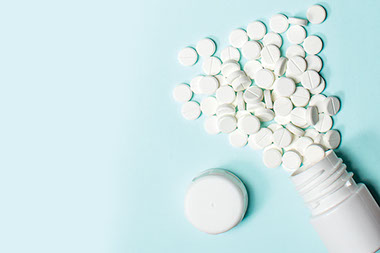
    An open pill bottle with aspirin spilled out.

    Taking a low dose aspirin every day can lower the chance of a heart attack. But that doesn’t mean that a daily aspirin is right for everyone. The National Institutes of Health says some people take aspirin each day – but they shouldn’t. The NIH has new guidelines about who should or should not take it.

    What does aspirin do?

    Aspirin is a non-steroidal anti-inflammatory drug (NSAID). It is a pain reliever for headaches and other aches and pains.

    Aspirin also thins the blood. This can prevent clots that can lead to a heart attack or stroke. Taking a low-dose aspirin every day can be life-saving for many people. However, aspirin also has risks. It can cause bleeding in the stomach and brain bleeding in rare cases.

    New guidelines to follow

    Researchers think many people are taking aspirin without their doctor’s approval. This can mean they could put themselves in danger of bleeding or stomach problems. Aspirin can also interact with other medications or supplements.

    Experts no longer think everyone over age 70 should take daily aspirin. People who have a low risk of heart attack or stroke may not need it. Also, people who have a higher risk of bleeding – no matter what age – should not take it.

    People who benefit from daily aspirin have a higher risk of heart attack or stroke. They may have already had a heart attack or stroke in the past. They may have a family history of heart problems or other risk factors.

    The best protection

    If you don’t need daily aspirin, you can help prevent heart disease with simple healthy habits.

    *  Get more exercise.

    *  Eat a heart-healthy diet.

    *  Don’t smoke.

    *  Get regular cholesterol and blood pressure checks.

    What’s the bottom line?Don’t start taking daily aspirin unless your doctor says you should. And, tell your doctor and pharmacist about all medications and supplements you take.

    Sources: American Heart Association, National Institutes of Health

    © American Institute for Preventive Medicine
  • Shopping Around For Contact Lenses

    FINANCIAL HEALTH

    Contact case holder.

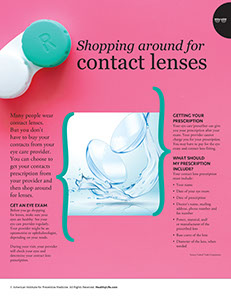
    Many people wear contact lenses. But you don’t have to buy your contacts from your eye care provider. You can choose to get your contacts prescription from your provider and then shop around for lenses.

    Get an eye exam

    Before you go shopping for lenses, make sure your eyes are healthy. See your eye care provider regularly. Your provider might be an optometrist or ophthalmologist, depending on your needs.

    During your visit, your provider will check your eyes and determine your contact lens prescription.

    Getting your prescription

    Your eye care prescriber can give you your prescription after your exam. Your provider cannot charge you for your prescription. You may have to pay for the eye exam and contact lens fitting.

    What should my prescription include?

    Your contact lens prescription must include:

    *  Your name

    *  Date of your eye exam

    *  Date of prescription

    *  Doctor’s name, mailing address, phone number and fax number

    *  Power, material, and/or manufacturer of the prescribed lens

    *  Base curve of the lens

    *  Diameter of the lens, when needed

    Source: Federal Trade Commission

    © American Institute for Preventive Medicine
  • Setting Doable Goals For A Healthy Diet

    HEALTHY EATING

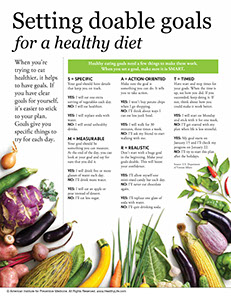
    A variety of vegetables.

    When you’re trying to eat healthier, it helps to have goals. If you have clear goals for yourself, it’s easier to stick to your plan. Goals give you specific things to try for each day.

    Healthy eating goals need a few things to make them work. When you set a goal, make sure it is SMART.

    S = Specific

    Your goal should have details that keep you on track.

    Yes: I will eat one extra serving of vegetables each day.

    No: I will eat healthier.

    Yes: I will replace soda with water.

    No: I will avoid unhealthy drinks.

    M = Measurable

    Your goal should be something you can measure. At the end of the day, you can look at your goal and say for sure that you did it.

    Yes: I will drink five or more glasses of water each day.

    No: I’ll drink more water.

    Yes: I will eat an apple or pear instead of dessert.

    No: I’ll eat less sugar.

    A = Action-oriented

    Make sure the goal is something you can do. It tells you to take action.

    Yes: I won’t buy potato chips when I go shopping.

    No: I’ll think about ways I can eat less junk food.

    Yes: I will walk for 30 minutes, three times a week.

    No: I’ll ask my friend to start walking with me.

    R = Realistic

    Don’t start with a huge goal in the beginning. Make your goals doable. This will boost your confidence.

    Yes: I’ll allow myself one mini-sized candy bar each day.

    No: I’ll never eat chocolate again.

    Yes: I’ll replace one glass of soda with water.

    No: I’ll quit drinking soda.

    T = Timed

    Have start and stop times for your goals. When the time is up, see how you did. If you succeeded, keep doing it. If not, think about how you could make it work better.

    Yes: I will start on Monday and stick with it for one week.

    No: I’ll get started with my plan when life is less stressful.

    Yes: My goal starts on January 15 and I’ll check my progress on January 22.

    No: I’ll try to start this plan after the holidays.

    Source: U.S. Department of Veteran Affairs

    © American Institute for Preventive Medicine

  • Sepsis: Spot It, Save A Life

    MEDICAL NEWS

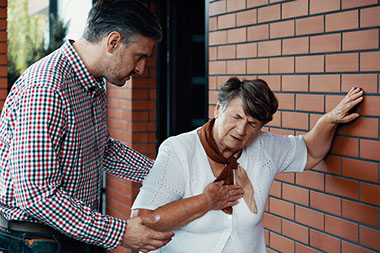
    Women leaning on wall with chest pain and man helping her.

    Sepsis can happen when a person has an infection like pneumonia, an infected cut in the skin or a urinary tract infection. Then, the body’s immune system releases a strong response that can get out of control. This immune response is so powerful that it can damage the body’s organs and cause blood clots.

    Sepsis can cause blood pressure to get extremely low and heart rate to get faster. This can trigger septic shock. With septic shock, the body becomes starved for blood and oxygen. It is a life-threatening emergency.

    Most who get an infection will not get sepsis. But experts don’t know why some people get it and others don’t. It seems to affect older adults, babies and young children the most. People who have a weakened immune system or a long-term illness like diabetes, liver disease or cancer are also more likely to get it.

    Spot sepsis signs

    Sepsis can be hard to spot. At first, symptoms may look like a mild illness. Sometimes a person has an infection and doesn’t know it. Signs include:

    *  Fever or a low body temperature

    *  Chills

    *  Fast heartbeat

    *  Trouble breathing or  fast breathing

    *  Blotchy skin or rash

    *  Being confused

    *  Feeling faint or lightheaded

    Even if you don’t have an infection, or don’t think you have one, ask yourself:

    *  Was I recently around someone who was ill?

    *  Did I recently have surgery or a medical procedure?

    *  Do I have any cuts or breaks in the skin?

    Getting treatment

    If you think a person might have sepsis, it’s important to get them medical care right away. Doctors will look at symptoms and may order blood tests. Sometimes other tests, like an x-ray or CT scan, may be needed.

    Sepsis is serious, so doctors often treat it in the Intensive Care Unit (ICU) of a hospital. Treatment usually includes antibiotics and getting fluids.

    Fortunately, most people who recover from sepsis often contine to have a normal, healthy life.

    Sources: Centers for Disease Control and Prevention, National Institutes of Health, Sepsis Alliance

    © American Institute for Preventive Medicine
  • Self-Care For Your Brain

    SELF-CARE CORNER

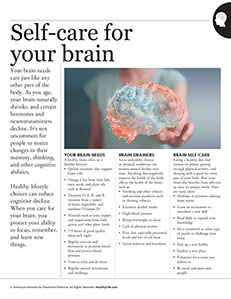
    Photo illustration of brain with hands reaching out to touch it.

    Your brain needs care just like any other part of the body. As you age, your brain naturally shrinks, and certain hormones and neurotransmitters decline. It’s not uncommon for people to notice changes in their memory, thinking, and other cognitive abilities.

    Healthy lifestyle choices can reduce cognitive decline. When you care for your brain, you protect your ability to focus, remember, and learn new things.

    Your brain needs

    A healthy brain relies on a healthy lifestyle:

    *  Quality nutrients that support brain cells

    *  Omega 3 fats from fatty fish, nuts, seeds, and plant oils such as flaxseed

    *  Vitamins D, E, K, and B vitamins from a variety of fruits, vegetables, and sunshine (Vitamin D)

    *  Minerals such as iron, copper, and magnesium from leafy greens and other plant foods

    *  7-9 hours of good quality sleep each night

    *  Regular exercise and movement to promote blood flow and protect blood pressure

    *  Time to relax and de-stress

    *  Regular mental stimulation and challenge

    Brain drainers

    Some unhealthy choices or physical conditions can worsen mental decline over time. Anything that negatively impacts the health of the body affects the health of the brain, such as:

    *  Smoking and other tobacco and nicotine products, such as chewing tobacco

    *  Excessive alcohol intake

    *  High blood pressure

    *  Being overweight or obese

    *  Lack of physical activity

    *  Poor diet, especially processed foods and lots of red meat

    *  Social isolation and loneliness

    Brain self-care

    Eating a healthy diet that focuses on plants, getting enough physical activity, and sleeping well is good for every part of your body. But, your brain also benefits from self-care to meet its unique needs. Here are some ideas:

    *  Meditate to promote calming brain waves

    *  Learn an instrument to introduce a new skill

    *  Read daily to expand your knowledge

    *  Do a crossword or other type of puzzle to challenge your brain

    *  Pick up a new hobby

    *  Explore a new place

    *  Volunteer for a cause you believe in

    *  Be social and meet new people

    © American Institute for Preventive Medicine
  • See Your Fitness Progress

    BE FIT

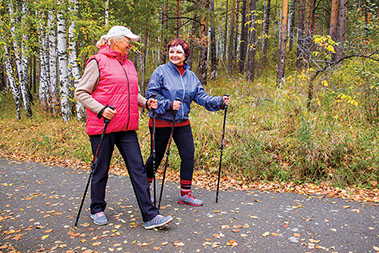
    Two women walking with walking sticks.

    When you’re trying to get fit, it can be hard to stay motivated. Look for ways that you’re making progress. This can help you keep going!

    Progress isn’t just about weight. You are making progress if:

    *  You have more energy. Do you feel less tired than you used to? Are you getting more done?

    *  Your daily tasks are easier. Maybe carrying the groceries isn’t as tough as it used to be. Or going upstairs doesn’t leave you out of breath.

    *  You’re getting better sleep. Exercise can help you sleep better, leaving you feeling refreshed and energized in the morning.

    Keep it up! The longer you exercise, the better you’ll feel!

    Source: National Institute on Aging

    © American Institute for Preventive Medicine

  • Secure Your Home For Vacation

    WELL-BEING

    Small wooden home on table with hands protecting it.

    When you’re gone on vacation, you want to know your home is safe and secure. Ideally, you want to avoid letting your home look unoccupied and unwatched.

    Tips to protect your home while away

    *  Set lights on timers, both inside and out.

    *  Check doors and windows before you leave.

    *  Arrange for lawn care or snow removal.

    *  Have the post office hold your mail until you return.

    *  Cancel other deliveries.

    *  Enlist a neighbor to keep an eye on things.

    *  Check if your local police department offers vacation home checks.

    *  Invest in a security system.

    *  Install a video doorbell.

    *  Don’t post about your vacation on social media.

    *  Hire a housesitter to visit or stay at your home while you’re away.

    *  Invest in quality locks on all exterior doors.

    *  Leave a car in the driveway.

    *  Set up motion-activated lights in the backyard.

    *  Turn off your garage openers.

    © American Institute for Preventive Medicine
  • Say Goodbye To Winter Rash

    SELF-CARE CORNER

    Female using face cream on cheeks.

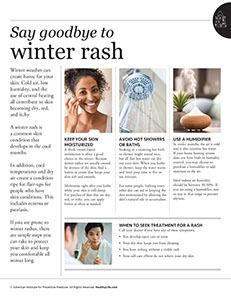
    Winter weather can create havoc for your skin. Cold air, low humidity, and the use of central heating all contribute to skin becoming dry, red, and itchy. A winter rash is a common skin condition that develops in the cool months.

    In addition, cool temperatures and dry air create a condition ripe for flair-ups for people who have skin conditions. This includes eczema or psoriasis.

    If you are prone to winter rashes, there are simple steps you can take to protect your skin and keep you comfortable all winter long.

    Keep your skin moisturized

    A thick, cream-based moisturizer is often a good choice in the winter. Because winter rashes are usually caused by dryness of the skin, find a lotion or cream that keeps your skin soft and smooth.

    Moisturize right after you bathe while your skin is still damp. For patches of skin that are dry, red, or itchy, you can apply lotion as often as needed.

    Avoid hot showers or baths

    Soaking in a steaming hot bath or shower might sound nice, but all that hot water can dry out your skin. When you bathe or shower, keep the water warm and limit your time to five or ten minutes.

    For some people, bathing every other day can aid in keeping the skin moisturized by allowing the skin’s natural oils to accumulate.

    Use a humidifier

    In cooler months, the air is cold and it also contains less water. If your home heating system does not have built-in humidity control, you may choose to purchase a humidifier to add moisture to the air.

    Ideal indoor air humidity should be between 30-50%. If you are using a humidifier, aim to stay in that range to prevent dryness.

    When to seek treatment for a rash

    Call your doctor if you have any of these symptoms:

    *  You develop open cuts or sores

    *  Your dry skin keeps you from sleeping

    *  You have itching without a visible rash

    *  Your self-care efforts do not relieve your dry skin

    © American Institute for Preventive Medicine
  • Say Goodbye To Bad Habits

    WELL-BEING

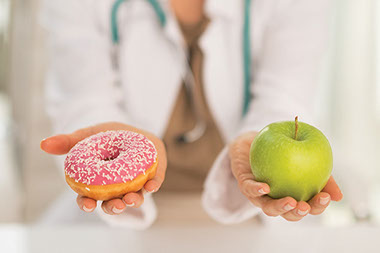
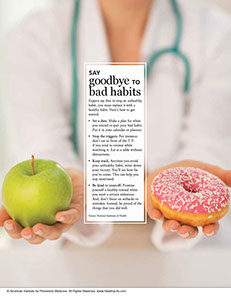
    Doctor holding apple in one hand and a donut in the other hand.

    Experts say that to stop an unhealthy habit, you must replace it with a healthy habit. Here’s how to get started.

    *Set a date.Make a plan for when you intend to quit your bad habit. Put it in your calendar or planner.

    *Stop the triggers.For instance, don’t eat in front of the T.V. if you tend to overeat while watching it. Eat at a table without distractions.

    *Keep track.Anytime you avoid your unhealthy habit, write down your victory. You’ll see how far you’ve come. This can help you stay motivated.

    *Be kind to yourself.Promise yourself a healthy reward when you meet a certain milestone. And, don’t focus on setbacks or mistakes. Instead, be proud of the things that you did well.

    Source: National Institutes of Health

    © American Institute for Preventive Medicine
  • Savory Potato Salad

    HEALTHY EATING

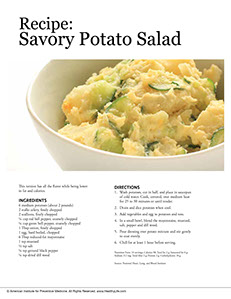
    A dish filled with potato salad.

    This version has all the flavor while being lower in fat and calories.

    Ingredients

    *  6 medium potatoes (about 2 pounds)

    *  2 stalks celery, finely chopped

    *  2 scallions, finely chopped

    *  ¼ cup red bell pepper, coarsely chopped

    *  ¼ cup green bell pepper, coarsely chopped

    *  1 Tbsp onion, finely chopped

    *  1 egg, hard boiled, chopped

    *  6 Tbsp reduced-fat mayonnaise

    *  1 tsp mustard

    *  ½ tsp salt

    *  ¼ tsp ground black pepper

    *  ¼ tsp dried dill weed

    Directions

    1.  Wash potatoes, cut in half, and place in saucepan of cold water. Cook, covered, over medium heat for 25 to 30 minutes or until tender.

    2.  Drain and dice potatoes when cool.

    3.  Add vegetables and egg to potatoes and toss.

    4.  In a small bowl, blend the mayonnaise, mustard, salt, pepper and dill weed.

    5.  Pour dressing over potato mixture and stir gently to coat evenly.

    6.  Chill for at least 1 hour before serving.

    Nutrition Facts: 10 servings, Calories 98; Total fat 2 g; Saturated fat 0 g; Sodium 212 mg; Total fiber 2 g; Protein 2 g; Carbohydrates 18 g.

    Source: National Heart, Lung, and Blood Institute

    © American Institute for Preventive Medicine