Blog

  • Nuts & Allergies

    HEALTHY EATING

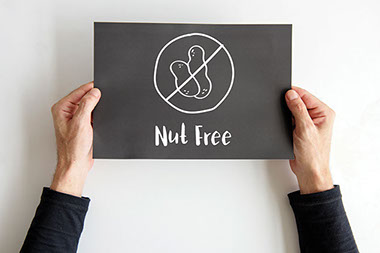
    Image of hands holding sign that says "Nut Free".

    Food allergies affect millions of people. With a food allergy, the immune system reacts to the food like it’s an invader. It may cause swelling, trouble breathing, hives and itching.

    Nut allergy dangers

    Nut allergies can be life-threatening.

    A person who is allergic to nuts could have a reaction from being near someone eating nuts. Even a tiny crumb of nuts left on a table could be life-threatening. This is why many schools do not allow nuts in classrooms or lunchrooms.

    If you or your family member has a nut allergy, you can still enjoy some nut alternatives. They can be just as delicious – and nutritious – as nuts.

    Nut alternatives

    Nuts contain plant-based protein, healthy fats and some vitamins and minerals. If you can’t eat nuts, don’t worry. There are other foods with these benefits!

    *Legumes:Soybeans, peas, lentils and chickpeas are legumes. They can be roasted as a snack or in salads. Some people are allergic to some types of legumes, however. Be sure to ask about legume allergies before using them for passing dishes or at school.

    *Seeds:There are so many kinds to choose from, like sunflower, pumpkin, chia, flax and hemp. They go well with salads, in smoothies or as a snack.

    *Avocadoes:Although not a significant source of protein, avocadoes are rich in healthy fats, B vitamins, potassium and magnesium. Avocadoes can go on many foods, from toast to salads to  stir-frys.

    Nut-Free butter Options

    Many nut-free butters make a great sandwich or spread for fruit. They taste a lot like peanut butter but without the peanuts.

    Today’s nut-free butters may contain soybeans, sunflower seeds, chickpeas or peas. These can all be healthy alternatives to nuts. Most contain some healthy fats and protein. Check the label for added salt or sugar.

    The Bottom Line

    Nuts are a healthy choice – and there are allergy-free options available. If you have an allergy to nuts, read all food labels. Look at allergen information and ingredients to stay safe.

    © American Institute for Preventive Medicine

  • No Time To Exercise? Move Your Body Instead

    BE FIT

    Father and son walking the dog.

    Exercise is great for your health. But sometimes it’s hard to fit it into a busy schedule. Don’t worry – you can do movement instead.

    If there are days when you don’t have time for exercise, you can still move. Adding movement into your day is a way to improve your health without investing as much time. There’s no gym or special equipment involved.

    Why should I move more?

    Studies show that people who move their bodies every day live longer than those who don’t. It’s also good for the environment. If you walk or bike to your destination, you save gas and carbon emissions. If you take the stairs instead of the elevator, you save electricity.

    Movement ideas

    Not sure how to get started with movement? You can find things that work for your life. Think about ways you can move instead of sit. Here are some ideas:

    *Avoid the elevator and take the stairs if you can.You can burn calories two to three times faster climbing stairs than walking briskly on flat ground. Can’t take it the whole way? Take the stairs halfway and the elevator the rest of the way. Try to take stairs instead of escalators, too.

    *Park farther away from the front door and walk a little more whenever possible.Many studies have shown that people who live in cities walk more and weigh less than people who live in areas where they drive more.

    *Whenever possible, bike or walk instead of driving.People who commute to work by biking or walking tend to weigh less than people who always drive.

    *If you live far from where you are going, consider driving part of the way and walking the rest of the way.Even a half-mile walk is good movement.

    *Choose hobbies you enjoy that are active, but don’t feel like exercise.This may include gardening, dancing or walking while listening to music or an audiobook.

    *Walk in place or lift weights while watching your favorite TV show.Stretch or walk in place while talking on the phone at home or work.

    Sources: American Heart Association, Veterans Health Administration

    © American Institute for Preventive Medicine
  • You’re Never Too Old To Exercise

    BE FIT

    Older man smiling while holding out a basketball.

    Older adults might find it hard to exercise. But exercise is great for older adults and may even help relieve joint pain and increase energy. It can help you sleep better, maintain a healthy weight and  relieve stress.

    See your doctor first.

    Talk to your doctor before starting an exercise plan if you have any health conditions or take medications.

    Stay hydrated.

    Drink water before, during and after your workout.

    Perform all types of exercise.

    This includes flexibility (stretching), strength (weights or resistance) and endurance (walking, biking or other activities).

    © American Institute for Preventive Medicine

  • Natural Remedies For Menopause Symptoms

    SELF-CARE CORNER

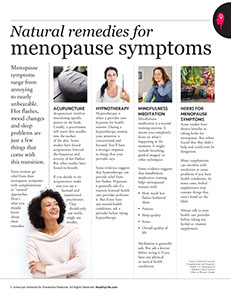
    Women sitting with eyes closed and relaxed.

    Menopause symptoms range from annoying to nearly unbearable. Hot flashes, mood changes and sleep problems are just a few things that come with this transition.

    Some women get relief from their menopause symptoms with complementary or “natural” approaches. Here’s what you should know about these remedies.

    Acupuncture

    Acupuncture involves stimulating specific points on the body. Usually, a practitioner will insert thin needles into the surface of the skin. Some studies have found acupuncture lowered the frequency and severity of hot flashes. But other studies have found no benefit.

    If you decide to try acupuncture, make sure you use a licensed and experienced practitioner. They should only use sterile, single-use needles.

    Hypnotherapy

    Hypnotherapy is when a provider uses hypnosis for health reasons. During a hypnotherapy session, your attention is concentrated and focused. You’ll have a stronger response to things that your provider says.

    Some evidence suggests that hypnotherapy can provide relief from hot flashes. Hypnosis is generally safe if a trained, licensed health care provider performs it. But if you have any mental health conditions, ask a provider before trying hypnotherapy.

    Mindfulness meditation

    Mindfulness meditation is a mental training exercise. It means you completely focus on what’s happening in the moment. It might include breathing, guided imagery or other techniques.

    Some evidence suggests that mindfulness meditation training helps menopausal women with:

    *  How much hot flashes bothered them

    *  Anxiety

    *  Sleep quality

    *  Stress

    *  Overall quality of life

    Meditation is generally safe. But ask a doctor before trying it if you have any physical or mental health conditions.

    Herbs for menopause symptoms

    Some studies have shown benefits to taking herbs for menopause. But others found that they didn’t help and could even be dangerous.

    Many supplements can interfere with medicines or cause problems if you have health conditions. In some cases, herbal supplements may contain things that aren’t listed on the label.

    Always talk to your health care provider before taking any herbal or vitamin supplement.

    Sources: National Center for Complementary and Integrative Health, U.S. Department of Health & Human Services Office on Women’s Health

    © American Institute for Preventive Medicine
  • Myths About Underactive Thyroid

    MEDICAL NEWS

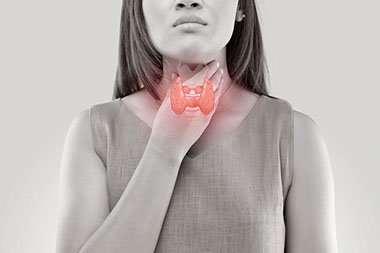
    Image of women holding her neck with an illustration of the thyroid gland on top.

    One of the most common thyroid problems is hypothyroidism, or underactive thyroid.

    Hypothyroidism means the thyroid gland isn’t making enough thyroid hormones. This can cause a number of symptoms, including:

    *  Fatigue

    *  Trouble with learning or remembering

    *  Dry hair, nails or skin

    *  Constipation

    *  Sore muscles

    *  Weight gain or bloating

    *  Heavy or irregular menstrual periods

    Although hypothyroidism is a common problem, there are many myths about it. Read on to learn about some common myths – and what you should know and hypothyroidism.

    Myth:You can’t lose weight if you have a thyroid problem.

    Fact:Many people can get to a healthy weight with hypothyroidism after getting on the proper dose of thyroid medication. They may need to work with a nutritionist or other health provider and get plenty of exercise. But losing weight is doable.

    Myth:You can’t get pregnant if you have hypothyroidism.

    Fact:Many women can get pregnant with an underactive thyroid. They should work with their doctor to make sure they are on thyroid medication that is safe and effective. It’s important to take thyroid medication consistently and carefully throughout pregnancy.

    Myth:Only older women have hypothyroidism.

    Fact:Thyroid problems can affect anyone, of any age. But women older than 60 years are at an increased risk for hypothyroidism.

    Myth:People with underactive thyroid need to take iodine.

    Fact:People with hypothyroidism should be on a medication that their doctor prescribes. Taking iodine supplements is usually not needed.

    Myth:High doses of thyroid medicine are better.

    Fact:Having too much thyroid hormone can lead to health problems like rapid heart rate, irregular heartbeat, bone loss and can even become life threatening. Work with your doctor to be sure your thyroid blood levels are within a healthy range.

    Myth:I can manage underactive thyroid with a healthy diet.

    Fact:A healthy diet is great for everyone, including people with underactive thyroid. However, even the best food choices cannot replace missing thyroid hormones. A person needs to take their thyroid medication as their doctor prescribes to replace these hormones.

    Source: American Association of Clinical Endocrinologists

    © American Institute for Preventive Medicine

  • Move Outside The Exercise Box

    BE FIT

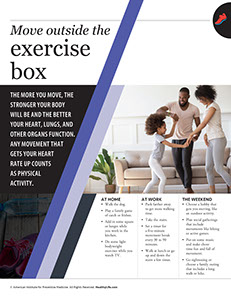
    Family dancing around.

    The more you move, the stronger your body will be and the better your heart, lungs, and other organs function. Any movement that gets your heart rate up counts as physical activity.

    At home

    *  Walk the dog.

    *  Play a family game of catch or frisbee.

    *  Add in some squats or lunges while you work in the kitchen.

    *  Do some light bodyweight exercises while you watch TV.

    At work

    *  Park farther away to get more walking time.

    *  Take the stairs.

    *  Set a timer for a five-minute movement break every 30 to 90 minutes.

    *  Walk at lunch or go up and down the stairs a few times.

    The weekend

    *  Choose a hobby that gets you moving, like an outdoor activity.

    *  Plan social gatherings that include movements like hiking or active games.

    *  Put on some music and make chore time fun and full of movement.

    *  Go sightseeing or choose a family outing that includes a long walk or hike.

    © American Institute for Preventive Medicine
  • Mood & Food: The Close Link

    HEALTHY EATING

    A bite out of a green apple and in a chocolate bar.

    You may already know that your diet can change how you feel mentally. If you’ve ever been really hungry, you may notice that you start to feel upset or angry. And, some high-calorie junk foods are called “comfort foods” for a reason. They make you feel better mentally, but only for a little while.

    The link between the mind and what a person eats is complex. That’s why it can be so hard to make good choices when you have a bad day or feel depressed. But there are ways to fight this habit and start to make better choices, even when your mood is down or you feel stressed.

    Why we want comfort food

    Stress can make you want to eat unhealthy foods. This is your body’s way of trying to get fuel when it thinks you are in trouble. Although this is normal, you have the power to overcome it.

    Take a moment to think about a food you are craving. Then think about your current emotions. If you’re feeling sad, angry or stressed, this could be why you want that pizza or ice cream.

    If you eat the food, you may feel good for a few minutes. But unhealthy foods with lots of fat and sugar can actually increase the risk of depression or anxiety. This creates an unhealthy cycle that will continue as you eat those comfort foods.

    The cycle of mood & food

    If you use food to cope with stress or depression for too long, your body will get used to it. Then, when you do try to make a healthy choice, your body and mind may be confused. This could lead to an even stronger craving for those comfort foods. This cycle makes it very hard to make changes to your diet.

    You can win!

    You’re not stuck in this cycle. Eating fruits and vegetables can make you feel happy. When you’re happy, you’re more likely to reach for healthy foods again. This can start a positive cycle!

    Source: American Heart Association

    © American Institute for Preventive Medicine
  • Mood-Boosting Foods

    HEALTHY EATING

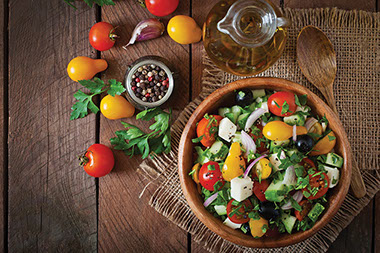
    Fresh salad bowl.

    A healthy diet can have an effect on your brain. It can actually make you feel happy.

    Eat plenty of foods with omega-3 fats. These heart-healthy fats are found in fish, flaxseeds and walnuts, and may help reduce the risk of developing depression.

    Focus on the Mediterranean Diet. This diet includes lots of plant-based foods like fruits and vegetables, as well as olive oil, whole grains, fish, poultry, eggs and beans.

    Source: American Heart Association

    © American Institute for Preventive Medicine