Tag: Alcohol Use

  • Teach Your Kids Not To Drink

    Substance Use & Abuse

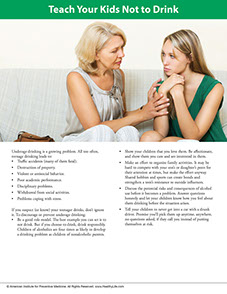
    Underage drinking is a growing problem. All too often, teenage drinking leads to:

    *  Traffic accidents (many of them fatal).

    *  Destruction of property.

    *  Violent or antisocial behavior.

    *  Poor academic performance.

    *  Disciplinary problems.

    *  Withdrawal from social activities.

    *  Problems coping with stress.

    If you suspect (or know) your teenager drinks, don’t ignore it. To discourage or prevent underage drinking:

    *  Be a good role model. The best example you can set is to not drink. But if you choose to drink, drink responsibly. Children of alcoholics are four times as likely to develop a drinking problem as children of nonalcoholic parents.

    *  Show your children that you love them. Be affectionate, and show them you care and are interested in them.

    *  Make an effort to organize family activities. It may be hard to compete with your son’s or daughter’s peers for their attention at times, but make the effort anyway. Shared hobbies and sports can create bonds and strengthen a teen’s resistance to outside influences.

    *  Discuss the potential risks and consequences of alcohol use before it becomes a problem. Answer questions honestly and let your children know how you feel about them drinking before the situation arises.

    *  Tell your children to never get into a car with a drunk driver. Promise you’ll pick them up anytime, anywhere, no questions asked, if they call you instead of putting themselves at risk.
    Page from A Year of Health Hints book by the American Institute for Preventive Medicine. www.HealthyLife.com. All rights reserved.

    © American Institute for Preventive Medicine
  • 5 Reasons To Limit Alcohol

    Substance Use & Abuse

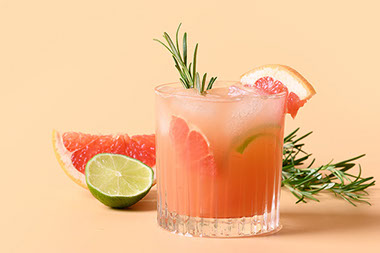
    Cocktail drink with slices of grapefruit and lime.

    Limit alcohol to lower your risk for:

    1.  Injuries from falling and operating machines

    2.  Liver and heart diseases, stroke, and high blood pressure

    3.  Cancers of the breast, mouth, throat, colon, and liver

    4.  Depression, sleep disorders, unsafe sex, alcohol abuse, and harmful alcohol and drug interactions

    5.  Motor vehicle crashes. As little as 2 drinks can impair some people’s ability to drive safely.

    Take Action: Be Social Without Alcohol

    *  Focus more on the people you are with than alcoholic drinks.

    *  Keep drinks without alcohol in your house to offer guests.

    *  Plan activities with others that do not include alcohol.

    *  Drink water. This helps you save money, too.

    Page from HealthyLife Weigh book by the American Institute for Preventive Medicine. www.HealthyLife.com. All rights reserved.

    © American Institute for Preventive Medicine
  • Drink Responsibly

    Substance Use & Abuse

    Limit alcohol to one to two drinks a day.

    Alcohol is a depressant and the most widely used legal drug in the United States. About one in 13 adults are alcoholics or alcohol abusers. Alcohol is a leading cause of traffic-related deaths for 15 to 24 year olds and a trigger for one in four suicides and about 50 percent of spousal abuse.

    Enough is enough.

    Two drinks per day for men and one drink per day for women and persons age 65 and older is enough to release tension. Drinking too much can slur your speech, decrease your ability to think clearly, and put you at greater risk of having a traffic accident, if driving.

    One drink equals 1-1/2 ounces of 80-proof hard liquor, 12 ounces of beer, or 4-5 ounces of wine.

    Use alcohol wisely:

    *  Alcohol and some prescribed drugs don’t mix and can sometimes be fatal. Read labels and ask your doctor before combining the two.

    *  Know your drinking limit and stick to it.

    *  Drink slowly.

    *  After you have one to two drinks with alcohol, drink something alcohol-free.

    *  Don’t drink and drive.

    *  Always designate a driver who will not be drinking.

    Don’t drink alcohol if:

    *  You are pregnant.

    *  You are under the legal drinking age.

    *  You are driving a car, a boat, a plane or operating machines.

    *  You are alcohol or drug dependent.

    *  You have hepatitis.

    Action Step

    If you order alcohol when you eat out, ask to have it served with, not before, the meal. Alternate sips of alcohol and water. Designate a sober driver. Buzzed driving is drunk driving.

    Page from Ways to Well-Being book by the American Institute for Preventive Medicine. www.HealthyLife.com. All rights reserved.

    © American Institute for Preventive Medicine
  • Driving Yourself To Drink

    Substance Use & Abuse

    Take this test to see if you are out of control.

    You may think you are a social drinker, when others see you as a problem drinker. If you have any doubts, or just want to prove your friends and family wrong, take this test developed by Alcoholics Anonymous.

    Answer Yes or No:

    1.  Have you ever decided to stop drinking for a week or more, but lasted only a few days?

    2.  Do you wish people would mind their own business about your drinking and stop telling you what to do?

    3.  Have you ever switched from one kind of drink to another in the hope that this would keep you from getting drunk?

    4.  Have you had a drink in the morning during the past year?

    5.  Do you envy people who can drink without getting into trouble?

    6.  Have you had problems connected with drinking during the past year?

    7.  Has your drinking caused troubles at home?

    8.  Do you ever try to get extra drinks at a party because you are not served enough?

    9.  Do you tell yourself you can stop drinking any time you want, even though you keep getting drunk when you didn’t mean to?

    10. Have you missed days of work because of drinking?

    11. Do you have blackouts?

    12. Have you ever felt your life would be better if you did not drink?

    Score Yourself: If you answered yes to four or more questions, chances are you have a drinking problem and need to seek professional help.

    Action Step

    If your drinking is tied to emotional issues that you are trying to drown, seek counseling. Coming to terms with your triggers and learning to manage those triggers will help put you back in control of your life.

    Page from Ways to Well-Being book by the American Institute for Preventive Medicine. www.HealthyLife.com. All rights reserved.

    © American Institute for Preventive Medicine
  • Face Up To Your Drinking Habits

    Substance Use & Abuse

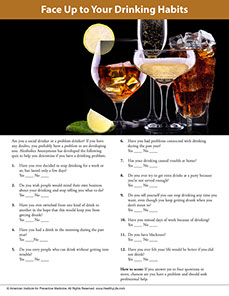
    Are you a social drinker or a problem drinker? If you have any doubts, you probably have a problem or are developing one. Alcoholics Anonymous has developed the following quiz to help you determine if you have a drinking problem.

    1.  Have you ever decided to stop drinking for a week or so, but lasted only a few days?  Yes ____ No ____

    2.  Do you wish people would mind their own business about your drinking and stop telling you what to do?  Yes ____ No ____

    3.  Have you ever switched from one kind of drink to another in the hope that this would keep you from getting drunk?  Yes ____ No ____

    4.  Have you had a drink in the morning during the past year?  Yes ____No ____

    5.  Do you envy people who can drink without getting into trouble?  Yes ____ No ____

    6.  Had problems connected with drinking during the past year?  Yes ____ No ____

    7.  Has your drinking caused trouble at home?  Yes ____ No ____

    8.  Do you ever try to get extra drinks at a party because you’re not served enough?

    Yes ____      No ____

    9.  Do you tell yourself you can stop drinking any time you want, even though you keep getting drunk when you don’t mean to?  Yes ____ No ____

    10. Have you missed days of work because of drinking?  Yes ____ No ____

    11. Do you have blackouts?  Yes ____ No ____

    12. Have you ever felt your life would be better if you did not drink?  Yes ____ No ____

    How to score: If you answer yes to four questions or more, chances are you have a problem and should seek professional help.

    Page from A Year of Health Hints book by the American Institute for Preventive Medicine. www.HealthyLife.com. All rights reserved.

    © American Institute for Preventive Medicine
  • Where To Get Help For A Drinking Problem

    Substance Use & Abuse

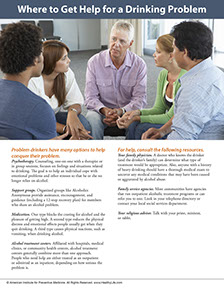
    Image of man seeking help.

    Problem drinkers have many options to help conquer their problem.

    *  Psychotherapy. Counseling, one-on-one with a therapist or in group sessions, focuses on feelings and situations related to drinking. The goal is to help an individual cope with emotional problems and other stresses so that he or she no longer relies on alcohol.

    *  Support groups. Organized groups like Alcoholics Anonymous provide assistance, encouragement, and guidance (including a 12-step recovery plan) for members who share an alcohol problem.

    *  Medication. One type blocks the craving for alcohol and the pleasure of getting high. A second type reduces the physical distress and emotional effects people usually get when they quit drinking. A third type causes physical reactions, such as vomiting, when drinking alcohol.

    *  Alcohol treatment centers. Affiliated with hospitals, medical clinics, or community health centers, alcohol treatment centers generally combine more than one approach. People who need help are either treated as an outpatient or admitted as an inpatient, depending on how serious the problem is.

    For help, consult the following resources.

    *  Your family physician. A doctor who knows the drinker (and the drinker’s family) can determine what type of treatment would be appropriate. Also, anyone with a history of heavy drinking should have a thorough medical exam to uncover any medical conditions that may have been caused or aggravated by alcohol abuse.

    *  Family service agencies. Most communities have agencies that run outpatient alcoholic treatment programs or can refer you to one. Look in your telephone directory or contact your local social services department.

    *  Your religious adviser. Talk with your priest, minister, or rabbi.

    Page from A Year of Health Hints book by the American Institute for Preventive Medicine. www.HealthyLife.com. All rights reserved.

    © American Institute for Preventive Medicine

  • Recognize Addiction

    Substance Use & Abuse

    How to tell if you have a drinking or drug problem.

    If you are addicted to alcohol or drugs, craving the substance can be as strong as the need for food or water. You are unable to stop using the substance even though it causes or worsens problems for you, family, friends, and coworkers. Your drinking or drug use may put you and others in danger or cause legal problems.

    Signs You Have a Problem:

    Signs depend on the substance. Common ones include:

    *  Your use and tolerance of alcohol or a drug has increased. You need more of the substance to get “high.”

    *  You hide alcohol or drugs at home or at work.

    *  You often carry drugs and/or items such as glass pipes, straws and needles used to take the drugs.

    *  You get withdrawal symptoms when you stop using the substance. Examples are:

    – Anxiety

    – Being very edgy

    – Blackouts

    – Chills or sweating

    – Delirium

    – Depression

    – Feeling “spaced out”

    – Hallucinations

    – Panic

    – Seizures

    – Tremors of the hands or face

    Behavioral Changes:

    *  You develop a pattern of being absent or late for work.

    *  You have mood swings.

    *  You have temper flare-ups.

    *  You keep asking family and friends for money.

    *  You develop a habit of stealing to support your habit.

    *  You become very secretive about your life.

    *  You have a new group of friends who drink a lot or  use drugs.

    *  You have problems dealing with others.

    Action Step

    The first step to recovery is admitting that you have a problem. You may not recognize it at first, but the people around you do. Listen to them. Then ask for help.

    Page from Ways to Well-Being book by the American Institute for Preventive Medicine. www.HealthyLife.com. All rights reserved.

    © American Institute for Preventive Medicine
  • Smart Tips For Business Drinking

    Substance Use & Abuse

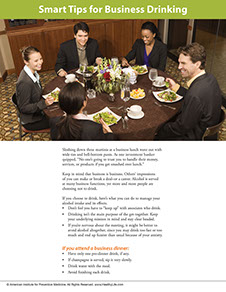
    Image of co-workers cheering with glasses of wine.

    Sloshing down three martinis at a business lunch went out with wide ties and bell-bottom pants. As one investment banker quipped, “No one’s going to trust you to handle their money, services, or products if you get smashed over lunch.”

    Keep in mind that business is business. Others’ impressions of you can make or break a deal-or a career. Alcohol is served at many business functions, yet more and more people are choosing not to drink.

    If you choose to drink, here’s what you can do to manage your alcohol intake and its effects.

    *  Don’t feel you have to “keep up” with associates who drink.

    *  Drinking isn’t the main purpose of the get-together. Keep your underlying mission in mind and stay clear headed.

    *  If you’re nervous about the meeting, it might be better to avoid alcohol altogether, since you may drink too fast or too much and end up fuzzier than usual because of your anxiety.

    If you attend a business dinner:

    *  Have only one pre-dinner drink, if any.

    *  If champagne is served, sip it very slowly.

    *  Drink water with the meal.

    *  Avoid finishing each drink.

    Page from A Year of Health Hints book by the American Institute for Preventive Medicine. www.HealthyLife.com. All rights reserved.

    © American Institute for Preventive Medicine
  • Limit Alcohol

    Healthylife® Weigh

    Part 3

    Glass of wine for 2 at dinner.

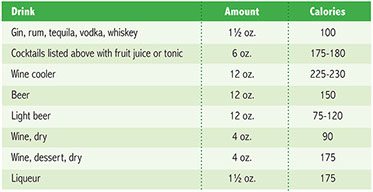
    Alcoholic beverages provide calories with little or no nutrients. Alcohol can damage your heart, liver, brain, and other body systems. It can cause high blood pressure and increases your risk for some cancers. Drinking can also decrease your immunity, making it harder for your body to fight disease.

    Chart showing alcoholic drink, calories per amount.

    Effects of Alcohol on Weight Management

    *  It stimulates the appetite.

    *  It can make it harder to keep track of how much you’ve eaten.

    *  It can cause a drop in blood sugar. This can make you tired and less able to concentrate. It can also cause you to crave something sweet.

    If you drink alcohol, do so wisely.

    *  Don’t drink and drive. Designate a driver who will not be drinking. Volunteer to stay sober.

    *  Drink slowly. You will probably drink less.

    *  Drink alcohol with a meal. Food slows alcohol absorption.

    *  Drink a full glass of water between each alcoholic drink.

    © American Institute for Preventive Medicine

  • Alcohol Increases Risk For Breast Cancer

    SELF-CARE CORNER

    Image of middle-aged women smiling wearing a pink blazer.

    Breast cancer is the second leading cause of cancer death for women in the United States, after lung cancer. Dr. Erica Mayer, a breast cancer expert at Dana-Farber Cancer Institute, says there are at least 5 simple ways women can reduce their risk of getting the disease:

    1.Limit alcohol.Research has shown having too much alcohol can increase your risk of breast cancer. If you choose to drink alcohol-including beer, wine, or liquor-limit yourself to no more than one half to one drink a day on average.

    2.Get a mammogram.Many health organizations advise women to get regular mammograms starting at age 40. “Mammography screening does not prevent or cure breast cancer, but it may detect the disease before symptoms occur,” said Dr. Mayer.

    3.Eat a healthy diet and keep your weight under control.The American Cancer Society recommends a diet rich in vegetables, fruits, whole grains, and fiber. “High-fat diets can lead to being overweight or obese, which is a risk factor for breast cancer,” said Dr. Mayer.

    4.Exercise.There’s growing evidence that physical activity reduces a woman’s breast cancer risk.

    5.Determine if you have family history of breast cancer and be vigilant to early detection.Twenty to 30% of people who develop breast cancer have a family history of the disease. About 5 to 10% of women carry a BRCA1 or BRCA 2 mutation, the so called “breast cancer genes.”

    © American Institute for Preventive Medicine