MEDICAL NEWS

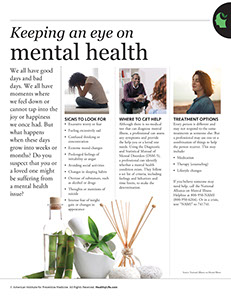
We all have good days and bad days. We all have moments where we feel down or cannot tap into the joy or happiness we once had. But what happens when these days grow into weeks or months? Do you suspect that you or a loved one might be suffering from a mental health issue?
Signs to Look For
* Excessive worry or fear
* Feeling excessively sad
* Confused thinking or concentration
* Extreme mood changes
* Prolonged feelings of irritability or anger
* Avoiding social activities
* Changes in sleeping habits
* Overuse of substances, such as alcohol or drugs
* Thoughts or mentions of suicide
* Intense fear of weight gain or changes in appearance
Where to Get Help
Although there is no medical test that can diagnose mental illness, a professional can assess any symptoms and provide the help you or a loved one needs. Using the Diagnostic and Statistical Manual of Mental Disorders (DSM-5), a professional can identify whether a mental health condition exists. They follow a set list of criteria, including feelings and behaviors and time limits, to make the determination.
Treatment Options
Every person is different and may not respond to the same treatments as someone else. But a professional may use one or a combination of things to help the person recover. This may include:
* Medication
* Therapy (counseling)
* Lifestyle changes
If you believe someone may need help, call the National Alliance on Mental Illness Helpline at 800-950-NAMI (800-950-6264). Or in a crisis, text “NAMI” to 741741.
Source: National Alliance on Mental Illness
© American Institute for Preventive Medicine