Tag: calm

  • Taking The Stress Out Of Travel

    Healthy Travel

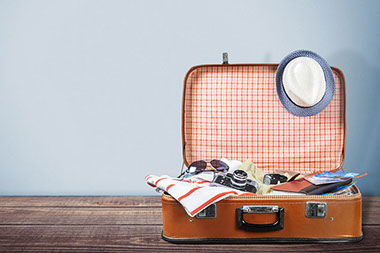
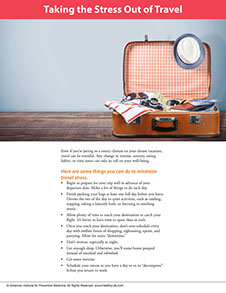
    Image of suit case opened.

    Even if you’re jetting to a sunny climate on your dream vacation, travel can be stressful. Any change in routine, scenery, eating habits, or time zones can take its toll on your well-being.

    Here are some things you can do to minimize travel stress.

    *  Begin to prepare for your trip well in advance of your departure date. Make a list of things to do each day.

    *  Finish packing your bags at least one full day before you leave. Devote the rest of the day to quiet activities, such as reading, napping, taking a leisurely bath, or listening to soothing music.

    *  Allow plenty of time to reach your destination or catch your flight. It’s better to have time to spare than to rush.

    *  Once you reach your destination, don’t over-schedule every day with endless hours of shopping, sightseeing, sports, and partying. Allow for some “downtime.”

    *  Don’t overeat, especially at night.

    *  Get enough sleep. Otherwise, you’ll come home pooped instead of renewed and refreshed.

    *  Get some exercise.

    *  Schedule your return so you have a day or so to “decompress” before you return to work.

    Page image from A Year of Health Hints book by the American Institute for Preventive Medicine. www.HealthyLife.com. All rights reserved.

    © American Institute for Preventive Medicine

  • Dealing With Family Arguments

    FAMILY LIFE

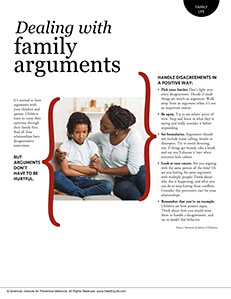
    Mother comforting her young son who's upset.

    It’s normal to have arguments with your children and spouse. Children learn to voice their opinions through their family first. And all close relationships have disagreements sometimes.

    But arguments don’t have to be hurtful.

    Handle disagreements in a positive way:

    *Pick your battles:Don’t fight over every disagreement. Decide if small things are worth an argument. Walk away from an argument when it’s not an important matter.

    *Be open.Try to see others’ point of view. Stop and listen to what they’re saying and really consider it before responding.

    *Set boundaries.Arguments should not include name calling, insults or disrespect. Try to avoid shouting, too. If things get heated, take a break and say you’ll discuss it later when everyone feels calmer.

    *Look at root causes.Are you arguing with the same person all the time? Or are you having the same argument with multiple people? Think about why this is happening, and what you can do to stop having these conflicts. Consider this preventive care for your relationships.

    *Remember that you’re an example.Children see how parents argue. Think about how you would want them to handle a disagreement, and try to model that behavior.

    Source: American Academy of Pediatrics

    © American Institute for Preventive Medicine

  • Coping With A Crisis

    Home Safety

    The first step in coping with a crisis is to recognize what is happening. Part of this is to accept the feelings and reactions you have as normal responses to an abnormal event. Some reactions show that your body and mind are on a high state of alert. Others are part of the healing process. The second step is to manage the effect the crisis has on you (e.g., how you feel and the ability to live your life).

    Typical Reactions

    Reactions to a crisis or trauma vary widely. You may experience many, only a few, or none of these reactions. These reactions to a crisis or trauma are common. Most people fully recover from even moderate stress reactions within six to sixteen months.

    Behavior Reactions

    *  Crying, anger outbursts, restlessness

    *  Withdrawal, isolating yourself, or clinging to others

    *  Increased urge for alcohol or drugs

    *  Problems with family, friends, co-workers

    *  Being “on guard” or easily startled

    *  Inappropriate humor

    *  Change in eating, sleeping, and or other behaviors

    *  No longer maintaining daily routines. You may be too afraid to leave your home.

    Physical Reactions

    *  Headaches

    *  Upset stomach

    *  Nervousness

    *  Change in appetite

    *  Muscle aches

    *  Tiredness, fatigue, exhaustion

    *  Insomnia

    Emotional Reactions

    *  Anger

    *  Irritability

    *  Emotional numbness

    *  Worry

    *  Fear

    *  Sadness

    *  Grief

    *  Feeling unmotivated

    *  Feeling unsafe

    *  Weakness

    *  Feeling insecure

    *  Helplessness

    *  Hopelessness

    *  Guilt

    *  Feeling overwhelmed

    Mental Reactions

    *  Disbelief

    *  Shock

    *  Recurring thoughts of the event

    *  Confusion

    *  Poor memory

    *  Impaired concentration

    *  Inability to make decisions

    *  Bad dreams

    *  Violent fantasies

    *  Changes in or questions about religious beliefs

    Handling Anxiety

    *  Write down, ahead of time, the steps to take for different disasters (e.g., house, fires, floods, etc.). Go through drills for each plan with the whole family. Make sure the car always has gas. This is in case you have to leave an area.

    *  Know your place of work’s emergency plans. Find out about them from your supervisor, Employee Assistance Program (EAP), etc.

    *  Take a course in first aid from the Red Cross, your police or fire department.

    *  Give each family member a prepaid phone card with about a ten dollar value. Instruct children how to use the card and a pay phone. Some cell phone services may be overwhelmed in an emergency.

    *  Set up a “check-in” plan. Choose someone for family members to call or e-mail to check on each other. Pick someone far enough away who would not likely be part of the same event. Of course, call each other on cell, regular, or pay phones.

    *  Choose two places to meet. One is at home or near your home. Choose another place farther away in case you can’t get home. Make plans for the safety of your children.

    *  If you have children in school, find out the school’s crisis plan. Know the school’s policy for sending children home. Make sure the school has current phone numbers for you and other caregivers in case you can’t be reached. Find out what the school needs to have to release your child to designated caregivers.

    *  If you have a pet, plan for its safety. For more information, contact the Red Cross orwww.disasterrelief.org/library/prepare/pets.html.

    *  When you enter a building, find emergency exits and stairways. Plan ahead how to get out quickly from buildings, vehicles, crowded public places, etc.

    *  Make an emergency supply kit. Put these things in backpacks or containers that one or more family members can easily carry:

    – Three days’ supply of bottled water (one gallon a day per person if possible. Put these next to, not in your containers.)

    – Food that won’t spoil. A hand can opener.

    – Flashlight and extra batteries

    – A battery powered radio or TV and extra batteries

    – First aid kits for the home and the car

    – Sleeping bags or blankets

    – A change of clothing for each person

    – Items for family members with special needs (e.g., baby supplies, medicines, etc.)

    – Duct tape and dry towels that you can make wet to make a room airtight

    – Bleach

    – Important documents, cash, and credit cards

    For more information on being ready for disasters, contactwww.redcross.orgor call your local Red Cross. Ask about their “Preparing for the Unexpected” class. This one and a half-hour class teaches families and employees safety steps to take for many kinds of disasters.

    Deal with Fear

    Handling Anxiety

    Anxiety is a feeling of dread, fear, or distress over a real or imagined threat to your mental or physical well being. When anxiety becomes extreme, possible threats are overestimated. Also, inner strength, support from family, the community, and the nation are underestimated.

    A certain amount of anxiety is normal. It can alert you to seek safety when you are in physical danger. Anxiety is not normal, though, when there is no apparent reason for it or when it overwhelms you and interferes with your day-to-day life. If this is the case, seek help from your doctor, a mental health professional, or your Employee Assistance Program (EAP) at work. Treatment can include medication and counseling. It may also include behavior therapy or taking part in a self-help group.

    Signs and Symptoms of Anxiety

    *  Rapid pulse and/or breathing rate

    *  Racing or pounding heart

    *  Dry mouth

    *  Sweating

    *  Trembling

    *  Shortness of breath

    *  Faintness

    *  Numbness/tingling of the hands, feet, or other body part

    *  Feeling a “lump in the throat”

    *  Stomach problems

    Self-Help for Anxiety

    *  If you are prescribed medication, take it as advised.

    *  Identify your feelings.

    *  Talk to others about your fears. It’s okay to ask for help. If available at your place of work, attend group meetings with an EAP counselor or other mental health professional where people can share feelings.

    *  Maintain your normal routines.

    *  Escape for a little while. Go to a movie. Read a good book. Take a walk in the woods or a trip to a museum.

    *  Take a long, warm shower or bath.

    *  Don’t fight the desire to cry. Tears can help relieve stress and also release a natural pain-relieving substance from the brain.

    *  Laugh a lot. Laughter relaxes muscles and relieves tension.

    *  Recognize the things you can control and what you can’t control. Identify and use your own strengths and resources.

    *  Use measures that have helped you overcome fear and helplessness in the past.

    *  Don’t take on more than you can handle. Make a to-do list. Prioritize important items.

    *  Reward yourself. Treat yourself to little things that make you feel good.

    *  Think positively.

    Take Charge, Coping with a Crisis book by the American Institute for Preventive Medicine. www.HealthyLife.com. All rights reserved.

    © American Institute for Preventive Medicine

  • Address Anxiety 2

    Healthylife® QuitWell™

    Part 2

    Zen garden with massage stones and waterlily.

    Anxiety is a feeling of dread, fear, or distress over a real or imagined threat to your mental or physical well-being. Smoking, chewing, or vaping may be a way that you have coped in the past with these feelings. At all stages of change, you can learn to address anxiety in healthy ways.

    First, try to calm your body physically. Calming the physical body can make working through what is in your mind easier.

    *  Breathe deeply and evenly.

    *  Take a walk or get some other form of exercise.

    *  Take a long, warm bath or shower. Or, go for a swim.

    *  Listen to soothing music. Or, go somewhere quiet.

    *  Connect with people. Visit or call someone who will listen to you and support you.

    *  Drink a warm cup of decaf coffee or tea-avoid caffeine, which can make anxiety worse.

    As you take a step back, use these tips to manage the thoughts that are causing your anxiety:

    *  Ask: is your thought based on facts?

    *  Identify what you are trying to do. Know your purpose.

    *  Consider many different outcomes and their effects.

    *  View the situation from many perspectives.

    *  Don’t assume a situation will have the same outcome as it did in the past.

    *  Have good evidence for a generalization before you make it.

    *  Avoid assuming one event caused another just because they happened at the same time.

    You will likely feel calmer after you quit. Nicotine only makes you more nervous. Nicotine is a stimulant. After you get over the initial stress of quitting, you’ll find that without all that nicotine in your body, you feel calmer and more relaxed.

    © American Institute for Preventive Medicine

  • Keeping Cool When Work Heats Up

    WORK LIFE

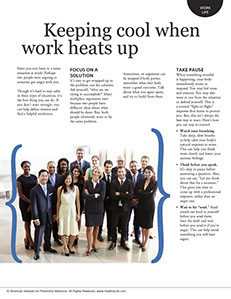
    Image of a great of employees.

    Have you ever been in a tense situation at work? Perhaps two people were arguing or someone got angry with you.

    Though it’s hard to stay calm in these types of situations, it’s the best thing you can do. If you don’t react strongly, you can help defuse tension and find a helpful resolution.

    Focus on a solution

    It’s easy to get wrapped up in the problem, not the solution. Ask yourself, “what are we trying to accomplish?” Many workplace arguments start because two people have different ideas about what should be done. But, both people ultimately want to fix the same problem.

    Sometimes, an argument can be stopped if both parties remember what they both want: a good outcome. Talk about what you agree upon, and try to build from there.

    Take pause

    When something stressful is happening, your body immediately wants to respond. You may feel tense and anxious. You may also want to run from the situation or defend yourself. This is a normal “fight-or-flight” response that wants to protect you. But, this isn’t always the best way to react. Here’s how you can stay in control:

    *  Watch your breathing. Take deep, slow breaths to help calm your body’s natural response to stress. This can help you think more clearly and lower your anxious feelings.

    *  Think before you speak. It’s okay to pause before answering a question. Also, you can say, “Let me think about that for a moment.” This gives you time to come up with a professional response, rather than an angry one.

    *  Wait to hit “send.” Read emails out loud to yourself before you send them. Save the draft and wait before you send it if you’re angry. This can help avoid something you will later regret.

    © American Institute for Preventive Medicine