Tag: Cancer

  • Blood Cancer: Key Facts

    MEDICAL NEWS

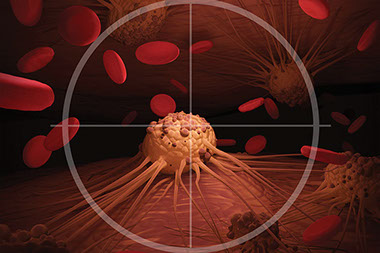
    Illustration of cancer attacking blood cells.

    Your blood is made up of many different types of cells. These include red blood cells, white blood cells, and platelets. White blood cells protect the body from harmful substances and prevent infections.

    Blood cancer is caused by the uncontrolled growth of abnormal white blood cells. The abnormal cells do not work properly, preventing them from carrying out their essential functions. As the dysfunctional cells accumulate in the blood, they crowd out healthy cells.

    It’s important to know what signs and symptoms to look for. Be sure to check with your doctor if you have any questions or concerns about blood cancer.

    Three main types of blood cancer

    Leukemia

    Leukemia is cancer that affects the bone marrow where blood cells are made. From the bone marrow, it spreads to the blood and can affect other organs.

    Lymphoma

    This type of blood cancer impacts the white blood cells in the lymphatic system. There are two types of lymphoma: Hodgkin, which spreads directly from one lymph node to another, and Non-Hodgkin, which spreads erratically through the lymph nodes.

    Multiple myeloma

    Myeloma affects plasma cells. These are white blood cells that produce antibodies to fight infections. When the plasma cells don’t function correctly, the body’s immune system doesn’t work properly.

    Symptoms of blood cancer

    Talk to your doctor if you experience the following:

    *  Fatigue

    *  Fever

    *  Unexplained weight loss

    *  Bone pain

    *  Swollen lymph nodes

    *  Frequent infections

    Survival rates have steadily increased

    Fifty years ago, there were few successful treatments for blood cancer. Now, there is a range of treatment options available, and more people achieve remission than ever before. Early detection and improved treatments have increased five-year survival rates and provide hope for the future.
    © American Institute for Preventive Medicine

  • Brca Gene For Breast Cancer

    MEDICAL NEWS

    Women wearing pink shirts with pink ribbons.

    You may have heard of the BRCA gene for breast cancer. But many people don’t understand what this gene is, or what it really means for breast cancer risk.

    What BRCA really means

    “BRCA” is an abbreviation for “BReast CAncer.” There are two types: BRCA1 and BRCA2. Everyone has both of these genes. Having them does not mean you will get breast cancer.

    In fact, BRCA genes actually help prevent breast cancer. They can stop or slow breast cancer growth.

    When BRCA genes aren’t good

    In some people however, the BRCA genes don’t work properly. This is called a BRCA gene mutation.

    When this happens, the BRCA genes can’t prevent breast cancer. This makes the person more likely to get breast cancer. They may also develop breast cancer at a younger age. Those with BRCA mutations have a higher risk of developing other cancers too, including ovarian and pancreatic.

    Up to 65 percent of women with a BRCA1 mutation will develop breast cancer before age 70. About 45 percent of women with a BRCA2 mutation will develop breast cancer by age 70. People who have a mutated BRCA gene may also pass this along to their children.

    What to do

    Women who have one of the following should talk with a doctor:

    *  A family history of breast cancer

    *  History of ovarian cancer

    *  History of two or more cancers of any type

    In some cases, you may need a test to look at the BRCA genes. If the test finds that you have a BRCA mutation, talk with your doctor about next steps. This may include:

    *  Watching closely for breast cancer signs and getting regular screenings

    *  Taking certain medicines that can reduce estrogen, which can lower breast cancer risk

    *  Having a mastectomy, which is surgical removal of the breasts

    Screening is key

    Even without a BRCA gene mutation, all women should talk with their doctors about breast cancer risk. They should get regular breast cancer screenings. Finding breast cancer early is key. It means you have the best chance for successful treatment.

    Sources: National Breast Cancer Foundation, National Institutes of Health

    © American Institute for Preventive Medicine
  • Can Food Prevent Cancer?

    HEALTHY EATING

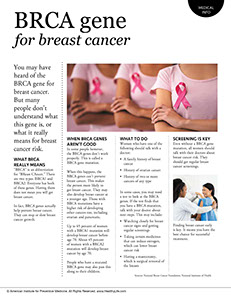
    A variety of baskets filled with fruits and vegetables.

    Studies have shown that eating healthy foods, especially plants, can help prevent certain health problems. It can help you avoid type 2 diabetes, heart disease and stroke. Some research also shows that a healthy diet can help prevent cancer.

    There is no single food or diet that will always prevent cancer. Many times, cancer is caused by things we cannot control. But there is promising research that says a healthy diet can lower your risk of some cancers. Here is what researchers have found.

    Fruits and vegetables

    We already know fruits and vegetables are good for you. They are full of vitamins, fiber and other nutrients. Eating lots of fruits and vegetables may lower the chances of getting lung, colorectal, oral, esophagus, stomach and colon cancer. The Mediterranean Diet, which includes lots of fruits and vegetables, is one diet plan that seems to have anti-cancer ability.

    In addition to fruits and vegetables, people should get enough calcium and vitamin D. These nutrients may play a role in lowering the risk of getting colorectal cancer.

    Phytochemicals – a health booster

    Phytochemicals are special chemicals found in plants. Some studies suggest that they can lower your cancer risk. Phytochemicals may:

    *  Boost your immune system

    *  Help block cancer-causing substances called carcinogens

    *  Lower inflammation that can lead to cancer

    *  Help your DNA repair itself

    *  Slow down the growth of cancer cells

    *  Get rid of damaged cells in the body

    Phytochemicals are found in fruits, vegetables, legumes and whole grains. Foods that have bright colors or strong flavors tend to have the most phytochemicals.

    What not to eat

    Some foods may increase the risk of some cancers. Avoid or limit:

    *  Heavily processed meats like ham, bacon, sausage and salami

    *  Alcohol, which may increase the risk of mouth, throat, esophagus, breast, colorectal and liver cancer

    *  Foods that cause indigestion and heartburn. Long-term heartburn can increase the risk of esophagael cancers

    Most experts agree that nutritional supplements have not been shown to fight cancer. Stick to eating healthy foods for more cancer-fighting power.

    Your doctor is your partner in helping to prevent cancer and other health problems. Be sure to discuss your cancer risk and the best diet for you.

    Sources: American Academy of Family Physicians, American Institute for Cancer Research, National Institute of Diabetes and Digestive and Kidney Diseases

    © American Institute for Preventive Medicine

  • Cancer-Fighting Foods

    HEALTHY EATING

    Top view cup of tea and tea pot.

    A healthy diet plays an important role in supporting a healthy immune system. And a strong immune system can prevent and neutralize cancer cells.

    Some specific foods contain compounds that have cancer-fighting properties. While more research is needed, these foods may offer protective benefits in a balanced diet.

    Colorful fruits & vegetables

    The rich color of fruits and vegetables comes from phytonutrients, plant compounds that provide health benefits.

    Eating a variety of different colored fruits and vegetables provides the body with a wealth of potent antioxidants, vitamins, and minerals to support good health.

    Dark green and orange vegetables, tomatoes, cruciferous vegetables, and alliums (onions, garlic, etc.) show particular promise for cancer-fighting ability.

    Beans, peas, & lentils

    Packed with fiber and nutrients, pulses such as beans, peas, and lentils show evidence of lowering the risk of colorectal cancer.

    Regular consumption of these powerful plants provides a boost of fiber that feeds and nourishes the microbiome in the gut.

    Your microbiome is an essential player in the immune system and one of the first lines of defense against colon cancer growth.

    Walnuts

    While all kinds of nuts and seeds should be part of a healthy plant-based diet, walnuts deserve a special mention.

    Walnuts contain healthy fats and plant compounds called polyphenols which may combat oxidative stress in the body.

    The tannins in walnuts give them their distinctive taste and may also provide cancer-fighting benefits.

    Tea

    Your daily cup of tea is more than a soothing drink. Tea contains flavonoids. These compounds act as antioxidants, reduce inflammation, and may potentially be anti-carcinogens.

    The plants found in tea create flavonoids as part of their own personal protection system. When you drink tea, those same compounds that protect the plants from disease and pests go to work defending you.

    © American Institute for Preventive Medicine

  • Do Cell Phones Cause Cancer?

    WELL-BEING

    Women holding cell phone with head phones on.

    Many people have their phones in pockets or purses all the time.

    Is this safe?

    Cell phones and RF waves

    When they are turned on, cell phones give off radiofrequency (RF) waves. When a person holds a cell phone up to their ear, they are exposed to the RF waves from the phone.

    At very high levels, RF waves can cause heat. This is how microwave ovens heat food. But the energy given off by a cell phone isn’t enough to cause a person’s body to heat up.

    Most stuides say “NO”

    Studies on rats have found that exposing their entire bodies to RF waves for long periods of time may increase the risk of a certain type of tumor. The levels used in this study were much higher than what a person would experience from normal everyday cell phone use.

    Most studies on humans have found that people who have brain tumors do not use cell phones more than people who don’t have tumors. Other human studies have found that brain tumors don’t happen more on the side of the head where people hold their cell phones. Both results seem to suggest that cell phones do not cause brain tumors.

    But a few studies have found an increased tumor risk on the side of the head where a person usually holds their cell phone.

    Researchers believe we need more studies to find out for sure whether cell phones could be linked to cancer.

    What should I do?

    The American Cancer Society says RF waves are not as strong as different types of radiation like x-rays and UV light. X-rays and UV light can damage DNA. RF waves from cell phones are much weaker and don’t cause DNA damage. This means they would not make changes that could cause a tumor to form.

    But, if you want to avoid exposure to RF waves, you can:

    *  Keep your phone away from your body. Don’t keep it in your pocket when it’s turned on.

    *  Use the speaker function or an earpiece when talking on the phone.

    Source: American Cancer Society

    © American Institute for Preventive Medicine
  • Exercise Lowers Breast Cancer Risk

    BE FIT

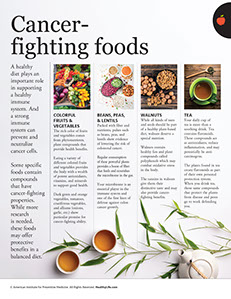
    Women using weights.

    In just 30 minutes a day, a woman can lower her risk of breast cancer. You don’t need special equipment or a gym. Power walking is a good choice to make a difference!

    Exercise lowers breast cancer risk by:

    *  Helping you get to a healthy weight. Being overweight raises the risk of getting breast cancer. This is because fat cells make estrogen that can allow some types of breast cancer cells to grow.

    *  Boosting your immune system. This could help stop or slow the growth of cancer cells.

    Source: National Breast Cancer Foundation

    © American Institute for Preventive Medicine

  • Lower Your Breast Cancer Risk

    MEDICAL NEWS

    Couple jogging on side walk.

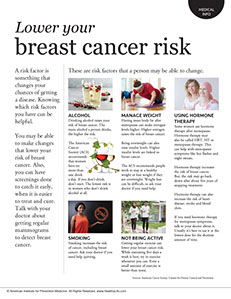
    A risk factor is something that changes your chances of getting a disease. Knowing which risk factors you have can be helpful.

    You may be able to make changes that lower your risk of breast cancer. Also, you can have screenings done to catch it early, when it is easier to treat and cure. Talk with your doctor about getting regular mammograms to detect breast cancer.

    These are risk factors that a person may be able to change.

    Alcohol

    Drinking alcohol raises your risk of breast cancer. The more alcohol a person drinks, the higher the risk.

    The American Cancer Society (ACS) recommends that women have no more than one drink a day. If you don’t drink, don’t start. The lowest risk is in women who don’t drink alcohol at all.

    Manage weight

    Having more body fat after menopause can make estrogen levels higher. Higher estrogen raises the risk of breast cancer. Being overweight can also raise insulin levels. Higher insulin levels are linked to breast cancer.

    The ACS recommends people work to stay at a healthy weight or lose weight if they are overweight. Weight loss can be difficult, so ask your doctor if you need help.

    Using hormone therapy

    Some women use hormone therapy after menopause. Hormone therapy may also be called HRT, HT or menopause therapy. This can help with menopause symptoms like hot flashes and night sweats.

    Hormone therapy increases the risk of breast cancer. But, the risk may go back down after about five years of stopping treatment. Hormone therapy can also increase the risk of heart disease, stroke and blood clots.

    If you need hormone therapy for menopause symptoms, talk to your doctor about it. Usually it’s best to use it at the lowest dose for the shortest amount of time.

    Smoking

    Smoking increases the risk of cancer, including breast cancer. Ask your doctor if you need help quitting.

    Not being active

    Getting regular exercise can lower your breast cancer risk. While exercising five days a week is best, try to exercise whenever you can. Even a small amount of exercise is better than none.

    Sources: American Cancer Society, Centers for Disease Control and Prevention

    © American Institute for Preventive Medicine

  • Prevention Is Key: Hpv & Cervical Cancer

    MEDICAL NEWS

    Image of 4 female doctors.

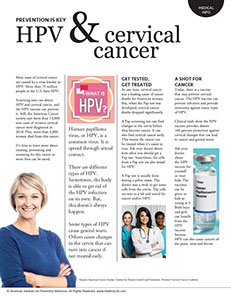
    Most cases of cervical cancer are caused by a virus known as HPV. More than 79 million people in the U.S. have HPV.

    Screening tests can detect HPV and cervical cancer, and the HPV vaccine can prevent it. Still, the American Cancer society says more than 13,000 new cases of invasive cervical cancer were diagnosed in 2018. Plus, more than 4,000 women died from this cancer.

    It’s time to learn more about treating, preventing and screening for this cancer so more lives can be saved.

    What is HPV?

    Human papilloma virus, or HPV, is a common virus. It is spread through sexual contact.

    There are different types of HPV. Sometimes, the body is able to get rid of the HPV infection on its own. But, this doesn’t always happen.

    Some types of HPV cause genital warts. Others cause changes in the cervix that can turn into cancer if not treated early.

    Get tested, get treated

    At one time, cervical cancer was a leading cause of cancer deaths for American women. But, when the Pap test was developed, cervical cancer deaths dropped significantly.

    A Pap screening test can find changes in the cervix before they become cancer. It can also find cervical cancer early. This means the cancer can be treated when it’s easier to cure. Ask your doctor about how often you should get a Pap test. Sometimes, the cells from a Pap test are also tested for HPV.

    A Pap test is usually done during a pelvic exam. The doctor uses a swab to get some cells from the cervix. The cells are sent to a lab and tested for cancer and/or HPV.

    A shot for cancer

    Today, there is a vaccine that may prevent cervical cancer. The HPV vaccine can prevent infection and provide immunity against many types of HPV.

    Clinical trials show the HPV vaccine provides almost  100 percent protection against cervical changes that can lead to cancer and genital warts.

    Ask your doctor about the HPV vaccine for yourself or your kids. The vaccines can be given to kids as young as 9. Both boys and girls can benefit from the HPV vaccine because HPV can also cause cancers of the penis, anus and throat.

    Sources: American Cancer Society, Centers for Disease Control and Prevention, National Cervical Cancer Coalition

    © American Institute for Preventive Medicine
  • Talking About Oral Cancer

    MEDICAL NEWS

    Image of dentist with illustration of a tooth.

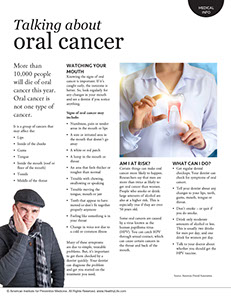
    More than 10,000 people will die of oral cancer this year. Oral cancer is not one type of cancer.

    It is a group of cancers that may affect the:

    *  Lips

    *  Inside of the cheeks

    *  Gums

    *  Tongue

    *  Inside the mouth (roof or floor of the mouth)

    *  Tonsils

    *  Middle of the throat

    Watching your mouth

    Knowing the signs of oral cancer is important. If it’s caught early, the outcome is better. So, look regularly for any changes in your mouth and see a dentist if you notice anything.

    Signs of oral cancer may include:

    *  Numbness, pain or tender areas in the mouth or lips

    *  A sore or irritated area in the mouth that doesn’t go away

    *  A white or red patch

    *  A lump in the mouth or throat

    *  An area that feels thicker or rougher than normal

    *  Trouble with chewing, swallowing or speaking

    *  Trouble moving the tongue, mouth or jaw

    *  Teeth that appear to have moved or don’t fit together properly anymore

    *  Feeling like something is in your throat

    *  Change in voice not due to a cold or common illness

    Many of these symptoms are due to simple, treatable problems. But, it’s important to get them checked by a dentist quickly. Your dentist can diagnose the problem and get you started on the treatment you need.

    Am I at risk?

    Certain things can make oral cancer more likely to happen. Researchers say that men are more than twice as likely to get oral cancer than women. People who smoke or drink large amounts of alcohol are also at a higher risk. This is especially true if they are over 50 years old.

    Some oral cancers are caused by a virus known as the human papilloma virus (HPV). You can catch HPV through sexual contact, which can cause certain cancers in the throat and back of the mouth.

    What can I do?

    *  Get regular dental checkups. Your dentist can check for symptoms of oral cancer.

    *  Tell your dentist about any changes to your lips, teeth, gums, mouth, tongue or throat.

    *  Don’t smoke – or quit if you do smoke.

    *  Drink only moderate amounts of alcohol or less. This is usually two drinks for men per day, and one drink for women per day.

    *  Talk to your doctor about whether you should get the HPV vaccine.

    Source: American Dental Association

    © American Institute for Preventive Medicine

  • What Is Lymphoma?

    MEDICAL NEWS

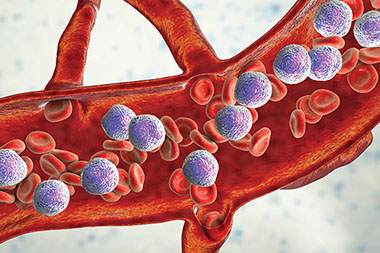
    Illustration of vein with blood cells.

    There are several different types of blood cancers. About half of all blood cancers are lymphomas. Lymphoma is cancer in the lymph system. The lymph system is part of the immune system that fights off illnesses and infections. It also helps control the flow of fluids in the body.

    Lymphoma is not one type of cancer. It is a group of many types.

    Hodgkin lymphoma is one type. It was named after the doctor who discovered it. All other lymphomas are called non-Hodgkin lymphomas. There are more than 60 types of non-Hodgkin lymphomas.

    What’s the difference?

    Hodgkin and non-Hodgkin lymphomas affect lymphocytes, which are cells in the lymphatic system. Doctors can tell which type of lymphoma a person has by looking at their cells under a microscope.

    Hodgkin lymphoma has a special cell with two centers, or nuclei. These are known as Reed-Sternberg cells, and they only occur in people with Hodgkin lymphoma.

    Similar signs

    Even though there are different types of lymphoma, the signs look alike. Some signs include:

    *  A painless lump in the neck, armpit or groin

    *  Excessive sweating

    *  Fever

    *  Trouble breathing

    *  Weight loss

    *  No appetite

    *  Feeling weak

    *  Itching

    Know the risk

    Lymphoma can attack almost any area of the body. Often its symptoms are hard to spot, or they may be blamed on other health issues. That’s why it’s good to know if you’re at a higher risk of getting lymphoma. Risk factors include:

    *  Having a close relative with lymphoma

    *  Previously being exposed to radiation or chemotherapy

    *  Long-term exposure to chemicals

    *  Having a weakened immune system

    Talk to your doctor

    There is no surefire way to prevent lymphoma. However, you can get regular checkups and talk to your doctor about your health. Ask them about your risk of cancer and ways you can lead the healthiest life possible. If you notice changes in your health or symptoms, tell them.

    Sources: American Cancer Society, Leukemia and Lymphoma Society

    © American Institute for Preventive Medicine